The best MTB trails around Brunstatt-Didenheim
4.4
(541)
1,941
riders
319
rides
Mountain bike trails around Brunstatt-Didenheim offer diverse terrain, from the challenging ascents of the Vosges hills to the flatter paths along the Rhone-Rhine Canal. The region is characterized by a mix of unpaved segments in forested areas and well-maintained routes suitable for various skill levels. Green spaces and riverbanks, such as those along the Ill and Doller, provide scenic backdrops for rides. This variety ensures options for both leisurely cycling and more demanding technical mountain biking.
Best mountain bike trails…
Last updated: October 19, 2026
4.8
(5)
41
riders
49.0km
04:24
840m
840m
Moderate mountain bike ride. Good fitness required. Advanced riding skills necessary.
4.5
(11)
42
riders
24.8km
02:20
450m
450m
Moderate mountain bike ride. Good fitness required. Suitable for all skill levels.

3.8
(6)
20
riders
30.4km
02:24
370m
370m
Moderate mountain bike ride. Good fitness required. Suitable for all skill levels.
4.6
(7)
32
riders
29.3km
02:47
540m
540m
Moderate mountain bike ride. Good fitness required. Advanced riding skills necessary.
4.3
(3)
6
riders
18.4km
01:36
310m
310m
Moderate mountain bike ride. Good fitness required. Suitable for all skill levels.
Get access to more routes and recommendations from other explorers.
Already have an account?
Our route recommendations are based on thousands of hikes, rides, and runs completed by other people on komoot.
Start today with a free account
Your next adventure awaits.


Tips from the Community

Albert-Lucie Memorial The memorial near Heidwiller commemorates the French soldier Alfred „Albert“ Lucie, who fell in 1917 during the First World War at the age of just 20 in the Schönholz area. Lucie came from Nancy and belonged to the 60th Battalion of Chasseurs à pied, a French hunter unit. The Schönholz was part of the front in southern Alsace during the First World War. Traces of the fighting at the time are still preserved in the woods today, including former trenches and communication trenches. Relatives of Albert Lucie searched for the place of his death many decades later and, together with local history enthusiasts, were able to locate the spot where he had presumably fallen. The memorial thus stands not only for the fate of an individual soldier but also commemorates the numerous fallen whose deaths are difficult to reconstruct today. It is particularly noteworthy that the memory of Albert Lucie was revived by his family, thereby also bringing the history of the fighting in the Schönholz more into public awareness. Further information: DNA – Sur les traces d’un Poilu lorrain tombé au Schönholz or https://gw.geneanet.org/christianlucie?lang=fr&n=lucie&p=alfred+albert
0
0

The cannon must have been huge. It had a range of up to 40 km. It terrorized the inhabitants of Belfort. This was the response to the bombing of Freiburg, among other places. It was then used as a feint to distract from the attack on Verdun.
0
0
The German soldiers who died in the Battle of Mühlhausen in August 1914 are buried there, including the first casualty of World War I. It's a bit off the beaten track and very well maintained.
0
0

Beneath the forest canopy, you can discover numerous traces of bygone times, still visible or legible; only the "barracks" have disappeared. During a guided tour with one of the site's enthusiastic volunteers, you can explore the underground tunnels and discover the organization of this impressive military infrastructure. Of course, you can also visit the surface infrastructure yourself, following the marked route, where the panels provide detailed explanations. An application, "Site du Grand Canon de Zillisheim," is also available for download.
5
0
The Illfurth German War Cemetery was established by the French military authorities in April 1920. As a collective cemetery, it housed some of the fallen soldiers from the battles of August 7 and 17, 1914. The transfer of war dead to Illfurth, who had been provisionally buried in 64 municipalities and districts during the war or who had died in French captivity, ended in 1924. Among those reburied was the first German casualty of the 1914-1918 War on the Western Front, Lieutenant Albert Mayer, who fell on August 2, 1914, while on patrol. The first French soldier also lost his life in this battle. Several memorials erected in field cemeteries during the war were also relocated to Illfurth.
8
0

The 38 cm Schnellladekanone L/45 (38 cm S.K. L/45) was a gun used by the Imperial Navy and the German Army during World War I. Originally designed as a naval gun, it was also used on land under the designation 38 cm Geschütz Max or Langer Max. The "38 cm SK L/45" had a barrel with an inner diameter of 38 cm, making it one of the largest calibers used at the time. Its range was up to 48 km. Between 1915 and 1916, the German army installed a naval gun called the "Langer Max" in the Zillisheim Forest. This gun, designed to fire long bursts at Belfort and the Saint Amarin Valley, was actually a diversionary plan....
1
0

The castle fits nicely into the panorama. But I didn't go there.
0
0

A few more photos and texts can be found in the corresponding hiking highlight in the komoot system, under the title "Chapelle Notre-Dame-des-Neiges" it can be reached with the following link =>>https://www.komoot.com/de-de/highlight/3297592
0
0
Frequently Asked Questions
How many mountain bike trails are available around Brunstatt-Didenheim?
There are over 360 mountain bike trails around Brunstatt-Didenheim listed on komoot, offering a wide range of options for different skill levels and preferences. This includes 115 easy routes, 241 moderate routes, and 9 difficult routes.
What kind of terrain can I expect on mountain bike trails near Brunstatt-Didenheim?
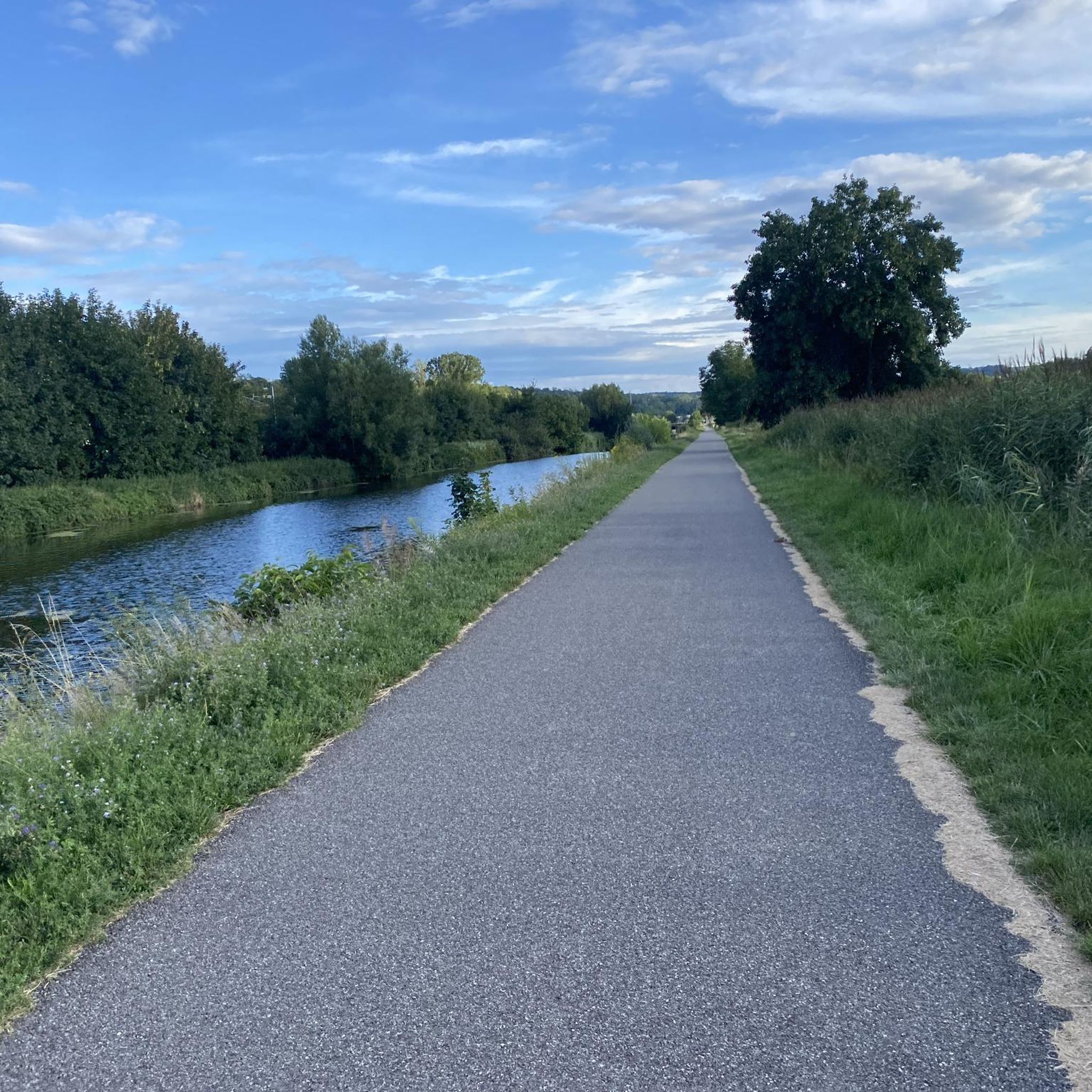
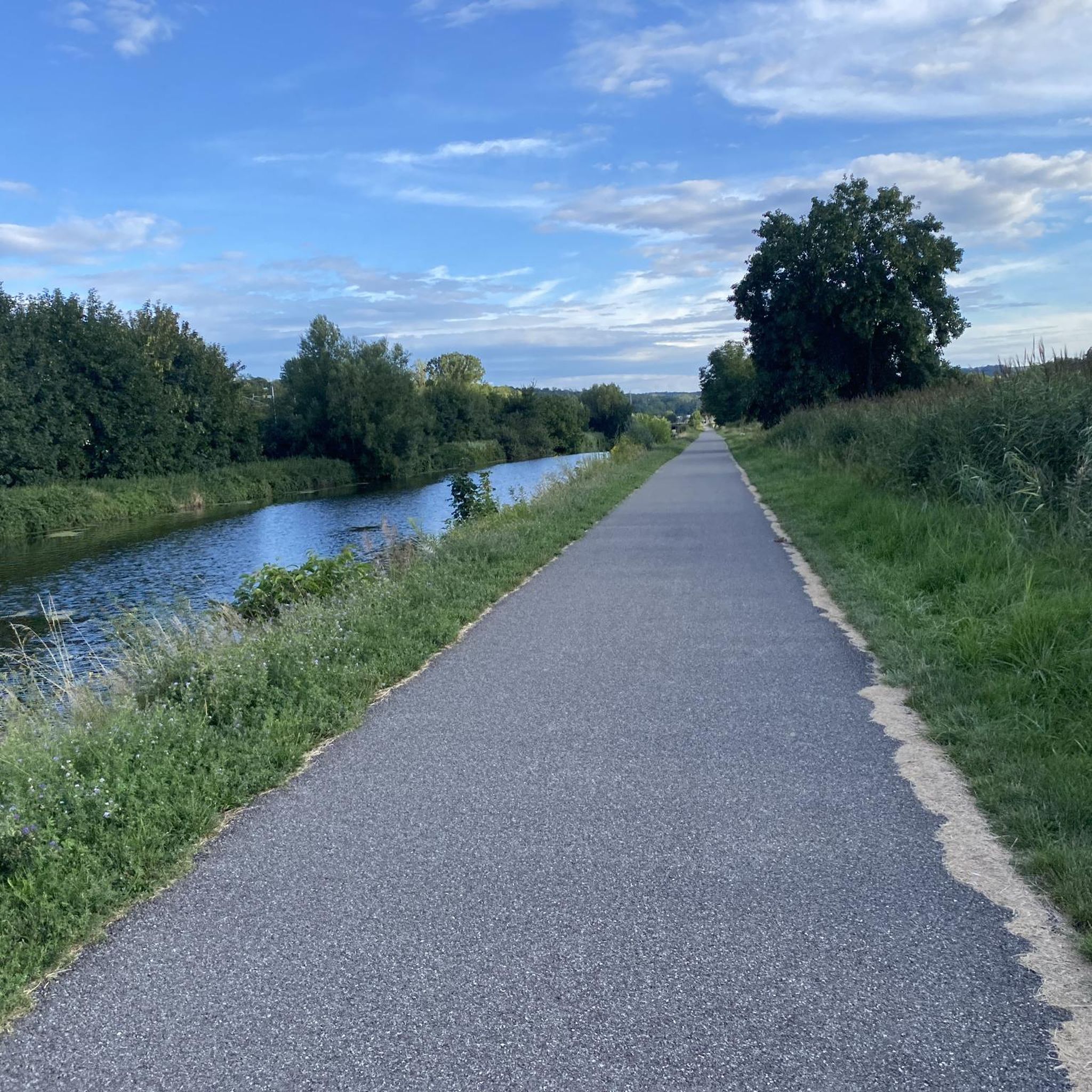
The terrain around Brunstatt-Didenheim is quite diverse. You'll find challenging ascents and unpaved segments in the nearby Vosges hills, ideal for more demanding rides. In contrast, the paths along the Rhone-Rhine Canal offer flatter, often paved routes, perfect for leisurely cycling. Many trails also wind through extensive forests and along riverbanks like the Ill and Doller.
What do other mountain bikers say about the trails in Brunstatt-Didenheim?
The mountain bike trails in Brunstatt-Didenheim are highly rated by the komoot community, with an average score of 4.5 stars from over 470 reviews. More than 2000 mountain bikers have used komoot to explore the varied terrain, often praising the scenic beauty and diverse options available.
Are there mountain bike trails suitable for beginners in Brunstatt-Didenheim?
Yes, there are plenty of options for beginners. The region offers 115 easy mountain bike routes. The flatter paths along the Rhone-Rhine Canal are particularly well-suited for less experienced riders or those looking for a relaxed ride, often featuring paved surfaces and gentle gradients.
Are there challenging mountain bike routes for experienced riders?
Absolutely. For experienced riders seeking a challenge, there are 9 difficult mountain bike routes available. These trails often venture into the Vosges hills, featuring significant elevation gains and technical unpaved segments that require good fitness and riding skills. Additionally, there are 241 moderate routes that offer a good workout without being overly technical.
Are there family-friendly mountain bike trails in Brunstatt-Didenheim?
Yes, the region offers several family-friendly mountain bike options. The flat, well-maintained paths along the Rhone-Rhine Canal are ideal for families, providing a safe and scenic environment for all ages. Many of the 115 easy routes are suitable for family outings.
Can I bring my dog on the mountain bike trails around Brunstatt-Didenheim?
Many of the forest paths and less technical trails around Brunstatt-Didenheim are suitable for riding with dogs, provided they are well-behaved and kept under control. Always check local regulations for specific areas, especially nature reserves, and ensure your dog is fit enough for the chosen route. The scenic paths along the Ill and Doller rivers are often popular for walks with dogs.
What landmarks or points of interest can I see along the mountain bike trails?
While mountain biking, you can encounter several interesting landmarks. The Eglingen Lock and Zillisheim Drawbridge and Lock No. 35 along the Rhone-Rhine Canal are picturesque spots. Some routes, like the Petit Séminaire de Zillisheim – Litten Chapel loop from Flaxlanden, lead through forested areas and past historical sites. The region also features the Rhône–Rhine Canal itself, which is a major scenic feature.
Are there any circular mountain bike routes in Brunstatt-Didenheim?
Yes, many of the mountain bike trails around Brunstatt-Didenheim are designed as loops, allowing you to start and end at the same point. Examples include the challenging Grand Cannon of Zillisheim – The chapel path loop from Flaxlanden, the scenic Nice trailhead – View of the Alps loop from Flaxlanden, and the Big fallen tree on the path – Nice trailhead loop from Brunstatt-Didenheim.
When is the best time of year for mountain biking in Brunstatt-Didenheim?
The best time for mountain biking in Brunstatt-Didenheim is generally from spring through autumn (April to October). During these months, the weather is typically mild and pleasant, and the trails are in good condition. While winter riding is possible, some trails might be muddy or icy, especially in higher elevations, so checking local conditions is advisable.
Are there mountain bike trails with views of the Alps near Brunstatt-Didenheim?
Yes, some routes offer panoramic views that can include the distant Alps on clear days. The Nice trailhead – View of the Alps loop from Flaxlanden is specifically known for offering such vistas, making for a rewarding ride.
Is there parking available near the mountain bike trails?
Brunstatt-Didenheim's proximity to Mulhouse and its green environment means there are often various parking options available near trailheads, especially in and around the town and at popular starting points for forest routes. Specific parking details can often be found on individual route pages on komoot.
Most popular routes around Brunstatt-Didenheim
Most popular attractions around Brunstatt-Didenheim

Get inspired with the komoot mobile app


Explore more
Browse the best MTB trails in other regions.
