Attractions and Places To See around Arganil - Top 20
Best attractions and places to see around Arganil include a diverse landscape of historical villages, river beaches, and natural monuments. Arganil, Portugal, is situated in a region characterized by its mountainous terrain, river valleys, and traditional settlements. The area offers opportunities to explore cultural heritage alongside its natural beauty, revealing many hidden gems Arganil nature has to offer.
Best attractions and places to see around Arganil
- The most popular attractions is Historical Village of Piódão, a settlement that belongs to the network of Historic Villages of Portugal. This particularly well-preserved village is known for its unique slate architecture and tranquil setting in the Serra do Açor.
- Another must-see spot is Fraga da Pena Waterfall, a natural monument located in the Serra do Açor Protected Landscape. Visitors can expect to see a series of successive waterfalls, culminating in a 19-meter cascade.
- Visitors also love Colorful Boardwalks of the Trilho dos Gaios, a trail that leads along the winding banks of the Cavalos River. This route offers a unique walking experience, passing through lush vegetation and granite blocks.
- Arganil is known for its historical sites, natural monuments, and scenic trails. The region offers a variety of attractions to see and explore, from ancient bridges to river beaches and waterfalls.
- The attractions around Arganil are appreciated by the komoot community, with 40 upvotes and 81 photos shared by visitors.
Last updated: October 17, 2026
Historical Village of Piódão
Highlight • Settlement
The town (village) of Piódão, the urban center and the parish headquarters, has been classified as a Property of Public Interest since 1978.[3]
Pedestrian trails of extraordinary beauty.👍🥾🦯
Translated by Google •
Tip by

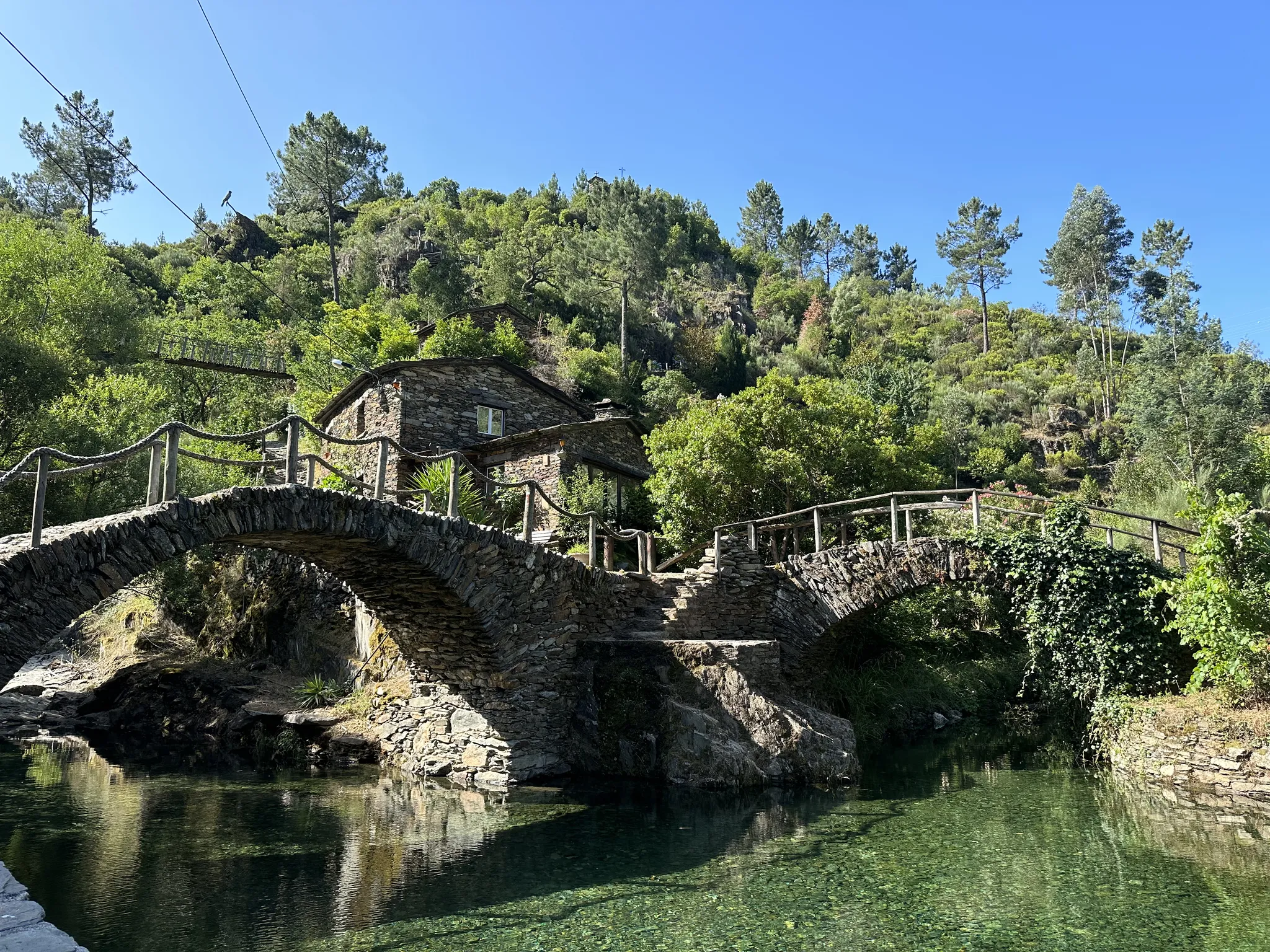
Foz d'Égua
Highlight • Beach
The landscape is serene, but getting there is a bit of an adventure: a rough trail winds down to the water, crossing terraces and shale steps that make the arrival part of the experience.
Translated by Google •
Tip by

Sign up now to discover places like this
Get recommendations on the best single tracks, peaks, & plenty of other exciting outdoor places.
Roman Bridge of Sumes
Highlight • Bridge
In the surrounding area, traces of medieval paving can still be seen. Regardless of the bridge's uncertain age, it is classified as a Property of Public Interest, having witnessed centuries of history.
Translated by Google •
Tip by
Fraga da Pena Waterfall
Highlight • Waterfall
Translated by Google •
Tip by
Royal Bridge over the Ceira River
Highlight • Bridge
Location: Center of the village of Góis, facilitating pedestrian access.
Characteristics: Imposing structure with stone arches, typical of crossing constructions from the monarchical period.
Surroundings: The Ceira River, near this area, offers river beaches highly sought after during the summer, standing out for the quality of the water and tranquility.
History: It is part of the built heritage from the Manueline/medieval period of the region.
Showing Translation
Tip by
Sign up for free to discover even more attractions around Arganil.
Already have an account?
Start today with a free account
Your next adventure awaits.
Other adventures around Arganil

Tips from the Community

The Ceira River is a mountain river with crystal-clear waters that flows through the municipality of Góis.
0
0

The Ponte Real (or Ponte Velha) over the Ceira River is located in the village of Góis, being one of the historical ex-libris of the region. This medieval-style bridge, later reformed, is an important tourist attraction, crossing the Ceira River, a left-bank tributary of the Mondego River, which originates in the Serra do Açor. Location: Center of the village of Góis, facilitating pedestrian access. Characteristics: Imposing structure with stone arches, typical of crossing constructions from the monarchical period. Surroundings: The Ceira River, near this area, offers river beaches highly sought after during the summer, standing out for the quality of the water and tranquility. History: It is part of the built heritage from the Manueline/medieval period of the region.
1
0

Bridge built over the Cavalos River, with a deck approximately 50 m long and 3 m wide. It probably forms part of the same road link as the Roman road of Pedra da Sé, serving as a connection between the Roman civitas of Bobadela and that of Viseu. It has only one arch with a perfect semicircular span, and the pavement that forms part of the deck is the result of intervention after the time of construction. It has been classified as a Property of Public Interest (IIP) since 1990, by Decree No. 163 of July 17, 1990.
1
0
Both Piódão and Foz d'Égua are accessible by car. But it's worth hiking the trail that connects them. It takes about 45 minutes, downhill from Piódão to Foz d'Égua (remember that the return is a slight climb). It's worth crossing the restored suspension bridge in Foz d'Égua before returning to Piódão. The Foz d'Égua pool is a popular spot for a dip in its very cold waters. Dipping your feet in the icy water of the stream is always very pleasant after a hike, immersing yourself in nature. I did it and recommend it. 👍🥾
1
0
The Fraga da Pena Waterfall, located in the Serra do Açor Protected Landscape, is a geological feature crossed by the Barroca de Degraínhos, creating a series of successive waterfalls. The waterfall is 19 meters high. Along its banks are some ancient specimens of the Portuguese oak (Quercus robur) and the chestnut tree (Castanea sativa), as well as the strawberry tree (Arbutus unedo), the thorny Daphne gnidium, and the adernos (Phillyrea latifolia and P. angustifolia).
2
0
Piódão belongs to the network of Historic Villages of Portugal. The town (village) of Piódão, the urban center and the parish headquarters, has been classified as a Property of Public Interest since 1978.[3] Pedestrian trails of extraordinary beauty.👍🥾🦯
4
0

This area has been hit by a serious forest fire in recent weeks.
2
2

Piódão is a particularly well-preserved, historic village worth a visit. If you're looking for peace and quiet and enjoy hiking, you've come to the right place. Although the historic village of Piódão doesn't hold any particular significance in Portugal's history, it has recently become an increasingly popular tourist attraction, perhaps due to its beautiful location in the Serra do Açor.
5
2
Frequently Asked Questions
What kind of natural attractions can I explore around Arganil?
The Arganil region is rich in natural beauty. You can visit the impressive Fraga da Pena Waterfall, a 19-meter cascade within the Serra do Açor Protected Landscape. Another highlight is Foz d'Égua, a picturesque river beach nestled in the mountains, known for its natural pool and rustic bridges. The area also features lush river valleys and mountainous terrain.
Are there any historical sites or cultural villages to visit near Arganil?
Absolutely. A must-see is the Historical Village of Piódão, a particularly well-preserved settlement known for its unique slate architecture and tranquil setting. You can also explore the ancient Roman Bridge of Sumes, which stands over the Cavalos River and is classified as a Property of Public Interest.
What are the best options for hiking and walking around Arganil?
Arganil offers diverse walking experiences. The Colorful Boardwalks of the Trilho dos Gaios provide a unique walk along the Cavalos River. For more extensive hiking, consider routes like the 'Foz d'Égua – Historical Village of Piódão loop' (9.18 km, moderate) or the 'Fraga da Pena Waterfall – Pardieiros Village loop' (2.47 km, easy). You can find more hiking options in the Hiking around Arganil guide.
Are there family-friendly attractions or activities in the Arganil region?
Yes, several attractions are suitable for families. The Historical Village of Piódão is a charming place to explore with its unique architecture. The river beach at Foz d'Égua offers a natural pool for swimming and relaxing. Additionally, the Colorful Boardwalks of the Trilho dos Gaios offer an engaging and scenic walk for all ages.
Where can I find wild swimming spots near Arganil?
The most notable wild swimming spot is the river beach of Foz d'Égua. Located where the Piódão and Chãs d’Égua streams meet, it forms a natural pool perfect for a refreshing dip, especially during warmer months.
What are some hidden gems or less-known natural spots around Arganil?
Beyond the main attractions, the region is full of hidden natural beauty. The area around the Roman Bridge of Sumes features a serene natural setting with enormous granite rocks and dirt paths, offering a tranquil escape. The winding banks of the Cavalos River, especially along the Trilho dos Gaios, reveal lush vegetation and moss-covered rocks, creating a fairy-tale-like atmosphere.
What outdoor activities, besides hiking, are available in the Arganil area?
The region around Arganil is excellent for various outdoor sports. You can find numerous routes for mountain biking, with options like the 'View of Benfeita – Olive Oil Mill and Watermill loop' (51.12 km, difficult). Road cycling is also popular, with routes such as the 'Ring route from Côja towards the Serra do Açor' (81.66 km, difficult). Explore more options in the MTB Trails around Arganil and Road Cycling Routes around Arganil guides.
What is the best time of year to visit Arganil for outdoor activities?
The Arganil region, like much of central Portugal, generally experiences warm, dry summers and mild, wet winters. Spring (April-June) and Autumn (September-October) are often ideal for outdoor activities like hiking and cycling, offering pleasant temperatures and vibrant landscapes. Summer (July-August) is perfect for enjoying river beaches and swimming spots, though it can be quite hot for strenuous hikes.
Are there any viewpoints offering panoramic views of the Arganil region?
Yes, several spots offer great views. The Historical Village of Piódão itself is situated in a beautiful valley, offering scenic vistas of the Serra do Açor. The area around Foz d'Égua also provides picturesque views of the river and surrounding mountains. Additionally, trails like the Colorful Boardwalks of the Trilho dos Gaios offer various vantage points along the river.
What do visitors appreciate most about the attractions around Arganil?
Visitors frequently praise the unique charm of the Historical Village of Piódão, highlighting its well-preserved architecture and peaceful atmosphere. The natural beauty of the Fraga da Pena Waterfall and the enchanting river beach at Foz d'Égua are also highly rated for their scenic appeal and tranquility. The region's blend of cultural heritage and stunning natural landscapes is a consistent draw.
Are there any easy hiking trails suitable for beginners or short walks near Arganil?
For an easy and relatively short walk, consider the 'Fraga da Pena Waterfall – Pardieiros Village loop' which is 2.47 km long and rated as easy. The Colorful Boardwalks of the Trilho dos Gaios also offer a pleasant and accessible walking experience along the river, suitable for a relaxed stroll.
Most popular attractions around Arganil

Get inspired with the komoot mobile app


Explore more
Still not found the Highlight you’re looking for? See guides of the top attractions in other regions:
