Attractions and Places To See around Dreenan - Top 18
Attractions and places to see around Dreenan are primarily concentrated in the Lower Lough Erne area of County Fermanagh, Northern Ireland. This region is characterized by its historical significance, featuring ancient monuments and castle ruins. Visitors can explore a landscape rich in cultural heritage, situated near the expansive waters of Lough Erne. The area offers a blend of historical sites and natural viewpoints.
Best attractions and places to see around Dreenan
- The most popular attractions is Janus Stones of Caldragh…
Last updated: August 17, 2026
Castle Caldwell Ruins
Highlight • Castle
Tip by

Tully Castle Ruins
Highlight • Castle
Tip by

Sign up now to discover places like this
Get recommendations on the best single tracks, peaks, & plenty of other exciting outdoor places.
Sign up for free
Janus Stones of Caldragh Cemetery
Highlight • Monument
Translated by Google •
Tip by

Castle Archdale Courtyard Buildings
Highlight • Monument
Tip by

View of Lough Erne from Cliffs of Magho
Highlight • Lake
Tip by
Sign up for free to discover even more attractions around Dreenan.
Sign up for free
Already have an account?
Start today with a free account
Your next adventure awaits.
Login or Signup

Tips from the Community

During WW2 Castle Archdale was a major base for flying boats and housed up to 2,500 people. Buildings such as these would have been a central location for the RAF fighters who lived here. Sometimes exhibitions are held in these courtyards to display some of the key historical notes of the use of this area during the war.
2
0
The viewpoint at the Cliffs of Magho is sensational. Enjoy panoramic views over Lough Erne and towards the Atlantic Ocean and Blue Stack mountains. Picnic benches, bins, and an information board are provided at the top.
5
0

Built in the 17th century, Castle Caldwell was part of the Ulster Plantation, a province of Ireland colonised by British settles throughout King James I era. The castle had a number of inhabitants after that and fell into ruin towards the 1800s. Although access to the castle is now forbidden due to its dangerous state of repair, the surrounding park and forest can be explored freely. Keep your eyes peeled for the ruined chapel and overgrown graveyard.
1
0
This fortified house is on Tully Point and built for Sir John Hume who occupied the house until 1641 when it was attacked by John Maguire and burned on Christmas Eve with all its inhabitants massacred. After that it was not lived in again. There is a visitors centre in a restored farmhouse that has an interesting exhibition telling a number of stories relating to the castle. To visit the castle be sure to step off the bike as it is on foot only!
1
0

Built in the 17th century by Francis Blennerhasett of Norfolk, Castle Caldwell was once part of Ulster Plantation, a province of Ireland colonised by British settlers during the reign of King James I. The castle had various inhabitants over the centuries until it fell into ruin towards the end of the 1800s. Today, Castle Caldwell lies within Castle Caldwell Forest Park, a nature reserve on the banks of Lower Lough Erne. Although access to the castle is forbidden due to its ruinous state, you can visit the surrounding park for free. Look out for the ruined chapel and overgrown graveyard too.
0
0

This fortified house and bawn are set on Tully Point and were built for Sir John Hume who occupied the house until 1641 when it was attacked and burned on Christmas Eve by Rory Maguire and the inhabitants massacred. It was not lived in again. A visitor’s centre, located in a restored farmhouse, houses an exhibition telling local stories relating to the castle. (https://discovernorthernireland.com/things-to-do/tully-castle-p675521)
3
0

Breathtaking views of Lough Earne.
3
1

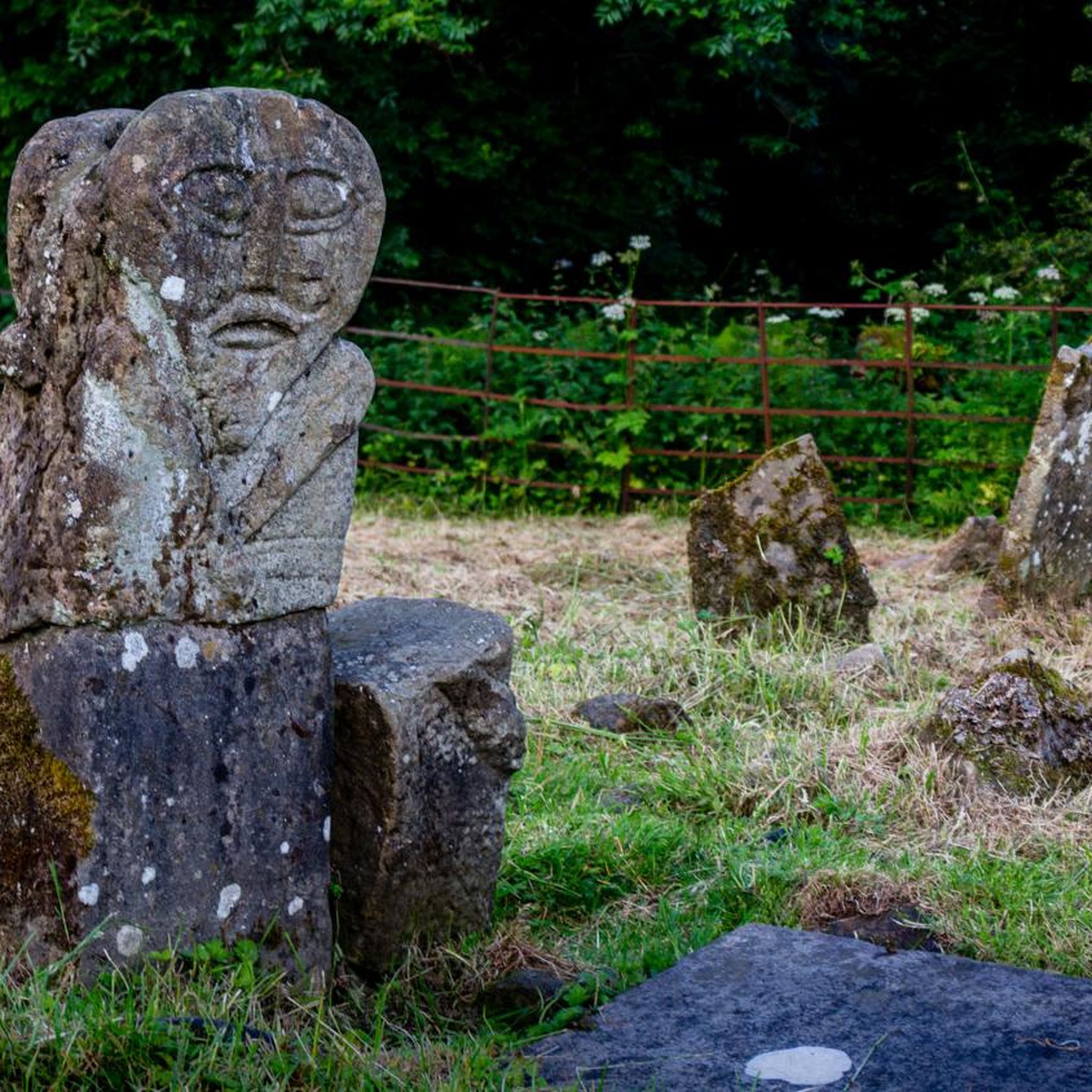
The two pre-Christian, probably Iron Age stone figures, some 70cm high, stand amongst modern graves in the small, isolated Caldragh graveyard. Both were originally Janus-faced (face on front and back). The simpler figure is more heavily damaged. It is likely to be a Celtic cernunnos-like god of vegetation and fertility.
1
0
Frequently Asked Questions
What historical sites can I explore around Dreenan?
The Dreenan area, particularly in County Fermanagh, is rich in historical sites. You can visit the ancient Janus Stones of Caldragh Cemetery on Boa Island, which feature pre-Christian stone figures. Other notable historical locations include the ruins of Castle Caldwell, a 17th-century Ulster Plantation castle, and Tully Castle Ruins, a fortified house with a visitor's centre detailing its history.
Are there any ancient monuments or archaeological sites near Dreenan?
Yes, the most prominent ancient monument is the Janus Stones of Caldragh Cemetery on Boa Island. These unique stone carvings, likely dating from the Early Medieval/Early Christian period, are believed to represent mythological figures and are a significant cultural landmark.
What natural attractions are there to see in the Dreenan area?
The Dreenan area is situated near the expansive waters of Lower Lough Erne, offering beautiful lake views. While not directly in Dreenan, the wider Northern Ireland region boasts natural wonders like the UNESCO World Heritage Site of the Giant's Causeway with its basalt columns, and the scenic Glens of Antrim. Closer to Dreenan, you can enjoy the natural surroundings of Castle Caldwell Forest Park.
Are there family-friendly attractions around Dreenan?
Yes, several attractions in the Dreenan area are suitable for families. Tully Castle Ruins has a visitor's centre that tells local stories, making history engaging. The Castle Archdale Courtyard Buildings often host exhibitions, and the Rossmore Point Beacon offers serene views over Lough Erne with a bench, perfect for a relaxing family stop.
Where can I go hiking or walking near Dreenan?
There are numerous hiking and walking opportunities around Dreenan. You can find easy hikes like the Rossergole Point Walk or the Cliffs of Magho loop. For more challenging routes, consider the Cliffs of Magho via Old Man's Head. Explore more options on the Hiking around Dreenan guide or the Easy hikes around Dreenan guide.
Are there options for mountain biking around Dreenan?
Yes, the Dreenan area offers several mountain biking trails. You can find routes like the Scarplands Cycle Trail (moderate) or the Caldwell Castle to Derrin Mountain loop (easy). For more extensive options, check out the MTB Trails around Dreenan guide.
What are some good viewpoints to visit near Dreenan?
For serene views over Lough Erne, visit the Rossmore Point Beacon, where you can sit and enjoy the scenery. The Cliffs of Magho also offer spectacular vistas of the surrounding landscape and the lough.
Can I visit any castles or ruins in the Dreenan region?
Absolutely. The Dreenan area is home to several castle ruins. You can explore the grounds and forest surrounding the 17th-century Castle Caldwell Ruins, though access to the castle itself is restricted. Another significant site is Tully Castle Ruins, a fortified house with an informative visitor's centre.
What is the best time of year to visit Dreenan?
While specific data for Dreenan isn't available, Northern Ireland generally experiences milder weather from late spring to early autumn (May to September), making it ideal for exploring outdoor attractions and historical sites. Summers are typically pleasant, though rain is possible year-round.
Are there any lesser-known or 'hidden gem' attractions around Dreenan?
Beyond the main highlights, exploring the smaller, isolated graveyards like Caldragh on Boa Island to find unique historical markers such as the Janus Stones can feel like discovering a hidden gem. The quiet trails within Castle Caldwell Forest Park also offer peaceful exploration away from crowds.
What kind of historical significance does the Dreenan area hold?
The Dreenan area is deeply rooted in Northern Irish history, particularly concerning the Ulster Plantation era. Sites like Castle Caldwell and Tully Castle are direct remnants of this period. Additionally, ancient monuments like the Janus Stones connect the region to much older, pre-Christian traditions and mythology.
Are there any attractions related to World War II history near Dreenan?
Yes, the Castle Archdale Courtyard Buildings are historically significant for their role during World War II. Castle Archdale served as a major base for flying boats, housing up to 2,500 personnel. Exhibitions are sometimes held in these courtyards to highlight the area's wartime history.
Are there any easy walking trails suitable for all abilities near Dreenan?
Yes, several easy walking trails are available. The Rossergole Point Walk and the Cliffs of Magho loop are both considered easy and offer scenic routes. The Easy hikes around Dreenan guide provides more details on these and other accessible options.
Most popular routes around Dreenan
Most popular attractions around Dreenan

Get inspired with the komoot mobile app


Explore more
Still not found the Highlight you’re looking for? See guides of the top attractions in other regions:
