Attractions and Places To See around Great Bromley - Top 20
Best attractions and places to see around Great Bromley, a village in the Tendring district of Essex, include a mix of historical landmarks, cultural sites, and natural features. The area offers agricultural land interspersed with woodlands, alongside ancient churches and significant historical structures. Visitors can explore sites ranging from 14th-century churches to wildlife-rich natural areas.
Best attractions and places to see around Great Bromley
- The most popular attractions is Flatford Granary, a man-made monument that stored grain until the…
Last updated: August 16, 2026
Willy Lott's Cottage
Highlight • Settlement
Tip by

St Mary's Church, Dedham
Highlight • Religious Site
Tip by

Sign up now to discover places like this
Get recommendations on the best single tracks, peaks, & plenty of other exciting outdoor places.
Sign up for free
Flatford Granary
Highlight • Monument
Tip by

Mistley Towers
Highlight • Historical Site
Tip by

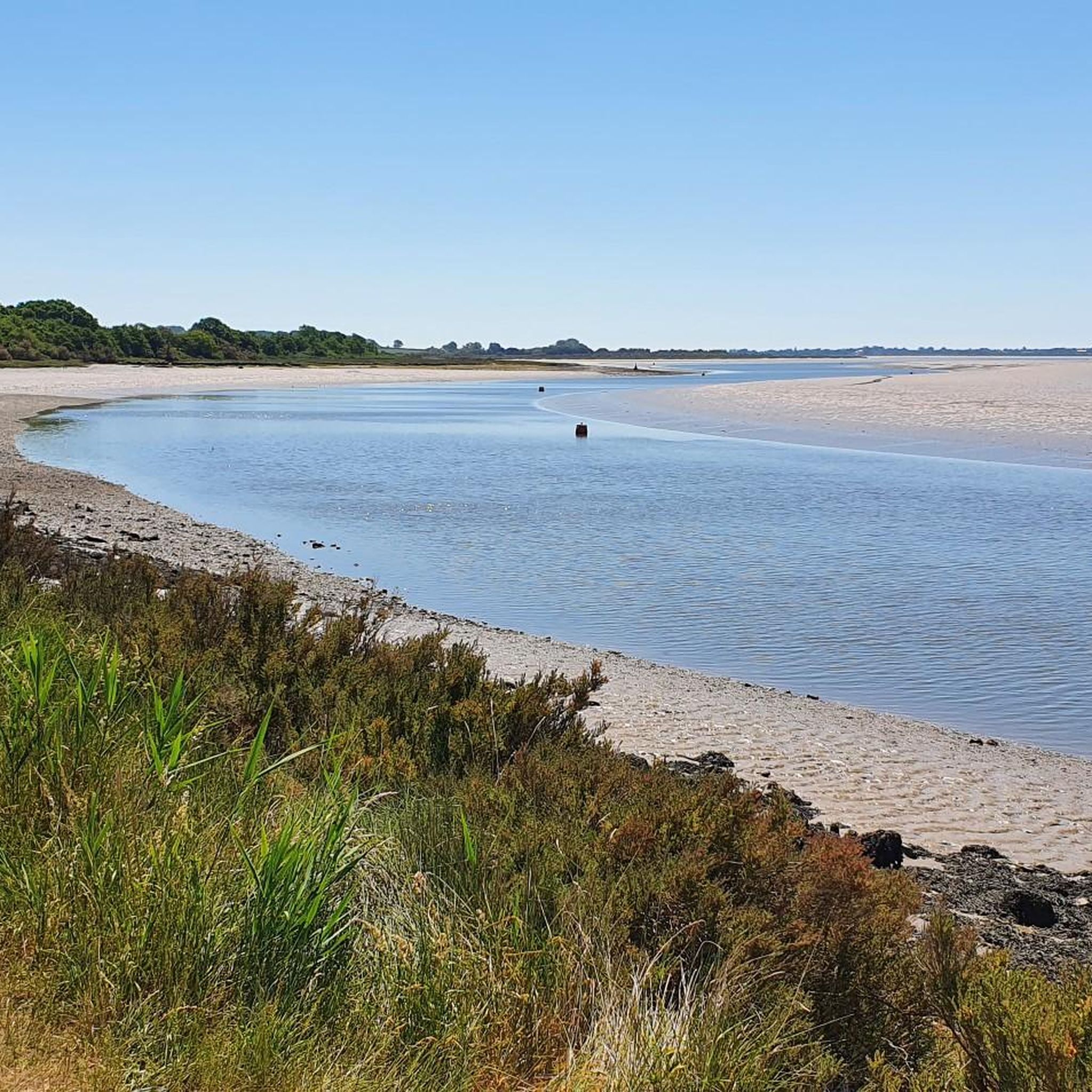
Manningtree Estuary
Highlight • Natural
Tip by

Sign up for free to discover even more attractions around Great Bromley.
Sign up for free
Already have an account?
Start today with a free account
Your next adventure awaits.
Login or Signup
Tips from the Community

The Flatford Granary stored grain until the 19th century when flour milling became profitable. Owned by Golding Constable, it passed to his son Abram and was eventually sold to William Bentall in 1846.
2
0

One of the quintessential rural English scenes. A dead end on road, although there is an off-road route that connects to Manningtree if you don't mind some gravel riding.
0
0

From the National Trust; 'The Granary was used to store grain until it could be processed at either the water or steam mills, a function it continued to provide until the early 19th-century. By the middle of the 18th-century it was more lucrative to mill grain into flour than to full cloth. Flatford Mill was converted into a flour mill and the Granary was used to store grain and flour. Until his death in 1816, Flatford Granary formed part of Golding Constable's (John Constable's father) milling estate. The Granary then passed to Golding's younger son Abram who sold it to William Bentall in 1846.'
3
0

Manningtree has traditionally claimed to be the smallest town in England, but its 2007 population of 700 people in 20 hectares[2] and the 2011 census population for the civil parish of 900 are much higher than the 351 population of Fordwich, Kent.[3] However the settlement of Manningtree has a population of 5696.[4] In April 2009 it was proposed that Manningtree should merge with Mistley and Lawford to form a single parish, losing its separate identity as a town.[5] As of 2018 such a merger has not occurred, and the town council currently claims to be the smallest by area. (https://en.wikipedia.org/wiki/Manningtree)
3
0
The square symmetrical towers are in the neoclassical style, resembling tall pavilions rather than towers, with each facade pedimented and the whole surmounted by a cupola decorated with blind windows interspersed by Ionic columns. At ground floor level two unfluted ionic columns at each corner support a decorative cornice. The columns are decorative only, and appear to serve no structural purpose. The design of the towers creates the impression that the building was once more of a miniature cathedral than a parish church. However, the main body of the church was small and occupied the (now empty) site between the two towers. It was a single storey structure with a simple hipped roof and entrance porticos at its centre. This was the part of Adam's church which was demolished in 1870. The remaining towers are Grade I listed and a scheduled monument. (https://en.wikipedia.org/wiki/Mistley_Towers)
5
0
One of the great churches of northern Essex, St Mary's dominates the High Street of Dedham. The church as we see it today is primarily a 15th-century rebuilding of an earlier medieval church which existed at least as early as 1322. That early church occupied the site of the current south aisle chapel, an indication of just how much smaller it was than the grand 15th-century building we see today! The door to the vestry is thought to have been the main entrance to the 14th-century church. Work on a new church was begun in 1492 and completed in 1522. The walls are rubble and flint, so common in East Anglia. The tower is knapped flint, dressed with limestone. The striking west tower, finished in 1519, is totally self-supporting and features an unusual vaulted passage. An unsubstantiated tradition is that Margaret Beaufort, mother of Henry VII, gave money for the tower to be built. Whoever paid for it, the tower is certainly striking; it stands 131 feet high and is visible for miles along the valley. (https://www.britainexpress.com/counties/essex/churches/dedham.htm)
3
0

This church, dedicated to St Mary the Virgin in 1492 when the present building was begun, is not the first church to have been built upon this site. There has been a church in Dedham since at least 1322, when services were held in a smaller church on the site of the present South Aisle Chapel. The archway to the present Vicar’s vestry is thought to have been the entrance to that church.
3
0

Mistley Towers are two porticoed classical towers which stood at each end of the now-demolished Church of St Mary the Virgin, a grandiose but highly unconventional place of worship. Work commenced on the church in 1776. The Towers are now in the care of English Heritage and are free to visit. For more information, visit: https://www.english-heritage.org.uk/visit/places/mistley-towers.
3
0
Frequently Asked Questions
What historical sites can I explore around Great Bromley?
Great Bromley and its surroundings are rich in history. You can visit the magnificent 14th and 15th-century Parish Church of St George the Martyr, known for its double hammerbeam roof. Other notable historical landmarks include Willy Lott's Cottage, famously depicted in John Constable's paintings, and the Flatford Granary, part of Golding Constable's milling estate. Further afield, explore St Mary's Church in Dedham, a grand 15th-century church, and the unique Mistley Towers, remnants of a neoclassical church.
Are there any natural attractions or woodlands to visit near Great Bromley?
Yes, the area boasts several natural features and woodlands. You can explore ancient woodlands such as Manning Grove, Mill Woods, and Boudge Hill Wood, which are also designated County Wildlife Sites. The Bromley Brook flows between Great Bromley and Elmstead, offering a village footpath alongside its length and attracting diverse wildlife. Long Cover is another large woodland area with ponds, ideal for walks.
What outdoor activities, like hiking or cycling, are available around Great Bromley?
The region offers various outdoor activities. For hiking, you can find routes like the 'Flatford and Constable Country Walk' or explore trails along the River Colne. There are also options for mountain biking, such as the 'Constable country loop from Manningtree – Dedham Vale'. You can find more detailed routes and guides for hiking and MTB trails around Great Bromley.
Are there family-friendly attractions in the Great Bromley area?
Many attractions around Great Bromley are suitable for families. Historic sites like Willy Lott's Cottage and Flatford Granary offer insights into local history. Natural areas like the Manningtree Estuary provide opportunities for wildlife spotting and gentle walks. The village pond at Bromley Cross is also a charming spot to observe ducks and other pond life.
What is the best time of year to visit Great Bromley for outdoor activities?
The spring and autumn months are generally ideal for outdoor activities around Great Bromley. Spring brings blooming nature and milder temperatures, while autumn offers beautiful foliage, especially in the woodlands. Summer is also pleasant, though it can be busier. Winter can be cold, but crisp days are still suitable for walks.
Are there any easy walking trails near Great Bromley?
Yes, there are several easy walking trails. The 'Flatford and Constable Country Walk' is an easy option, as are routes like 'Saint Peter's Church ruins – Path Along the River Colne loop from Alresford' and 'High Street Climb – Path Along the River Colne loop from Wivenhoe'. You can explore more easy hikes around Great Bromley.
What kind of wildlife can I expect to see in the natural areas around Great Bromley?
The natural areas, particularly around Bromley Brook and the village pond, are rich in wildlife. You might spot various birds, including buzzards, kingfishers, and egrets. Mammals such as deer, badgers, and foxes are also present in the woodlands and agricultural lands.
Are there any hidden gems or lesser-known spots worth visiting in Great Bromley?
Beyond the well-known attractions, consider exploring the remnants of the former AMES 24 Radar Station (RAF Bromley), an early Chain Home radar station from WWII, where some structures like guardhouses and concrete tower bases can still be seen. The ancient burial mounds discovered in and around the village also offer a glimpse into its deep past.
What is the significance of the Parish Church of St George the Martyr in Great Bromley?
The Parish Church of St George the Martyr is a significant 14th and 15th-century church, considered one of the finest in North Essex. It's notable for its double hammerbeam roof and large tower. It also features a stained-glass window commemorating the historical link to the Stone family, who emigrated to the United States in the 17th century, and sustained bomb damage during World War II.
Can I find cafes or places to eat near the attractions in Great Bromley?
While Great Bromley itself is a village, some nearby attractions offer amenities. For instance, near Willy Lott's Cottage in Flatford, there is a cafe and picnic area. The nearby town of Manningtree, situated on the estuary, also has plenty of places for food and drink.
What is the <a href="https://www.komoot.com/highlight/1654146" target="_blank" rel="noopener">Manningtree Estuary</a> known for?
The Manningtree Estuary is a wildlife-rich area located on the River Stour, renowned for its natural beauty. It's often considered the gateway to Constable Country and offers opportunities for birdwatching and enjoying scenic views. The town of Manningtree itself is known for its charm and claims to be England's smallest town by area.
Most popular routes around Great Bromley
Most popular attractions around Great Bromley

Get inspired with the komoot mobile app


Explore more
Still not found the Highlight you’re looking for? See guides of the top attractions in other regions:
