The best MTB trails around Herstappe
4.4
(124)
797
riders
94
rides
Mountain biking around Herstappe features a landscape characterized by gentle rolling hills, agricultural fields, and historical paths. The region's terrain includes former tramway lines and routes along the Jeker river, offering varied surfaces for mountain bikers. Elevation changes are generally moderate, with no significant peaks, making it accessible for different skill levels. The area provides a mix of open country views and sections that pass through small villages and past local landmarks.
Best mountain bike trails around Herstappe
- The most…
Last updated: August 16, 2026
3.8
(6)
28
riders
27.8km
01:41
230m
230m
Moderate mountain bike ride. Great for any fitness level. Advanced riding skills necessary.
4.5
(8)
10
riders
21.7km
01:12
130m
130m
Easy mountain bike ride. Great for any fitness level. Suitable for all skill levels.

Sign up for free
4.7
(3)
7
riders
37.8km
02:25
330m
330m
Moderate mountain bike ride. Good fitness required. Advanced riding skills necessary.
7
riders
28.6km
01:38
140m
140m
Easy mountain bike ride. Great for any fitness level. Suitable for all skill levels.
5.0
(1)
9
riders
36.1km
02:20
290m
290m
Moderate mountain bike ride. Good fitness required. Advanced riding skills necessary.
Get access to more routes and recommendations from other explorers.
Sign up for free
Already have an account?
Our route recommendations are based on thousands of hikes, rides, and runs completed by other people on komoot.
Start today with a free account
Your next adventure awaits.
Login or Signup
Tips from the Community

This transparent church, aptly named 'Reading Between the Lines', is a work of art by PIT, designed by the architectural duo Gijs Van Vaerenbergh. It symbolises the decay of the church. The ten-meter-high artwork consists of one hundred stacked layers of sheet steel in the shape of a church in Loon. Thanks to the unique construction, the beautiful Haspengouw landscape remains visible through the church. In 2012, this transparent church received the 'Building of the Year' award from the renowned website ArchDaily. It was the first time a Belgian project had received this honour. Enjoy the view; this is a place with one of the most breathtaking panoramas.
1
0
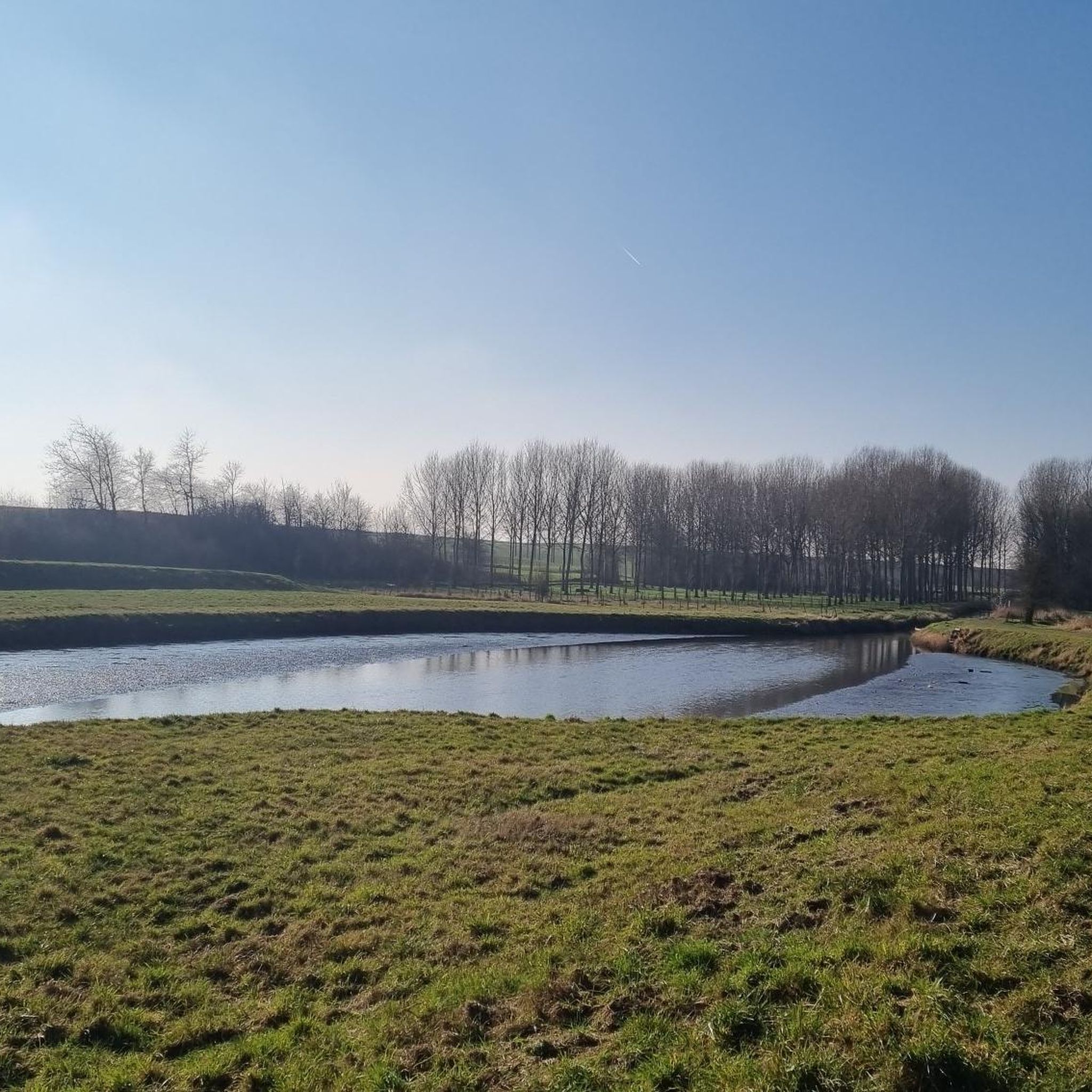
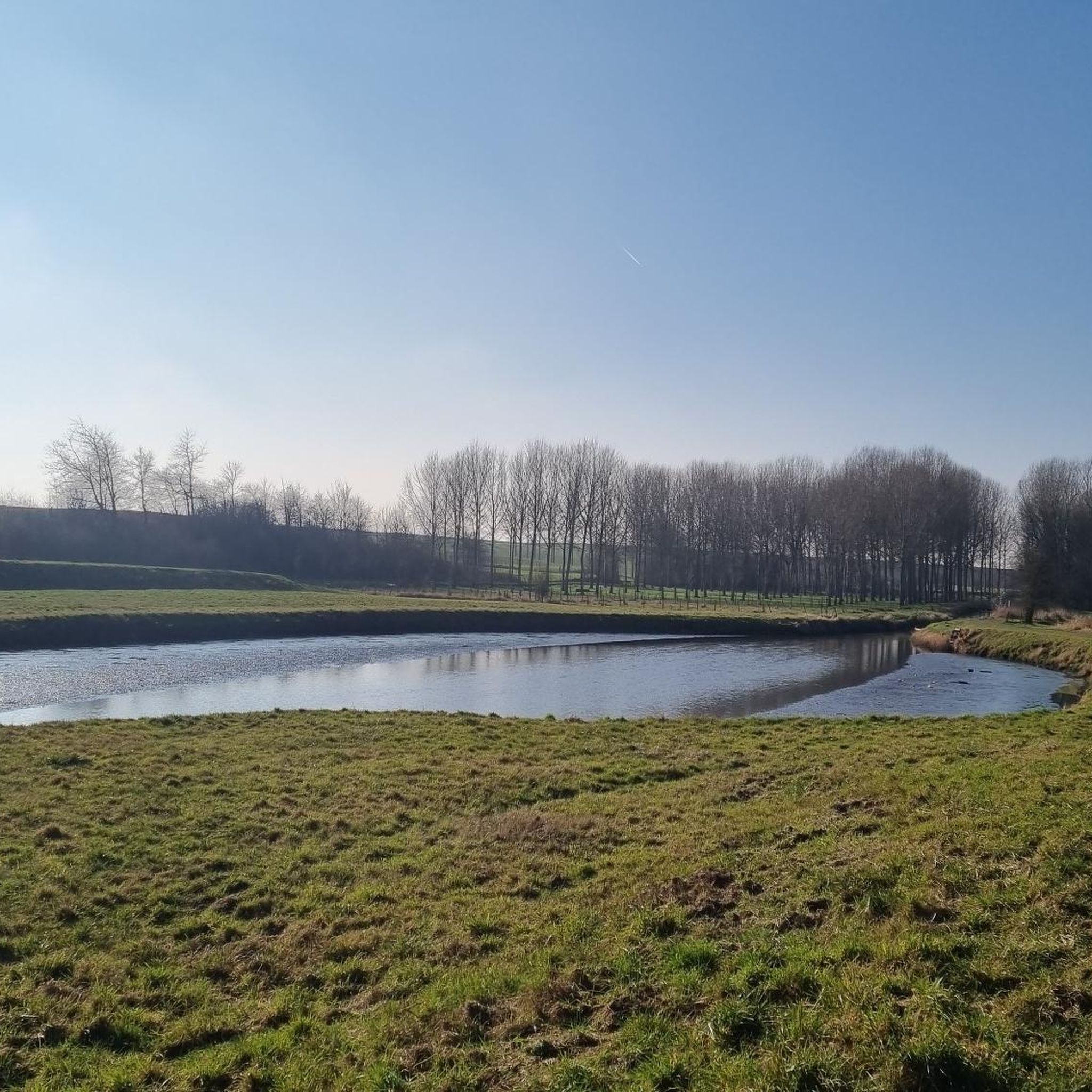
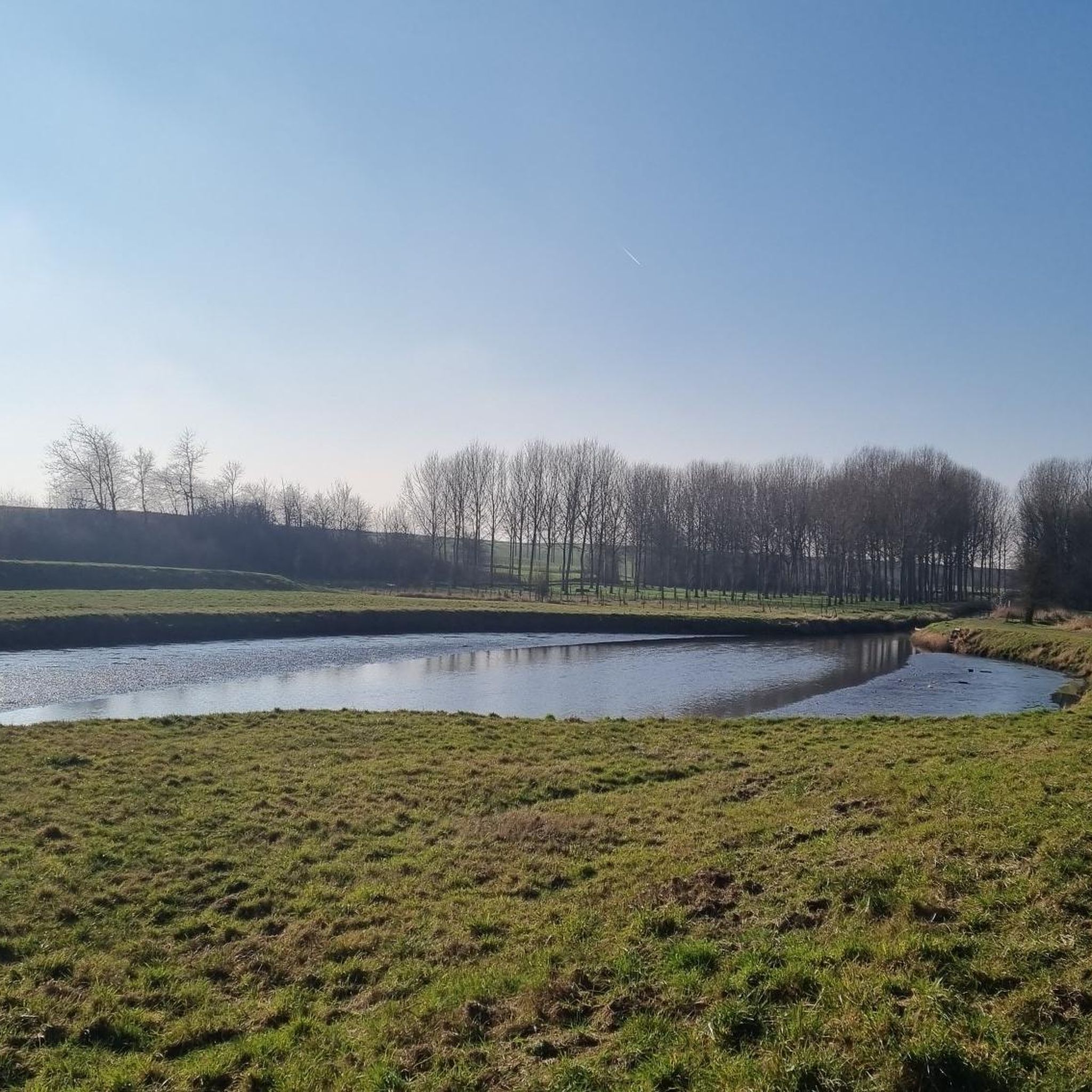
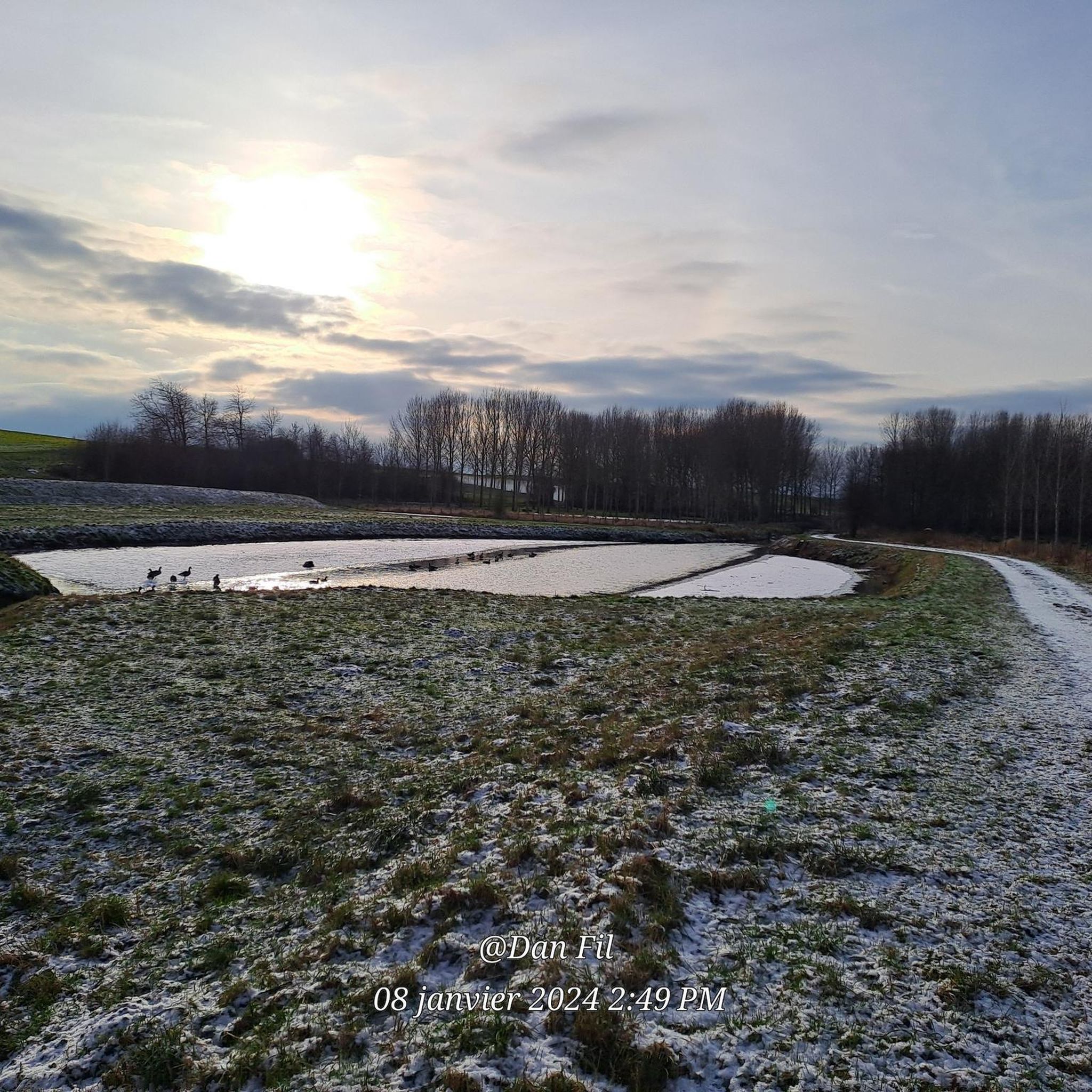
Natuurreservaat De Kevie is one of Haspengouw's most important nature reserves due to its valuable flora and fauna and its location in the Jeker Valley. More than 300 plant species can be found here, including orchids, water violets, and arrowhead. Animal species include breeding birds, various fish species, and amphibians.
0
0

The Castle of Rooi is situated just outside the hamlet of Mulken in the territory of Neerrepen. The castle is a castle farm and consists of a U-shaped main building surrounded by a pond and a square farmstead. The place name Rooi was first mentioned in 1287. In the 14th century, the castle was owned by Libert Butoir, hereditary guardian of Horion.
1
0

The nature reserve De Kevie, located in the southeast of Tongeren, is not only a beautiful place for walking but also ideal for cyclists who want to enjoy peace, nature, and a green environment. This vast valley belt around the Jeker river is popular with recreational cyclists and cycle tourists, and various cycle paths and routes run through and along the area, forming part of the local cycle network. A popular route follows parts of the old railway line towards Nerem and runs along the edges of De Kevie, where cyclists ride on quiet unpaved paths that are often shared with walkers. These paths are largely separate from busy traffic, ensuring a pleasant and safe cycling experience in the middle of the landscape. Along these paths, you cycle through a varied landscape of hay meadows, valley forests, and marsh zones, with the green banks of the Jeker and the surrounding nature forming a constant backdrop. The route connections are linked to locally signposted nodes, making it possible to plan both short circular rides and longer tours that integrate De Kevie into broader cycling routes through the Limburg landscape, including routes that pass picturesque villages and farmlands. In addition, there are plans and projects to further improve the cycling infrastructure between the city center of Tongeren and De Kevie. New cycle paths are intended, among other things, to provide a safe and comfortable connection between the city park, the allotment gardens, and De Kevie, and to connect to regional cycle routes such as the future cycle highway F791 towards Liège.
0
0
Rosmeulen Castle is a historic country house and estate of great architectural and heritage value, located at Neremstraat 229 in Nerem, a sub-municipality of Tongeren. Dating back to the early 20th century, the building represents a unique combination of Neo-Rococo and Art Nouveau architecture, designed for chocolate and gingerbread manufacturer Florent Rosmeulen. Construction of the manor house, originally named La Brise, began around 1911, opposite the Rosmeulen chocolate factory. However, the founder himself never fully occupied the building, partly due to financial difficulties and the impact of the First World War. The building is situated amidst a romantic castle garden in the English landscape style, featuring ponds, lawns, mature trees, walking paths, and a walled vegetable garden, all contributing to the estate's unique atmosphere. The imposing entrance hall features a majestic staircase and stained-glass windows, while the exterior facades are richly ornamented with features such as bay windows, colonnades, and a round tower under a domed roof. During the First and Second World Wars, the castle was used by German and later American troops, respectively, reflecting its strategic location and the building's role during that time. After the war, the manor changed owners several times. Families such as Duesberg-Bossen Blijweert and Riskin lived there, and the Riskin family, in particular, carried out maintenance and renovation work for many years. In mid-2020, the castle was purchased by Dirk and Bie D'haese, who began a thorough restoration to restore the dilapidated building to its former glory. Their goal is not only to preserve the heritage but also to open the castle and park for use by associations and for events, with spaces such as a large hall of over 300 m² available. The castle is included in the Inventory of Immovable Heritage of Flanders for its architectural value, rich ornamentation, and its location in a historic park with a pond. Rosmeulen Castle, together with the former Rosmeulen chocolate factory and the surrounding landscape, forms a recognizable and valuable ensemble in Nerem with ties to the local industrial culture of the early 20th century, the social history of the region, and today's heritage conservation.
0
0
Under the old railway bridge at the De Kevie nature reserve in Tongeren, a striking mural catches the eye of everyone entering the walking and recreation area. Designed and executed by British-Australian street artist James Cochran, better known by his stage name Jimmy C., the mural measures approximately 18 meters wide and 4 meters high. The artwork was installed as a tribute to Adeline Valkenborg, the founder of the Belgian Centre for Guide Dogs (BCG) in Tongeren. The centre celebrated its 30th anniversary in 2020, and when regular festivities were cancelled due to the coronavirus pandemic, the initiators decided to create a lasting and socially meaningful artwork to commemorate her work and vision. The location under the railway bridge was carefully chosen. On the one hand, the place is literally and figuratively a bridge in the landscape, a passage for walkers and dogs near a dog park. On the other hand, it has symbolic value: Adeline herself was seen as a bridge-builder who paved the way for visually impaired people by establishing an institute that trains and connects guide dogs. The mural features, among other things, a portrait of Adeline with a guide dog and also integrates elements that visualize the journey of a scent hound from puppy to fully-fledged guide dog. The work functions not only as an artistic eye-catcher but also as an inspiring and educational element, raising visitors' awareness of the importance of guide dogs and the mission of the BCG. There are plans to place an information board with a QR code near the mural, directing passersby to information about Adeline and the BCG and how people can get involved, for example, as a foster family for puppies or by supporting the organization. This mural thus perfectly combines street art, social engagement, and local identity. In a place where people experience nature, relaxation, and history, an important story about independence, guidance, and inclusion also has space to be seen and read.
1
0
A large mural has been installed at the entrance gate under an old railway bridge in the De Kevie nature reserve (Tongeren) to commemorate the thirtieth anniversary of the Belgian Guide Dog Centre. This mural is not just a random drawing but a meaningful work of art, commissioned by the centre and intended as a lasting tribute to Adeline Valkenborg, the founder of the Belgian Guide Dog Centre. The mural was designed by James Cochran, also known as Jimmy C, a British-Australian street artist internationally renowned for his large and detailed works. The mural covers an area of approximately 18 meters wide and 4 meters high, giving it a prominent position under the bridge near De Kevie. The choice of this location is symbolic, as the railway bridge is located near a dog park and is a frequent sight for both walkers and dog owners. Moreover, the bridge itself represents a metaphor for connection and guidance, which aligns with the mission of the Belgian Centre for Guide Dogs to support and connect people with visual impairments with their environment. The artwork thus combines nature, social function, and art experience. On the one hand, it is part of the experience value of De Kevie as a nature reserve, and on the other, it tells a story about the commitment to partnership and support of people with disabilities through their guide dogs. Adeline Valkenborg was a Belgian woman and the founder of the Belgian Centre for Guide Dogs (BCG vzw) in Tongeren. Born in 1959, she experienced a sudden, total loss of her sight at the age of 14, leaving her completely blind. Visually impaired herself and confronted with the daily challenges this entailed, Adeline noticed that there was no local supply of well-trained guide dogs in Belgium. In the 1980s, guide dogs were virtually impossible to find in Belgium, and people with visual impairments struggled to maintain the mobility that others take for granted. She decided to change this. Through acquaintances and contacts, she connected with the British organization Guide Dogs for the Blind Association and obtained her first guide dog, a Labrador named Snowy, to help her with her daily commute. This made a deep impression on her and gave her the idea to establish a Belgian guide dog training program. On March 15, 1990, Adeline officially founded the Belgian Guide Dog Center in Tongeren. The center partially followed the British training model, using English commands for the dogs, making it the first organization in Belgium to systematically train and pair guide dogs with people with visual impairments. Adeline saw the need for true independence and mobility in daily life, both for herself and for others with visual impairments. Guide dogs are not only tools for avoiding obstacles, but they also provide people with a sense of confidence, security, and social connection in a society that is typically highly visual. The center she founded offers these dogs free of charge to people with visual impairments, with careful training and long-term support. Her efforts meant that for the first time, visually impaired people in Belgium could, on a large scale and professionally, follow a program to become independent and actively participate in social life, together with a guide dog. Adeline Valkenborg remained involved with the center even when her health sometimes hampered her work, and she continued to advocate for the integration of visually impaired people into society. Her vision was always focused on growth and improvement of services so that as many people in need as possible could be helped. She passed away on June 16, 2016, at the age of 56, but the center still bears her name and continues to grow. To mark important milestones, such as the center's 30th anniversary, artworks (such as the mural at De Kevie) have been installed to permanently honor her work and memory.
1
0
At the starting point of the old Kevie tram line near the De Kevie nature reserve near Tongeren, Belgium, stands a striking wooden owl sculpture. This sculpture is an artistic element that is part of the walking experience and serves as a landmark for visitors exploring the historic route of the old tram line. The Kevie itself refers to the former tram line that ran through this region and is now part of walking and cycling networks that lead through nature and the surrounding countryside. The wooden owl has been described by hikers as a beautiful example of creative work in the landscape. It appeals to those who love art and nature and serves as a symbolic welcome to the old tram line. Although no extensive documentation about the artist or the exact date of creation is available in online sources, it is often mentioned by recreationists as a pleasant and memorable stop or landmark at the beginning of the route. The choice of an owl can be interpreted symbolically: in many cultures, the owl symbolizes wisdom, observation, and a connection with nature, which is well-suited to a walking route that runs through green spaces and along a historic transport route. The wooden material emphasizes the artwork's natural context and connects with the sense of tranquility and landscape that people seek when walking in De Kevie. The old tram line itself adds a historical dimension, as tram lines in many Flemish and Dutch regions were once important connections between villages and towns, and preserving the route as a walking and cycling route keeps that past alive in the present. Artwork, information panels, and rest stops will be placed along these paths to allow visitors to enjoy not only nature but also cultural and historical elements.
1
0
Frequently Asked Questions
How many mountain bike trails are available around Herstappe?
There are nearly 100 mountain bike trails around Herstappe listed on komoot, offering a wide range of options for different skill levels and preferences.
Are there mountain bike trails suitable for beginners in Herstappe?
Yes, Herstappe offers a good selection of trails for beginners. Approximately 32 routes are rated as easy. An excellent option is the Saint George's Church – Sint-Evermarus Chapel loop from Xhendremael, which is 15.1 miles (24.3 km) long and features gentle gradients through rural landscapes.
What kind of terrain can I expect on mountain bike trails in Herstappe?
The terrain around Herstappe is characterized by gentle rolling hills, agricultural fields, and historical paths. You'll find varied surfaces, including former tramway lines and routes along the Jeker river. Elevation changes are generally moderate, making it accessible for various skill levels.
Are there any family-friendly mountain bike routes in the Herstappe area?
Many of the easy-rated trails are suitable for families. The region's gentle rolling hills and moderate elevation changes make it accessible. Consider routes like the Kevieboom Wooden Sculpture – Old Tramway Path loop from Lantin, which is 17.7 miles (28.5 km) and leads through pleasant landscapes.
Can I bring my dog on the mountain bike trails in Herstappe?
While specific regulations for dogs on trails can vary, many of the open agricultural paths and rural routes around Herstappe are generally dog-friendly. It's always recommended to keep your dog on a leash, especially near livestock or in populated areas, and to check local signage for any restrictions.
What are the best times of year for mountain biking in Herstappe?
Spring, summer, and early autumn generally offer the best conditions for mountain biking in Herstappe, with pleasant temperatures and drier trails. The rolling hills and open fields provide beautiful scenery during these seasons. While winter riding is possible, some paths might be muddy or slippery.
Are there any challenging mountain bike trails for advanced riders?
While Herstappe is known for its gentle terrain, there are a few routes that offer a bit more challenge. Approximately 5 trails are rated as difficult. The Roman Villa Landmark – Roman Road loop from Vechmaal, a 17.3 miles (27.8 km) moderate trail, offers historical paths and varied surfaces that can be a good test for experienced riders looking for a longer ride.
Are there any loop mountain bike trails around Herstappe?
Yes, the majority of mountain bike routes around Herstappe are designed as loops, allowing you to start and finish at the same point. Examples include the Chapel of Our Lady of Lourdes – Terhove Castle loop from Koninksem, which is an easy 19.9 km (12.4 miles) ride.
What interesting landmarks or attractions can I see along the mountain bike trails?
The trails often pass by historical sites and natural beauty. You might encounter attractions such as the Reading Between the Lines (See-Through Church), Grootloon High-Stem Orchards, or various castles like Heks Castle. Many routes also follow old tramway lines, offering a glimpse into the region's past.
What do other mountain bikers enjoy most about Herstappe?
The mountain bike trails around Herstappe are highly rated by the komoot community, with an average score of 4.2 stars from over 80 reviews. Riders often praise the peaceful rural landscapes, the well-maintained paths, and the opportunity to explore historical routes and charming villages.
Are there options for longer mountain bike tours in Herstappe?
Yes, Herstappe offers several longer routes. For instance, the Old Tramway Path – Route Along the Jeker loop from Crisnée is an easy 29.9 km (18.6 miles) trail that provides an extended ride through varied scenery, including former railway lines and riverside paths.
Most popular attractions around Herstappe

Get inspired with the komoot mobile app


Explore more
Browse the best MTB trails in other regions.
