Attractions and Places To See around Rometta - Top 20
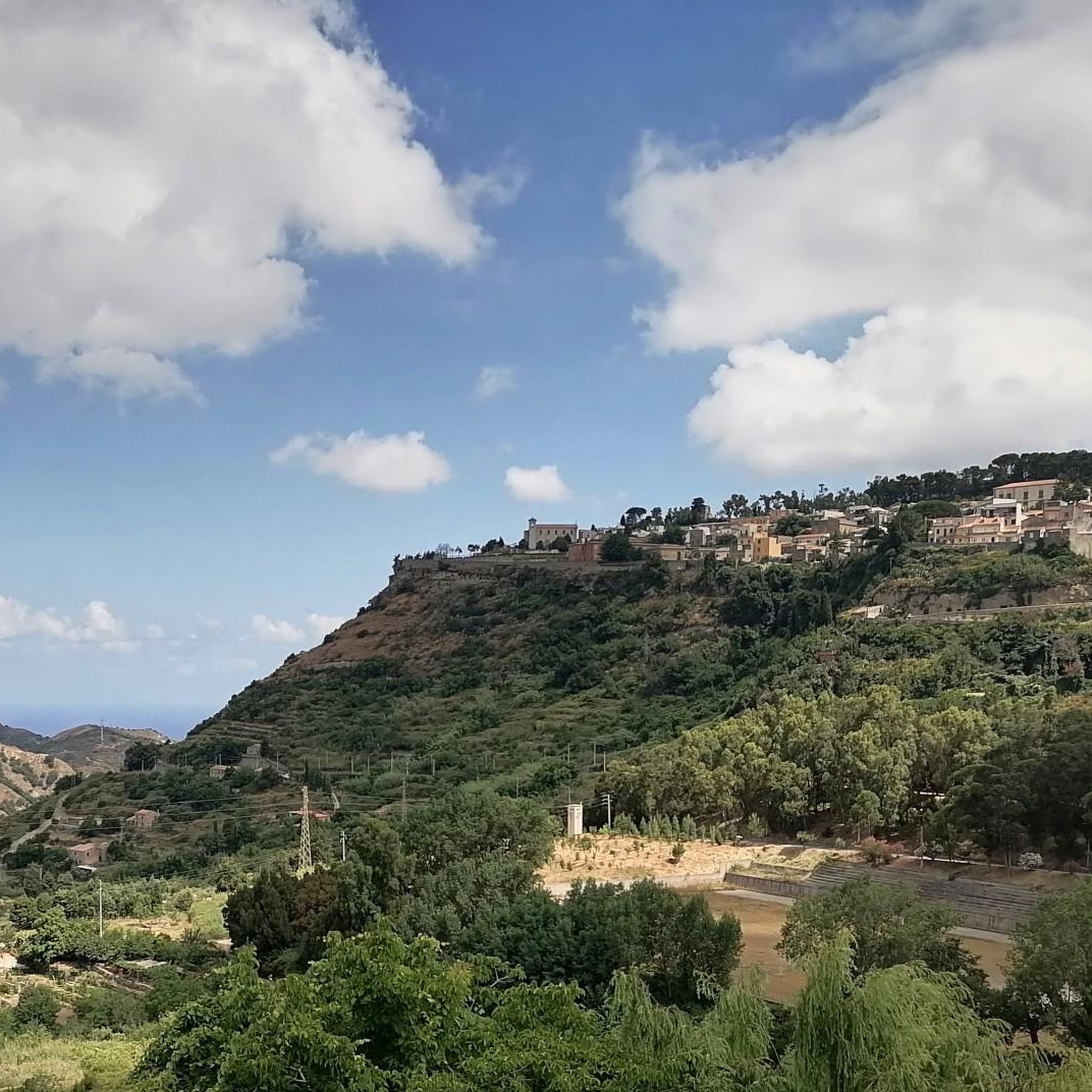
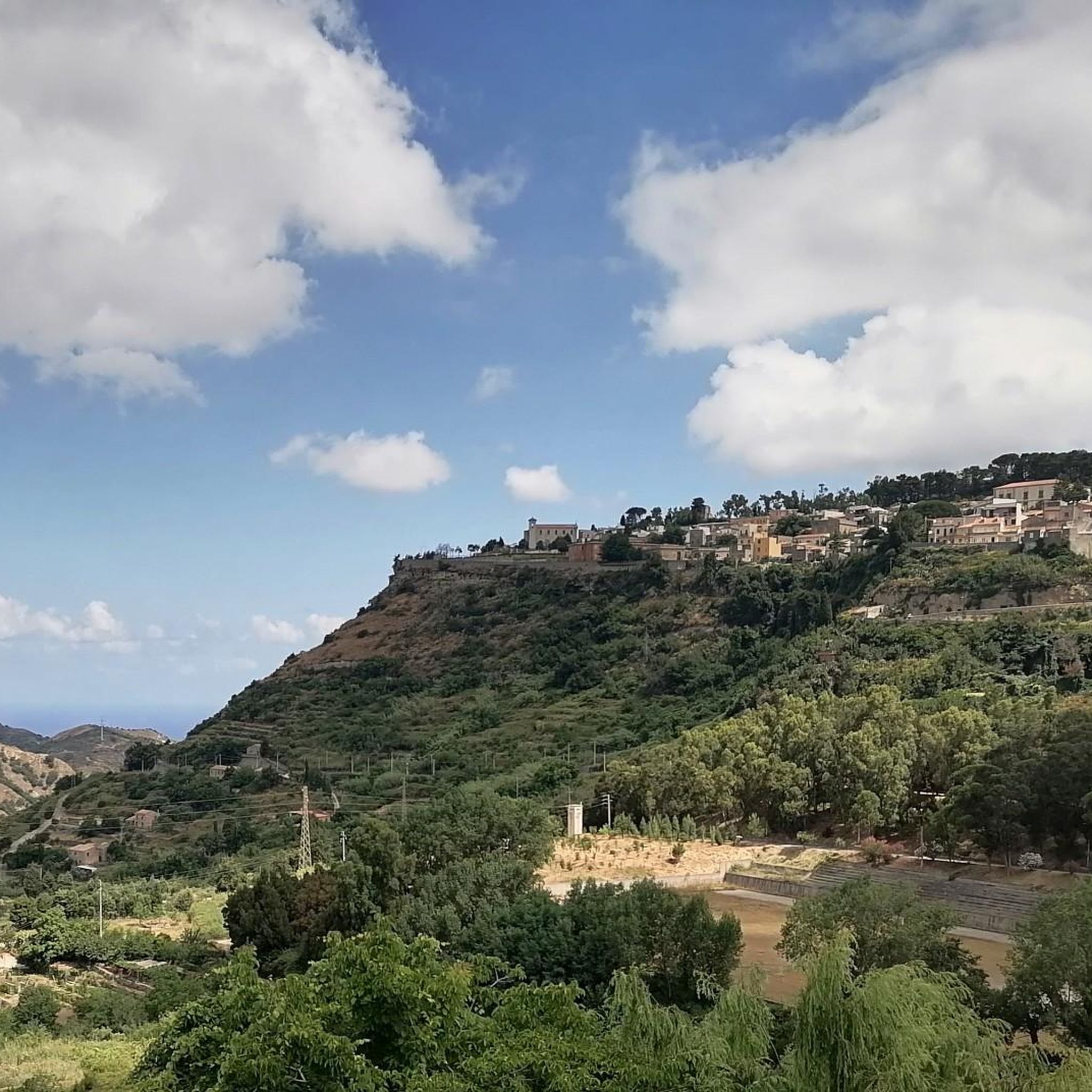
Best attractions and places to see around Rometta, a historic hilltop town in Sicily, offer a blend of cultural sites and natural landscapes. Situated in the Messina province, Rometta provides panoramic views of the Tyrrhenian Sea, the Peloritani and Nebrodi Mountains, Mount Etna, and the Aeolian Islands. The area is characterized by its rich Norman, Byzantine, and medieval influences, evident in its architecture and historical landmarks. Visitors can explore ancient fortifications, religious buildings, and scenic summits.
Best attractions and places…
Last updated: June 24, 2026
Forte Campone
Highlight • Historical Site
Translated by Google •
Tip by

Messina Cathedral and Bell Tower
Highlight (Segment) • Religious Site
Translated by Google •
Tip by

Sign up now to discover places like this
Get recommendations on the best single tracks, peaks, & plenty of other exciting outdoor places.
Sign up for free
Monte Scuderi
Highlight • Summit
It is said that to reveal (find) the immense treasure hidden at the top of the mountain (the "Trovatura," as these …
Translated by Google •
Tip by

Puntale Bandiera Summit and Observation Tower
Highlight • Summit
Translated by Google •
Tip by

Sanctuary of Saint Mary of Montalto
Highlight • Religious Site
Translated by Google •
Tip by
Sign up for free to discover even more attractions around Rometta.
Sign up for free
Already have an account?
Start today with a free account
Your next adventure awaits.
Login or Signup
Other adventures around Rometta

Tips from the Community

Monte Scuderi, the magical mountain, full of hidden treasures. It is said that to reveal (find) the immense treasure hidden at the top of the mountain (the "Trovatura," as these hidden treasures are called in Sicily), one must first catch three fish from the Sea of Ali. They must then be brought "still alive" and on a "handkerchief woven by a virgin" to the top of the mountain. There, they will be cooked, and from them will emerge a huge serpent that will coil three times around the seeker's body. However, the seeker must not be afraid, or he will end up in distant, desolate lands. Once this is done precisely and carefully, a crack will open in the mountain, and upon entering, he will find a hen with seven chicks made of solid gold. Now, I don't know if I've remembered this story correctly, but the fact remains that Monte Scuderi has always represented a magical mountain, full of mystery, for the citizens of the villages below. From its flat summit, a 360° view of the surrounding area is offered. And a cave, visitable where the treasure could actually be found
0
0

Magnificent view of Messina
3
0

Beautiful church with a terrace in front, from which you can enjoy a magnificent view over Messina. The bells are also visible from the outside.
3
0
Just before arriving at the Fort you will find a small plaque with the name and photo of a young girl. It is Graziella Campagna, an innocent victim of the mafia, taken up there by deception and killed there for having discovered the true identity of a Cosa Nostra man who was hiding in Villafranca Tirrena, in the 80s. Leave her a thought, a prayer, a visit
1
0
Wonderful bivouacs overlooking the Strait of Messina. However, I advise you not to pitch tents on the plateau of the Forestry Watch Tower because (said by the forestry workers themselves) there is the danger of unexpected and very powerful lightning. For bivouacking there is, just below the Forest Tower, another smaller plateau, next to the access road to the plateau.
1
0

The Cathedral of Messina was opened on September 22, 1197 by Archbishop Berardo, in the presence of Emperor Henry VI. and his wife Constanze, daughter of the Norman King Roger II of Sicily. Over the course of history it was destroyed and rebuilt several times, so that hardly anything remains of the original structure. The original beamed ceiling was destroyed in a fire in 1254. The laid-out body of the recently deceased Hohenstaufen King Conrad IV fell victim to this fire. In the earthquakes of 1783 and 1908, the entire interior was destroyed by the collapsing walls. After the earthquake of 1783, the bell tower was demolished and two neo-Gothic towers were added to the two side apses next to the choir. After the earthquake of 1908, the cathedral was reconstructed in its medieval state from 1919 to 1923. In 1933 a free-standing bell tower was built next to the cathedral. On the night of June 13, 1943, Messina fell victim to a bombardment and the cathedral burned down completely again. However, the free-standing bell tower was spared. The cathedral was opened in August 1947 under Pope Pius XII. consecrated again and received the title of a minor basilica. Until the new consecration, the co-cathedral of Santissimo Salvatore served as a temporary cathedral.
4
0
The church that houses the sanctuary was built in the 13th century in a mix of Romanesque and Gothic styles. It was completely destroyed during the earthquake in 1908 and the current construction is a reconstruction. There is a monument to John Paul II in the square in front of the church.
3
0

A wonderful panoramic point on the Ionian and Tyrrhenian side, the peak is located at an altitude of 1065 m, the view from here repays all the effort made to get there.
1
0
Frequently Asked Questions
What historical landmarks can I visit in Rometta?
Rometta is rich in history, offering several notable landmarks. You can explore the remains of its medieval fortifications, including the ancient city gates like Porta Milazzo and Porta Messina, which once protected the town. Another significant site is the Poggio Torre Complex, featuring remnants of a noble residence and a 13th-century Prison Tower. Don't miss Forte Campone, an Umbertine fortification in excellent condition, located in Calvaruso.
Where can I find the best panoramic views in Rometta?
Due to its hilltop location, Rometta offers numerous vantage points for stunning vistas. Piazza Margherita in the heart of the village provides breathtaking panoramic views of the Peloritani and Nebrodi Mountains and Mount Etna. For even more expansive views, head to Puntale Bandiera Summit and Observation Tower, located at 1065 meters, offering a wonderful 360-degree panorama of both the Ionian and Tyrrhenian sides of Sicily, including the Aeolian Islands on clear days. From Porta Messina, you can also admire views spanning from the Calabrian coasts to the Sanctuary of Dinnammare and over Messina.
Are there any ancient or unique religious sites in Rometta?
Yes, Rometta boasts several significant religious sites. The Mother Church of Santa Maria Assunta (12th–16th century) is a prominent Norman-Byzantine church. The Byzantine Church of Santa Maria dei Cerei (5th–6th century) is one of Rometta's oldest buildings, a rare example of early Christian Byzantine architecture. The Church of the Capuchins (12th century) also contributes to the town's spiritual heritage. Additionally, the Sanctuary of Saint Mary of Montalto, originally built in the 13th century, is a reconstructed church featuring a monument to John Paul II.
What natural features are worth exploring around Rometta?
Rometta's natural landscape is ideal for exploration. Beyond the panoramic summits like Puntale Bandiera and Monte Scuderi, you can visit the Saracen Caves (also known as Early Christian Caves). These ancient caves, carved into sandstone rock, are accessible via scenic hiking trails and offer a unique combination of natural beauty and historical intrigue, with some featuring Byzantine frescoes.
Are there family-friendly attractions or activities in Rometta?
While Rometta's historical sites and natural landscapes are generally suitable for families, specific attractions like the Sanctuary of Saint Mary of Montalto are noted as family-friendly. Exploring the medieval fortifications and enjoying the panoramic views from Piazza Margherita can also be enjoyable for all ages. The Saracen Caves offer an adventurous outing for families interested in history and nature.
What kind of outdoor activities, like hiking or cycling, can I do near Rometta?
Rometta's hilly terrain and proximity to natural landscapes make it an excellent destination for outdoor activities. You can find numerous hiking trails leading to scenic overlooks and historical sites. For cycling enthusiasts, there are several routes available. You can explore various cycling tours around the area, including options for touring bicycles and road cycling. Check out the available cycling routes around Rometta or road cycling routes around Rometta for detailed options.
Are there specific hiking trails recommended for exploring Rometta's natural beauty?
Yes, Rometta offers trails that lead to significant natural and historical sites. The trails to the Saracen Caves provide a unique blend of natural beauty and historical intrigue. For more challenging hikes with rewarding views, consider routes leading to Puntale Bandiera Summit or Monte Scuderi, both offering 360-degree panoramic vistas. You can also find various running trails around Rometta that are suitable for hiking.
When is the best time of year to visit Rometta's attractions?
Rometta can be enjoyed throughout much of the year. Spring and autumn generally offer pleasant temperatures, ideal for hiking and exploring historical sites without the intense summer heat. These seasons also provide lush landscapes and comfortable conditions for outdoor activities. Summer can be warm, but the hilltop location often provides refreshing breezes, and the panoramic views are stunning, especially at sunset.
How can I get around Rometta and its attractions?
Rometta is a hilltop town, and while some areas are walkable, having a car is often recommended for reaching attractions outside the historic center and exploring the wider region. Parking availability can vary, especially in the older parts of town. Public transport options might be limited, so planning your routes in advance is advisable.
What makes Monte Scuderi a "magical mountain"?
Monte Scuderi is known as a "magical mountain" due to local legends and mysteries surrounding hidden treasures. From its flat summit, it offers spectacular 360-degree views of the surrounding area. It also features a visitable cave, adding to its allure and the sense of discovery for visitors.
Can I find local cuisine or dining options near Rometta's attractions?
Yes, Rometta offers traditional Sicilian cuisine in local trattorias. You can savor regional favorites like pasta alla norma, arancini, cannoli, and granita. While exploring, you might come across local spots like Casa di Cura Don Minico, known for its excellent homemade bread and stuffed 'pastelle'.
Is Rometta suitable for visitors interested in Byzantine architecture?
Absolutely. Rometta is particularly notable for its Byzantine influences. The Byzantine Church of Santa Maria dei Cerei, dating back to the 5th–6th century, is a rare and well-preserved example of early Christian Byzantine religious architecture in Sicily. The Mother Church of Santa Maria Assunta also showcases a blend of Norman and Byzantine styles, making Rometta a significant destination for those interested in this architectural period.
Most popular attractions around Rometta

Get inspired with the komoot mobile app


Explore more
Still not found the Highlight you’re looking for? See guides of the top attractions in other regions:
