The best MTB trails around Godega Di Sant'Urbano
4.3
(309)
1,959
riders
17
rides
Mountain biking around Godega Di Sant'Urbano offers a diverse landscape for riders. The immediate area features flat plains and agricultural zones, providing routes with gentle elevation changes. To the north, the terrain transitions towards panoramic hills and the Pre-Alps, offering more challenging climbs and descents. Riverine environments along the Meschio River and scenic vineyards in the Prosecco Hills also characterize the region's riding opportunities.
Best mountain bike trails around Godega Di Sant'Urbano
- The most popular mountain bike trail is Troi…
Last updated: July 6, 2026
4.9
(16)
56
riders
71.6km
06:15
1,860m
1,860m
Hard mountain bike ride. Very good fitness required. Advanced riding skills necessary. Some portions of the route may require you to push your bike.
5.0
(4)
60
riders
54.1km
03:42
760m
760m
Moderate mountain bike ride. Good fitness required. Suitable for all skill levels.

Sign up for free
4.3
(4)
37
riders
43.5km
03:04
580m
580m
Moderate mountain bike ride. Good fitness required. Advanced riding skills necessary.
5.0
(2)
37
riders
58.1km
03:51
620m
620m
Moderate mountain bike ride. Good fitness required. Suitable for all skill levels.
5.0
(1)
30
riders
40.2km
02:34
480m
480m
Moderate mountain bike ride. Good fitness required. Advanced riding skills necessary.
Get access to more routes and recommendations from other explorers.
Sign up for free
Already have an account?
Our route recommendations are based on thousands of hikes, rides, and runs completed by other people on komoot.
Start today with a free account
Your next adventure awaits.
Login or Signup

Tips from the Community

Polcenigo, nestled between the springs of the Livenza river and the foothills of the Carnic Prealps, is one of the most beautiful villages in Italy. Its historic center is an elegant network of stately palaces in Venetian style, testifying to the prestige of the noble Polcenigo family. Walking through the alleys, you discover a timeless atmosphere, dominated by the remains of the medieval castle that watches over the village from the top of the hill. The beating heart is Piazza Plebiscito, but the greatest charm lies in the symbiotic relationship with water: canals, old mills, and small bridges create picturesque views. Not far away, the Gorgazzo and Santissima springs offer waters of an almost unreal turquoise blue, making the village a fundamental stop for those seeking historical beauty and nature.
0
0

Pordenone foothills itinerary: St. Christopher's Way
0
0
Piazza Flaminio represents the beating heart and elegant living room of the historic district of Serravalle, in Vittorio Veneto. Completely paved in grey stone, the square is a remarkable example of Renaissance urban planning, defined by a curtain of stately buildings that testify to the glorious past linked to the Serenissima. The Palazzo della Comunità, the ancient seat of the city government, and the Civic Tower overlook it, while the welcoming arcades house historic shops and cafes. The harmony of its proportions and the view of the mountainous landscapes that frame it create a unique theatrical atmosphere, making it one of the most charming squares in the Venetian hinterland, where history can be breathed in every architectural detail.
1
0

On May 25, 1964, a fire completely destroyed the first and second floors, rendering them unusable. The efforts of firefighters and artillerymen who rushed to the scene in force managed to contain the flames and prevent them from spreading to the nearby building. Despite the negative opinion of the Military Engineering Corps regarding restoration work, public opinion and the Belluno CAI Section pushed for yet another reconstruction, finding valid support in Gen. Pietro Torrazzo. This recommenced under the supervision of the 6th Mountain Artillery Regiment of Belluno. The inauguration ceremony was held on August 31, 1968. The seventies still saw the race to "conquer" a spot for television antennas, both military and civilian. The most imposing one, belonging to RAI, was placed a few meters from the refuge, on the north side, and is still there today. A new period of closure and management uncertainties followed. In 1988, the COMILITER of Padua decided on its renovation, which concluded in 1992. In 1993, the State Technical Office proposed a rental fee, and on May 1, 1994, after five years, the refuge reopened under new management. In 1995, the agreement, still in force, was signed. Today, this place represents an act of gratitude for the survival of a heritage entirely belonging to Belluno.
1
0
The idea to erect the first refuge of the CAI section of Belluno was taken during the board meeting of May 20, 1898, and formalized in July 1899. Its function was to support hikers from Belluno and Treviso. The refuge was inaugurated on September 23, 1900, and dedicated to Richard Henry Budden, one of the pioneering figures of mountaineering, proponent of numerous reforestation projects to safeguard the mountain environment, and a sincere friend of the province of Belluno. The construction was built on land donated by the De’ Bertoldi family. After difficult management, also due to the debt situation, during World War I the refuge was set on fire, making it unusable as a shelter. Reconstruction began in September 1938, when a detachment of the 24th battery of the 5th Alpine Artillery Regiment encamped on Col Visentin for the initial excavation operations. It was reopened on August 15, 1946. Based on the project by architect Alfarè, the current small tower was built, adapted into a chapel-shrine for the Fallen of the 5th Mountain Division, a votive tomb that held the lighthouse donated by the Navy and contains the list of brothers fallen in Libya, on Ortigara, on the Carso, on Sabotino, those on the arid Ethiopian plains, and finally those who remained on the fields of Albania, in the Montenegrin gorges, and in the desolate immensity of the Russian steppe.
1
0
Located at an altitude of 1764 meters, Rifugio Col Visentin offers one of the widest and most evocative panoramas of the Veneto Prealps. From here, the view stretches from the Adriatic Sea to Monte Grappa, from Montello to the Dolomites, with spectacular glimpses of iconic peaks such as Pelmo, Civetta, Antelao, Cimon della Pala, Croda Rossa, and the Marmarole. On the clearest days, you can even make out the Croatian coast to the East, and to the West, the gaze extends beyond the Berici Mountains. The refuge is a reference point for summer and winter tourism in Veneto, frequented by hikers, snowshoers, cyclists, and nature lovers in every season. It offers accommodation with breakfast, lunch, and dinner. It is open daily from May to September and on weekends during the rest of the year. Inside the refuge, you will find the highest meteorological station in the Veneto Prealps, as well as three webcams offering real-time images of the landscape. www.rifugiocolvisentin.net
1
0

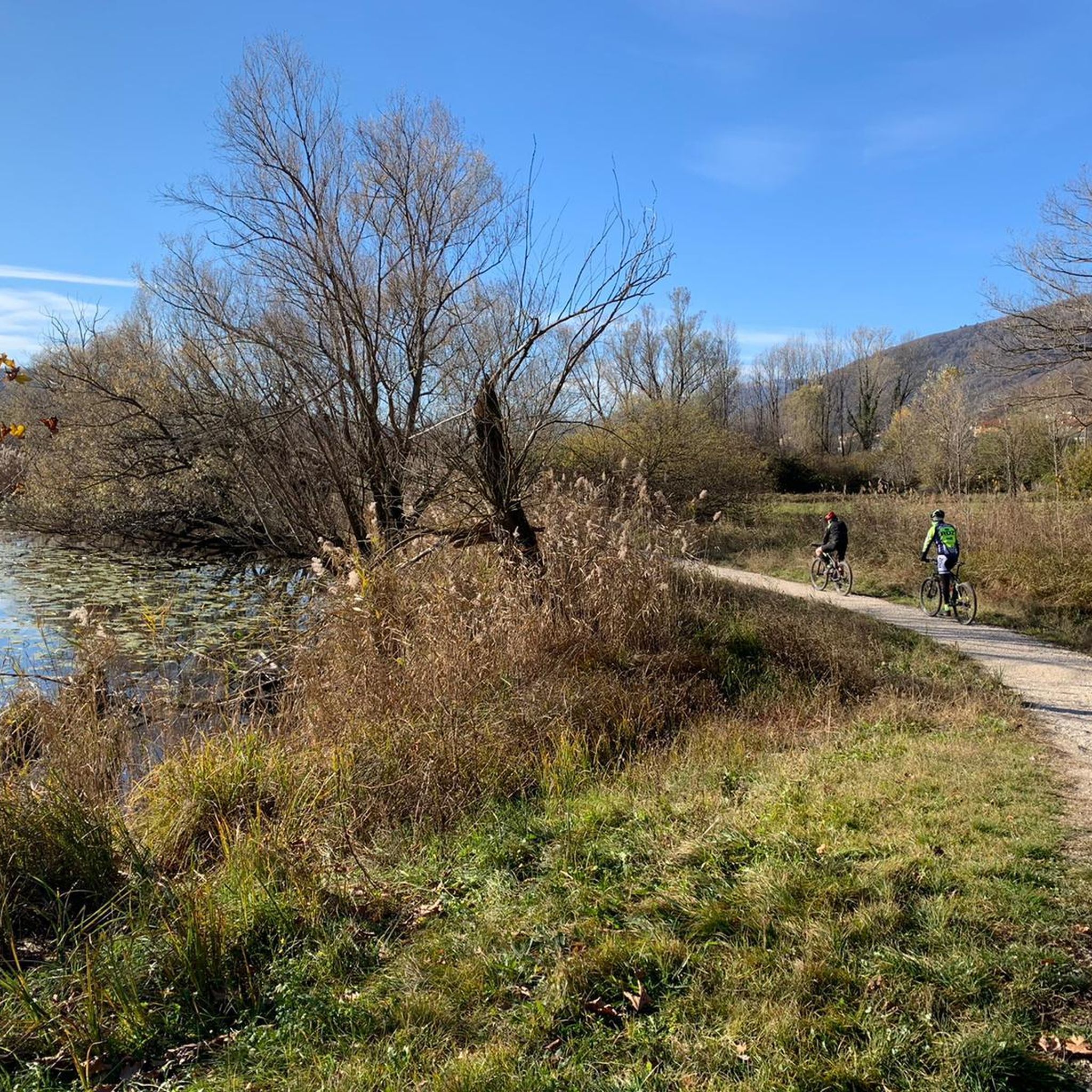
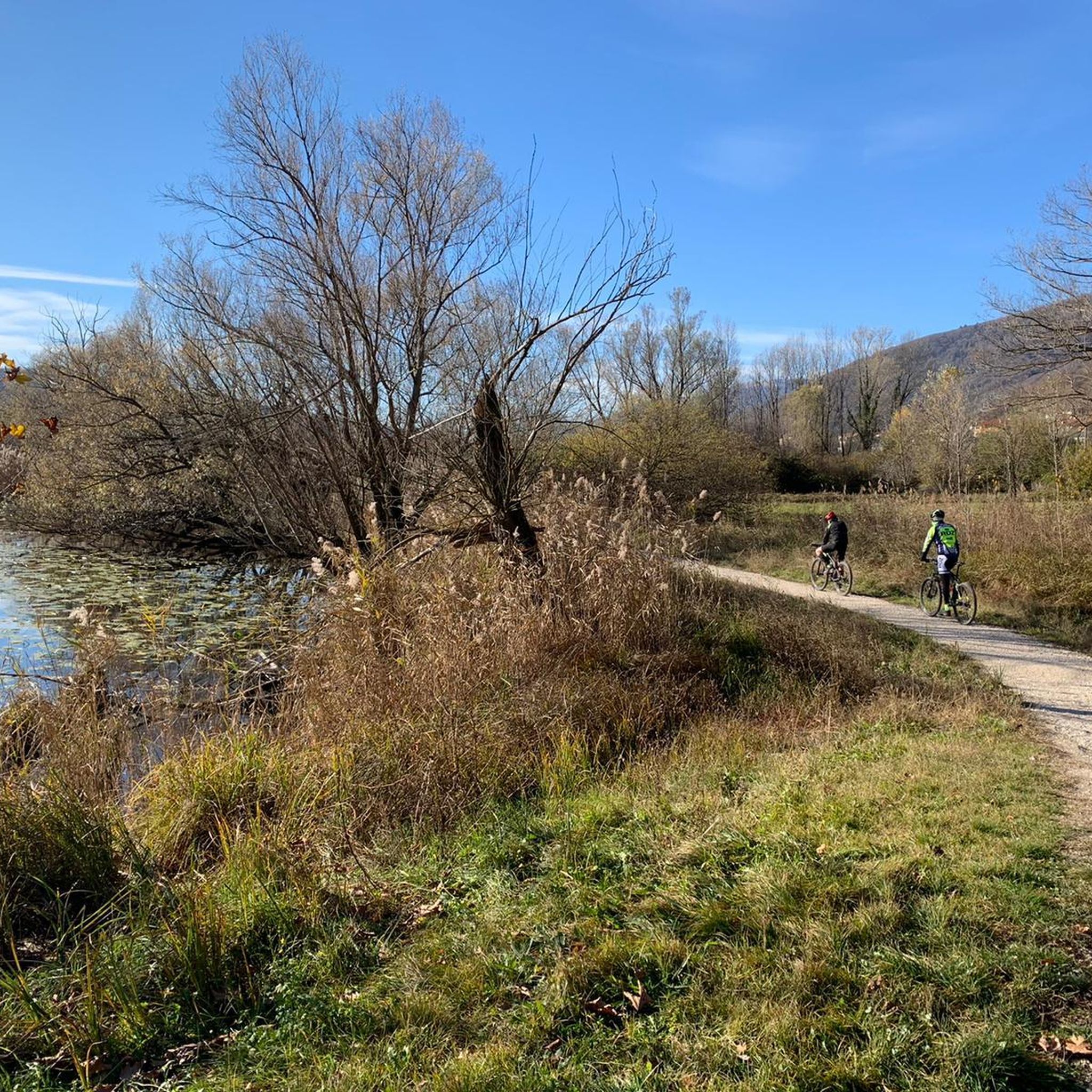
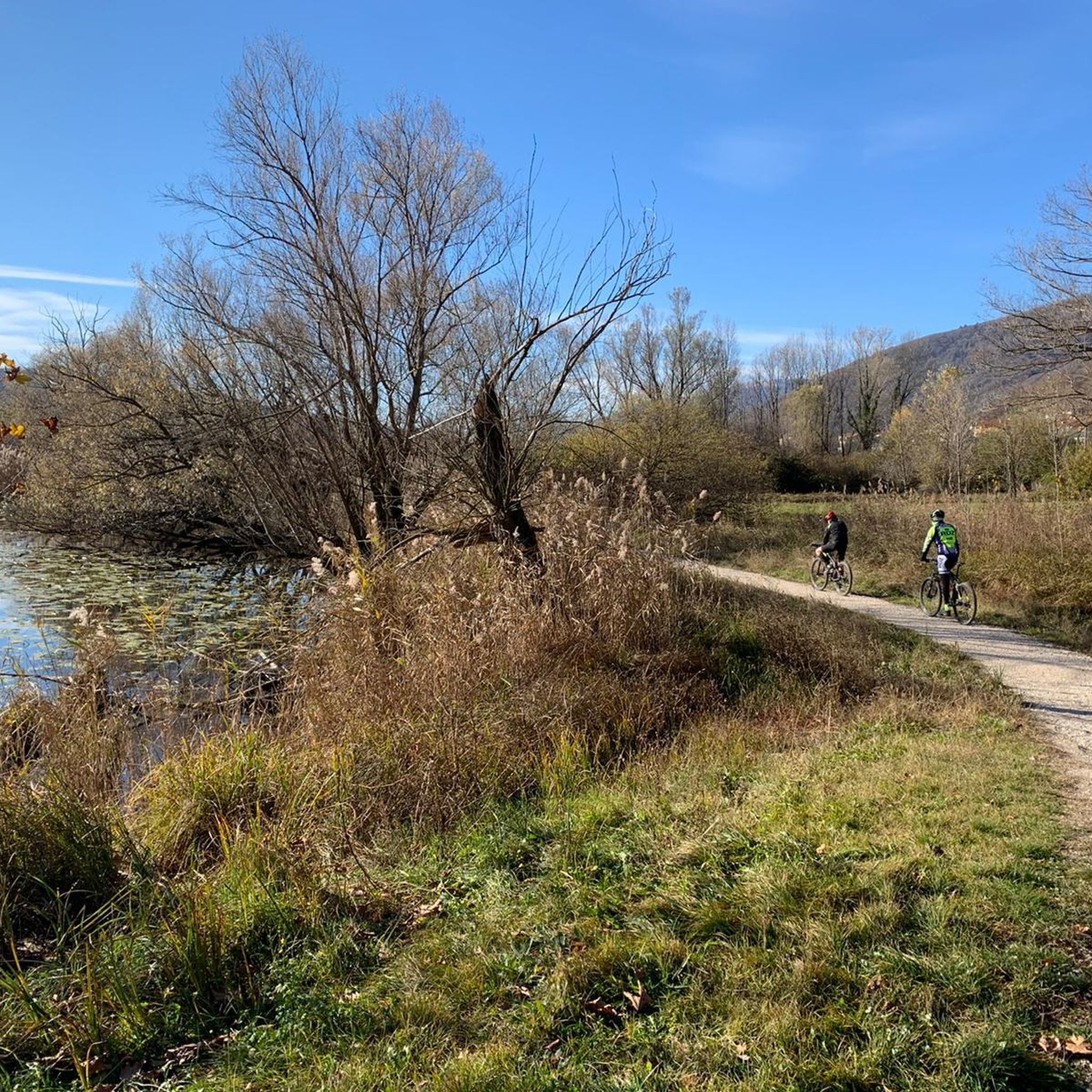
Worth a photo with your bike!🚴🏻♂️💪🏼🔝🚲
0
0
Frequently Asked Questions
How many mountain bike trails are available around Godega Di Sant'Urbano?
There are over 20 mountain bike trails in the Godega Di Sant'Urbano area, offering a variety of experiences for different skill levels.
Are there any easy mountain bike trails suitable for beginners or families?
Yes, the region offers 3 easy mountain bike trails. These routes typically feature gentle elevation changes through flat plains and agricultural zones, making them ideal for beginners or family outings. The Santa Augusta Trail – Gravel Trail Along the Canal loop from Pianzano is a moderate option that includes canal-side riding, which can be adapted for a more relaxed pace.
Where can I find more challenging mountain bike routes?
For more challenging rides, head towards the panoramic hills and Pre-Alps. There are 4 difficult trails available. The Waterfall on the Meschio River – Rifugio Col Visentin loop from Pianzano is a demanding 69.1 km route that leads through riverine environments and ascends to higher elevations, offering significant climbs. Another challenging option is the Ford on the Roggia Sarmede – Colline del Prosecco loop from San Fior, which covers 44.9 km with substantial elevation gain.
Are there mountain bike trails that form a loop?
Many of the mountain bike trails in Godega Di Sant'Urbano are designed as loops, allowing you to start and finish at the same point. Examples include the Troi dei Pai Trail – Picnic area by Lago Morto loop from San Fior and the San Salvatore Castle – Collalto Castle loop from Pianzano, both offering moderate, circular routes.
What kind of landscapes can I expect to see while mountain biking here?
The region offers a diverse range of landscapes. You'll ride through flat agricultural plains, alongside the clear waters of the Meschio River, and through scenic vineyards in the Prosecco Hills. As you venture further, the terrain transitions to panoramic hills and the Pre-Alps, providing varied scenery and more challenging climbs.
Are there any scenic viewpoints along the mountain bike trails?
Yes, the area is rich in scenic viewpoints, especially in the hilly sections. You can find stunning vistas from locations like Mount Altare, the Col Alt War Memorial, and the View from Col del Penacio. These spots offer sweeping views of the surrounding plains, vineyards, and even the distant Dolomites.
What historical landmarks or attractions can I visit near the trails?
The region is dotted with historical sites. You can explore castles such as Conegliano Castle or Caneva Castle. The area also features historic villas and churches, like the Church of San Biagio di Baver, offering cultural stops during your rides. The San Salvatore Castle – Collalto Castle loop from Pianzano specifically connects historical landmarks with scenic riding.
Are there any natural attractions or waterfalls to see?
Yes, the Meschio River is a prominent natural feature, known for its clear waters. Along its banks, you can find the 'Christ of the Meschio' on an islet with a small waterfall, offering a tranquil resting spot. The Waterfall on the Meschio River – Rifugio Col Visentin loop from Pianzano specifically highlights this riverine environment.
What do other mountain bikers say about the trails in Godega Di Sant'Urbano?
The mountain biking routes in Godega Di Sant'Urbano are highly rated by the komoot community, with an average score of 4.4 stars from over 300 reviews. Riders often praise the diverse terrain, from flat agricultural paths to challenging climbs in the hills, and the scenic beauty of the vineyards and riverine environments.
What is the best season for mountain biking in Godega Di Sant'Urbano?
While specific trail conditions can vary, the diverse landscape of Godega Di Sant'Urbano, with its mix of plains, vineyards, and hills, generally offers good riding opportunities throughout spring, summer, and autumn. Spring and autumn often provide more comfortable temperatures and vibrant scenery, while summer can be pleasant, especially in the mornings or evenings.
Are there any trails that pass through the famous Prosecco Hills?
Yes, the region is part of the Prosecco Hills of Conegliano and Valdobbiadene, a UNESCO heritage site. Many routes, such as the Ford on the Roggia Sarmede – Colline del Prosecco loop from San Fior, will take you through these picturesque vineyards, offering stunning views and a unique riding experience.
Most popular routes around Godega Di Sant'Urbano
Most popular attractions around Godega Di Sant'Urbano

Get inspired with the komoot mobile app


Explore more
Browse the best MTB trails in other regions.
