Top 8 Castles around Santa Maria Di Sala
Best castles around Santa Maria Di Sala are found in this town within the Metropolitan City of Venice, Italy. The area is characterized by its historical landmarks and traditional Italian architecture. It offers a glimpse into the region's past, with structures like Il Castello di Stigliano showcasing medieval and Renaissance influences. The surrounding landscape provides a setting for exploring historical sites and local culture.
Best castles around Santa Maria Di Sala
- The most popular castles is Villa Pisani, Stra,…
Last updated: October 17, 2026
Villa Pisani
Highlight • Castle
Translated by Google •
Tip by

Stigliano Castle
Highlight • Castle
Over the centuries the complex passed through the hands of various owners. …
Translated by Google •
Tip by

Sign up now to discover places like this
Get recommendations on the best single tracks, peaks, & plenty of other exciting outdoor places.
Forte Poerio
Highlight • Historical Site
Translated by Google •
Tip by

Tempesta Fortress, Noale
Highlight • Castle
Showing Translation
Tip by

Historic Center of Noale
Highlight • Historical Site
Showing Translation
Tip by

Sign up for free to discover even more castles around Santa Maria Di Sala.
Already have an account?
Start today with a free account
Your next adventure awaits.

Tips from the Community

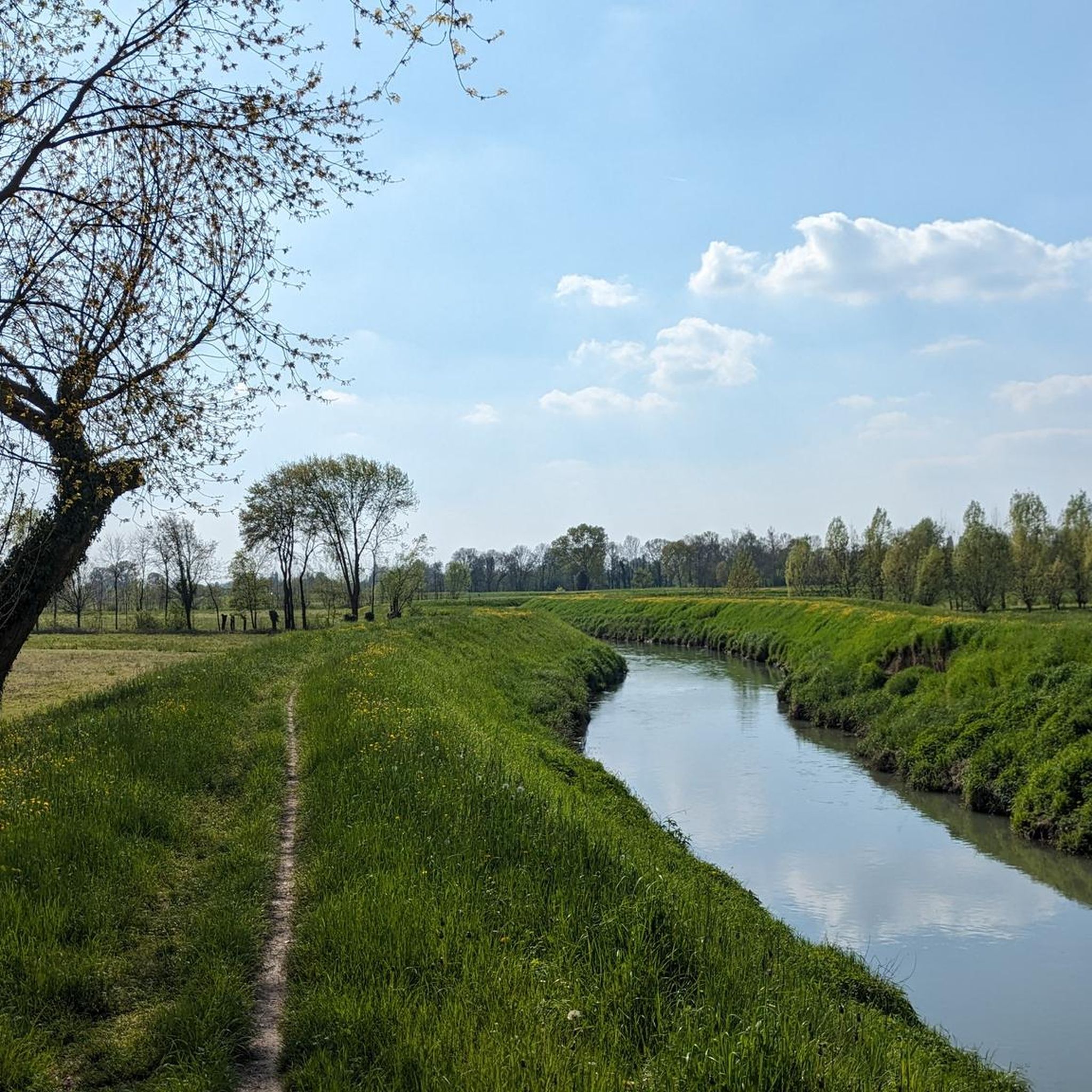
The historic center of Noale preserves the charm of an ancient fortified village, dominated by the remains of the Rocca dei Tempesta and surrounded by the waters of the Marzenego river. Strolling through the streets of the center, you will encounter historic buildings, arcades, and views of the waterway, in a landscape where medieval history intertwines with the daily life of the town.
1
0

La Rocca dei Tempesta is the monumental heart of Noale and one of the most fascinating medieval defensive structures in the Veneto. Built in the 12th century at the behest of the Tempesta family, the fortress stood on a strategic area, protected by an ingenious system of moats fed by the waters of the Marzenego river. The imposing brick structure, of which the majestic perimeter walls and corner towers remain today, retains the charm of a lowland castle. Although the interior is now a suggestive green meadow used for historical re-enactments such as the Palio, the remains still allow us to read the original layout of the noble residence. The Rocca represents a symbol of power and resistance, offering a unique setting where nature intertwines harmoniously with ancient medieval vestiges.
1
0

The medieval fortress of Stigliano was first mentioned in 1152 as a feudal property of the Bishop of Treviso. However, its origins may date back to Roman times due to its location in the "graticolato" area. In 1158, it was entrusted to the Tempesta family of Noale and then to the Teutonic Knight Aldobrandino da Superno. Built in a strategic position, alongside the Muson dei Sassi stream, it marked the border between the territories of Padua and Treviso. Therefore, it was the scene of numerous brutal battles until the end of the fourteenth century. It was here, however, that the disputes between the Carraresi and the Serenissima Republic of Venice began. It was the Venetians who finally conquered it in 1520, when it was sold to the Priuli family, who transformed it into a typical Venetian villa of the time. The entire complex then became the property of the Venier family, who further renovated it. Today, only the northeast corner tower remains of the original castle.
1
0
Completed in 1912, it represents the last type of fortress, a concept brutally swept away in the first months of the Great War. It had six cupolas with 149mm guns, never used and immediately dismantled to be taken to the battle front. On the attack front, it was covered by a large embankment, now removed, exposing the massive reinforced concrete structure. The entire wide, rectangular moat surrounding it has been filled in; the original sliding bridge with riveted iron girders remains. It was maintained and cared for until recently by the Military Property Office. It is located near the Ponte Damo roundabout, not far from the Riviera del Brenta. It is still formally owned by the Military Property Office, under concession to the Municipality of Mira. Currently, although in excellent condition, it cannot be visited. Outside, in the adjacent buffer area, there is a children's playground. https://www.magicoveneto.it/venezia/forti/Forte-Poerio.htm https://www.comune.mira.ve.it/vivere-il-comune/luoghi/parco-di-forte-poerio/
0
0


The origins of the castle date back to Roman times, when the building was used as a fortification. Over the centuries the complex passed through the hands of various owners. In 1152 to the bishop of Treviso, from 1158 the Tempesta family were vassals and in January 1220, Count Guido ceded the rights to Aldevrandino da Superno. Built in a strategic position, on the border between the territories of Treviso and Padua, it was the scene of numerous battles. Conquered definitively by the Venetians in the seventeenth century, the complex passed to the Venier family who carried out renovations. After a long period of abandonment, recently, thanks to the renovation work by Paolo Bertan, the building has undergone further adaptations to be adapted into an accommodation facility https://www.villeveneteforyou.com/castelli/castello-di-stigliano/
2
0

Rocca dei Tempesta in Noale, a formidable presence in the Venetian landscape, whispers tales of medieval grandeur and strategic prowess. Perched proudly in the heart of Noale, this fortress is a living testament to the historical tapestry of the region. Constructed in the 12th century, the Rocca bears witness to the ebb and flow of centuries, embodying the resilience of bygone eras. Its imposing towers and sturdy walls served both as a noble residence and a defensive stronghold, playing a vital role in the intricate dance of power and politics.
2
0
Villa Pisani is a magnificent villa located in the Veneto region, near the town of Stra. This architectural masterpiece is renowned for its grandeur, stunning gardens, and historical significance. Originally built in the 18th century for the powerful Pisani family, the villa has served various purposes over the years. Key features of Villa Pisani include its opulent interiors adorned with frescoes and artworks, expansive parklands featuring intricate mazes and statues, and a captivating view of the Brenta River. The villa has hosted notable figures throughout history, including Napoleon Bonaparte, who held a summit with other European leaders here in 1807. Visitors to Villa Pisani can explore its lavishly decorated rooms, stroll through the meticulously landscaped gardens, and immerse themselves in the rich history that this architectural gem embodies. The villa stands as a testament to the grandeur of Italian art and culture.
4
0
Frequently Asked Questions
What are some notable historical castles and sites to visit around Santa Maria Di Sala?
Beyond the well-known Villa Pisani, Stra, you can explore Stigliano Castle, a medieval fortress with Roman origins adapted into a stately palace. Another significant site is Forte Poerio, a historical fort built as part of the Campo Trincerato di Mestre defensive project.
Are there family-friendly castles or historical sites in the area?
Yes, several sites are suitable for families. Villa Pisani, Stra, Stigliano Castle, Forte Poerio, Tempesta Fortress, Noale, and Tiso Palace and La Rocca Civic Tower are all categorized as family-friendly, offering engaging experiences for all ages.
What kind of history can I expect to discover at these castles?
The castles and historical sites around Santa Maria Di Sala offer a rich tapestry of history. For instance, Stigliano Castle dates back to Roman times and saw numerous battles, later adapted by the Venetians. Villa Pisani, Stra showcases 18th and 19th-century Venetian art and architecture, while Forte Poerio represents early 20th-century military defense strategies.
Are there opportunities for outdoor activities like hiking or cycling near the castles?
Absolutely. The region offers various routes for outdoor enthusiasts. You can find numerous road cycling routes, including a 'Villa Pisani, Stra – Prato della Valle loop', or explore hiking trails like the 'Historic Center of Noale – Tempesta Fortress, Noale loop'. For mountain biking, there's a 'Stigliano Castle – Via delle Risorgive loop'. You can find more details on these activities in the Hiking around Santa Maria Di Sala, Road Cycling Routes around Santa Maria Di Sala, and MTB Trails around Santa Maria Di Sala guides.
What is the best time of year to visit the castles around Santa Maria Di Sala?
The best time to visit is generally during the spring (April to June) and autumn (September to October) when the weather is mild and pleasant for exploring both indoor and outdoor attractions. Summer can be warm, but still suitable, especially for enjoying the castle grounds. Winter visits are possible, though some outdoor activities might be limited by colder temperatures.
Can I find places to eat or stay near the castles?
Yes, Santa Maria di Sala and its surrounding towns offer various amenities. Stigliano Castle itself has been adapted into an accommodation facility and includes a restaurant. The charming streets of Santa Maria di Sala also feature quaint cafes and traditional Italian houses, providing options for dining and accommodation.
Is there parking available at the castles?
While specific parking details for each castle vary, attractions in the Santa Maria Di Sala area generally have parking options. For example, Forte Poerio has parking available at the roadside. It is advisable to check the specific visitor information for each site prior to your visit for precise parking arrangements.
What are the architectural styles I can observe in the castles of this region?
The castles and historical buildings in the area showcase a blend of architectural styles. Stigliano Castle, for instance, features a distinctive mix of medieval and Renaissance elements, with imposing stone walls and intricate frescoes. Villa Pisani, Stra is a grand example of a Venetian villa, reflecting 18th-century design, while Forte Poerio exhibits simpler, geometric lines characteristic of early 20th-century military architecture.
Are there any castles that offer a museum experience?
Yes, Villa Pisani, Stra houses a national museum with 18th and 19th-century art and furnishings. Additionally, Stigliano Castle features a museum within its chambers, exhibiting artifacts that provide insights into its history and former inhabitants.
What do visitors particularly enjoy about the castles and historical sites in Santa Maria Di Sala?
Visitors appreciate the immersive historical experience offered by the well-preserved architecture, such as the medieval grandeur of Stigliano Castle and the impressive scale of Villa Pisani, Stra with its beautiful park. The opportunity to explore diverse historical structures, from grand villas to military forts, is also highly valued by the komoot community.
Are there any castles that were originally fortifications?
Yes, several castles in the area began as fortifications. Stigliano Castle was originally a medieval fortress with Roman origins, strategically positioned between territories. Tempesta Fortress, Noale, constructed in the 12th century, served as both a noble residence and a defensive stronghold. Forte Poerio was explicitly built as a military fort for defense.
Can I visit castles that have been adapted for modern use?
Yes, some historical sites have been adapted. Stigliano Castle, for example, has undergone renovations to be adapted into an accommodation facility. Similarly, Tiso Palace, once part of a fortified medieval castle, now serves as the seat of the municipality.
Most popular routes around Santa Maria Di Sala
Most popular attractions around Santa Maria Di Sala

Get inspired with the komoot mobile app


Explore more
Looking for the best castles somewhere else? Discover other guides around Santa Maria Di Sala:
