Attractions and Places To See around Semèstene/Semestene - Top 20
Attractions and places to see around Semèstene/Semestene include historical sites, natural features, and cultural landmarks in the Logudoro Meilogu region of Sardinia, Italy. This medieval village is situated in a fertile valley at the foot of Monte Benazzosu, offering a landscape shaped by volcanic craters and streams. The area provides insights into a rich history, from Nuragic settlements to Romanesque architecture and medieval life.
Best attractions and places to see around Semèstene/Semestene
- The most popular attractions is Tamuli Archaeological Site…
Last updated: October 4, 2026
Rebeccu Medieval Village
Highlight • Settlement
Translated by Google •
Tip by

Macomer
Highlight • Settlement
Translated by Google •
Tip by

Sign up now to discover places like this
Get recommendations on the best single tracks, peaks, & plenty of other exciting outdoor places.
Sacred Spring of Su Lumarzu
Highlight • Historical Site
The paved rectangular atrium …
Translated by Google •
Tip by
Filigosa Necropolis and Nuraghe Ruju
Highlight • Historical Site
The necropolis of Filigosa is located on the northern outskirts of Macomer, in the province of Nuoro, Sardinia. It was not eponymous for any of the Abealzu-Filigosa …
Translated by Google •
Tip by
Romanesque Church of San Nicola di Trullas
Highlight • Religious Site
In the surrounding area you can see …
Translated by Google •
Tip by

Sign up for free to discover even more attractions around Semèstene/Semestene.
Already have an account?
Start today with a free account
Your next adventure awaits.
Popular around Semèstene/Semestene

Tips from the Community

Dating back to the 12th-13th century, a very well-preserved Romanesque church which can be freely accessed through the gate that overlooks the street. In the surrounding area you can see the remains of the monastery of which the church was part.
3
0

Standing on a rocky ridge of Meilogu, Rebeccu dominates the plain of Santa Lucia, six kilometers from Bonorva, isolated and populated only by the legends that made it famous. Rebeccu is a medieval village with a prestigious past, almost uninhabited today, once the capital of the Curatoria of Costavalle and a strategic point on the border between the Giudicati of Arborea and Torres. A few stone houses, some restored, a small church and a desecrated graveyard make it both unsettling and evocative, especially in light of the stories surrounding it. The most famous concerns King Beccu, feudal lord of the village, and his daughter, Princess Donoria: believed to be a witch who was expelled from the village while her house was being destroyed by fire. Leaving it tied to a mule, he unleashed the “curse of the thirty houses”: Rebeccu would never have had more than thirty houses. According to some versions, even the father started his anathema, poisoning the numerous water sources in the area. During the Judgment period, the center had 400 inhabitants, then it began to depopulate from the 15th century. According to legend, the survivors of the curse founded Bonorva, while some of them, the boldest, tried to rebuild the village, being careful not to exceed thirty houses. However, history says that a Catalan detachment, arriving from Alghero in 1353, exterminated the population and burned the village, only to provoke the reaction of the Arborea Judicate. A few decades later, a peace treaty was signed between Eleonora d'Arborea and the King of Aragon in the church of Rebeccu. The importance that the center had in the Middle Ages has also given rise to another legend: it is here, in a castle that has now disappeared, that the marriage between the judge and Brancaleone Doria was said to have taken place. Between the cobbled streets and the houses, you will walk in absolute silence, breathing in a constantly evocative and mysterious atmosphere. It's no coincidence that the village has become a backdrop for movies and photo sets, and has hosted a film festival for decades. Source: https://www.sardegnaturismo.it/it/esplora/rebeccu
0
0
The monument, a small cult spring from the Nuragic period, consists of an atrium and a small cell where the vein of the spring is collected. The paved rectangular atrium (5.15 x 1.80 m) has seating along the walls (height 0.30 m; width 0.40 m) and a small alcove. The masonry (height 2 m; width 3 m) consists of regular rows of carefully squared basalt blocks. From the atrium one enters the small cell through an entrance with a trapezoidal light (0.65 m wide; 0.64 m high) obtained in a monolithic slab. The small room (diameter 0.97 m; height 1.60 m), built of roughly worked but carefully joined blocks of basalt, has a "tholos" roof closed by a large horizontal slab. In Christian times, a Latin cross was engraved on the underside of the end plate. The water flows through a channel carved into the sill of the entrance to the spring to a drainage channel built under the floor of the atrium itself. The settlement of the place lasted until late antiquity, as evidenced by coins from the fourth century. AD Found in the time of Taramelli while clearing the porch. Source: http://www.sardegnacultura.it/j/v/253?v=2&c=2488&t=1&s=21393
0
0
Necropolis of Filigosa The necropolis of Filigosa is located on the northern outskirts of Macomer, in the province of Nuoro, Sardinia. It was not eponymous for any of the Abealzu-Filigosa cultures. The necropolis consists of four Domus de Janas, which were carved into the tuff slope below the Nuraghe Ruju (also Ruggiu) with about 10 m long dromoi. Here in 1965, during the excavation by E. Contu, traces of the Copper Age Filigosa culture, which dates back to 2900 to 2700 BC, were found in rock tombs that were otherwise created by the Ozieri culture (from 3500 BC). is dated. A second excavation, carried out by Alba Foschi, took place in the 1980s. The existing finds from the necropolis, consisting of simple, rarely decorated pottery and almost exclusively excarnated bones, have contributed to the understanding of the brief transitional phase in Sardinian prehistory. Three plants are parallel on the middle slope, while the fourth is slightly higher. The large chambers have front access to two (Tomb III) to eight (Tomb I) side chambers. On the floor, centrally located, there is a raised ring (0.97 m in diameter) that marks a fireplace. There are usually two entrances to the side chambers on the rear wall. Nuraghe Ruju The half-collapsed Nuraghe Ruggiu (or Ruju), as it were cut in half, shows the corbelled vault construction as in an elevation model, which gives an insight into the construction of the tholos. Source: https://de.wikipedia.org/wiki/Necropolis_of_Filigosa
2
0

Macomer is the cheese capital of Sardinia. At the Lacesa cheese factory, you can buy a wide variety of cheeses directly from the producer. Mon - Fri 8.30 a.m. - 1 p.m. & 4 p.m. - 7 p.m. Sat 8.30 a.m. - 1 p.m.
0
0


Town of Marmilla, rich in history and archeology. The murals on the facades of the houses are beautiful.
2
0
Frequently Asked Questions
What historical sites can I visit in and around Semestene?
The region is rich in history. You can explore the ancient Tamuli Archaeological Site, known for its Nuragic complex and unique betyls. Another significant site is the Filigosa Necropolis and Nuraghe Ruju, featuring Domus de Janas and insights into Copper Age and Nuragic construction. Don't miss the Romanesque Church of San Nicola di Trullas, with its 13th-century frescoes, or the Parish Church of San Giorgio in the village center. The area also boasts numerous Nuraghi, such as the majestic Iscolca Nuraghe, and remnants of the Santa Croce Church with its Gothic-Catalan portals.
Are there any medieval villages to explore near Semestene?
Yes, the charming Rebeccu Medieval Village is a historically significant settlement nearby. Once a strategic point between ancient Giudicati, it's now almost uninhabited but offers an evocative atmosphere with its stone houses and legends. The Medieval Village of Trullas, located near the Church of San Nicola di Trullas, also provides a glimpse into the past.
What natural attractions are there in the Semestene area?
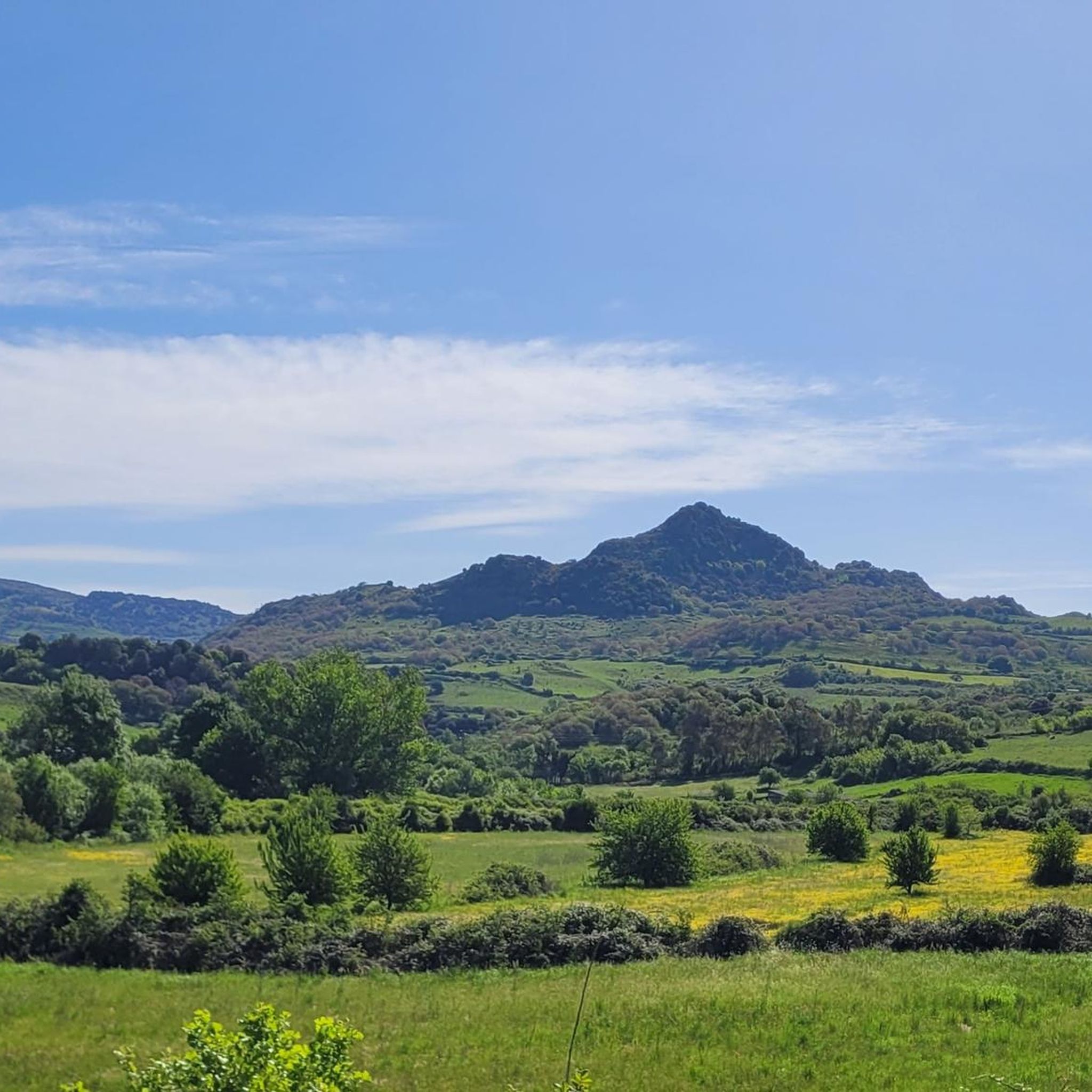
Semestene is nestled in a fertile valley at the foot of Monte Benazzosu, a typical volcanic crater of the Meilogu sub-region. The area is characterized by the Campeda Plateau and valleys carved by streams like Sa Orta and Sa Cariasa. The varied landscape, with its trachyte, limestones, and basalts, offers picturesque views and a rich natural environment.
What kind of outdoor activities can I do around Semestene?
The region offers various outdoor activities, particularly cycling. You can find numerous routes for road cycling, mountain biking, and touring. For example, explore routes like 'Upper Temo Lake – Inland Panorama' for road cycling, or 'Mount Traessu – Santuario di Bonu Ighinu' for mountain biking. You can find more details on specific routes in the Road Cycling Routes, MTB Trails, and Cycling around Semestene guides.
Are there any unique cultural features or events in Semestene?
Semestene is known for its colorful murals that adorn the historic alleys, adding to the village's charm. The Parish Church of San Giorgio celebrates its patron saint's feast day in April, and the Church of San Nicola di Trullas hosts a festival in early August. The village also participates in 'Monumenti Aperti' (Open Monuments) in spring, allowing visitors to admire its religious buildings and archaeological sites.
What is the <a href="https://www.komoot.com/highlight/5090510" target="_blank" rel="noopener">Sacred Spring of Su Lumarzu</a>?
The Sacred Spring of Su Lumarzu is a small cult spring dating back to the Nuragic period. It features an atrium and a small cell where the spring water is collected, built with carefully squared basalt blocks. A Latin cross engraved on the end plate suggests its use extended into Christian times, with coins from the fourth century AD found during excavations.
What can I expect when visiting <a href="https://www.komoot.com/highlight/3989526" target="_blank" rel="noopener">Macomer</a>?
Macomer is a settlement rich in history and archaeology, located near Semestene. Visitors often appreciate the murals on the facades of its houses. It's also known as the cheese capital of Sardinia, with opportunities to buy a variety of cheeses directly from producers like the Lacesa cheese factory.
Are there any family-friendly attractions in the area?
While specific 'family_friendly' highlights are limited, exploring the historical sites like the Nuraghi or the medieval villages can be an educational and engaging experience for families. The murals in Semestene and Macomer can also be an interesting visual treat for all ages.
What is the best time of year to visit Semestene?
Spring is an excellent time to visit, especially during the 'Monumenti Aperti' event when many historical sites are open for public viewing. Early August also offers the festival in honor of San Nicola di Trullas. Generally, spring and early autumn provide pleasant weather for exploring the outdoor attractions and historical sites.
Can I find ancient Nuraghi in the Semestene region?
Yes, the territory of Semestene has been inhabited since prehistoric times, and numerous Nuraghi are found in the area. The Filigosa Necropolis and Nuraghe Ruju is one such site, offering insight into Nuragic construction. The Iscolca Nuraghe is another particularly majestic example, rising on the slope towards the Campeda plateau within a spectacular natural setting.
What do visitors enjoy most about the attractions around Semestene?
Visitors appreciate the rich historical and archaeological significance of the area, from the ancient Nuragic complexes like Tamuli to the medieval charm of Rebeccu. The unique cultural elements, such as the murals in Semestene and Macomer, also add to the appeal. The natural landscapes, including volcanic craters and fertile valleys, provide a beautiful backdrop for exploration.
Most popular routes around Semèstene/Semestene
Most popular attractions around Semèstene/Semestene

Get inspired with the komoot mobile app


Explore more
Still not found the Highlight you’re looking for? See guides of the top attractions in other regions:
