The best walks and hikes around Murlo
4.3
(472)
1,594
hikers
22
hikes
Hiking trails around Murlo traverse a landscape characterized by rolling hills, historical mining areas, and scenic views of the Tuscan countryside, including parts of Val d'Orcia. The region features a mix of forested paths and open terrain, with routes often following ancient tracks or former railway lines. The area around Murlo, including Casciano di Murlo, offers varied elevations suitable for different hiking experiences.
Best hiking trails around Murlo
- The most popular hiking route is Murlo Mines Railway Trail – Ponte…
Last updated: October 11, 2026
4.4
(28)
107
hikers
13.7km
03:54
310m
310m
Moderate hike. Good fitness required. Easily-accessible paths. Suitable for all skill levels.
4.0
(7)
30
hikers
5.29km
01:31
130m
130m
Easy hike. Great for any fitness level. Easily-accessible paths. Suitable for all skill levels.

4.8
(6)
18
hikers
6.86km
01:57
140m
150m
Easy hike. Great for any fitness level. Easily-accessible paths. Suitable for all skill levels.
4.4
(10)
32
hikers
9.68km
02:45
200m
200m
Moderate hike. Good fitness required. Easily-accessible paths. Suitable for all skill levels.
4.1
(8)
19
hikers
9.25km
02:28
100m
100m
Moderate hike. Good fitness required. Easily-accessible paths. Suitable for all skill levels.
Get access to more routes and recommendations from other explorers.
Already have an account?
Our route recommendations are based on thousands of hikes, rides, and runs completed by other people on komoot.
Start today with a free account
Your next adventure awaits.

Tips from the Community

The former railway line has been opened up for tourism for hikers, cyclists and horse riders. Many information boards tell the story, benches invite you to linger. The structures (bridges, gorges, etc.) are interesting. However, the route is damaged in some places, so the passage by bike is not very easy (short, narrow, steep path). Impossible with the horse. Here is the official information: On the tracks of the railway from Miniere di Murlo This trail follows the first part of the railway track that served the mining village of Murlo. The railway began operations in 1877, transporting lignite and lime produced here to the coastal Grosseto region and northern Italian markets. It was believed that only a fast transportation system like the railway could compete with the great distances that separated Murlo from the main commercial centers. The Società Anonima della Miniera Carbonifera di Murlo was the company that built the standard gauge railway (143.5 cm) and initially operated the mining business (1872-1876); In this phase, the railway reached Volta al Salcio, near Monte Antico, where it joined the Siena-Monte Amiata-Grosseto national railway line. Mining activity was continued by the Compagnie Francaise des Charbonnages de Pienza (1876-1885) and the Società Generale per l'Industria delle Ligniti Italiane (1886-1894) and then ceased for about 25 years until the Società SAI-Ansaldo built the disused one in 1918 railway line and converted it into a narrow-gauge railway (95 cm), which was more economical and sufficient for the small locomotives used. Ansaldo ceased operations in 1922 when the last section of the mining railway (between La Befa and Monte Antico) was expropriated for the construction of the Siena-Buonconvento-Monte Antico line, which was completed in 1927. A new management of the Murlo mines only began in 1940, when the Società Miniere Carbonifere di Murlo converted the railway into a narrow-gauge "Decauville" type (60 cm) that was even cheaper, easier and quicker to lay. to La Befa; A warehouse was built here from which lignite was loaded onto trains on the new route to Grosseto. When the railway to Grosseto became unusable after the German damage in 1944, mining activity was stopped again. Finally, the management changed from 1951 to 1968 to Società Calce, Cementi, Carboni e Laterizi di Murlo, which was actually never active. Information about the route: Distance: 7 km Time: 1 hour and 40 minutes Total ascent: -188 m Difficulty: easy trail, all downhill to La Befa train station. Hiking shoes or boots and a good supply of water are required. The route can be covered on foot, by bike or on horseback. The last section between Molino della Befa and the train station is passable but has little traffic. For the way back on the same path, a total ascent of +188 m and about 2 hours can be expected.
0
0

route between the ancient lignite mines and the befa along the railway line
0
0
lignite mines starting point of the path along the route of the ancient railway it reached la befa
0
0
kiln for the production of lime that used local lignite
0
0
parish church remembered since 1200 today headquarters of the "new world community" for the recovery from social marginalization
0
0
Bridge over the crevole river in the path on the route of the old murlo mines railway
0
0

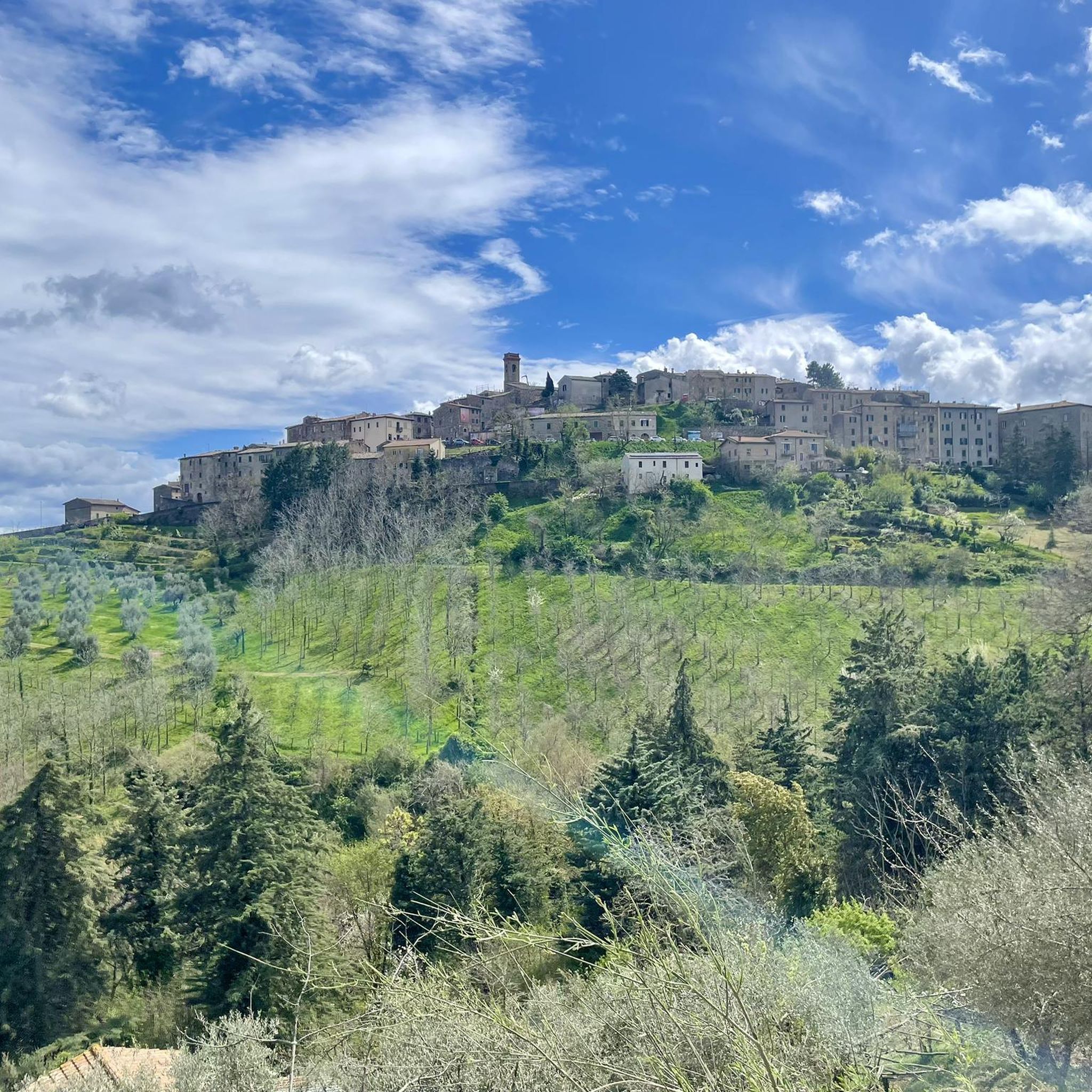
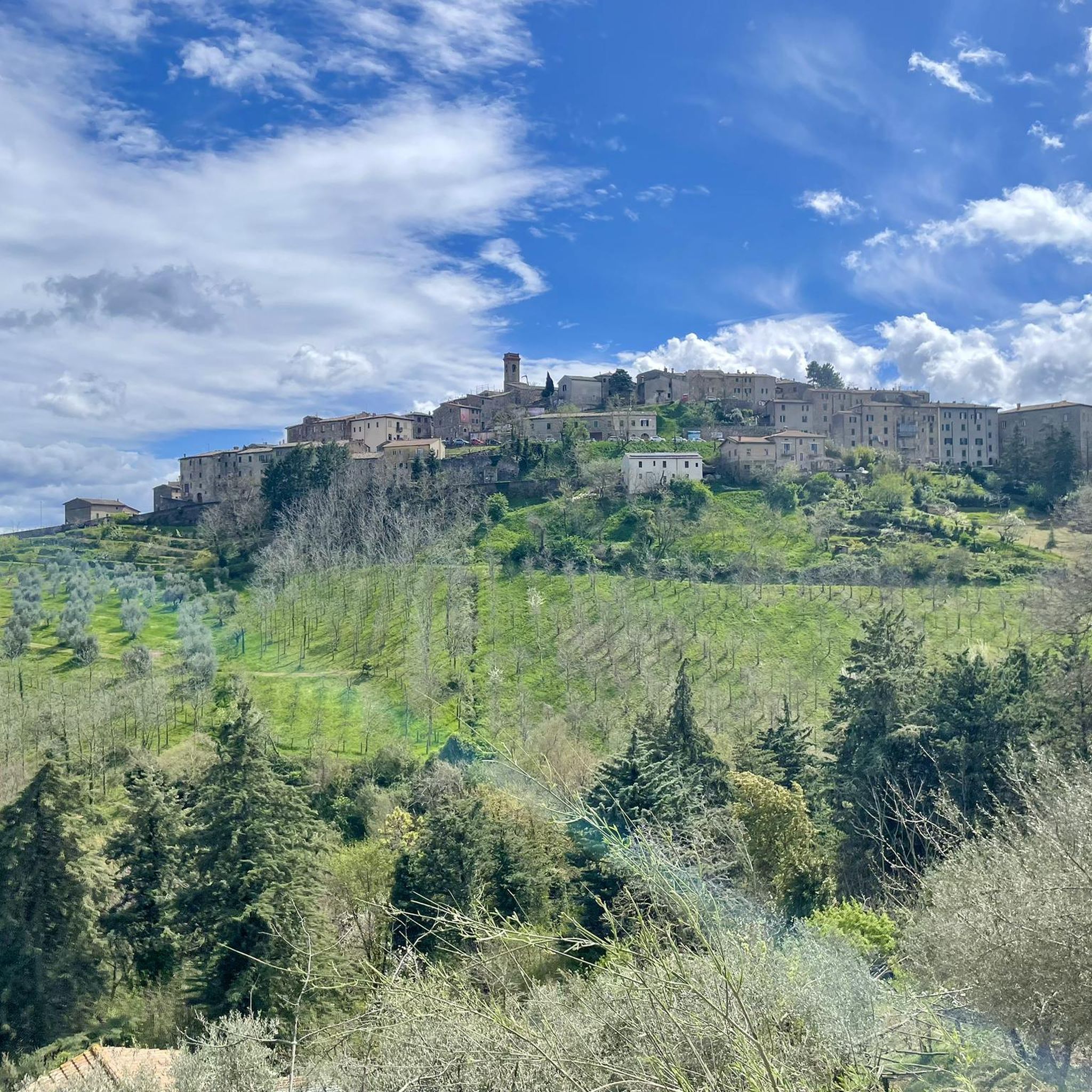
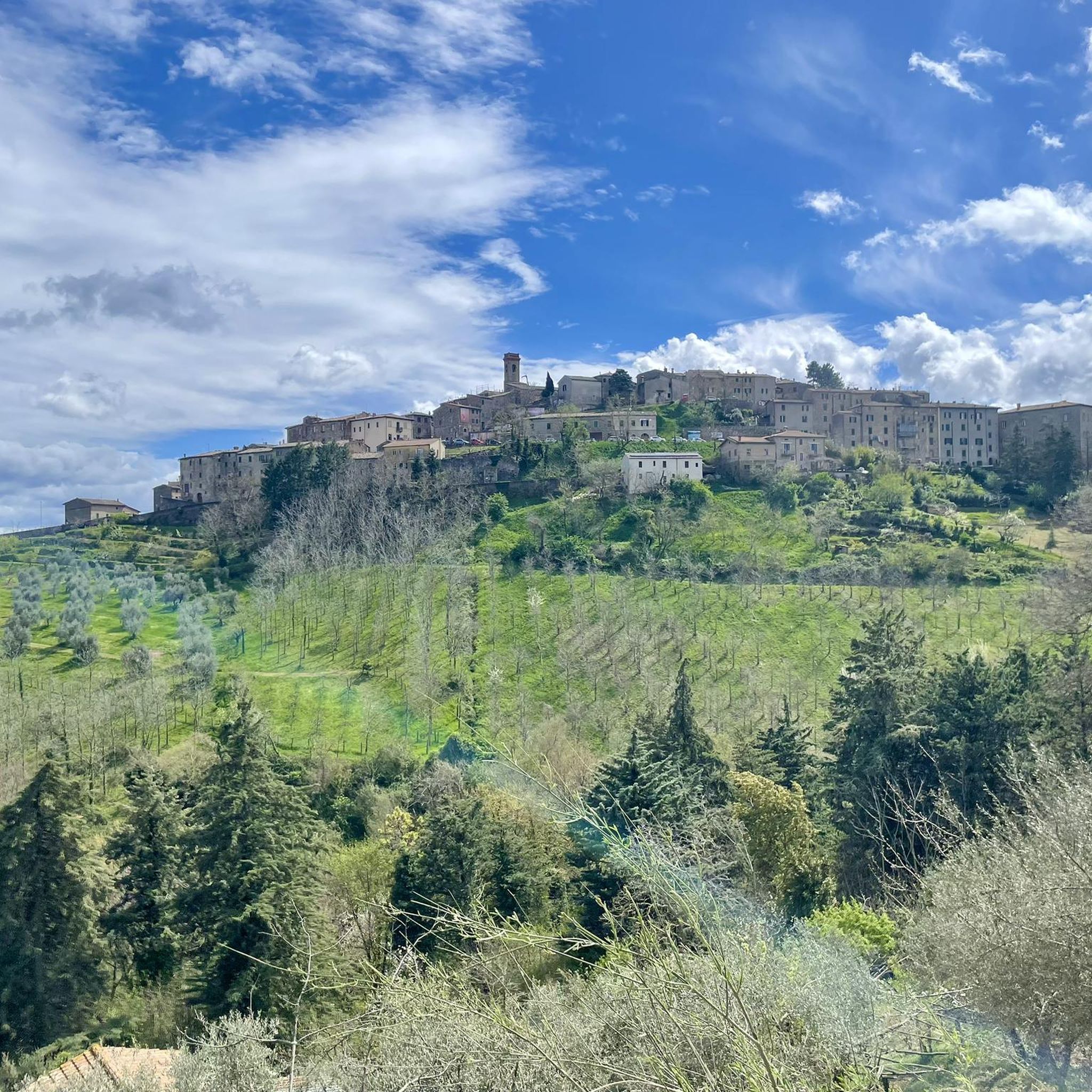
Beautiful village on a hill. There is also an archaeological museum. A trattoria. Two small squares. Visited in the height of summer, it looked deserted, but is inhabited. Worth a visit.
0
0

Frequently Asked Questions
How many hiking trails are available around Murlo?
Murlo offers a diverse network of 22 hiking trails. These include 4 easy routes, 15 moderate trails, and 3 more challenging options, catering to various fitness levels and preferences.
Are there easy hiking trails suitable for beginners or families in Murlo?
Yes, Murlo has 4 easy hiking trails perfect for beginners or families. A great option is the Santo Stefano loop from Casciano, an easy 3.3-mile (5.3 km) path that provides a gentle exploration of the local countryside around Casciano di Murlo.
What kind of scenery and historical points of interest can I expect on Murlo's trails?
Hiking trails around Murlo traverse a landscape characterized by rolling hills, historical mining areas, and scenic views of the Tuscan countryside, including parts of Val d'Orcia. You'll find a mix of forested paths and open terrain, often following ancient tracks or former railway lines. Notable nearby attractions include the historic town of Buonconvento and the unique geological formations of the Crete Senesi.
Are there good circular hiking routes in Murlo?
Many of Murlo's trails are designed as loops, offering convenient circular routes. A popular choice is the Murlo Mines Railway Trail – Ponte Nero loop from Murlo, an 8.5-mile (13.6 km) trail that explores the historical mining landscape.
When is the best time of year to hike in Murlo?
The best times to hike in Murlo are typically spring (April to June) and autumn (September to October). During these seasons, the weather is pleasant, temperatures are mild, and the Tuscan landscape is either blooming or showcasing vibrant fall colors. Summers can be hot, and winters can be cooler with occasional rain.
Can I bring my dog on hikes in Murlo?
Generally, dogs are welcome on hiking trails in Murlo and the surrounding Tuscan countryside. It's always recommended to keep your dog on a leash, especially when passing through agricultural areas or near wildlife, and to carry water for them.
Are there any longer or more challenging hikes for experienced hikers?
Yes, Murlo offers 3 difficult routes for experienced hikers, along with 15 moderate trails that can be quite long. For a longer moderate option with varied terrain, consider the View of Val d'Orcia – Ponte Nero loop from Montepescini, which spans over 10 miles (17 km).
What do other hikers enjoy most about hiking in Murlo?
The hiking trails in Murlo are highly rated by the komoot community, with an average score of 4.3 stars from nearly 400 reviews. Hikers often praise the region's unique blend of historical mining landscapes, the tranquility of the forested paths, and the stunning views of the Tuscan countryside, including glimpses of Val d'Orcia.
Are there any natural monuments or unique geological features to see?
Absolutely. The Murlo area is known for its distinctive natural features. You can explore the famous Crete Senesi, a unique landscape of rolling clay hills, and discover 'The Marls of Murlo' (The Marls of Murlo), which are significant geological formations.
Are there any hot springs or wild swimming spots near Murlo's hiking trails?
While not directly on every trail, the Murlo region is relatively close to natural hot springs. The Petriolo Thermal Baths and Bagni di Petriolo Hot Springs are notable natural monuments in the vicinity, offering opportunities for relaxation after a hike.
Where can I find parking for Murlo's trailheads?
Parking is generally available in the villages and towns that serve as starting points for hikes, such as Murlo itself, Casciano di Murlo, or La Befa. Look for designated parking areas within these settlements, often near the main squares or public facilities.
Are there any trails that follow old railway lines?
Yes, the historical mining areas around Murlo feature trails that utilize former railway lines. The Murlo Mines Railway Trail – Ponte Nero loop from La Befa is a great example, leading through these historical areas and woodlands.
Most popular attractions around Murlo

Get inspired with the komoot mobile app


Explore more
Browse the best Hikes in other regions.
