The best MTB trails around Monte Santa Maria Tiberina
4.6
(659)
3,252
riders
288
rides
Mountain biking around Monte Santa Maria Tiberina offers diverse landscapes and panoramic views from its elevation of 2,257 ft (688 m). The region features ancient Etruscan roads, centuries-old chestnut woods, and natural pastures, providing varied terrain for mountain bike trails. Streams like the Aggia and Erchi, tributaries of the Tiber River, flow at the base of the mountain. This area near the Tuscan border is characterized by woodlands and open plains, suitable for a range of riding experiences.
Best mountain…
Last updated: October 11, 2026
4.9
(9)
36
riders
Moderate mountain bike ride. Good fitness required. Advanced riding skills necessary.
5.0
(1)
13
riders
47.1km
03:15
730m
730m
Moderate mountain bike ride. Good fitness required. Suitable for all skill levels.

4.5
(4)
30
riders
Moderate mountain bike ride. Good fitness required. Suitable for all skill levels.
4.0
(1)
12
riders
19.0km
01:49
560m
560m
Moderate mountain bike ride. Good fitness required. Advanced riding skills necessary.
8
riders
31.1km
02:26
520m
520m
Moderate mountain bike ride. Good fitness required. Suitable for all skill levels.
Get access to more routes and recommendations from other explorers.
Already have an account?
Our route recommendations are based on thousands of hikes, rides, and runs completed by other people on komoot.
Start today with a free account
Your next adventure awaits.

Tips from the Community

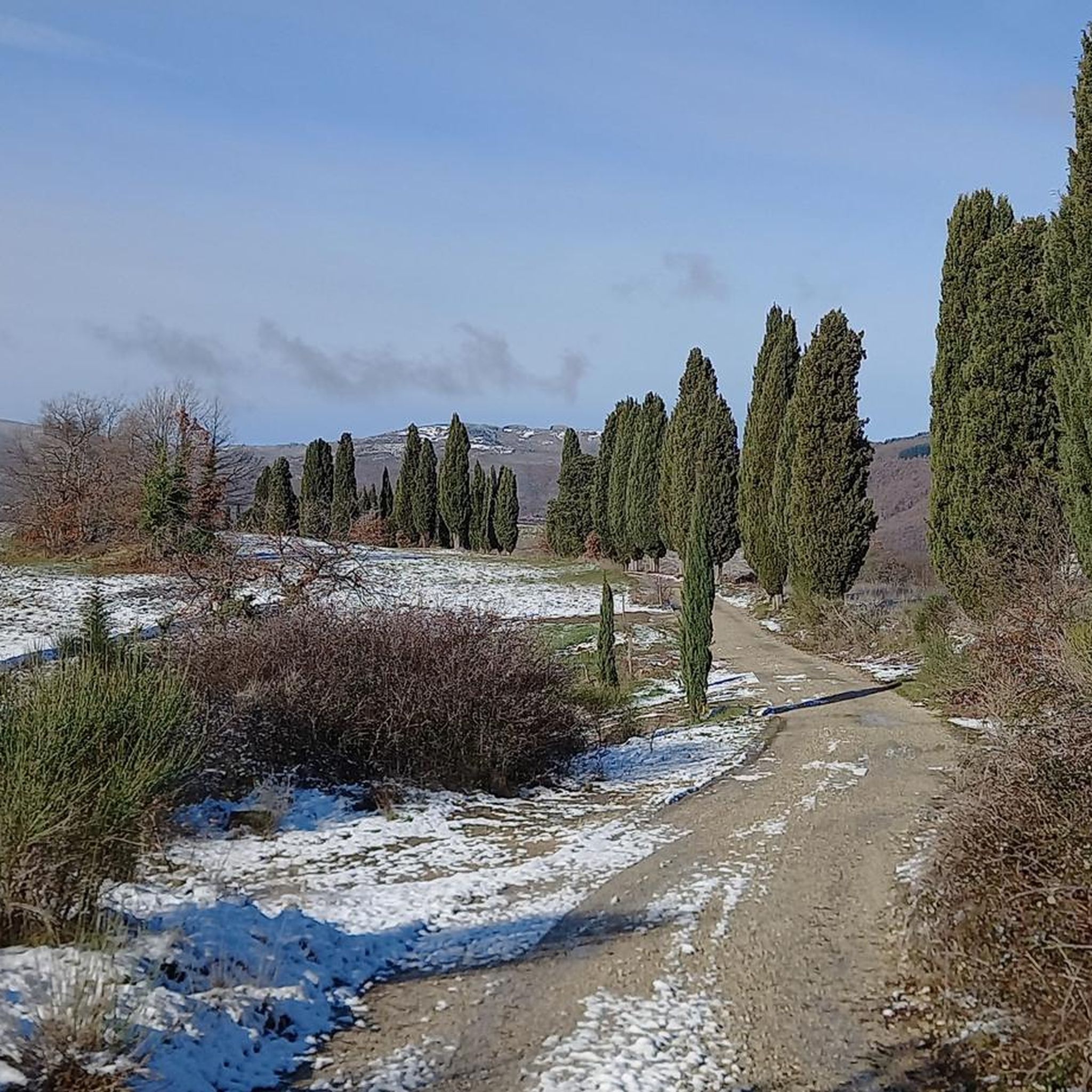
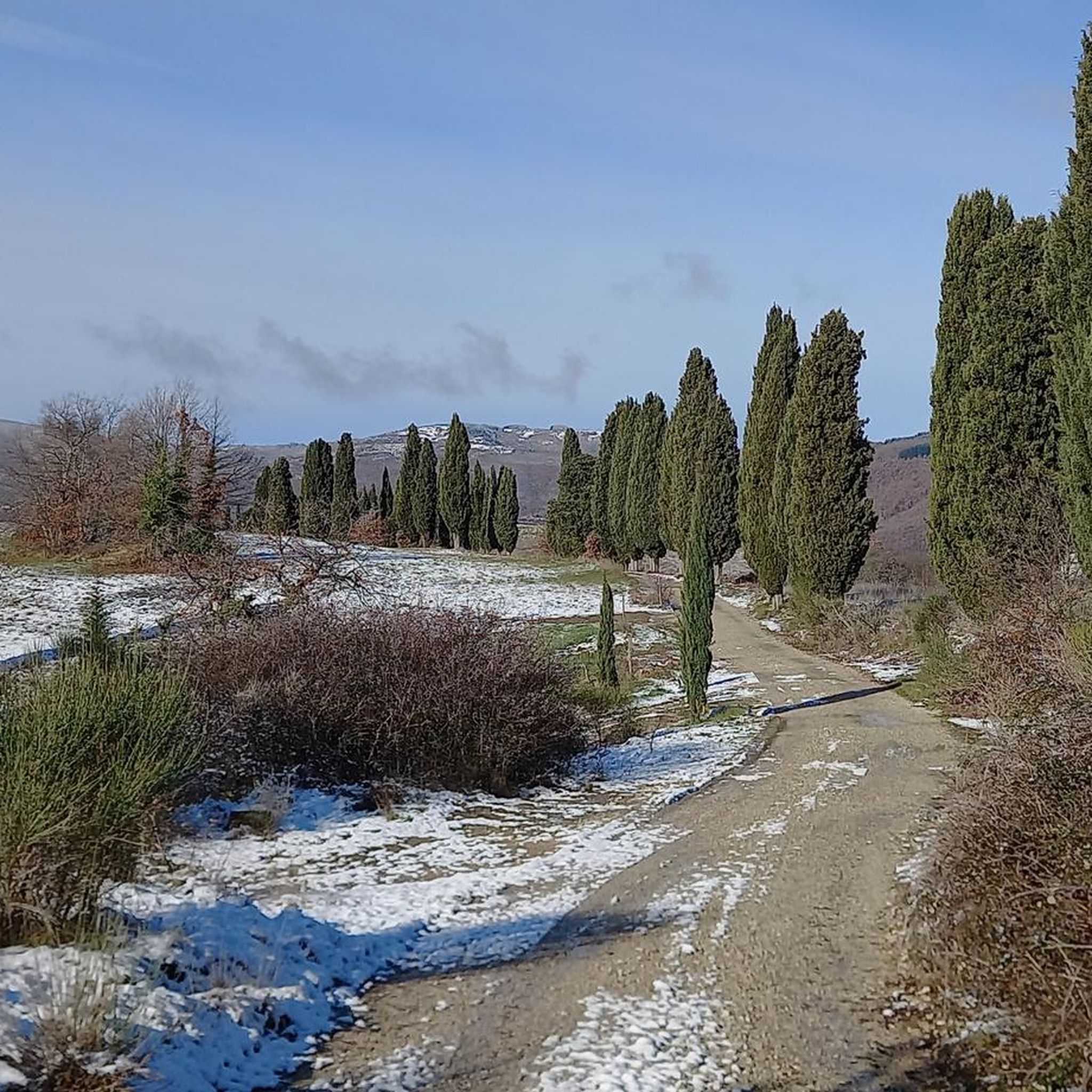
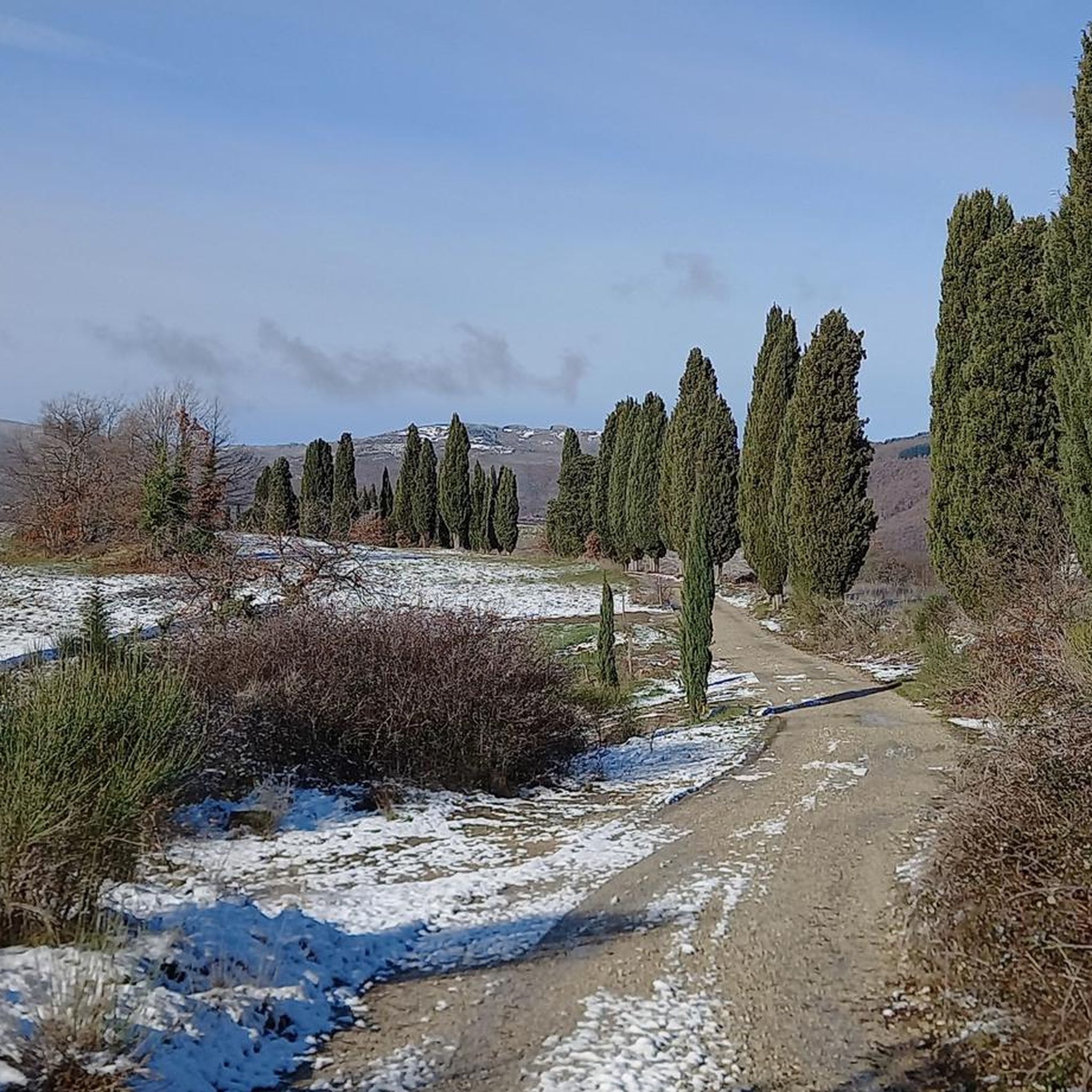
wide-ranging gravel trail that runs along the ridge near the church of Sant'Agnese
0
0

The Museum of the Madonna del Parto, just outside the walls of the village of Monterchi, is a museum for a single work, the masterpiece by Piero della Francesca, probably created towards the mid-fifteenth century for the small church of Momentana, now a cemetery chapel. It depicts the Virgin in an evident state of pregnancy with her hand on her belly in a very natural gesture that blends with the royalty of the entire composition. The angels open the tent, the tabernaculum, which contains Mary, which in turn is the tabernacle of the body of Christ. The hypothesis that it was painted following the death of the painter's mother, originally from Monterchi, is suggestive but unlikely. The Museum also displays the Madonna del Latte, dating back to the 14th century, which was located under the fresco by Piero della Francesca. After the Council of Trent, the altar of the Madonna del Parto was no longer officiated, probably because the subject was no longer considered decorous, and the masterpiece was thus rediscovered only at the end of the nineteenth century. It was so venerated by the inhabitants of Monterchi that, for fear that someone might take it away, they chased away both the restorer Domenico Fiscali, in charge of restoring it after the 1917 earthquake, and the art historians Ugo Procacci and Mario Salmi, who intended to put it safe from the bombings of the Second World War. In addition to the Madonna del Parto Museum in Monterchi it is also possible to visit the Scale Museum. Open to the public since June 2012 and set up in the rooms of the sixteenth-century Palazzo Massi-Alberti, it was born from the private collection of Velio Ortolani, one of the most important of its kind in Europe. Inside this Museum it is possible to retrace over six centuries of the history of all types of scales, starting from the elegant steelyards and two-arm scales of the 15th century up to more modern instruments, such as laboratory scales and market scales. dating back to the last century.
0
0
Monterchi is an Italian municipality of 1,716 inhabitants in the province of Arezzo, in the upper Tiber Valley. From 1927 to 1939 it was part of the province of Perugia, in Umbria, before returning to Arezzo following protests from the population. The town is particularly known for the Madonna del Parto, the famous fresco by Piero della Francesca painted between 1455 and 1465 in honor of his mother, Romana di Perino da Monterchi, originally from the area. The fresco, originally intended for the Chapel of Santa Maria di Momentana, is currently preserved in the Museum of the Madonna del Parto by Piero della Francesca.
0
0

The structures of the Fattoria Autonoma Babacchi were built towards the end of the 1950s and were mainly used for drying the tropical tobacco produced in the Città del Castello area. Decommissioned at the beginning of the Seventies, they were assigned to Alberto Burri shortly afterwards to be used as a laboratory for the creation of large-format works. Over the years, other spaces were recovered and in 1990 the Burri Museum was inaugurated in its current structure.
2
0

Following the track of the Apennine Cycle Route which passes mostly on asphalt, I found myself on this beautiful stretch of dirt road of about 15 km. along the Tiber, beautiful beautiful.
0
1

Former tobacco dryers open from Tuesday to Friday, 10am-1pm and 3pm-6pm. Saturday and Sunday 10am-6pm. For updates, consult the Web
0
0

Once a fishing lake now transformed into an oasis for the nesting of migratory birds
0
0

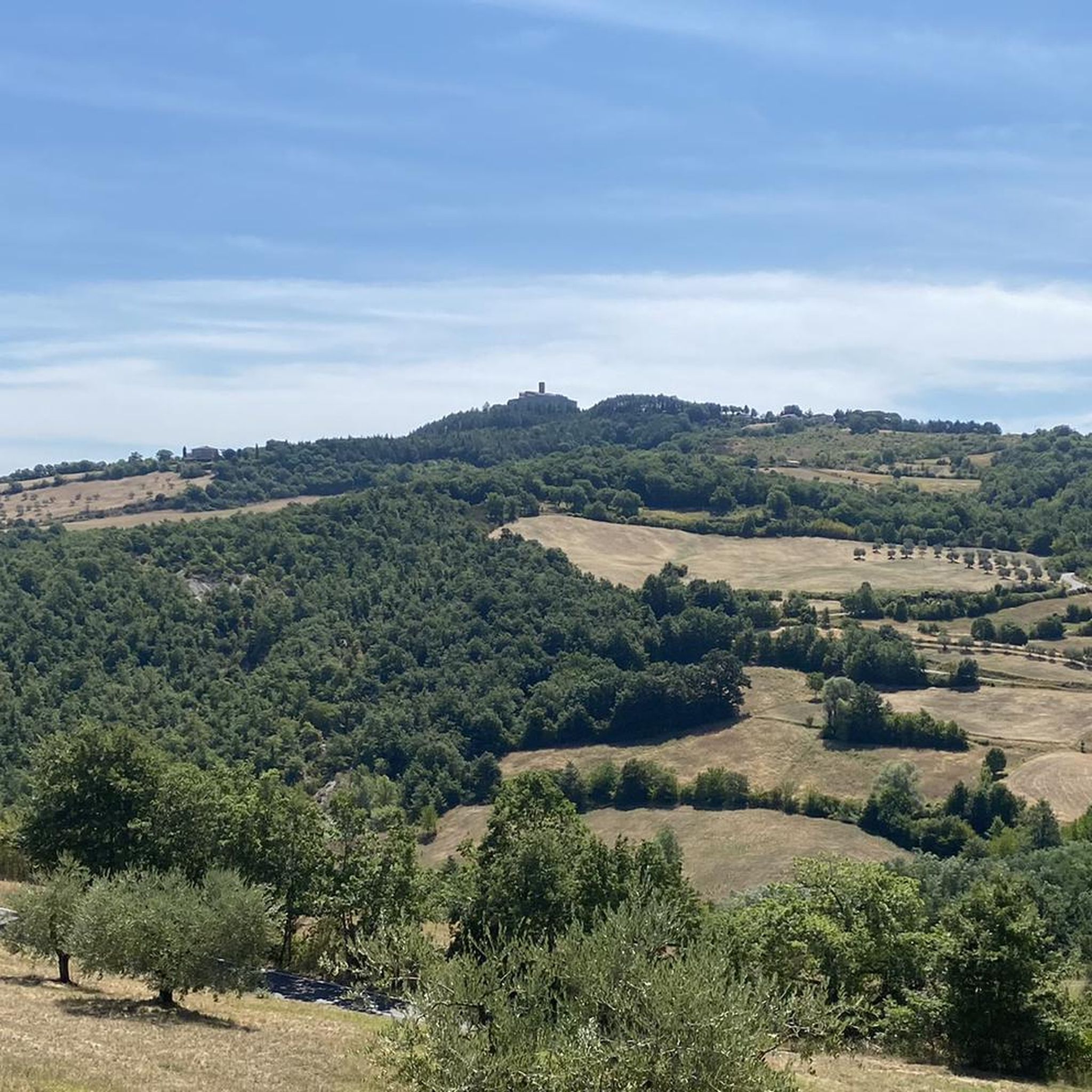
The small medieval village of Monte Santa Maria Tiberina occupies a panoramic position on a hill overlooking the plain of the Aggia stream, from where you can enjoy a splendid view of the Umbrian and Tuscan Valtiberina. Starting from the 11th century it was a fief of the Marquises Bourbon del Monte, descendants of those Marquises del Colle who came to Italy following the Franks and conquered a large part of the Upper Tiber Valley, building fortresses and castles in various strategic points. After the castle was destroyed (1198) due to disagreements with Pope Innocent III, the Marquises rebuilt it by linking their history to that of Monte Santa Maria Tiberina, they obtained concessions and privileges from popes and emperors, managing to remain independent. The marquisate was governed by the descendants of the family until 1815, when Duke Ferdinando of Tuscany took possession of it, interrupting the millenary dominion of the Bourbon del Monte. In 1859 it became part of the Kingdom of Italy.
0
0
Frequently Asked Questions
What kind of mountain biking can I expect around Monte Santa Maria Tiberina?
Monte Santa Maria Tiberina offers a diverse range of mountain biking experiences, from easy rides to challenging routes. The terrain includes ancient Etruscan roads, centuries-old chestnut woods, woodlands, and natural pastures, with both paved and unpaved segments. You'll find routes suitable for various fitness and skill levels, with some even requiring you to push your bike in difficult sections.
How many mountain bike trails are there in Monte Santa Maria Tiberina?
There are over 320 mountain bike trails around Monte Santa Maria Tiberina. These include 33 easy routes, 178 moderate routes, and 116 difficult routes, ensuring options for every skill level.
Are there any family-friendly mountain bike trails in the area?
Yes, there are mountain bike trails suitable for families. The region offers easy rides with minimal elevation gain, perfect for a more relaxed outing. While specific family-designated routes aren't listed, you can filter for 'easy' routes on komoot to find suitable options.
What are some moderate mountain bike trails around Monte Santa Maria Tiberina?
For a moderate challenge, consider the Monte Santa Maria Tiberina – Bridge over the Tiber loop from Piosina, a 47.4 km route with 730m elevation gain. Another good option is the Monterchi – Rolling country road loop from Lippiano, which covers 25.8 km with 648m elevation gain.
Are there challenging mountain bike trails for advanced riders?
Absolutely. Advanced riders looking for a challenge can tackle routes like the Candeggio Junction – Hare Pass Viewpoint loop from Trestina. This difficult 39.6 km path features significant elevation gain, leading to a rewarding viewpoint.
What kind of views can I expect on the mountain bike trails?
The trails offer extensive panoramic vistas. From Monte Santa Maria Tiberina, you can see the fertile plain of the Aggia stream, the Umbrian and Tuscan Valtiberina Valley, and on clear days, even the distant Apuan Alps and the Gran Sasso d'Italia massif. Many routes pass through rich green forests, olive groves, and vineyards, with views of fortified castles.
What do other mountain bikers enjoy most about the trails here?
The mountain bike trails around Monte Santa Maria Tiberina are highly rated by the komoot community, with an average score of 4.6 stars from over 600 reviews. Riders often praise the diverse landscapes, the mixture of medieval hamlets and natural beauty, and the panoramic views over the Tiber Valley.
Are there any circular mountain bike routes available?
Yes, many of the mountain bike routes around Monte Santa Maria Tiberina are loops. Examples include the Monte Santa Maria Tiberina – Bridge over the Tiber loop from Piosina and the Monte Santa Maria Tiberina – Bridge over the Tiber loop from San Secondo, both offering scenic circular rides.
What historical sites or attractions can I see near the mountain bike trails?
The region is rich in history. You can explore the medieval hamlet of Monte Santa Maria Tiberina itself, with its 16th-century castle and the parish church of Santa Maria. Other nearby attractions include the Church of San Severo, the Historic Centre of Anghiari, and the Church of San Francesco, Città di Castello. The Tiber Cycle Route (Ciclovia del Tevere) also passes through the area.
Are there any viewpoints accessible by mountain bike?
Yes, several routes lead to stunning viewpoints. For instance, the Candeggio Junction – Hare Pass Viewpoint loop from Trestina specifically takes you to the Hare Pass Viewpoint, offering expansive vistas of the surrounding landscape.
What is the best time of year for mountain biking in Monte Santa Maria Tiberina?
The diverse landscapes of Monte Santa Maria Tiberina make it suitable for mountain biking across many seasons. Spring and autumn generally offer pleasant temperatures and vibrant scenery. While the region is known for foraging truffles and mushrooms in favorable seasons, always check local weather conditions before heading out, especially for winter rides.
Where can I find parking for mountain biking trailheads?
Many routes start from towns or villages that offer parking. For example, routes often begin from locations like Piosina or Città di Castello-Zona Industriale, which typically have designated parking areas. It's advisable to check the specific route details on komoot for recommended starting points and parking information.
Most popular routes around Monte Santa Maria Tiberina
Most popular attractions around Monte Santa Maria Tiberina

Get inspired with the komoot mobile app


Explore more
Browse the best MTB trails in other regions.
