Attractions and Places To See around Montecrestese - Top 20
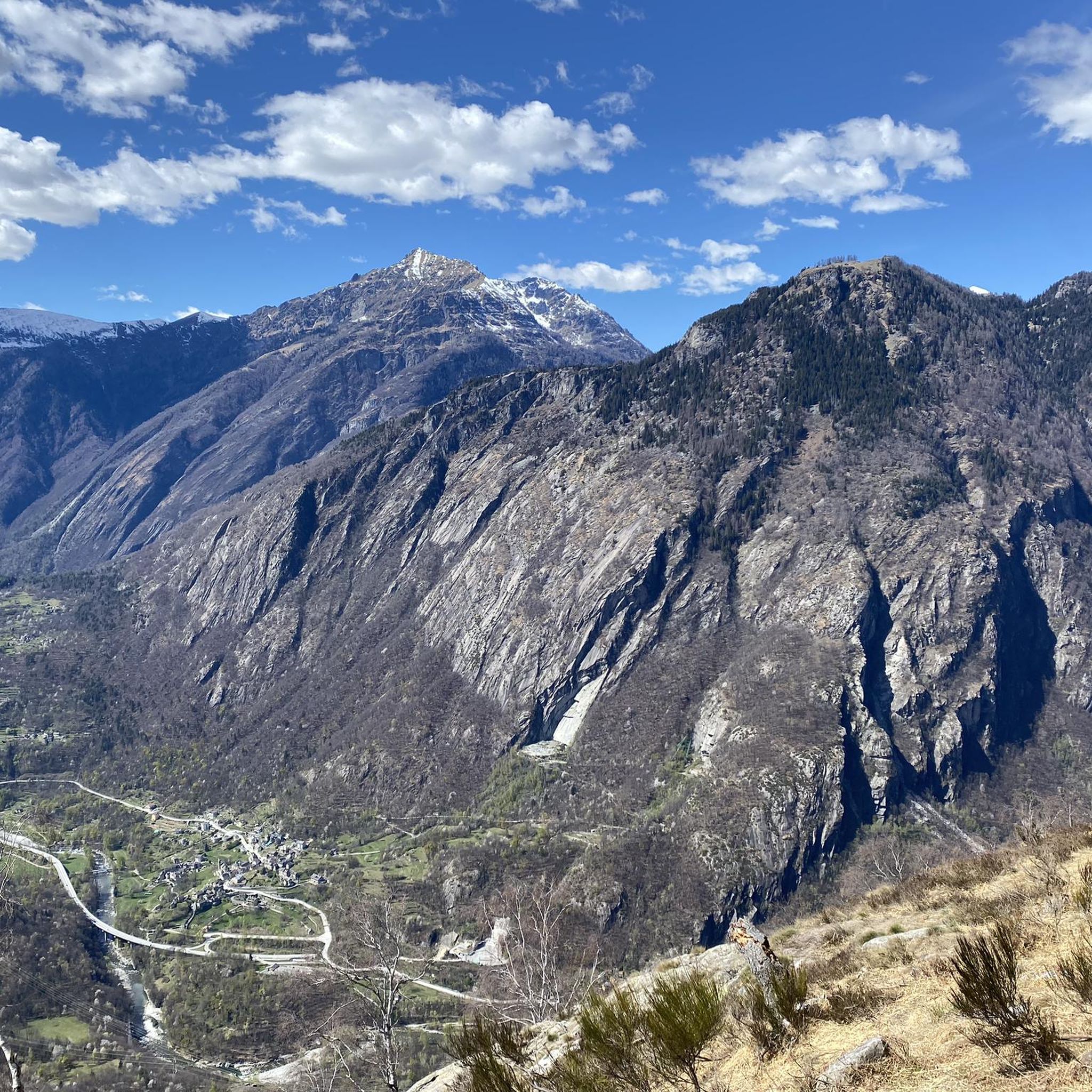
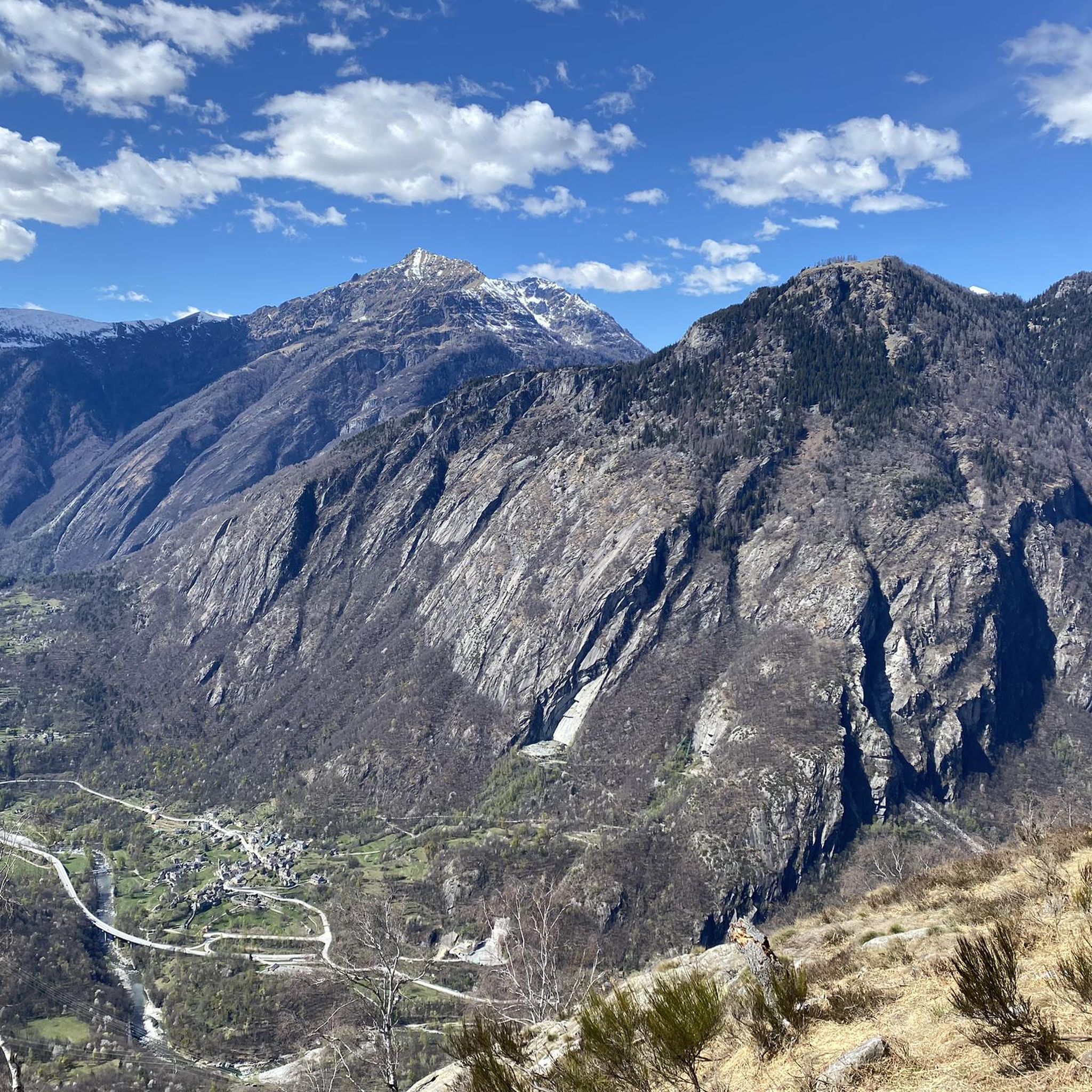
Best attractions and places to see around Montecrestese include a variety of historical, natural, and cultural sites. This municipality, nestled in the Lepontine Alps between the Toce and Isorno rivers, features a landscape shaped by ancient glaciers. Visitors can explore rocky promontories, chestnut woods, and enjoy views of the Ossola Valley. The area offers numerous old rural hamlets and well-maintained networks of popular hiking trails Montecrestese Italy.
Best attractions and places to see around Montecrestese
- The most popular attraction is…
Last updated: August 16, 2026
Giant's Kettles of the Toce
Highlight • Natural Monument
Translated by Google •
Tip by

Uriezzo South Gorge
Highlight • Gorge
Translated by Google •
Tip by

Sign up now to discover places like this
Get recommendations on the best single tracks, peaks, & plenty of other exciting outdoor places.
Sign up for free
Stations of the Cross at Sacro Monte Calvario, Domodossola
Highlight (Segment) • Religious Site
Translated by Google •
Tip by

Market Square, Domodossola
Highlight • Settlement
Translated by Google •
Tip by
Monumental Church of Saint Gaudenzio in Baceno
Highlight • Religious Site
Translated by Google •
Tip by

Sign up for free to discover even more attractions around Montecrestese.
Sign up for free
Already have an account?
Start today with a free account
Your next adventure awaits.
Login or Signup
Popular around Montecrestese


Other adventures around Montecrestese

Tips from the Community

Saint Francis of Assisi, whose 800th anniversary of death we celebrate this year, describes our Christian life with the words of the Apostle Peter: he reminds us that we are called to »follow in the footsteps of Christ, who called his betrayer friend and voluntarily handed himself over to his crucifiers« (cf. NbR XXII, 2; cf. 1 Pt 2:21). The Poverello encourages us to fix our gaze on Jesus: »Let us all, brothers, pay attention to the Good Shepherd, who, to save his sheep, suffered the torment of the cross« (Erm VI). Therefore, on this Way of the Cross, let us accept Saint Francis' invitation to follow in Jesus' footsteps, not just ritually or intellectually, but with our whole being and our whole life: »Offer yourselves in body and carry his holy cross and follow his most holy commandments to the end« (Off XV 13). (from the introduction to the Way of the Cross meditation with the Holy Father, Pope Leo XIV, in the Roman Colosseum on April 3, 2026)
0
0

Worth the visit, the hike, and the trip. A unique monument, definitely worth a visit with plenty of time.
0
0

Imposing church in Baceno
0
1

From a Celtic and Roman sanctuary to the Matarella fortress and a Capuchin monastery, this spiritual place tells an amazing story.
1
0

In 1656, two Capuchins chose the hill of Colle Mattarella, above Domodosso, to make it a place of pilgrimage. Twelve chapels were built, each with a statue or fresco depicting the Stations of the Cross, with an additional chapel depicting the Resurrection of Christ. At the top of Colle Mattarella stands the octagonal Sanctuary of the Holy Cross, the construction of which began in 1657. In the park of the Sacro Monte di Domodossola are the remains of the Mattarella Castle, destroyed in 1415 by Swiss soldiers who wanted to conquer the Ossola Valley and take it from the Duchy of Milan. In 1656, two Capuchins from the Domodossola monastery, Father Gioacchino from Cassano and Father Andrea from Rho, decided to have Stations of the Cross built on the slopes of Colle Mattarella, leading to a church dedicated to the Holy Cross. It was planned to gradually replace the crosses with chapels for the individual Stations of the Cross. Bishop Guido Maria Odescalchi commissioned the legal scholar Giovanni Matteo Capis to coordinate the project and named the hill Monte Calvario ("Calvary"), as the places of worship of the Sacri Monti ("holy mountains") were intended to symbolize the sites in the Holy Land that many pilgrims could not or could no longer reach. The construction work and the technical implementation were entrusted to the architect Tomaso Lazzaro from the Val d'Intelvi. The foundation stone for the pilgrimage site was laid on July 8, 1657, and in March 1662 the first Holy Mass was celebrated at the altar on which a crucifix by Dionigi Bussola had just been erected. A great benefactor and financier of the project was Kaspar Stockalper, a merchant, notary and governor from the Valais who was forced into exile in Domodossola, directly on Monte Calvario, where his figure embodies St. Gaspar, one of the Three Kings, in the 15th chapel of the Sacro Monte. The project to build the chapels was completed in the course of the 18th century; their furnishings have been constantly restored or renewed since then; the most recent statues, from 1957, are carved in wood. Source and further information: https://de.wikipedia.org/wiki/Sacro_Monte_di_Domodossola
1
0
The city of Roman origin lies on the Toce in the center of the Val Ossolane (Ossola Valley) on the route from the Simplon Pass to Lake Maggiore, in a valley widening into which various side valleys flow, on a large alluvial fan that the Bogna, the right tributary of the Toce, has created here. Today, Domodossola has 17,684 inhabitants (as of December 31, 2022). As the (formerly) largest Italian city whose name begins with "D", Domodossola is used in Italian spelling tables for this letter ("D come Domodossola"). Source: https://de.wikipedia.org/wiki/Domodossola In addition to the weekly market on Saturday, the Sacro Monte di Domodossola is particularly worth visiting. It is part of the Sacri Monti. The Sacri Monti in Piedmont and Lombardy have been part of the UNESCO World Heritage Site in northern Italy since 2003. Finally, you should enjoy the Italian flair in the town. In summer, be sure to eat an ice cream or stop off at a café or pizzeria, it's worth it.
3
0

There is a feeling of abrupt detachment when we enter what seems to be the mysterious door to the very heart of the mountain: almost suddenly we pass from a gentle, sunny and verdant landscape to a space of shadow where rare rays of sun struggle to penetrate, grazing the walls like blades of light, we pass from the heat to the cool-humid where only mosses and lichens manage to thrive and develop. We walk easily on the flat and dry bottom, created by the deposits of the streams, large irregularly rounded cavities alternate with narrow passages and above our heads dizzying walls seem at times to almost join together leaving only narrow openings towards the sky. Some metal ladders make the climb easier.
2
0
Architecture At the center of the Romanesque stone façade of the monumental Church of San Gaudenzio stands the portal, surmounted by a rose window and flanked by the large fresco of San Cristoforo, painted in 1542. At the entrance, the breadth of the basilica church is highlighted, with five naves, divided by four series of different columns and characterized by a markedly sloping floor, composed of slabs of serizzo. The difference in height between the beginning of the nave and the base of the steps of the presbytery is about 90 centimeters. The side naves are made up of ten splendidly frescoed transepts; in addition to the imposing ciborium of the main altar, seven side altars dedicated respectively to: San Rocco, San Giovanni Battista, Santa Vittoria, the Blessed Virgin Mary, San Pietro, Sant'Antonio Abate and San Carlo Borromeo enrich the Church of San Gaudenzio. The oldest and most artistically valuable part of the building is the Chapel of the Madonna (now of the Rosary), built in 1326; it is located in the nave to the right of the altar, and its wonderful frescoes are dedicated to the life of Mary. In the presbytery, on the right, there is the large Crucifixion (1542), a work by Antonio Zanetti known as Bugnate, below the figures of Adam and Eve, while on the barrel vault the seven-headed dragon of the Apocalypse is depicted; the transept of the presbytery is enclosed by three arches finely frescoed with prophets and sibyls. At the end of the eastern nave you can admire the sixteenth-century Baptistery consisting of a pedestal in white Crevoladossola marble surmounted by a wooden ciborium containing the baptismal font. To the west of the church in 1628 the chapel of the Confraternity of the Blessed Sacrament was erected, today used as a winter chapel and intended to guard the Blessed Sacrament. The bell tower from 1522, 50 meters high, the 'new' sacristy and the wooden choir behind the high altar, dating back to the end of the 17th century. The architecture of the church is completed by the beautiful organ of Swiss-Valais manufacture by the organ builders Carlent and Walpen dating back to the first half of the 19th century.
0
1
Frequently Asked Questions
What historical and cultural sites can I explore in Montecrestese?
Montecrestese is rich in history. You can wander through numerous ancient rural hamlets like Pontetto, Roldo, and Castelluccio, many with restored stone buildings. Don't miss the unique Parish Church Bell Tower, the highest in the Ossola Valley, or the intriguing Megalithic Remains in Castelluccio and Croppola. The Stations of the Cross at Sacro Monte Calvario, Domodossola, a UNESCO World Heritage site, is also nearby.
What natural attractions are there for visitors to Montecrestese?
The area boasts impressive natural formations. Explore the Giant's Kettles of the Toce, a geological wonder in the Antigorio Valley, or venture into the Uriezzo South Gorge, an impressive canyon where you can walk between towering rocks. The landscape, shaped by ancient glaciers, features rocky promontories and lush chestnut woods.
Are there family-friendly activities or attractions in Montecrestese?
Yes, several attractions are suitable for families. The Giant's Kettles of the Toce offers an easy and panoramic excursion. The Uriezzo South Gorge is also considered family-friendly, allowing walks through its unique rock formations. Exploring the ancient hamlets on paved mule tracks can also be an engaging experience for all ages.
What kind of outdoor activities can I do around Montecrestese?
Montecrestese is ideal for outdoor enthusiasts. You can enjoy hiking, mountain biking, and trail running on well-maintained networks of trails and mule tracks. Canyoning is also possible in the Isorno torrent. For specific routes, consider exploring the hiking routes around Montecrestese, or if you prefer cycling, check out the cycling tours in the area.
Where can I find the best panoramic views in Montecrestese?
For magnificent vistas, head to Mattarella Hill, which offers sweeping views of Domodossola and the surrounding mountains. The Alagua alpine pasture also provides remarkable panoramic views of the Toce River plain and the Antigorio Valley.
Are there any museums in Montecrestese?
Yes, Montecrestese hosts two interesting museums. The Museo dello Spazzacamino (Chimney Sweep Museum) is located in Villa Antonia, offering an engaging perceptual experience. Additionally, the Museo di Scienze della Terra U. Baroli (Ubaldo Baroli Museum of Earth Sciences) showcases unique stones and valuable minerals found in the region.
What is the best time to visit Montecrestese for outdoor activities?
The region is generally pleasant for outdoor activities from spring through autumn. The lush chestnut woods and well-maintained trails are particularly inviting during these seasons. For specific events like the gourmet walking tour through the hamlets, check local listings, as it typically combines hiking with local food and wine tasting.
Can I visit ancient hamlets in Montecrestese, and what makes them special?
Absolutely. Montecrestese is known for its numerous old rural hamlets, including Pontetto, Roldo, Burella, Cardone, and Castelluccio. These hamlets, scattered across various altitudes, can be explored via characteristic paved mule tracks. Many stone buildings have been restored, offering a journey back in time. The Tour of the Old Hamlets of Montecrestese is a great way to experience them.
What is the significance of the Tempietto Lepontico in Roldo?
The Tempietto Lepontico in Roldo is a unique ancient temple designed with a single small window. This window allows sunlight to penetrate directly into the building only during the autumn and spring equinoxes, highlighting its ancient astronomical or religious significance.
Are there any challenging hikes around Montecrestese?
Yes, for those seeking more challenging routes, the area offers options such as the 'At the Cippata Dam, Alpe Carvirone and Aulogna - Ring tour' or the 'Sentiero Italia CAI: Alpe Lago to Rifugio Bonasson', both listed as difficult in the hiking guide for Montecrestese. There are also mountain hikes available, like those found in the mountain hikes guide.
What do visitors enjoy most about the attractions near Montecrestese?
Visitors frequently appreciate the unique natural formations like the Giant's Kettles of the Toce and the impressive Uriezzo South Gorge, often noting the feeling of abrupt detachment when entering the cool, shadowy canyons. The historical and religious significance of sites like the Stations of the Cross at Sacro Monte Calvario is also highly valued, offering a place of peace and reflection amidst stunning Alpine views.
Most popular routes around Montecrestese
Most popular attractions around Montecrestese

Get inspired with the komoot mobile app


Explore more
Still not found the Highlight you’re looking for? See guides of the top attractions in other regions:
