Attractions and Places To See around Simaghis/Simaxis - Top 20
Best attractions and places to see around Simaghis/Simaxis are found in the fertile Campidano plain of central-west Sardinia, Italy. This region offers a blend of historical, cultural, and natural sites, situated along the Sant'Elena River. The area's rich history is evident through its ancient monuments and archaeological sites, reflecting its significance since Nuragic and Roman eras. Proximity to Monte Arci Park also provides access to unique natural features.
Best attractions and places to see around Simaghis/Simaxis
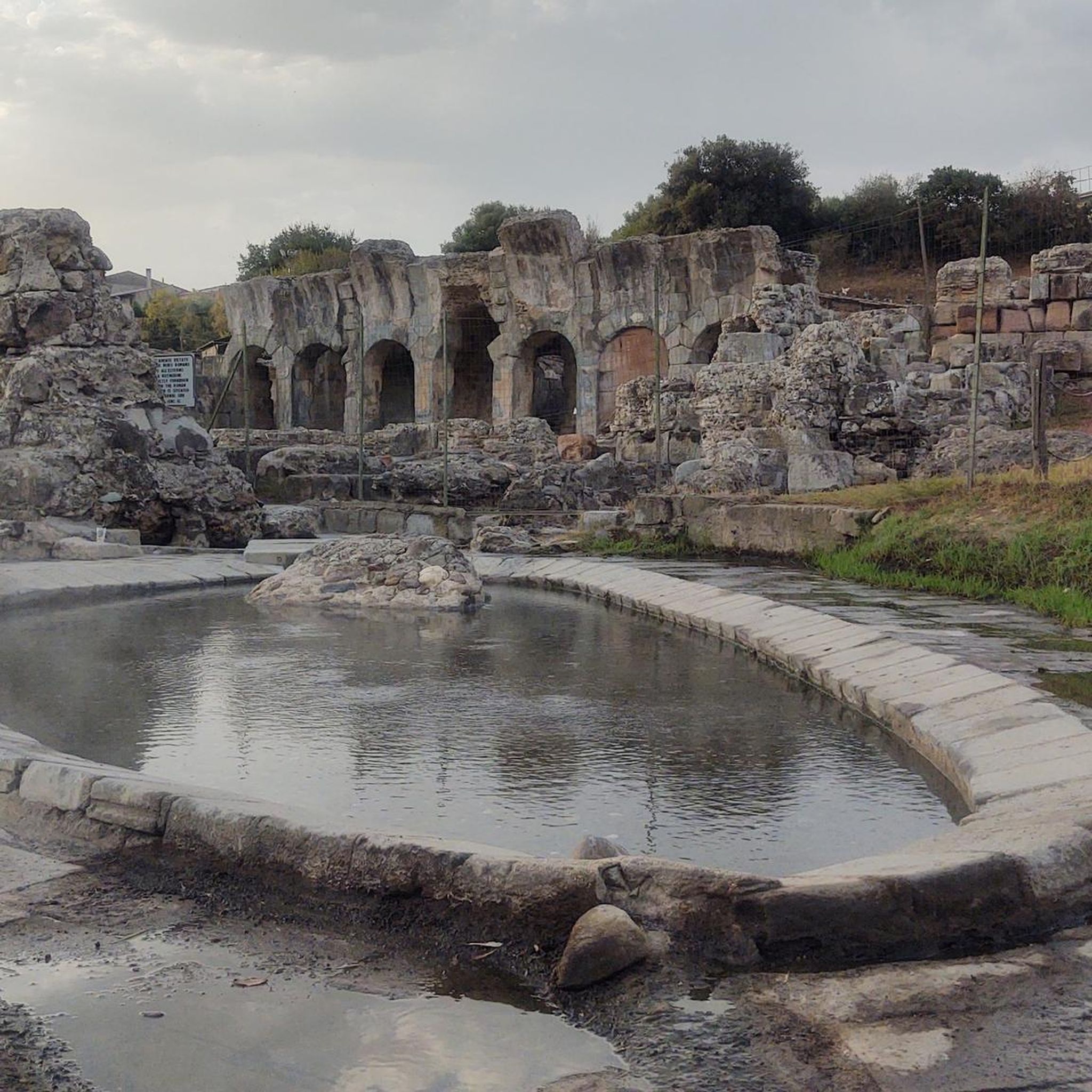
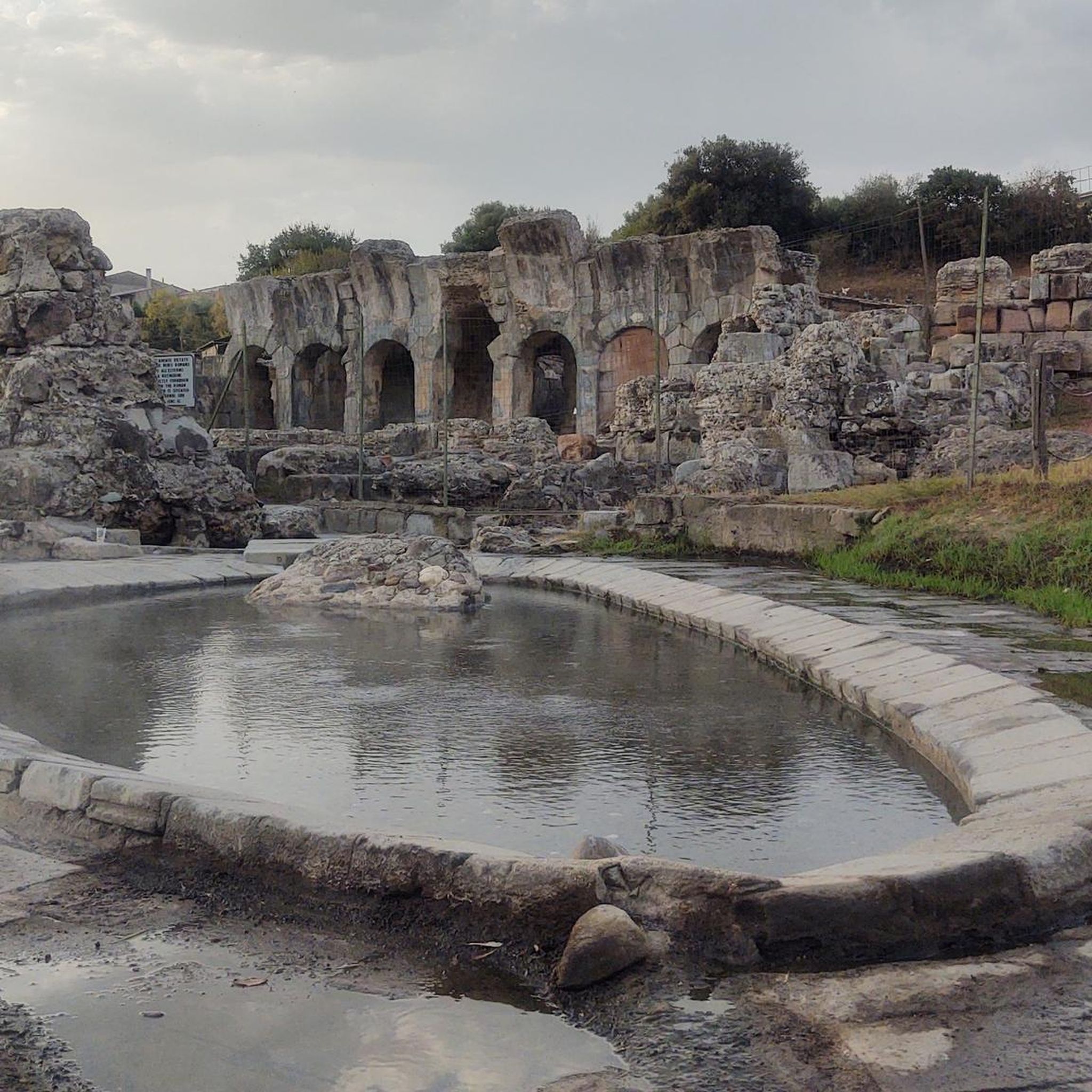
- The most popular attractions is Fordongianus Roman Baths, a historical site where warm waters naturally flow into the river. This archaeological site features different buildings constructed at various times, including a Nymphaeum tank dedicated to the worship of nymphs.
- Another must-see spot is Cathedral of St. Mary of the Assumption, a religious building in Oristano, about 10 km away. This Baroque-style Roman Catholic cathedral houses notable works, including a 14th-century Spanish wooden sculpture.
- Visitors also love Casa Aragonese, a historical site dating back to the 16th-17th century. This splendid example of stately architecture is divided into two parts, one of which houses a museum.
- Simaghis/Simaxis is known for its historical sites, religious buildings, and natural features. The area offers a variety of attractions to see and explore, from ancient Roman baths to significant cathedrals and architectural landmarks.
- The attractions around Simaghis/Simaxis are appreciated by the komoot community, with 32 upvotes and 46 photos shared by visitors.
Last updated: June 24, 2026
Cathedral of St. Mary of the Assumption
Highlight • Religious Site
Source: en.wikipedia.org/wiki/Oristano_Cathedral
Translated by Google •
Tip by

Fordongianus Roman Baths
Highlight • Historical Site
Translated by Google •
Tip by

Sign up now to discover places like this
Get recommendations on the best single tracks, peaks, & plenty of other exciting outdoor places.
Sign up for free
Portixedda Tower
Highlight • Historical Site
In the second half of the 16th century, fears of an invasion of Sardinia by the Ottoman Empire necessitated an operation to modernize the defensive structures. For this purpose, the upper part of the medieval tower was demolished, while the lower part was built into a new massive tower with a circular base. The cut stone of the previous structure was reused, along with other elements such as B. the Machikoles and loopholes, which have been adapted for the use of firearms. Key elements of military development included the creation of a decorative outer bank layer built just around the base to support offensive artillery attacks. Puerta de Levante was the name given to the new solid due to its role of patrolling the road leading east. However, it was more commonly known as Portixedda to distinguish it from the largest doors such as Porta Ponti by its small size…
Source: museooristano.it/view/s/b44c7b15ef994e9ca59e60fc73147784
Translated by Google •
Tip by

Casa Aragonese
Highlight • Historical Site
Translated by Google •
Tip by

Church of San Francesco (Oristano)
Highlight • Religious Site
The Church of San Francesco in Oristano has a neoclassical façade, but originally (i.e. when the Franciscans arrived in Oristano in 1253) the church was Gothic in style.
The facade of the Church of San Francesco has three portals and consists of two pillars and four columns supporting the tympanum. A hemispherical dome with an octagonal lantern crowns the building.
The interior, with a central plan, has two chapels on each side. The coffered dome is supported by pillars and semi-columns with Ionic capitals.
The first chapel on the left houses the Christ of Nicodemus, a remarkable 14th-century wooden sculpture of the Spanish school, prototype of a series of crucifixes, including the wooden crucifix of Ollolai, preserved in various churches in Sardinia.
In the sacristy there are other valuable works, such as the panel (1533), once part of an altarpiece, depicting St. Francis receiving the stigmata, the work of Pietro Cavaro and the marble statue (1368) possibly representing St. Basil Magnificent, attributed to Nino Pisano [3].
Source: oristanoturismo.it
Translated by Google •
Tip by

Sign up for free to discover even more attractions around Simaghis/Simaxis.
Sign up for free
Already have an account?
Start today with a free account
Your next adventure awaits.
Login or Signup

Tips from the Community

Beautiful baroque cathedral with a separate bell tower.
1
0

It's worth a visit, the architecture is interesting and the audio guide gives you detailed information about what you see. Entrance to the baths is included in the price (or vice versa). So if you see one you can also see the other as they are just a few minutes drive or probably 5-10 minutes walk away
1
0

A cathedral, so for Hamburgers: no carousels and beer, just church and stuff. Beautifully colorful inside.
3
1

nice square outside a pleasant baroque cathedral with a couple of gothic vestiges
4
0

The Aragonese House is a splendid example of stately architecture dating back to around the 16th-17th century. The house is divided into two parts and one of these houses a museum. Not far from here stands the church of San Pietro Apostolo.
1
0

The Franciscan Order has been present in Sardinia since 1230, and the monastery of San Francesco was founded in Oristano as early as 1253. There is no documentary evidence of the Gothic construction of the church. By the early 19th century, it was in serious disrepair, so Archbishop Giovanni Maria Bua decided to rebuild it from scratch rather than restore it. Thus, it was destroyed in 1835, and on February 17 of the following year, the foundation stone of the new church was blessed. It was designed by the Sassari friar Antonio Cano, a royal protégé who had studied at the Accademia di San Luca in Rome. The building collapsed on September 18, 1838, before the dome was completed. From the surviving survey of the church-monastery complex and its surroundings, it can be deduced that the dome had an elliptical shape, as is typical for Cano's works. Shortly thereafter, the task was assigned to the most important Sardinian architect of the 19th century, Gaetano Cima of Cagliari. The project, submitted on September 18, 1841, was approved on April 22, 1842, and work then began. The building, rebuilt according to the forms of purist classicism, reopened for worship in October 1847. The current building has a central plan with two chapels on each side and a deep semicircular apse. From the left chapel, a small room leads to the sacristy. The façade, accessible via a wide staircase with eight steps, is preceded by a tympanum-pronaos supported by four columns and two pilasters. All supports are surmounted by Ionic capitals. The façade features a large central portal and two smaller symmetrical side portals. The central body of the building is covered by a large hemispherical dome, standing on a cylindrical drum and surmounted by a polygonal lantern. Source and further information: http://www.sardegnacultura.it/j/v/253?v=2&c=2488&t=1&s=18322
1
0
The first document that testifies to the existence of the church dedicated to Santa Maria dates from February 20, 1192. In 1195 the cathedral and the entire city were set on fire and sacked by the troops of the magistrate of Cagliari Guglielmo de Lacon-Massa. The cathedral was badly damaged during the military occupation of the city and in 1228 reconstruction began. The pointed arch building, written documents and two bronze knockers on the portal bear witness to this. In the first half of the 14th century, the Romanesque structure of the Duomo was modified... The transept and the first bell tower were part of the 1300 extension, whose colored majolica dome was only added in the 18th century. In the will of King Hugh II of Arborea of April 4, 1335, the ruler mentions the place where he wanted to be buried: in the Church of the Virgin Mary of Oristano and precisely in the Chapel of San Bartolomeo, which still needs to be completed . Further extensions may have taken place between 1336 and 1349, as the grave of the legal adviser Filippo Mameli, who died in 1349, suggests. During an invasion of French militias that took place on February 25, 1637, the city of Oristano, the churches and especially the cathedral were looted and badly damaged. With the arrival of Sardinian troops from Cagliari and Sassari, the French soldiers decided to leave the city on February 28th to embark again. Pursued by the Sardinian military, the French left behind two pieces of artillery, eleven boats, thirty-six prisoners and eight banners, four of which are preserved on the wall of the main entrance of Oristano Cathedral. The current cathedral, built in the years 1729-1745 to an elegant Piedmontese Baroque design, houses the chapel with the relics of Sant'Archelao, patron saint of the city and the diocese. Source and more information: https://www.comune.oristano.it/it/amministrazione/luoghi/luogo/Cattedrale-di-Santa-Maria-Assunta/
2
1
Portixedda (literally "little door") is one of the smaller structures of the city walls, built between 1290 and 1293 by order of Judge Mariano II de' Bas-Serra d'Arborea. The defensive building controlled the important eastern access point that led to the Villa of Silì, continuing along the ancient Roman path of the Forum Traiani and finally to the Barbagie in the northeast of the island. The 13th-century structure was constructed as a square tower using mixed stone and mortar masonry techniques and was finished with an outer layer of sandstone blocks… In the second half of the 16th century, fears of an invasion of Sardinia by the Ottoman Empire necessitated an operation to modernize the defensive structures. For this purpose, the upper part of the medieval tower was demolished, while the lower part was built into a new massive tower with a circular base. The cut stone of the previous structure was reused, along with other elements such as B. the Machikoles and loopholes, which have been adapted for the use of firearms. Key elements of military development included the creation of a decorative outer bank layer built just around the base to support offensive artillery attacks. Puerta de Levante was the name given to the new solid due to its role of patrolling the road leading east. However, it was more commonly known as Portixedda to distinguish it from the largest doors such as Porta Ponti by its small size… Source: https://www.museooristano.it/view/s/b44c7b15ef994e9ca59e60fc73147784
0
0
Frequently Asked Questions
What historical and cultural sites can I explore around Simaxis?
The region around Simaxis is rich in history. You can visit the Casa Aragonese, a 16th-17th century stately home with a museum. Nearby, the Parish of San Simmaco Papa is a significant religious site. Don't miss the ancient Fordongianus Roman Baths, an archaeological site featuring different buildings and a Nymphaeum tank. In Oristano, about 10 km away, you'll find the impressive Cathedral of St. Mary of the Assumption and the Church of San Francesco.
Are there any natural attractions or parks near Simaxis?
Yes, Simaxis is close to the Monte Arci Park, known for its obsidian deposits, historically referred to as the Prehistoric 'black gold' of the Mediterranean. The town itself is situated along the Sant'Elena River, a tributary of the Tirso River, contributing to the fertile Campidano plain.
What are some family-friendly activities in the Simaxis area?
Many historical sites are suitable for families, such as the Cathedral of St. Mary of the Assumption and the Casa Aragonese, which offers a museum. Exploring the Fordongianus Roman Baths can also be an engaging experience for all ages, offering a glimpse into ancient history.
What kind of outdoor activities can I do near Simaxis?
The area around Simaxis offers various outdoor activities. You can find numerous routes for running, cycling, and mountain biking. For running, explore trails like the 'Running loop from Province of Oristano'. Cyclists can enjoy routes such as the 'Stagno di Cabras Loop'. Mountain bikers have options like 'In bici nel complesso forestale del Grighine da Solarussa'. You can find more details and routes in the dedicated guides for Running Trails around Simaghis/Simaxis, Cycling around Simaghis/Simaxis, and MTB Trails around Simaghis/Simaxis.
Are there any unique local events or traditions in Simaxis?
Simaxis celebrates its agricultural heritage with the Day of Rice every November, reflecting its history of rice cultivation. Another unique local tradition is the Carnival of Sa Coja de Tziu Damus, a retro-style carnival featuring a mock marriage and townspeople in traditional dress.
What is the significance of the Roman Bridge near Simaxis?
The Roman Bridge is an ancient monument near Simaxis, though its precise construction date is debated, with some scholars suggesting it was built between the 7th and 10th centuries AD. It is remarkably well-preserved and stands as a testament to the region's long history.
Where can I see ancient ruins of churches near Simaxis?
Just two kilometers from Simaxis, in the hamlet of San Vero Congius, you can find the ruins of the churches of San Nicolò di Mira and Sant'Angelo. Additionally, the remains of the ancient Parish of San Teodoro of Amasea, dating between the 7th and 9th centuries, are also located here.
What is the Portixedda Tower and where is it located?
The Portixedda Tower, also known as Porta de Levante, is a historical defensive structure in Oristano. Originally part of the city walls built in the late 13th century, its lower section was incorporated into a new, massive circular tower in the 16th century for defensive modernization. It controlled an important eastern access point to the city.
What is the best time of year to visit Simaxis?
Given its location in Sardinia, the spring (April-June) and autumn (September-October) months generally offer pleasant weather for exploring historical sites and engaging in outdoor activities, avoiding the peak heat of summer. The Day of Rice festival in November could also be a unique cultural experience.
Are there any archaeological sites related to the Nuragic period near Simaxis?
Yes, the area surrounding Simaxis has been densely populated since Nuragic, Phoenician/Punic, and Roman eras due to its fertile land and proximity to Monte Arci obsidian. Traces of two Neolithic villages (Ozieri culture) have been discovered near the river, indicating ancient human presence.
What do visitors enjoy most about the attractions around Simaxis?
Visitors frequently appreciate the rich historical depth of the region, from the ancient Fordongianus Roman Baths with their naturally flowing warm waters, to the architectural beauty of the Cathedral of St. Mary of the Assumption. The Casa Aragonese is also noted for its interesting architecture and museum. The komoot community has shared 46 photos and given 32 upvotes, highlighting the visual appeal and historical significance of these sites.
Where can I find accommodation near Simaxis?
While Simaxis itself is a smaller town, you can find accommodation options within Simaxis or in the larger nearby city of Oristano, which is about 10 km away. Oristano offers a wider range of hotels, B&Bs, and guesthouses.
Most popular routes around Simaghis/Simaxis
Most popular attractions around Simaghis/Simaxis

Get inspired with the komoot mobile app


Explore more
Still not found the Highlight you’re looking for? See guides of the top attractions in other regions:
