Attractions and Places To See around Monghidoro - Top 20
Attractions and places to see around Monghidoro, a town located on the border between Emilia and Tuscany, offer a blend of natural beauty and historical landmarks. Situated as a historical crossing point between the Po Valley and central Italy, the area features diverse landscapes including beech forests and chestnut groves. Visitors can explore cultural sites and ancient Roman roads, providing insights into the region's past and natural environment.
Best attractions and places to see around Monghidoro
- The most popular attractions…
Last updated: October 9, 2026
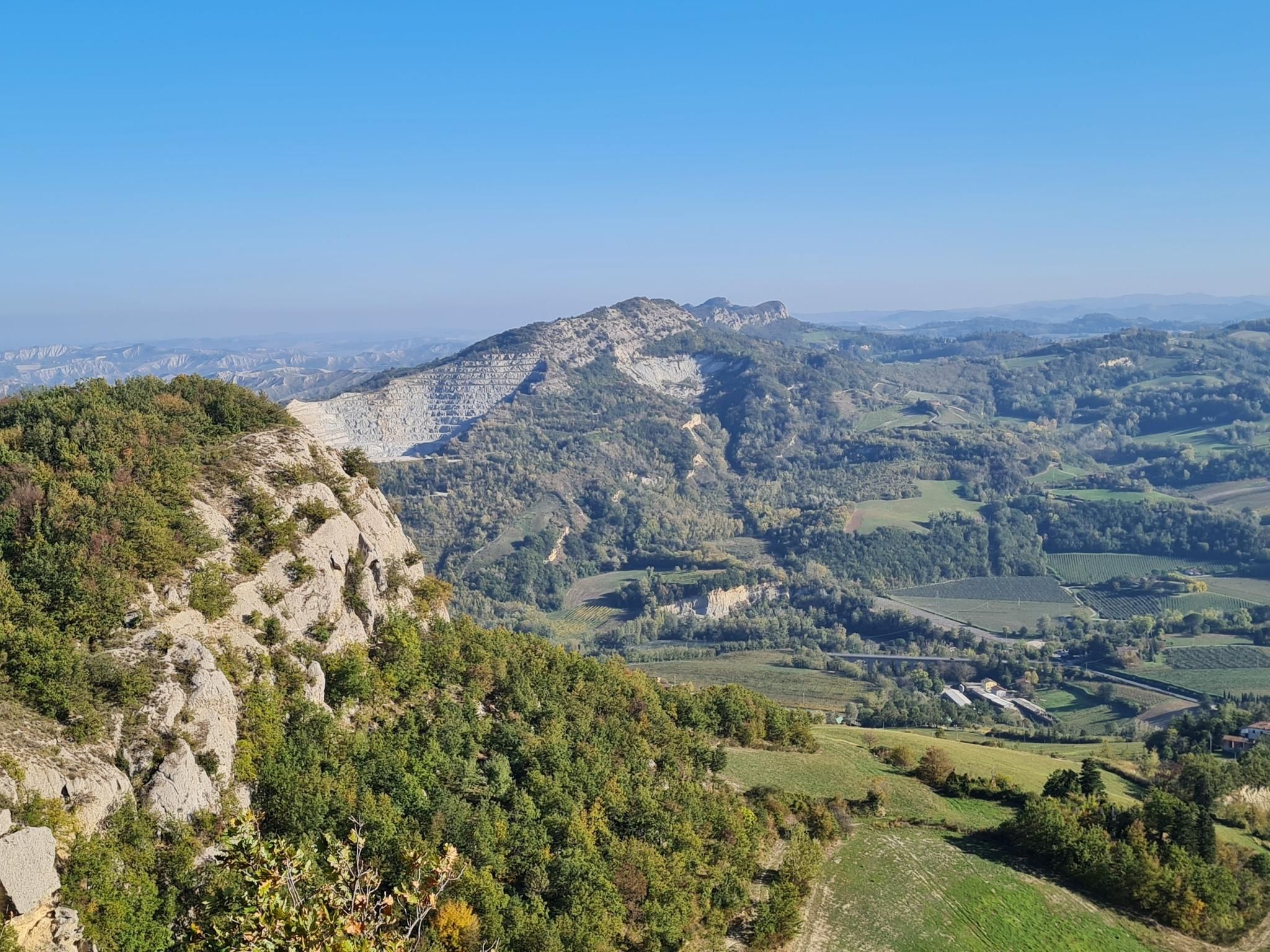
Monte Adone summit
Highlight • Summit
Translated by Google •
Tip by

Remains of the Military Flaminia
Highlight • Historical Site
Translated by Google •
Tip by

Sign up now to discover places like this
Get recommendations on the best single tracks, peaks, & plenty of other exciting outdoor places.
Pian di Balestra — Countryside on the Via degli Dei
Highlight • Natural
Translated by Google •
Tip by

Emilia-Romagna–Tuscany Border Marker
Highlight • Monument
Translated by Google •
Tip by

Ruins of Caprara di Sopra
Highlight • Historical Site
Translated by Google •
Tip by

Sign up for free to discover even more attractions around Monghidoro.
Already have an account?
Start today with a free account
Your next adventure awaits.

Other adventures around Monghidoro

Tips from the Community

a walk not to be missed!
0
0


already done twice and always beautiful
0
0

Along the Via degli Dei (Way of the Gods), you'll find the remains of the Flaminia Militare, an ancient Roman road built in 187 BC to connect Bologna to Arezzo. Hidden for centuries, it was rediscovered in the 1970s by two passionate hikers. Today, well-preserved sections of the original pavement can still be seen, nestled in the Apennine woods. Walking along it means traversing a true piece of history, on a journey that combines nature, archaeology, and memory.
2
0
recommended for the wonder of the woods and the super marked path
0
0

Borders as they should be. Nothing more than a stone by the wayside.
0
0


Here you can follow in historical footsteps: Discover the remains of the Flaminia Militare, an ancient Roman road built in 187 BC by Consul Caio Flaminio. This road connected Bologna with Arezzo and likely followed a route already used by the Etruscans to cross the Apennines. The Via Flaminia Militare is an ancient Roman road connecting Bologna and Arezzo. As Tito Livio recorded in 187 BC, it was built at the instigation of Consul Caio Flaminio, likely using a path already used by the Etruscans for trans-Apennine trade. The paving of the Via Flaminia Militare not only served to expand the Roman road network. Rather, the goal was to create a wide and well-maintained road that would make it easier for armies to cross the Apennines without major difficulties. Over time, the Via Flaminia Militare was gradually abandoned and eventually fell into obscurity during Roman times, having lost its strategic importance. In 1977, archaeologists Franco Santi and Cesare Agostini began to deepen their studies into the existence of this road and began searching for it. After two years of intensive research, in August 1979, they discovered a paving stone hidden beneath the foliage near Monte Bastione, not far from the Futa Pass. It was a slab of rock commonly used for road construction in Roman times. It is important to note that in addition to this ancient Roman road, there is another road with the same name: the Via Flaminia Militare, built as a strategic road for military purposes during World War II. Its name derives from the ancient Via Flaminia, built by the Romans as early as 220 BC to connect Rome to the city of Rimini.
0
1
Frequently Asked Questions
What natural attractions can I explore around Monghidoro?
The region offers several natural highlights. You can visit the extensive Alpe di Monghidoro nature reserve, known for its diverse forests and panoramic views. Another significant natural treasure is La Martina Park, a 155-hectare area perfect for walking, hiking, and mountain biking. Don't miss the spectacular pond at Triton's Park, home to newt specimens, or the historical Savena Stream Mills, some of which are still operational.
Are there historical sites to visit in the Monghidoro area?
Yes, Monghidoro is rich in history. You can explore the Remains of the Military Flaminia, an ancient Roman road built in 187 BC. Another poignant site is the Ruins of Caprara di Sopra, a small town destroyed during World War II. The Castellaccio Park also marks the site of the former Monghidoro 'castrum'.
What cultural landmarks are there in Monghidoro?
Monghidoro features several cultural landmarks. The Chiostro Olivetano della Cisterna, a remnant of a 16th-century Olivetan monastery, now hosts cultural events. The Church of Santa Maria Assunta, dating back to 1256, houses a painting by A. Burrini. In the Piamaggio hamlet, you can visit the Museum of Peasant Civilization of the Apennines to learn about local traditions.
Are there any family-friendly activities or parks in Monghidoro?
Absolutely! Triton's Park (Parco Avventura del Tritone) on Mount Oggioli is an adventure park surrounded by greenery, offering various routes with fixed and mobile walkways, ropes, and net tunnels suitable for both adults and children. It also has a free picnic area.
Where can I find panoramic views near Monghidoro?
For breathtaking views, head to the Monte Adone summit, which offers wonderful panoramic vistas. On clear days, the Alpe di Monghidoro also provides extensive views from the Adriatic to the Alps. You can also find great viewpoints along the Pian di Balestra — Countryside on the Via degli Dei.
What kind of outdoor activities are available around Monghidoro?
The area around Monghidoro is ideal for various outdoor activities. You can find numerous running trails, cycling routes, and mountain biking paths. For detailed routes, explore the Running Trails around Monghidoro, Cycling around Monghidoro, and MTB Trails around Monghidoro guides.
What is the significance of the ancient Roman road near Monghidoro?
The Remains of the Military Flaminia are sections of an ancient Roman road, Flaminia Militare, built in 187 BC. by Consul Caio Flaminio. This road connected Bologna to Arezzo and was crucial for facilitating the movement of armies across the Apennines. It was rediscovered by hikers in the 1970s and is now a popular historical trekking route.
Can I learn about local traditions and history in a museum?
Yes, the Museum of Peasant Civilization of the Apennines, located in Piamaggio about 3 kilometers from Monghidoro, offers a fascinating glimpse into the life and traditions of the area's peasants through reproductions of different settings and activities.
What unique natural features can be found along the Savena stream?
Along the Savena stream, you can discover ingenious historical mills, some of which are still operational, like the Mazzone Mill. The area is also characterized by numerous springs, ponds, wetlands, and the picturesque Passeggere lakes, offering a diverse natural landscape.
What do visitors particularly enjoy about the attractions in Monghidoro?
Visitors appreciate the blend of natural beauty and historical significance. Many enjoy the panoramic views from Monte Adone summit and the unique experience of walking along the ancient Remains of the Military Flaminia. The sense of history and the opportunity to connect with nature are frequently highlighted.
Is there a place to experience the border between Emilia-Romagna and Tuscany?
Yes, you can visit the Emilia-Romagna–Tuscany Border Marker. This cippo delimits the border between the two regions (Bologna - Florence) and is a popular spot for a photo, often found along wooded stretches near the Flaminia Militare.
Are there any significant religious sites in Monghidoro?
Beyond the Church of Santa Maria Assunta, the Sanctuary of Our Lady of Lourdes in the Campeggio hamlet is notable. It features a reproduction of the Lourdes grotto within one of its chapels and was recognized as a 'Jubilee Site' in 2025.
Most popular attractions around Monghidoro

Get inspired with the komoot mobile app


Explore more
Still not found the Highlight you’re looking for? See guides of the top attractions in other regions:
