Attractions and Places To See around Pontecorvo - Top 20
Best attractions and places to see around Pontecorvo include historical landmarks, cultural sites, and natural features. The town, situated on the Liri River, has medieval origins and is surrounded by rolling hills within the Monti Aurunci Nature Park. This region offers a blend of historical insights and scenic landscapes.
Best attractions and places to see around Pontecorvo
- The most popular attractions is Montecassino Abbey, a religious building founded in 529 AD. It is considered one of the most important…
Last updated: May 10, 2026
Montecassino Abbey
Highlight • Religious Site
Translated by Google •
Tip by

Polish War Cemetery at Monte Cassino
Highlight • Historical Site
Translated by Google •
Tip by

Sign up now to discover places like this
Get recommendations on the best single tracks, peaks, & plenty of other exciting outdoor places.
Sign up for free
Snow Well of the Aurunci Mountains
Highlight • Historical Site
Translated by Google •
Tip by

Hermitage of Santa Maria Romana
Highlight • Religious Site
The place is very isolated, therefore ideal for those who wish …
Translated by Google •
Tip by

Melfa Gorges
Highlight • Gorge
Translated by Google •
Tip by

Sign up for free to discover even more attractions around Pontecorvo.
Sign up for free
Already have an account?
Start today with a free account
Your next adventure awaits.
Login or Signup
Tips from the Community

"Death is not the end, but only a very specific end: namely, the end of a first, provisional period of life and the beginning of a never-ending new epoch. Jesus said, 'My kingdom is not of this world.' Therefore, there is another world. Not only his disciples, but also his opponents believed in this other world. The doctor of the law, for example, asks him what he must do 'to gain eternal life.' (...) Precisely because it lasts forever, this life is so precious that everything... of the present world pales in comparison." (Text by Albino Luciani / Pope John Paul I)
0
0

It is the destination of the evocative Cammino di San Benedetto which leads from his hometown of Norcia to the abbey of Montecassino which houses his tomb, passing through Subiaco where the Saint lived for a long time and where the monastery of Santa Scolastica and that of the Sacro Speco are located.
2
0
Beautiful road closed to traffic that follows the Melfa gorges along the path of San Benedetto
3
0

Climb that requires training, about 9km at 5/6% average gradient, but the view you see during the climb is worth the effort. Unfortunately they do not allow bikes in and currently there are no parking spaces for bikes, but you can take some photos.
0
0


Adorable, slight slope excellent even in the opposite direction uphill
0
0

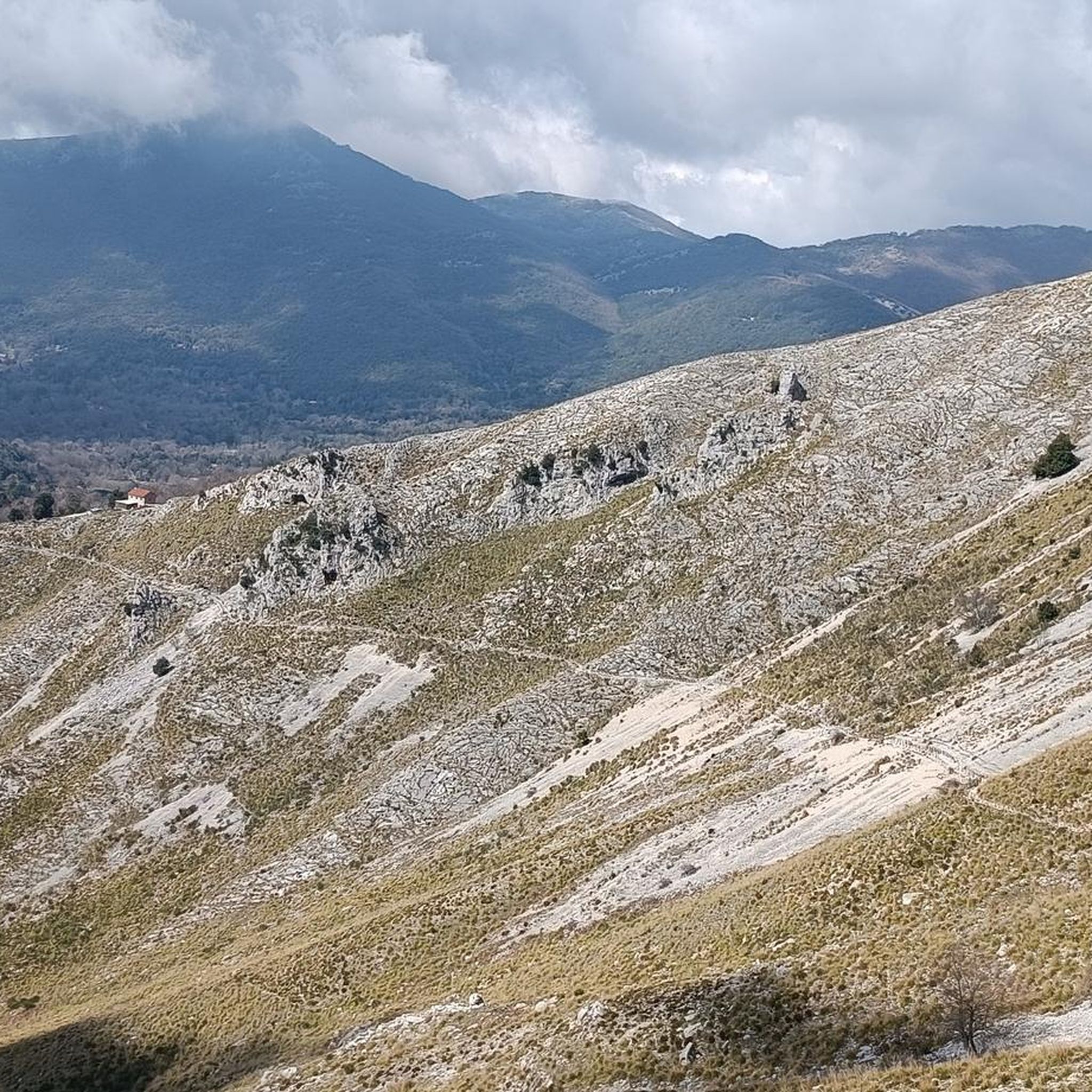
“Snow pits” and “snow ways” are interesting historical features found in many mountainous regions, including the Aurunci Mountains. These sites are linked to the collection and storage of snow, a historic activity carried out in many mountain areas before the advent of modern refrigeration technologies. Snow pits are historic structures used to store snow during the winter for later use during the warmer months of the year. These are underground constructions, made of dry stone, which allowed the snow to be preserved for several weeks or even months. The snow was compressed into the pits by layering it with layers of insulation such as straw, leaves or twigs, thus allowing its preservation until the summer season. This preserved snow was mainly used for cooling purposes or in the ice-making process. The snow routes of the Aurunci Mountains were ancient routes used to transport snow collected in snow pits towards the coast, in particular to Gaeta, where it was sold mainly to merchant ships for cooling food or drinks during the warmer months. The history of snow pits and snow routes represents a fascinating aspect of past life and traditions linked to the use of snow as a precious resource. Exploring these structures and historical routes can offer an interesting window into the past and daily life of local communities who lived in mountainous areas such as the Aurunci Mountains.
0
0

The Abbey of Montecassino, founded by San Benedetto da Norcia in 529 AD, is one of the oldest monasteries in Italy and the cradle of Western monasticism. Located in Cassino, between Rome and Naples, it was a spiritual and cultural center of great importance in the Middle Ages. Destroyed in 1944 during the battle of Monte Cassino, it was then faithfully rebuilt according to the original plans.
1
0
Frequently Asked Questions
What historical landmarks can I explore in and around Pontecorvo?
Pontecorvo is rich in history. You can visit the medieval Pontecorvo Castle and its Rodoaldo Tower, which now serves as the bell tower for the Basilica of San Bartolomeo. The Basilica of San Bartolomeo itself, rebuilt in Romanesque style after WWII, houses a Cathedral Museum. Just a short distance away, the Montecassino Abbey is a major historical and spiritual site, considered the cradle of Western monasticism.
Are there any museums in Pontecorvo worth visiting?
Yes, Pontecorvo offers several museums. The Civic Museum displays archaeological finds from the Roman and medieval periods. For those interested in local history, the Museo della Cultura Agricola e Popolare del Tabacco illustrates the region's tobacco cultivation history. Additionally, the Museo delle Battaglie on Monte Leuci is dedicated to World War II events, showcasing relics and documents from that period.
What natural attractions can I find near Pontecorvo?
The area around Pontecorvo boasts significant natural beauty. The town is nestled by the Liri River, which offers scenic views. You can also explore the Melfa Gorges, a unique place with a road closed to traffic, perfect for a slow-paced exploration. The region is characterized by rolling hills and is part of the Monti Aurunci Nature Park, where you can find viewpoints like the Big Bench 261 on Monte Menola for panoramic vistas.
What outdoor activities are available around Pontecorvo?
Pontecorvo is an excellent base for outdoor enthusiasts. You can find numerous routes for various sports. For hiking, explore trails like the 'Selvacava-Monte Fammera Trail' or routes within the Monti Aurunci Nature Park. Cyclists can enjoy road cycling routes such as 'Rocca Janula – Montecassino Abbey loop from Pontecorvo', while mountain bikers have options like 'Cascata della Mola loop from Pontecorvo'. You can find more details on these activities in the dedicated guides for Hiking around Pontecorvo, MTB Trails around Pontecorvo, and Road Cycling Routes around Pontecorvo.
Are there any family-friendly attractions in the Pontecorvo area?
Yes, several attractions are suitable for families. The Montecassino Abbey is categorized as family-friendly, offering a rich historical and cultural experience. Exploring the scenic Melfa Gorges on foot or by bike can also be an enjoyable activity for families, as the road is closed to traffic.
What is the significance of the Polish War Cemetery at Monte Cassino?
The Polish War Cemetery at Monte Cassino is a poignant historical site honoring the Polish soldiers who fell during the Battle of Monte Cassino in World War II. It is one of several war cemeteries in the Cassino area and features an obelisk dedicated to the fallen. It serves as a powerful reminder of the sacrifices made during the war.
Can I find any unique historical features related to past local life?
Yes, in the Monti Aurunci Mountains, you can discover the Snow Well of the Aurunci Mountains. These 'snow pits' and 'snow ways' are fascinating historical features used to collect and store snow during winter for use in warmer months, primarily for cooling and ice-making. They offer a glimpse into the past daily life and resourcefulness of local communities.
What is the Marco Pantani Summit?
The Marco Pantani Summit, originally known as 'Le Crocette', is a steep climb that has been dedicated to the famous cyclist Marco Pantani. At the top, there is a statue honoring him. It's a popular spot for cyclists and offers a viewpoint for those who make the ascent.
What do visitors particularly enjoy about the attractions around Pontecorvo?
Visitors frequently praise the spectacular routes and the sense of immersion in silence, especially when exploring places like the Melfa Gorges. The historical significance and spiritual atmosphere of sites like Montecassino Abbey are also highly appreciated. Many enjoy the beautiful landscapes and the opportunity to explore at a slow pace, taking in the unique surroundings.
Are there any specific cultural traditions or local products Pontecorvo is known for?
Pontecorvo is known for its traditional terracotta amphorae called 'cannate'. The town is also famous for its locally cultivated Pontecorvo DOP pepper, which is celebrated annually at a festival held in September. These traditions reflect the rich agricultural and artisanal heritage of the area.
What is the best time of year to visit Pontecorvo for outdoor activities?
The spring and autumn months generally offer the most pleasant weather for outdoor activities around Pontecorvo, with milder temperatures ideal for hiking, cycling, and exploring historical sites. Summers can be warm, while winters, though mild, might see some colder days, especially in the higher elevations of the Monti Aurunci Nature Park.
Can I reach attractions around Pontecorvo using public transport?
While specific public transport routes to every individual attraction may vary, Pontecorvo itself is accessible. For reaching major sites like Montecassino Abbey, there are often local bus services or taxis available from nearby towns like Cassino. However, for exploring more remote natural areas or trailheads, having a car is generally recommended for greater flexibility.
Most popular attractions around Pontecorvo

Get inspired with the komoot mobile app


Explore more
Still not found the Highlight you’re looking for? See guides of the top attractions in other regions:
