Attractions and Places To See around Pofi - Top 20
Attractions and places to see around Pofi include a town situated on an extinct volcano in the Lazio region of Italy. The area offers panoramic views of the Ciociaria region and features a blend of historical sites and natural landscapes. Visitors can explore ancient churches, historic palaces, and significant natural features like mountain summits. The region provides diverse points of interest for those exploring its history and natural beauty.
Best attractions and places to see around Pofi
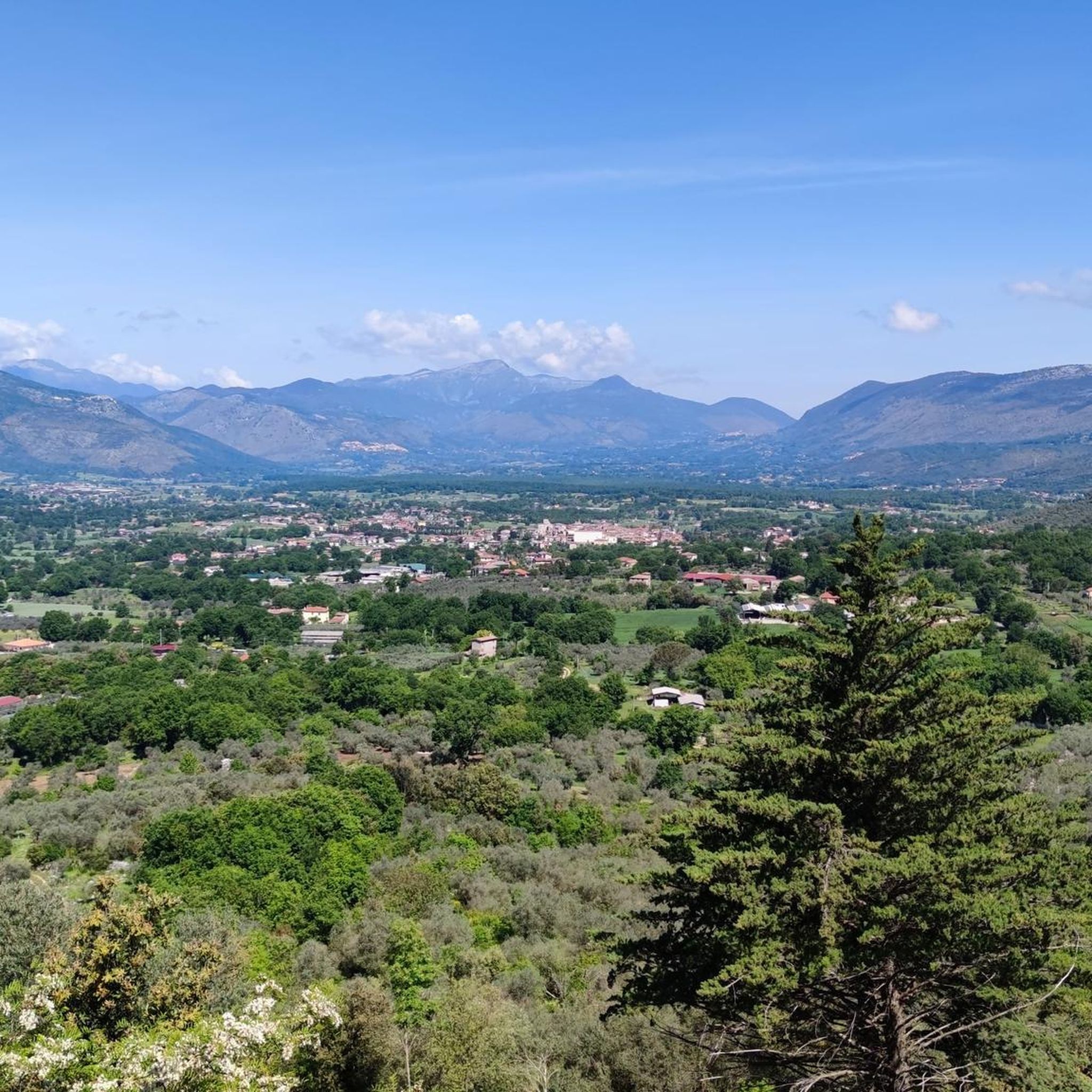
- The most popular attraction is Monte Lupino Summit, a summit that offers panoramic views. This summit provides a vista overlooking the Amaseno river valley and the villages of the Lepini Mountains.
- Another must-see spot is Monte Solo Summit and Statues of Sant'Elena and San Sinforo, a summit featuring man-made monuments. On its peak, visitors can find two 14-meter high iron statues depicting the patron saints of the village.
- Visitors also love Cyclist Safety Sign Near Ceccano, a man-made monument. This sign serves as an attention point for cyclists in the area.
- Pofi is known for its ancient churches, historic palaces, and natural summits. The area offers a variety of attractions to see and explore, from cultural landmarks to scenic viewpoints.
- The attractions around Pofi are appreciated by the komoot community, with 7 upvotes and 2 photos shared by visitors.
Last updated: October 11, 2026
Monte Lupino Summit
Highlight • Summit
Translated by Google •
Tip by

Castel Sindici
Highlight • Castle
The famous Gabriele D'Annunzio was also hosted in the elegant residence. In 1928 the Castel Sindici estate was declared an "Area of National Artistic Interest". In the cellars, "Castel Sindici" wine was produced, sold in Italy and abroad, winner of eight gold medals. This wine was much appreciated, so much so that it was mentioned among the fine wines of Lazio in the first edition of 1931 of the "Gastronomic Guide of Italy" of the Italian Touring Club and to be exhibited among the wines of the Italian pavilion of the 1935 World Expo in Brussels. .
It is still possible today to see the ceramic barrels where the wine was stored, which can be visited during some events. From 1943 the building was requisitioned by the Nazis who used it as the headquarters of the military command of the S.S. The building is currently owned by the Municipal Administration and is being restored. The surrounding park, full of centuries-old trees, is open to the public every day.
Text by the Cultores Artium Association
Translated by Google •
Tip by

Sign up now to discover places like this
Get recommendations on the best single tracks, peaks, & plenty of other exciting outdoor places.
Cyclist Safety Sign Near Ceccano
Highlight • Monument
Translated by Google •
Tip by

Fontana Don Chei
Highlight • Rest Area
Translated by Google •
Tip by
Frosinone Historic Center
Highlight • Historical Site
Translated by Google •
Tip by

Sign up for free to discover even more attractions around Pofi.
Already have an account?
Start today with a free account
Your next adventure awaits.



Tips from the Community

Very nice and rideable
0
0

A pious wish. In truth, one can be happy not to be run over. Very ruthless drivers in every respect
0
0

Beautiful sign for attention to cyclists
2
0

Frosinone is the largest city in the Latina Valley, an important communication route in Lazio between Rome and Naples which until the nineteenth century was a village with a rural vocation, while since the twentieth century it has become an important industrial and commercial center.
0
0

Fresh water, very useful in the summer
0
0

The famous Gabriele D'Annunzio was also hosted in the elegant residence. In 1928 the Castel Sindici estate was declared an "Area of National Artistic Interest". In the cellars, "Castel Sindici" wine was produced, sold in Italy and abroad, winner of eight gold medals. This wine was much appreciated, so much so that it was mentioned among the fine wines of Lazio in the first edition of 1931 of the "Gastronomic Guide of Italy" of the Italian Touring Club and to be exhibited among the wines of the Italian pavilion of the 1935 World Expo in Brussels. .
0
0

Elegant building built at the end of the 19th century at the behest of the oenologist and Knight of Labor Stanislao Sindici. The project was carried out by Count Giuseppe Sacconi, the architect who designed the Altare della Patria in Rome. The castle was built with local limestone on the model of an ancient medieval fortress and was built in the center of a large park that still surrounds it. The building was initially used as a cellar for storing wine but over the years it has been converted into a meeting place for important artists who gravitated around the Mayors. For example, the Roman painters Aurelio and Cesare Tiratelli are mentioned. The famous Gabriele D'Annunzio was also hosted in the elegant residence. In 1928 the Castel Sindici estate was declared an "Area of National Artistic Interest". In the cellars, "Castel Sindici" wine was produced, sold in Italy and abroad, winner of eight gold medals. This wine was much appreciated, so much so that it was mentioned among the fine wines of Lazio in the first edition of 1931 of the "Gastronomic Guide of Italy" of the Italian Touring Club and to be exhibited among the wines of the Italian pavilion of the 1935 World Expo in Brussels. . It is still possible today to see the ceramic barrels where the wine was stored, which can be visited during some events. From 1943 the building was requisitioned by the Nazis who used it as the headquarters of the military command of the S.S. The building is currently owned by the Municipal Administration and is being restored. The surrounding park, full of centuries-old trees, is open to the public every day. Text by the Cultores Artium Association
1
0
Frequently Asked Questions
What historical sites can I explore in Pofi?
Pofi is rich in history. You can visit the Church of Santa Maria Maggiore, a 12th-century church with Romantic-Gothic architecture and art. The Colonna Baronial Palace, with its Romanesque Clock Tower, offers a glimpse into the town's past. Other notable churches include the 17th-century Church of St. Peter and Franciscan Monastery and the 15th-century Church of St. Andrew the Apostle. Don't miss Castel Sindici, an elegant 19th-century building that once hosted Gabriele D'Annunzio and is now an "Area of National Artistic Interest" with a public park.
Are there any museums in Pofi?
Yes, Pofi offers a couple of interesting museums. The Ecomuseo Argil showcases significant fossil remains of Homo erectus and ancient elephants discovered in the local Lupara area. Additionally, the Museo Donazione "Umberto Mastroianni" is dedicated to the renowned 20th-century sculptor Umberto Mastroianni, featuring a large collection of his works.
What natural viewpoints or scenic spots are there around Pofi?
Pofi, being situated on an extinct volcano, offers several scenic viewpoints. You can enjoy panoramic 360-degree views of the Ciociaria region from various points. For specific summits, head to Monte Lupino Summit, which provides a beautiful vista overlooking the Amaseno river valley and the villages of the Lepini Mountains. Another great spot is Monte Solo Summit, part of the Ausoni Mountains, where you'll also find two impressive 14-meter high iron statues of Sant'Elena and San Sinforo.
What outdoor activities can I do near Pofi?
The area around Pofi is great for outdoor activities, especially cycling. You can find numerous routes for different sports. For example, there are challenging touring bicycle routes like the 107 km "Pisco Montano – Fossanova Abbey loop" or moderate options like the 48 km "Roman Amphitheater of Frosinone – Castle of the Counts of Ceccano loop." Mountain biking enthusiasts can explore routes such as the 71 km "Fontana Don Chei loop" or the 39 km "Monte Lupino Summit loop." Gravel biking is also popular, with routes like the 50 km "Historic Center of Patrica – Park Entrance loop." You can find more details on these and other routes in the Cycling around Pofi, MTB Trails around Pofi, and Gravel biking around Pofi guides.
Are there any family-friendly attractions in Pofi?
Yes, families can enjoy several attractions. The park surrounding Castel Sindici is open to the public daily and offers a pleasant space for children to play. The Ecomuseo Argil, with its fossil exhibits of ancient elephants, can be an engaging educational experience for all ages. Additionally, the natural beauty of the summits like Monte Lupino Summit and Monte Solo Summit offer opportunities for family walks and enjoying the views.
What unique natural features can I find near Pofi?
Beyond the panoramic views from the extinct volcano Pofi sits on, you can explore the Caves of Pastena, a notable natural attraction located in the vicinity, offering unique underground scenery. The area's summits, like Monte Lupino Summit and Monte Solo Summit, also provide distinct natural landscapes within the Ausoni Mountains.
What are some cultural traditions or festivals in Pofi?
Pofi hosts several vibrant events throughout the year that celebrate local culture. These include the Flower Festival on the last Sunday of April, the Fried Pizza Festival in early August, and a two-day Autumn Traditions festival in November, which highlights local culinary traditions, folk singing, and dance.
Where can I find fresh water during my outdoor activities near Pofi?
If you're out cycling or walking, you can find fresh spring water at Fontana Don Chei, one of the many fountains in the Amaseno area. It's a useful spot to cool off and refill your water bottle, especially during warmer months.
Are there any architectural highlights to see in Pofi?
Pofi boasts several architectural gems. The Church of Santa Maria Maggiore stands out with its 12th-century Romantic-Gothic style. The Colonna Baronial Palace, though reconstructed, features a prominent Romanesque Clock Tower. The Fontana di Madonna della Neve, built in 1711 by architect Alessandro Spacchi, is another beautiful example of historical design. The neoclassical architecture of the Santuario Madonna della Speranza, with its illuminating stained-glass windows, is also noteworthy.
What is the best time of year to visit Pofi for sightseeing and outdoor activities?
Spring and early autumn are generally ideal for visiting Pofi. In spring, you can experience the vibrant Flower Festival in April, and the weather is pleasant for exploring historical sites and enjoying panoramic views. Early autumn offers comfortable temperatures for outdoor activities like cycling and hiking, and you can also enjoy the Autumn Traditions festival in November.
Is there anything interesting to see in nearby towns related to Pofi's history?
Yes, in the nearby town of Arpino, you can visit the Museo Archeologico Industriale dell'Arte della Lana. This museum provides insight into the history of the wool industry, showcasing ancient equipment like looms and warping machines, which connects to the broader historical context of the Ciociaria region.
Most popular attractions around Pofi

Get inspired with the komoot mobile app


Explore more
Still not found the Highlight you’re looking for? See guides of the top attractions in other regions:
