The best walks and hikes around Pozzo D'Adda
4.4
(813)
6,231
hikers
306
hikes
Hiking around Pozzo D'Adda offers routes through the flat, fertile Lombard countryside, defined by the Adda River and its valley. The region features a riverine environment with lush forests and open fields, characteristic of the Parco Adda Nord. Trails often follow the riverbanks and canals, providing generally gentle gradients and accessible terrain. The landscape is primarily low-lying, with minimal elevation changes, making it suitable for various activity levels.
Best hiking trails around Pozzo D'Adda
- The most popular hiking route is…
Last updated: October 18, 2026
5.0
(3)
11
hikers
4.23km
01:09
60m
60m
Easy hike. Great for any fitness level. Easily-accessible paths. Suitable for all skill levels.
4.2
(6)
8
hikers
11.6km
02:58
50m
50m
Moderate hike. Good fitness required. Easily-accessible paths. Suitable for all skill levels.

4.4
(16)
192
hikers
8.08km
02:06
60m
60m
Moderate hike. Good fitness required. Easily-accessible paths. Suitable for all skill levels.
4.5
(19)
93
hikers
Moderate hike. Good fitness required. Easily-accessible paths. Suitable for all skill levels.
4.3
(12)
81
hikers
11.4km
02:57
70m
70m
Moderate hike. Good fitness required. Easily-accessible paths. Suitable for all skill levels.
Get access to more routes and recommendations from other explorers.
Already have an account?
Our route recommendations are based on thousands of hikes, rides, and runs completed by other people on komoot.
Start today with a free account
Your next adventure awaits.

Tips from the Community

The geometric layout and architectural hierarchy of the town reflect the organization of the factory itself: Il Cotonificio: imposing complex in Lombard Romanesque style with its iconic saw-tooth roofed sheds. Worker houses: semi-detached houses surrounded by a garden and a vegetable patch to ensure the sustenance and hygiene of the working family. Managers' villas: eclectic and stately homes, located in isolated areas and surrounded by greenery. Villa-Castello: the sumptuous feudal summer residence of the Crespi family in neo-Gothic style. Cemetery and Mausoleum: a monumental cemetery dominated by the enormous pyramid of the Crespi family, which seems to symbolically embrace the workers' tombs arranged in orderly rows. Collective services: the school (where everything was provided free of charge by the company), the church (exact copy of the Sanctuary of Busto Arsizio), the public washhouse, the hospital, and the workers' club.
0
0
In the village of Crespi d’Adda, there is a unique building. It is the so-called Castello villa. Together with the chimneys, the Castello villa of Crespi d’Adda is the most striking building in the entire workers' village, because it towers over the plain even from kilometers away. Its impressiveness is justified by the role it plays: being the calling card of the entire workers' village of Crespi d’Adda.
1
0

The Church of the Most Holy Name of Mary is the parish church of Crespi d'Adda, a hamlet in the municipality of Capriate San Gervasio in the province of Bergamo. Built between 1891 and 1893, it represents one of the key monuments of the famous workers' village, which is a UNESCO World Heritage site. The building was commissioned by the entrepreneur Cristoforo Benigno Crespi as part of the social structures intended for the well-being and community life of his employees. The Crespi family, originally from Busto Arsizio, wanted the church to be an almost exact copy of the Sanctuary of Santa Maria di Piazza in Busto Arsizio.
3
0
The industrial village of Crespi d'Adda, located in the municipality of Capriate San Gervasio (Bergamo), is the best-preserved workers' village in Southern Europe. Founded in 1878 by the textile entrepreneur Cristoforo Benigno Crespi, it represents an exceptional example of an ideal "company town" and, since 1995, has been included in the UNESCO World Heritage List. Unlike many industrial archaeology sites, Crespi d'Adda is a living and still inhabited site, mainly by the descendants of the original workers.
3
0
Villa Crespi in Crespi d'Adda (a hamlet of Capriate San Gervasio, Bergamo), also known simply as the Castle, was the lavish manor house of the Crespi family within the famous workers' village, now a UNESCO World Heritage site.
3
0
The Church of the Most Holy Name of Mary is the main place of worship in Crespi d'Adda, a famous workers' village in the municipality of Capriate San Gervasio and included in the list of UNESCO World Heritage sites.
3
0

The Locks of Trezzo sull'Adda represent a masterpiece of hydraulic engineering set in a landscape of rare beauty, where the force of the river meets human ingenuity. Located in the shadow of the majestic Visconti Castle, these structures were fundamental in making the Adda navigable, ideally connecting Lake Como to Milan via the Naviglio della Martesana canal. Walking along the towpath, one admires the contrast between the industrial archaeology of the Taccani Power Plant and the slow flow of water between the Adda's 'ceppo' rock walls. It is a place where the history of Leonardo da Vinci, who studied fluid motion here, merges with lush nature, offering evocative views and a suspended atmosphere that tells of centuries of navigation and river work.
0
0

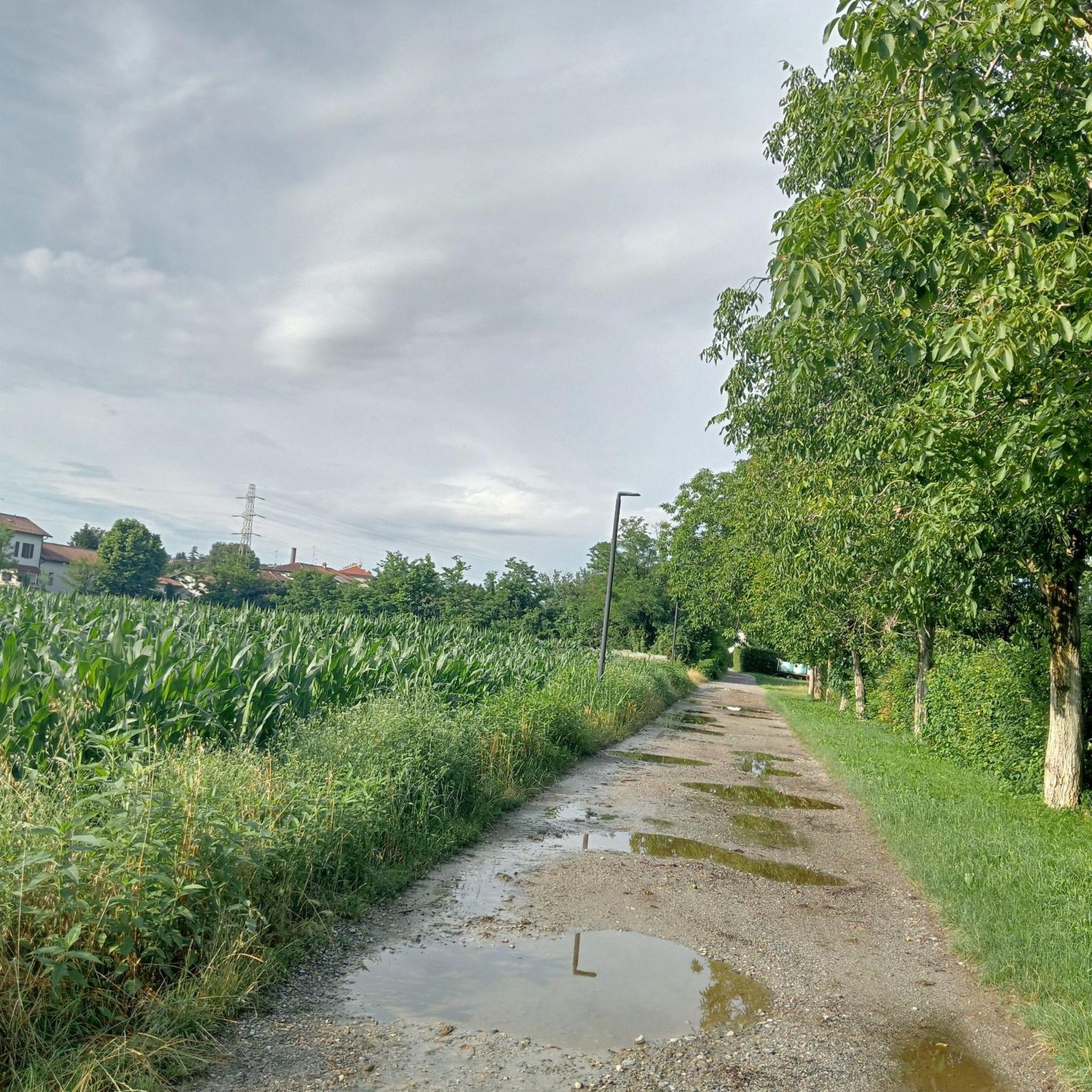
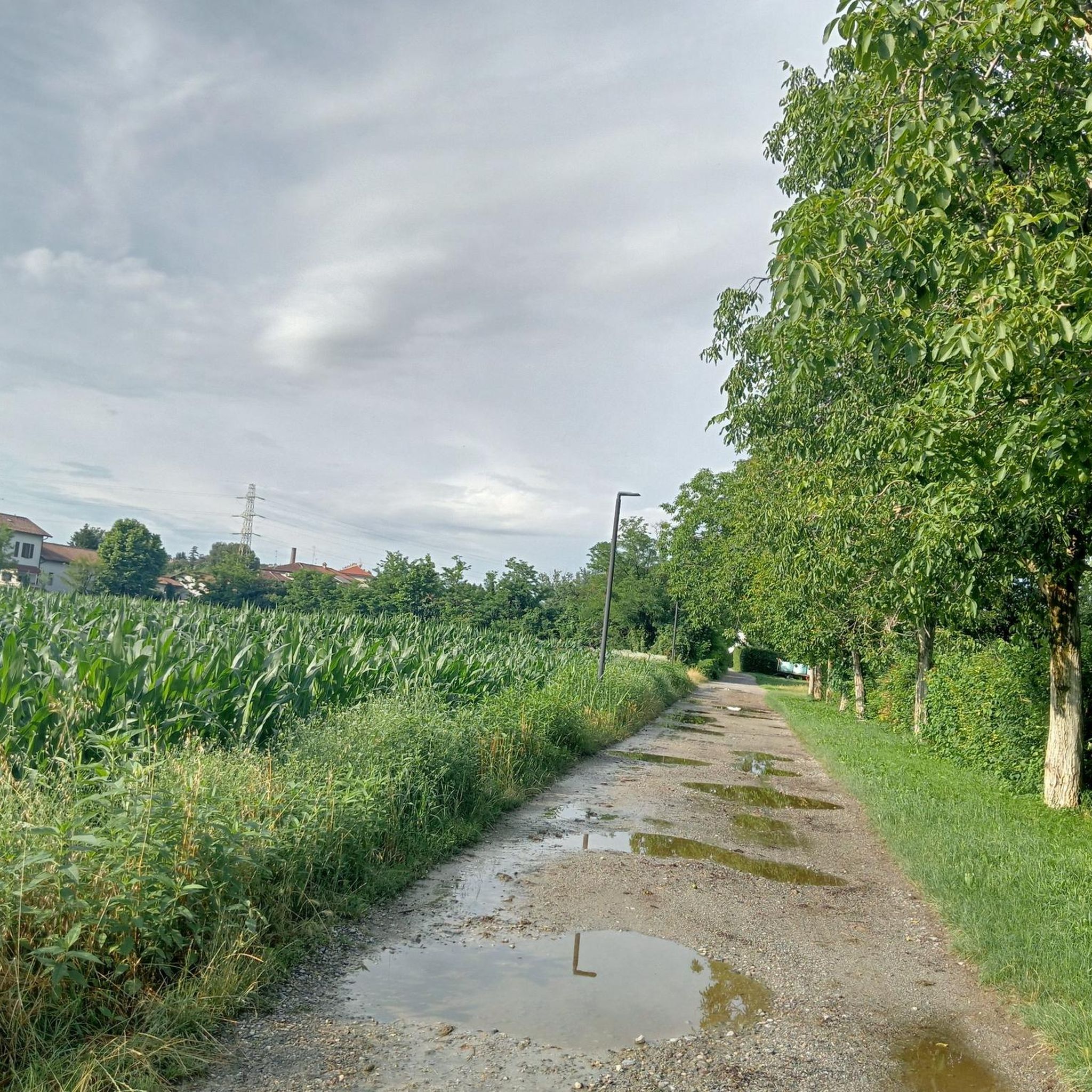
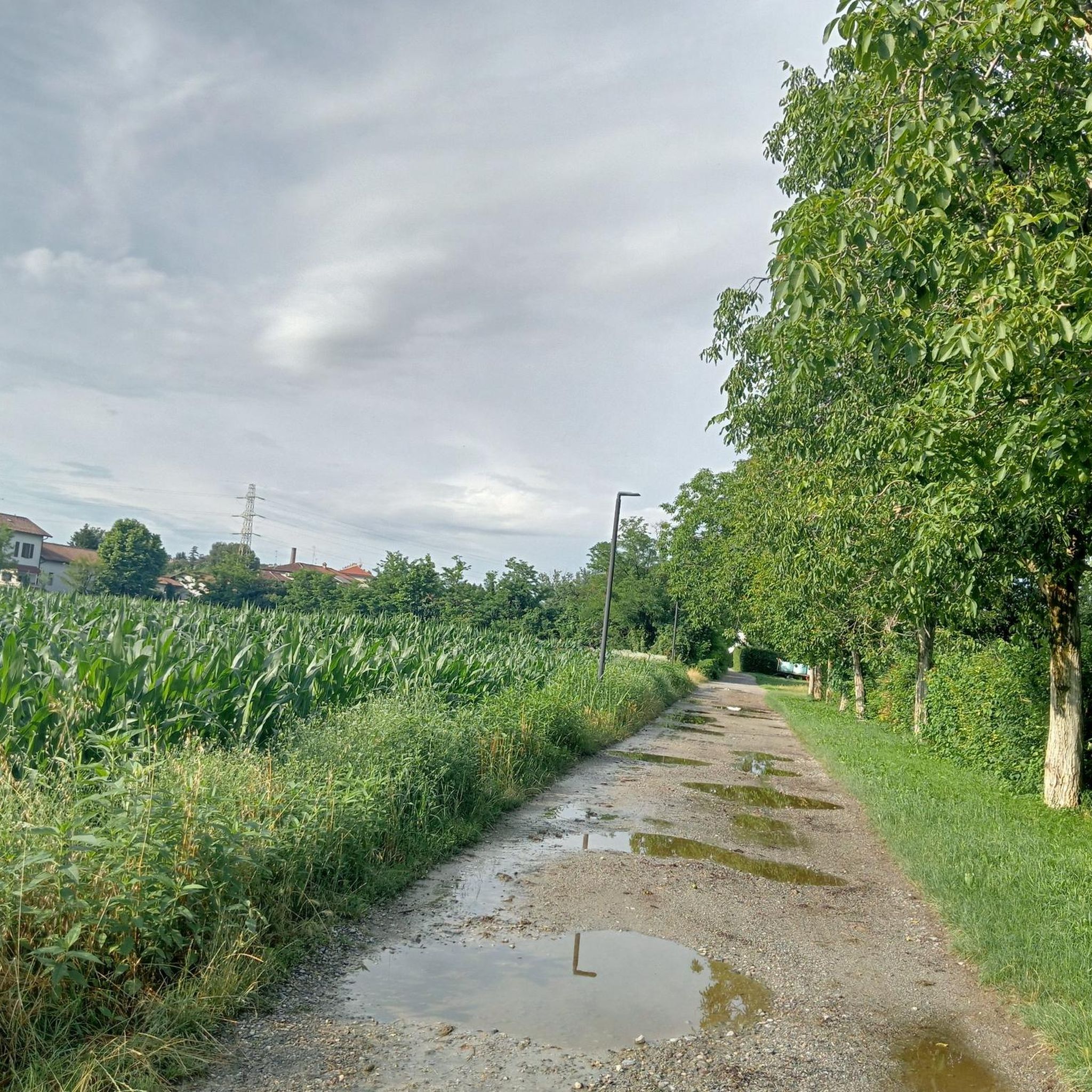
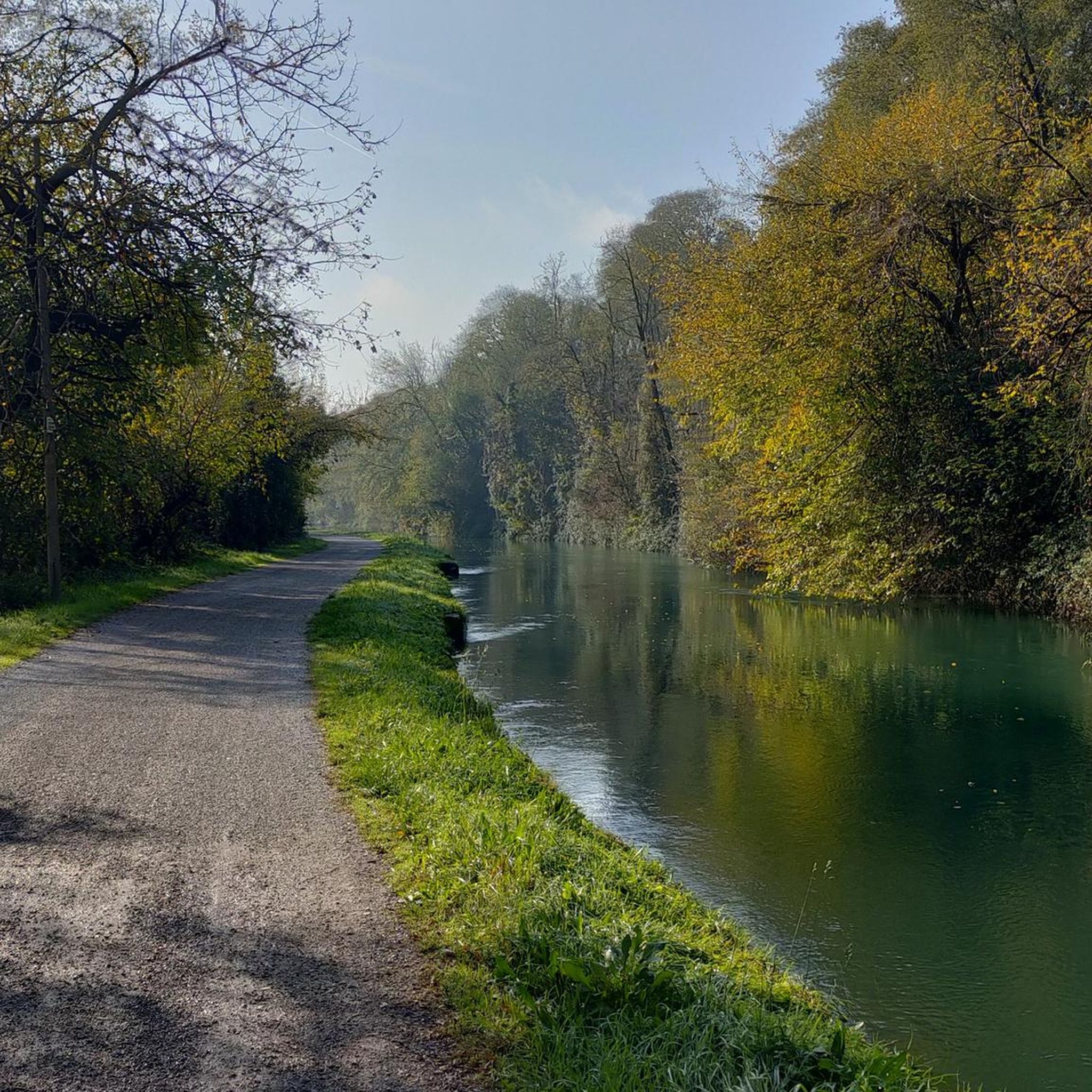
nice cycle/pedestrian section under the A4 along the Adda, shame that near the castle further ahead it has been blocked for too long!
0
0
Frequently Asked Questions
How many hiking trails are available around Pozzo D'Adda?
There are over 260 hiking routes around Pozzo D'Adda, catering to various preferences. Approximately half of these are rated as easy, with a similar number of moderate trails, and a few more challenging options for experienced hikers.
What kind of terrain can I expect on hikes in Pozzo D'Adda?
The terrain around Pozzo D'Adda is predominantly flat and fertile, characteristic of the Lombard countryside. Trails often follow the Adda River and its canals, featuring gentle gradients and accessible paths through lush forests and open fields within the Parco Adda Nord. Elevation changes are minimal, making for generally less strenuous walks.
Are there any circular hiking routes in the area?
Yes, Pozzo D'Adda offers several enjoyable circular routes. A popular easy option is the Along the Adda to the Castello di Trezzo − loop tour, which follows the Adda River towards the historic Trezzo Castle. Another moderate circular trail is the Trezzo sull'Adda Locks – Martesana Canal loop from Canonica d'Adda, exploring the Martesana Canal area.
What natural attractions or landmarks can I see while hiking?
The region is rich in natural beauty and historical landmarks. You can explore the Adda River and its valley, which is part of the protected Parco Adda Nord. Notable attractions include the impressive Taccani Hydroelectric Power Plant and Trezzo Castle Tower in Trezzo sull'Adda, or the historic Rudun Water Wheel in Groppello d'Adda. For natural features, consider visiting the Pignone Park and Waterfall on the Adda River or the tranquil Le Foppe Oasis of Cavenago Brianza.
Are there family-friendly hiking options in Pozzo D'Adda?
Yes, many trails in Pozzo D'Adda are suitable for families and children due to the generally flat terrain and easy gradients. The region's focus on riverside walks and paths through green spaces like the Parco Adda Nord makes for pleasant and accessible outings for all ages. The newly established Pozzo D'Adda Urban Forest also offers expanding green spaces for family exploration.
Can I bring my dog on the hiking trails?
While specific regulations for dogs can vary by exact location within the Parco Adda Nord, many of the trails along the Adda River and through the open countryside are generally dog-friendly. It's always advisable to keep dogs on a leash, especially in protected areas or near wildlife, and to carry waste bags.
What is the best time of year to go hiking in Pozzo D'Adda?
The flat terrain and riverine environment of Pozzo D'Adda make it suitable for hiking across multiple seasons. Spring and autumn offer pleasant temperatures and vibrant scenery, with lush greenery or colorful foliage. Summer can be warm but is enjoyable along the shaded riverbanks. Even winter offers opportunities for crisp, scenic walks, though some paths might be muddy after rain.
What do other hikers enjoy most about the trails in Pozzo D'Adda?
The hiking trails in Pozzo D'Adda are highly rated by the komoot community, with an average score of 4.4 stars from over 650 reviews. Hikers often praise the tranquil Lombard countryside, the scenic paths along the Adda River and Martesana Canal, and the accessibility of routes suitable for various fitness levels. The blend of natural beauty and historical points of interest is also a frequently mentioned highlight.
Are there any trails that pass through significant natural areas?
Absolutely. The Sentiero del Parco del Rio Vallone through Oak Grove (Boscone) is a moderate trail that leads directly through protected areas of the Parco Adda Nord, featuring beautiful oak groves and riverine landscapes, offering excellent opportunities for wildlife observation.
Is there public transport access to the hiking areas?
Pozzo D'Adda is part of the Milan metropolitan area, and while specific trailheads might require a short walk or local bus connection, public transport options are generally available to reach the vicinity. The Naviglio Martesana Cycle Path, which is also suitable for walking, connects Milan with the Adda River, providing a scenic way to access parts of the area.
Where can I find parking for hiking trails in Pozzo D'Adda?
Given Pozzo D'Adda's location within a municipality, parking is generally available in or near the town center and at various access points to the Parco Adda Nord or along the Adda River. For specific trailheads, it's often possible to find designated parking areas, especially near popular starting points for routes like those leading to Trezzo sull'Adda or along the Martesana Canal.
Most popular routes around Pozzo D'Adda
Most popular attractions around Pozzo D'Adda

Get inspired with the komoot mobile app


Explore more
Browse the best Hikes in other regions.
