Attractions and Places To See around Torre De' Negri - Top 20
Best attractions and places to see around Torre De' Negri, a small municipality in the Province of Pavia, Lombardy, Italy, are primarily centered on its historical and cultural sites. Situated near the Po River, the area offers a glimpse into ancient pilgrimage routes and local heritage. The region's landscape is characterized by its proximity to the river's alluvial valley, providing a rural setting for exploration. Visitors can discover landmarks that reflect centuries of history in this part of the southern…
Last updated: October 9, 2026
Little Church of Our Lady of Loreto
Highlight • Religious Site
The rural aedicule from the 15th century with an image of the Virgin of Loreto.
The ancient oratory …
Translated by Google •
Tip by

Church of San Giacomo della Cerreta
Highlight • Religious Site
Translated by Google •
Tip by
Sign up now to discover places like this
Get recommendations on the best single tracks, peaks, & plenty of other exciting outdoor places.
Via Francigena in Linarolo
Highlight • Trail
The passage of pilgrims is confirmed by the existence, in the past, …
Translated by Google •
Tip by
Church of San Michele Arcangelo, Belgioioso
Highlight • Religious Site
The castle was originally built in the 14th century by the Belgioioso family. It served as a fortified residence to …
Translated by Google •
Tip by
Casa Stranissima, Torre de' Negri
Highlight • Structure
Translated by Google •
Tip by
Sign up for free to discover even more attractions around Torre De' Negri.
Already have an account?
Start today with a free account
Your next adventure awaits.

Tips from the Community

The patronage of this shrine, dedicated to the Madonna, refers to the town of Loreto. This is one of the great and important Marian pilgrimage sites in Europe, along with Lourdes in the French Pyrenees and Fatima in Portugal. Unlike the other two places mentioned, however, Loreto is not known for apparitions of the Mother of God. Here, pilgrims can find something very tangible: Mary's childhood home in Nazareth (Israel). Her parents—not mentioned by name in the biblical writings of the New Testament—are mentioned in apocryphal traditions: Saint Anne and Saint Joachim are thus the grandparents of Jesus Christ (their common feast day in the calendar of saints is July 26). Crusaders likely dismantled the venerated building in Nazareth and brought it to Europe when the era of the Christian kingdoms in the Holy Land came to an end towards the end of the 13th century. But this very sober assumption is countered by a much more interesting legend: According to this, four angels carried out the translation and flew the house over the Mediterranean.
0
0

Unfortunately, this church of St. James on the Via Francigena was closed.
1
0

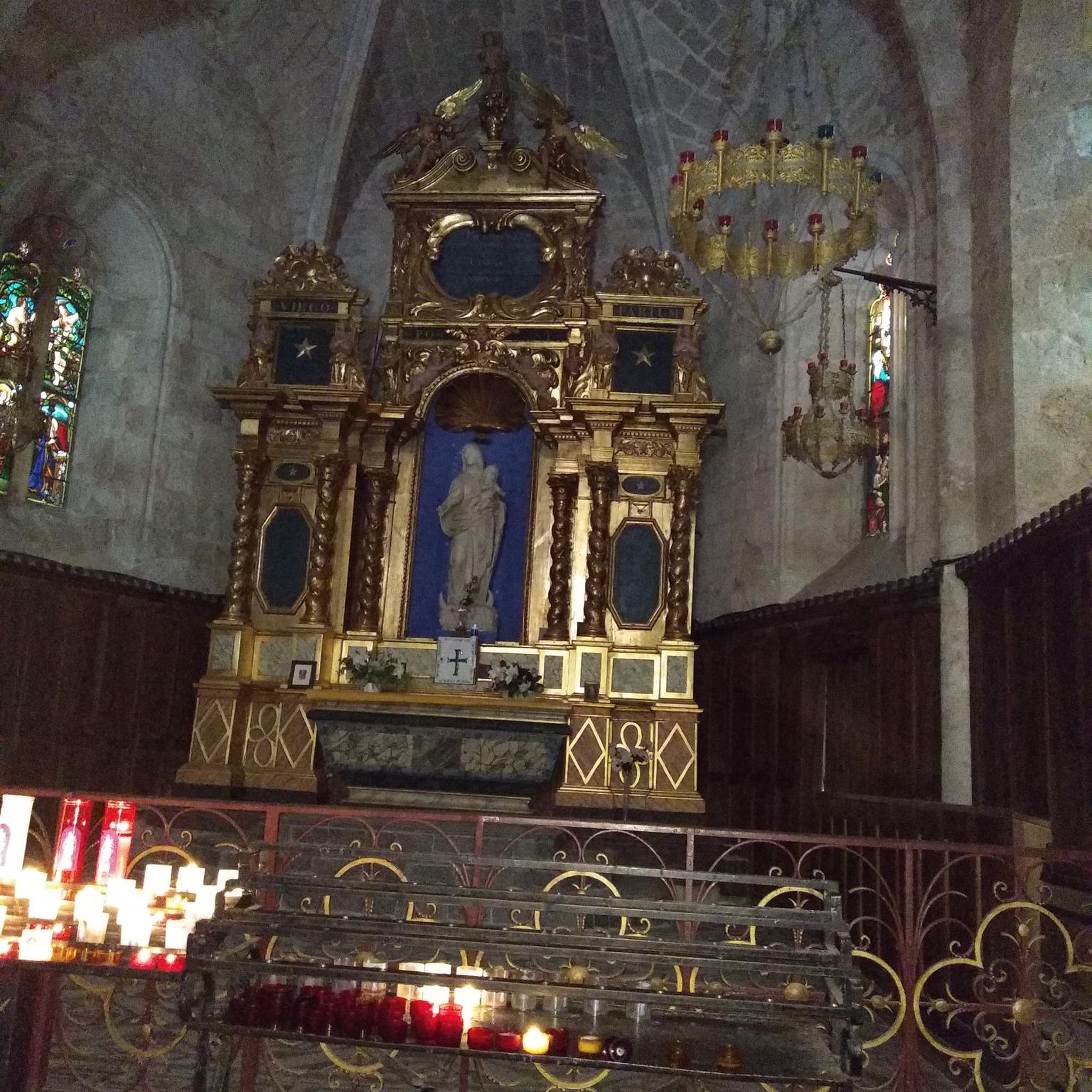
The Chiesuolo della Madonna di Loreto was built in three successive phases: The rural aedicule from the 15th century with an image of the Virgin of Loreto. The ancient oratory in brick from the 17th century, also dedicated to the Madonna di Loreto. The current church, dating from 1781. Architecture: The church has a single nave with a protiro (covered entrance) and is built of exposed brickwork. Inside there are frescoes and an altarpiece with the Madonna di Loreto. Significance: The Chiesuolo is also called ‘Il Chiesuolo’ and is dedicated to the Madonna of Loreto. It is an important historical testimony and a place of devotion. https://www.lombardiabeniculturali.it/architetture/schede/PV240-01108/
6
0
The church of San Michele Arcangelo is in an excellent state of conservation thanks to recent restorations. The façade shows a typical style of the 17th century and is divided into two parts by a horizontal brick frame. At the bottom, there are three portals flanked by slender pilasters. Above the central portal is a fresco dedicated to the saint. The upper half is framed by two curly volutes and two hollow niches that enclose a central window. The façade is crowned by a slightly projecting tympanum with a cross and three columns. The colours of the façade, a delicate balance between white and brown, give a foretaste of the opulence and wealth inside.
6
0
The Castello di Belgioioso, has a rich and fascinating history. The castle was originally built in the 14th century by the Belgioioso family. It served as a fortified residence to protect the surrounding area and as a symbol of power and prestige. In the 16th century, the castle underwent important renovations and extensions. The architecture was influenced by the Renaissance style, with elegant loggias, arcades and beautiful frescoes. In the 18th century, Antonio Barbiano obtained the elevation of Belgioioso to a principality in 1796 and expanded and rebuilt the medieval castle, enriched with extensive gardens and greenhouses in neoclassical style by the architect Leopold Pollack. In the 19th century, the castle became a meeting place for artists, writers and philosophers. It was a breeding ground for creativity and intellectual exchange. Today, the Castle of Belgioioso is managed by the Ente Fiera dei Castelli di Belgioioso e Sartirana. It organizes exhibitions and events that highlight the history, art and culture of the region.
6
0
The Via Francigena passes through the municipality of Linarolo, which belonged to the Order of the Knights Templar. The passage of pilgrims is confirmed by the existence, in the past, of a hospital for the Romans, mentioned by the Duke of Milan Gian Galeazzo Visconti in his Itinerary for pilgrims on the way to Rome, dated 1400. The woods and the proximity of the river were the ideal setting for nature walks and the re-enactment of an evocative history. The city is located in an area that was very popular in the Middle Ages, where the Strada Regina passed, via San Leonardo and Ospedaletto. The road connected Piacenza with Pavia along the Po and was the continuation of the Via Emilia (Rimini-Piacenza).
3
0

Place of cultural, artistic, historical and tourist interest Via Dante Alighieri, 1, 27011 Belgioioso PV https://www.belgioioso.it/ 0382970525
2
0
In the small town of Torre de' Negri, located in the Pavia region, there is a remarkable house called Casa Stranissima. This house seems straight out of a fairytale amusement park, with a picturesque and curious appearance. Unfortunately, little information is available about this mysterious house.
8
0
Frequently Asked Questions
What historical and cultural sites can I visit in Torre De' Negri?
The primary historical and cultural sites in the area are religious buildings with significant heritage. You can explore the Church of San Giacomo della Cerreta, known for its 15th-century Lombard art and votive paintings, and its connection to the ancient Via Francígena pilgrimage route. Another notable site is the Little Church of Our Lady of Loreto, which dates back to the 15th century and has been built in three successive phases, serving as an important place of devotion. Additionally, the Church of San Michele Arcangelo in Belgioioso, with its 17th-century facade and rich interior, is also nearby.
Are there any unique or unusual attractions in the area?
Yes, Torre De' Negri is home to Casa Stranissima, a unique and picturesque house that stands out for its distinctive and curious decoration. It's often described as looking like something out of a fairytale amusement park, attracting attention from passersby.
What outdoor activities are available around Torre De' Negri?
The rural setting near the Po River offers various outdoor activities. You can find numerous routes for running, hiking, and road cycling. For detailed guides and routes, you can explore the Running Trails around Torre De' Negri, Hiking around Torre De' Negri, and Road Cycling Routes around Torre De' Negri guides.
Can I find hiking trails near Torre De' Negri?
Yes, there are several hiking trails available. For example, you can find moderate trails like the Vaccarizza Loop Trail or the View of Canneto Pavese loop from Stradella. There are also easier options like the Hiking loop from Stradella. For a comprehensive list of routes, refer to the Hiking around Torre De' Negri guide.
What is the significance of the Via Francigena in this region?
The Via Francigena is a historic pilgrimage route that passes through the area, notably in Linarolo. The Church of San Giacomo della Cerreta was a destination for pilgrims due to its location on this ancient route. Historically, the passage of pilgrims is confirmed by the existence of a hospital for Romans in the past, and the route itself offers a glimpse into medieval history and nature walks.
What natural features characterize the landscape around Torre De' Negri?
Torre De' Negri is situated in the southern Pavese region, close to the Po River. The landscape is characterized by its proximity to the river's alluvial valley, offering a rural setting with fields and woods. While specific dramatic natural landmarks are not highlighted, the river and its surrounding environment provide a tranquil backdrop for outdoor activities.
Is Torre De' Negri suitable for family visits?
Yes, several attractions are considered family-friendly. The Little Church of Our Lady of Loreto and the Church of San Michele Arcangelo, Belgioioso are listed as family-friendly historical sites. The unique Casa Stranissima can also be an interesting sight for families.
What is the best time of year to visit Torre De' Negri for outdoor activities?
Given its location near the Po River and the focus on outdoor activities like hiking, running, and cycling, spring and autumn generally offer the most pleasant weather for exploration. Temperatures are milder, making it ideal for enjoying the rural landscape and historical sites without the intense heat of summer or the chill of winter.
Are there any dog-friendly walking options around Torre De' Negri?
While specific dog-friendly trails are not explicitly detailed, the numerous rural paths and trails for hiking and running around Torre De' Negri are generally suitable for walks with dogs, provided they are kept on a leash and local regulations are respected. The guides for Hiking and Running can provide routes that are likely suitable.
How long should I plan for visiting the main attractions?
To visit the key historical sites like the Church of San Giacomo della Cerreta and the Little Church of Our Lady of Loreto, along with seeing Casa Stranissima, a half-day to a full day would allow for a relaxed exploration. If you plan to incorporate outdoor activities like hiking or cycling, you might extend your visit to a full day or more.
What are the parking options near the attractions?
As Torre De' Negri is a small municipality, parking is generally available near the main attractions, especially the churches, which are often located in or near the village center or along accessible roads. Specific designated parking lots are not detailed, but street parking or small public areas are usually an option.
Can I reach the attractions by public transport?
Information regarding extensive public transport options directly to Torre De' Negri's specific attractions is limited. Given its small size and rural location, reaching the area primarily relies on personal vehicles. It's advisable to check local bus schedules from larger nearby towns like Pavia if you plan to use public transport, though direct routes to individual sights might be infrequent or unavailable.
Are there any cafes or places to eat near the main sights?
Torre De' Negri is a small village, so dedicated cafes or restaurants directly adjacent to every attraction might be limited. However, you can typically find local establishments in the village center or in nearby larger towns like Belgioioso, which is home to the Church of San Michele Arcangelo and offers more amenities.
Most popular routes around Torre De' Negri

Get inspired with the komoot mobile app


Explore more
Still not found the Highlight you’re looking for? See guides of the top attractions in other regions:
