The best walks and hikes around Montecchio Maggiore
4.3
(158)
943
hikers
66
hikes
Hiking around Montecchio Maggiore offers exploration of a varied landscape characterized by hills, valleys, and unique geological formations. The region features ancient stone quarries, karstic formations known as "Le Spurghe," and the volcanic Monte Nero. This terrain provides diverse gradients and settings for various hiking experiences, from gentle paths to more challenging ascents.
Best hiking trails around Montecchio Maggiore
- The most popular hiking route is Fontana della Nova, Castles and Montenero Trail, an easy 2.4 miles (3.9 km) trail that takes 1 hour 12 minutes to complete. This path integrates historical exploration of the castles with views of Monte Nero.
- Another top favourite among local hikers is Fontana Alta and Fontana Giuliani Trail, an easy 2.3 miles (3.8 km) path. This route connects centuries-old water sources, offering a walk through culturally significant sites.
- Local hikers also love the Chiesetta degli Alpini – Chiesetta di Via Monte Nero loop from Montecchio Maggiore, a 6.7 miles (10.7 km) trail leading through hilly terrain, often completed in about 3 hours 8 minutes.
- Hiking around Montecchio Maggiore is defined by hilly terrain, karstic formations, and historical landmarks like the Romeo and Juliet's Castles. The network offers options for different ability levels, from easy paths to moderate treks.
- The routes in Montecchio Maggiore are highly rated by the komoot community with an average score of 4.3 stars from over 150 reviews. More than 800 hikers have used komoot to explore Montecchio Maggiore's varied terrain.
Last updated: October 10, 2026
3.0
(2)
18
hikers
3.88km
01:12
150m
150m
Easy hike. Great for any fitness level. Easily-accessible paths. Suitable for all skill levels.
3.78km
01:06
100m
100m
Easy hike. Great for any fitness level. Easily-accessible paths. Suitable for all skill levels.

4.5
(13)
65
hikers
9.56km
02:49
280m
280m
Moderate hike. Good fitness required. Easily-accessible paths. Suitable for all skill levels.
4.1
(12)
61
hikers
Moderate hike. Good fitness required. Easily-accessible paths. Suitable for all skill levels.
4.9
(8)
42
hikers
12.0km
03:35
350m
350m
Moderate hike. Good fitness required. Easily-accessible paths. Suitable for all skill levels.
Get access to more routes and recommendations from other explorers.
Already have an account?
Our route recommendations are based on thousands of hikes, rides, and runs completed by other people on komoot.
Start today with a free account
Your next adventure awaits.
Tips from the Community


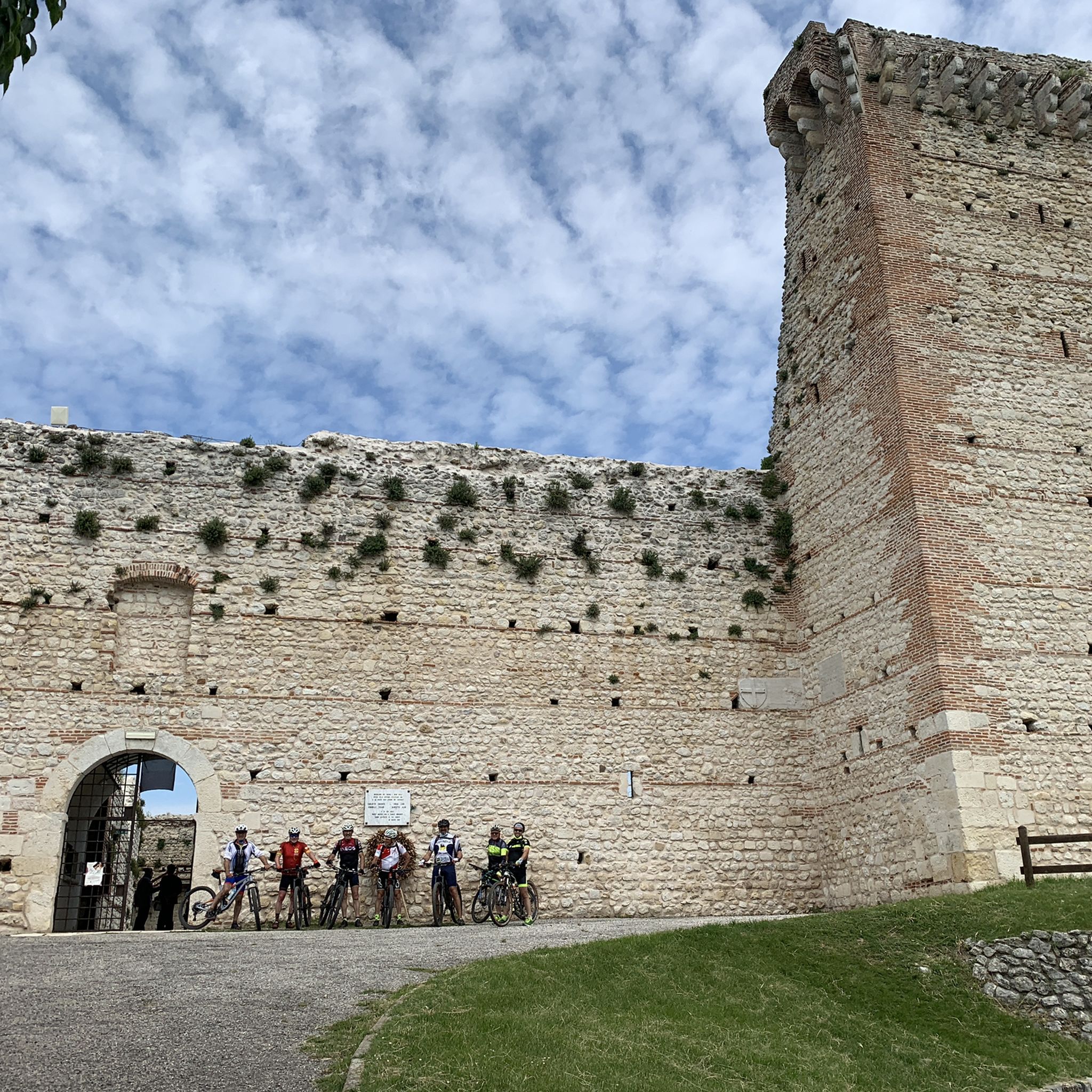
The evocative Alpini Church stands between Juliet's Castle and Romeo's Castle. Its construction was the result of a vow made by an Alpine soldier who survived the Russian Campaign in 1942: the soldier promised that, if he returned home safe and sound from the war, he would dedicate a small church to the Madonna dei Castelli. Construction began in October of that year, and the chapel was blessed on October 4, 1945. The project was entrusted to architect Ferdinando Forlati, who had already been involved in the restoration of the castles in 1939. The result was a simple building, constructed of local stone, inspired by the medieval style, perfectly integrated into the landscape and the ancient fortresses.
0
0
The first mention of this fountain dates back to 1540, but it is likely even older. After the Black Death of 1348 decimated the population, with the demographic recovery, the surrounding wooded area was once again cultivated under the name 'terra nova', hence the name of the fountain. It fed the aqueduct of the basin near the bell tower of St. Peter's, but was forgotten at the beginning of the 20th century, when the municipal aqueduct came into operation. It was faithfully restored in 1982: it consists of a (closed) tunnel that protects the spring and channels the water to the small external basin. The water is not subject to control.
1
0

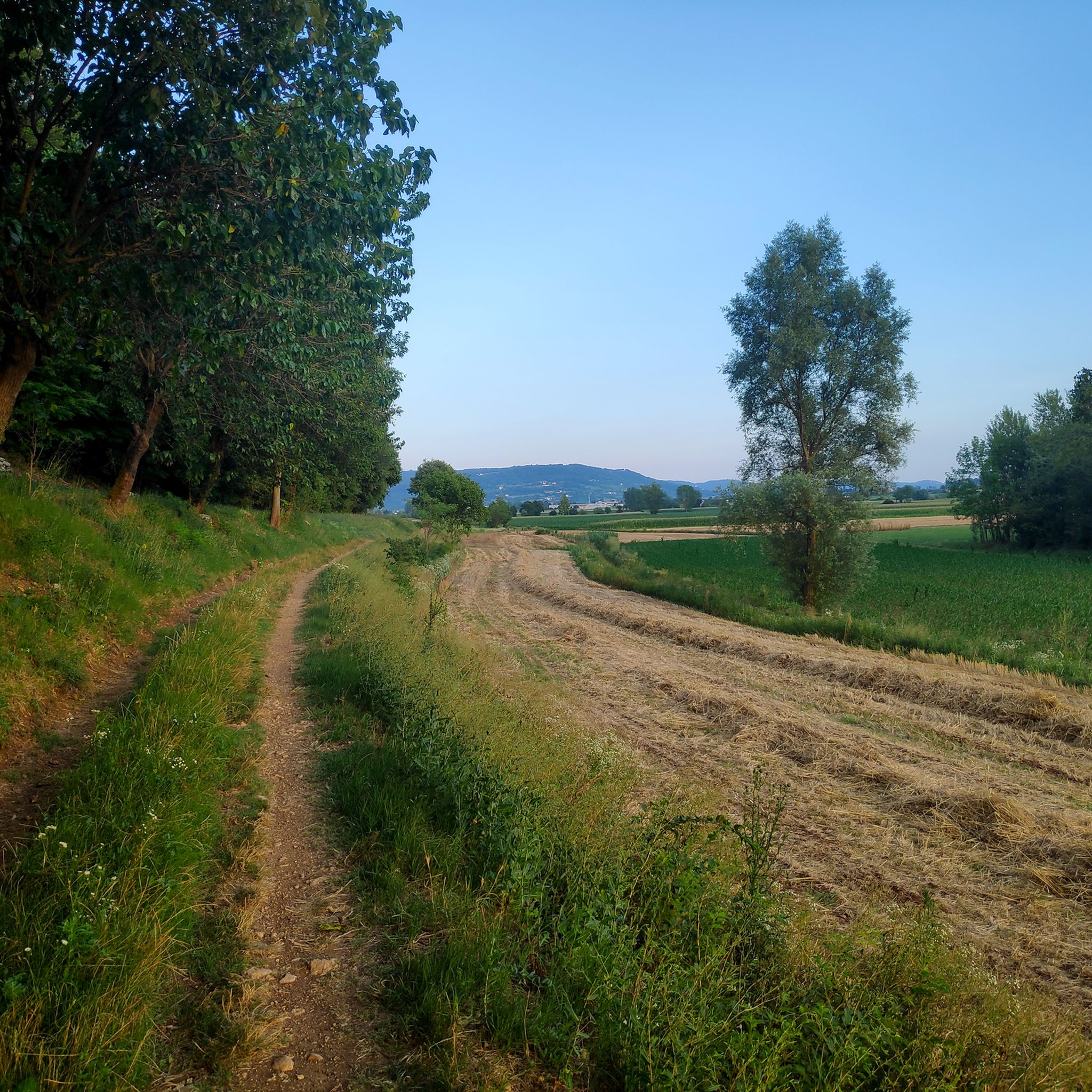
Nice stretch of dirt road on the hill
0
0

Il principale affluente del torrente Onte, il rio Mezzaruolo, pare debba il suo nome al suo scorrere “in mezzo”, in quanto per conclamata consuetudine è considerato il confine fra l’abitato di Sovizzo Basso e di Sovizzo Alto, i cui rispettivi parroci diedero vita negli anni ‘20 ad una accanita disputa per la sovranità sulla contrada San Daniele. Proprio in questa località, dove il nome di questo corso d’acqua è garbatamente storpiato in Smerdarólo (che forse è proprio l’appellativo originario), un antico ponte lo attraversa: il ponte Balabardo. La data in numeri romani iscritta sul manufatto (1647) si riferisce evidentemente ad un rifacimento o a un restauro sostanziale in tempo di Serenissima, in quanto il ponte risale almeno all’arrivo a Sovizzo dei Longobardi (fine sesto secolo), come suggerisce anche il nome tramandato dalla popolazione. Forse un tempo era semplicemente un guado, poi acconciato opportunamente dagli invasori che lo etichettarono per sempre con il loro appellativo: Bara (carro) e Bard/ Bart (ascia/lancia). Del resto non mancano nel territorio di Sovizzo riferimenti a termini di origine longobarda: Garibaldo, Braio, Valgrossa, Pietraguarda, Bellaguardia… Il territorio di Sovizzo parla longobardo. Fonte: https://subvicum.it/tappe/orme-longobarde/
0
0

uphill rural road passable only on foot or MTB. Leads to the castle of "Giulietta" and the hypogeum complex "Le Priare".
0
0
small church with a steep access staircase and a beautiful panoramic terrace
0
0
Shortly after the entrance to the path on Via Ziggiotti there are two special two-seater benches.
0
0
Frequently Asked Questions
How many hiking trails are available in Montecchio Maggiore?
Montecchio Maggiore offers a wide selection of hiking trails, with over 50 routes documented on komoot. These include 28 easy trails and 29 moderate trails, catering to various fitness levels.
What kind of terrain can I expect on hikes around Montecchio Maggiore?
The region features diverse terrain, including hilly landscapes, valleys like Valle San Clemente and Valbona, and unique geological formations. You'll encounter ancient stone quarries, the volcanic Monte Nero, and karstic formations known as "Le Spurghe," which are small canyons and rocky enclaves within the woods.
Are there any family-friendly hiking options in Montecchio Maggiore?
Yes, many trails are suitable for families. For an accessible option, consider the Fontana Alta and Fontana Giuliani Trail, an easy 3.8 km path that connects centuries-old water sources. The area's Nordic Walking Park also features routes designed for various skill levels, including easier paths.
Can I bring my dog on the hiking trails?
Generally, dogs are welcome on most hiking trails in Montecchio Maggiore. However, it's always advisable to keep them on a leash, especially in more populated areas or near wildlife, and to check for any specific local regulations on individual routes.
Are there any circular hiking routes in the area?
Yes, Montecchio Maggiore offers several circular routes. A popular moderate option is the Chiesetta degli Alpini – Chiesetta di Via Monte Nero loop from Montecchio Maggiore, which is 10.7 km long and takes about 3 hours 8 minutes to complete.
What historical landmarks or natural attractions can I see while hiking?
Hiking in Montecchio Maggiore allows you to explore both historical and natural wonders. You can visit the famous Romeo and Juliet's Castles, explore ancient stone quarries, or discover the unique karstic formations of "Le Spurghe." The Fontana della Nova, Castles and Montenero Trail integrates historical exploration with views of Monte Nero. You can also find highlights like Monte Nero and the Lucio's Hole cave.
Are there any viewpoints along the trails?
Yes, the hilly terrain and volcanic features like Monte Nero offer several opportunities for scenic views. You can find specific viewpoints such as the View of Vicenza and the Berici Hills, providing panoramic vistas of the surrounding landscape.
What is the best time of year to go hiking in Montecchio Maggiore?
Montecchio Maggiore is suitable for hiking throughout much of the year. Spring and autumn offer pleasant temperatures and vibrant scenery, while summer can be enjoyable, especially on shaded trails. Winter hiking is also possible, though conditions may vary, and some paths might be more challenging.
Is there a Nordic Walking Park in Montecchio Maggiore?
Yes, Montecchio Maggiore is home to Italy's largest Nordic Walking Park. It features eleven well-marked loop routes totaling 83 km, with three distinct starting points, designed to accommodate various skill levels.
What do other hikers say about the trails in Montecchio Maggiore?
The routes in Montecchio Maggiore are highly regarded by the komoot community, holding an average rating of 4.3 stars from over 150 reviews. Hikers often praise the varied terrain, the integration of historical landmarks, and the well-maintained network of paths.
Are there any longer, more challenging hikes available?
While there are no trails classified as 'difficult' in the immediate area, several moderate routes offer longer distances and more elevation gain. For example, the Chiesetta degli Alpini – Monte Longo loop from Montecchio Maggiore is a 12 km trail with over 350 meters of elevation gain, providing a more strenuous experience.
Where can I find parking for hiking trailheads?
While specific parking details for every trailhead are not provided, Montecchio Maggiore, as a municipality, offers various parking options. It is recommended to check local signage or use navigation apps to find suitable parking near your chosen starting point.
Most popular routes around Montecchio Maggiore
Most popular attractions around Montecchio Maggiore

Get inspired with the komoot mobile app


Explore more
Browse the best Hikes in other regions.
