The best cycling routes around Sala Baganza
3.7
(17)
540
riders
31
rides
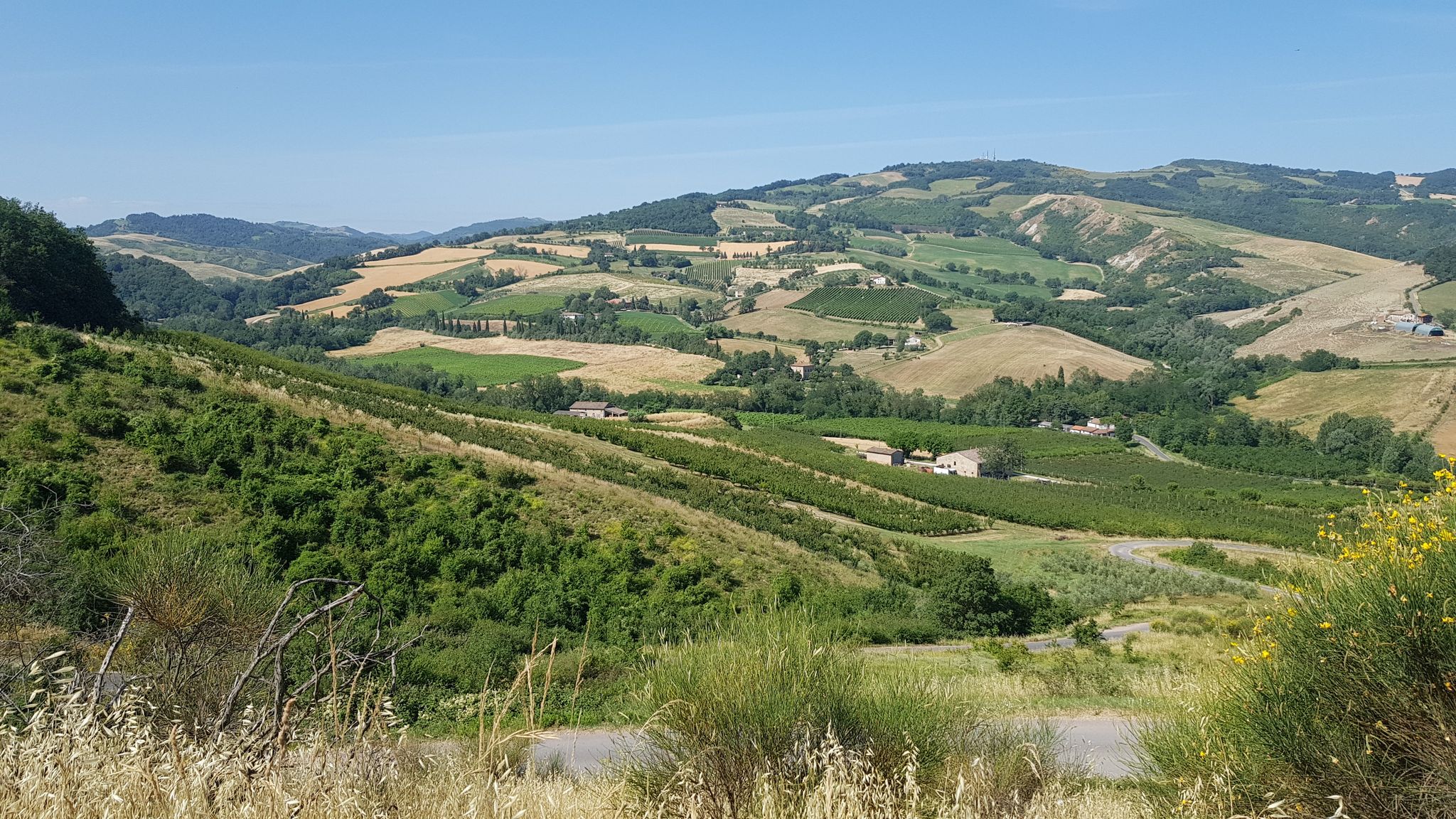
Touring cycling around Sala Baganza offers diverse routes through the Apennine foothills in Emilia-Romagna. The region features a varied landscape, including the gentle hills of the Val Baganza, dense woodlands of the Parco dei Boschi di Carrega, and scenic Malvasia vineyards. Cyclists can navigate routes alongside the Baganza river or explore more challenging terrain with gradual ascents and panoramic views.
Best touring cycling routes around Sala Baganza
- The most popular touring cycling route is Val Baganza and Felino - ring…
Last updated: October 18, 2026
4.0
(2)
12
riders
16.9km
01:05
120m
120m
Easy bike ride. Great for any fitness level. Mostly paved surfaces. Suitable for all skill levels.
4.6
(5)
33
riders
Hard bike ride. Very good fitness required. Mostly paved surfaces. Suitable for all skill levels.

4.0
(1)
49
riders
Moderate bike ride. Good fitness required. Mostly paved surfaces. Suitable for all skill levels.
3.8
(4)
35
riders
Moderate bike ride. Good fitness required. Mostly paved surfaces. Suitable for all skill levels.
4.5
(2)
79
riders
33.6km
02:21
550m
550m
Hard bike ride. Very good fitness required. Mostly paved surfaces. Suitable for all skill levels.
Get access to more routes and recommendations from other explorers.
Already have an account?
Our route recommendations are based on thousands of hikes, rides, and runs completed by other people on komoot.
Start today with a free account
Your next adventure awaits.


Other adventures around Sala Baganza

Tips from the Community

La Rocca Sanvitale di Sala Baganza is a fascinating fortress of medieval origin located in Sala Baganza, in the province of Parma. Born around the year 1100 as a defensive structure, it lost its military function over time to transform into a sumptuous noble residence and hunting lodge, hosting three great dynasties over the centuries: the Sanvitale, the Farnese, and the Bourbon. Although three of its original sides were demolished in the Napoleonic era, the building today preserves splendid Renaissance frescoes from the 16th century and is surrounded by the majestic Farnesian Garden.
0
0

The Carrega Woods Park is the first protected area established in Emilia-Romagna (in 1982) and extends for about 2,600 hectares on the gentle hills between Collecchio and Sala Baganza, about 15 km from Parma. Characteristics and Nature Landscape: It combines centuries-old woods of oaks, chestnuts, and conifers with green meadows, streams, and small historic artificial lakes. Places of interest: It houses architectural jewels such as the famous Casino de' Boschi and the evocative Beech Forest of Maria Amalia
0
0
First mentioned in 854, Santa Maria Assunta is among the oldest parish churches in the diocese of Parma. In the mid-11th century, the church with three naves and three apses was built, whose structure is the basis of the current building. A few decades later, to offer shelter to pilgrims, a front portico was added to this structure, wide three bays and deep two, later closed and integrated into the church. In the same period, a pulpit was created, dismantled at the end of the 16th century, of which some sculptural parts are preserved. A first side chapel was built in the 14th century, the second in the 16th. The other chapels were added to the church during the renovation work that from 1712 to 1745 adapted it to the taste of the time, plastering the walls and vaulting the naves. The radical restoration work carried out from 1927 to 1942 removed much of the 18th-century additions.
3
0
The Pieve di Santa Maria Assunta, also known as the Pieve di Fornovo, is one of the most important and evocative Catholic places of worship in the Romanesque style in the province of Parma. Located in Piazza IV Novembre in Fornovo di Taro, the church represents an extraordinary historical testimony, inextricably linked to the medieval flow of pilgrims along the Via Francigena. First mentioned in an official document from the year 854, the pieve probably stands on the remains of a previous Roman temple dedicated to the god Mercury. The current basilica layout with three naves and three apses dates back to the mid-11th century. A few decades later, a frontal portico was added to offer shelter to travelers, later integrated into the facade itself.
2
0

Romanesque parish church of great historical interest, the bas-reliefs on the facade are interesting
1
0
The Boschi di Carrega Regional Nature Park was established in 1982 as the first regional park in Emilia-Romagna. It is located in the province of Parma, extending for about 1270 hectares on the river terraces between the Taro river and the Baganza stream, in the municipal territories of Collecchio, Sala Baganza and Fornovo di Taro. This green lung protects a hilly area of immense naturalistic, historical and cultural value, famous for its ducal atmospheres and elegant landscapes.
0
0
The Boschi di Carrega Regional Park was established in 1982 as the first regional park in Emilia-Romagna. It is located in the province of Parma, extending for about 1270 hectares on the river terraces between the Taro river and the Baganza stream, in the municipal territories of Collecchio, Sala Baganza and Fornovo di Taro. This green lung protects a hilly area of immense naturalistic, historical and cultural value, famous for its ducal atmospheres and its elegant landscapes.
0
0

The Church of San Giovanni Battista is a Catholic place of worship with modernist architecture, located at Via Picelli 45 in Felegara, a hamlet of Medesano, in the province and diocese of Parma. It is the seat of a parish in the pastoral area of Pedemontana. HISTORY The original place of worship, dedicated to St. Iohannis, was built in the Middle Ages; the earliest evidence of its existence dates back to 1230, when the chapel was mentioned in the Capitulum seu Rotulus Decimarum of the Diocese of Parma. In 1564, the church was elevated to the status of an independent parish, but due to its poor structural condition, Bishop Giovanni Battista Castelli, during his apostolic visit in 1579, ordered its demolition and reconstruction or suppression. Construction of the new church began by 1627, and it was completed before 1714. The bell tower was erected in 1790. The bell tower was raised in 1920. In 1934, further radical renovations were undertaken on the church, designed by architect Moderanno Chiavelli. He expanded the building, adding two aisles to the 16th-century central nave and transforming the two 17th-century side chapels into the two branches of the transept, and gave it a new façade. This modernist place of worship was completed in 1938. In 1959, the interior was decorated according to a design by architect Marco Pellegri, with the arches, pillars, and apse covered in terracotta tiles by sculptor Mario Orlandini, who also created some panels, as well as the high altar and the marble pulpit. Between 2014 and 2016, the church underwent restoration work designed by architects Alberto Bordi, Sauro Rossi, and Marco Zarotti. The restoration work included the façades, roofs, and interiors, as well as the redevelopment of the presbytery and the resurfacing of the paving and churchyard. SOURCE and other information https://it.wikipedia.org/wiki/Chiesa_di_San_Giovanni_Battista_(Medesano,_Felegara)
1
0
Frequently Asked Questions
How many touring cycling routes are available around Sala Baganza?
There are over 30 touring cycling routes available around Sala Baganza, offering a wide range of options for different skill levels and preferences.
What are the general difficulty levels of touring cycling routes in Sala Baganza?
The routes around Sala Baganza cater to various abilities. You'll find 3 easy routes, 14 moderate routes, and 13 more challenging routes, ensuring options for beginners and experienced cyclists alike.
What kind of landscapes can I expect to see while cycling around Sala Baganza?
Cycling around Sala Baganza offers diverse landscapes. You can expect to ride through the gentle hills of the Val Baganza, dense woodlands of the Parco dei Boschi di Carrega, and scenic Malvasia vineyards. The region's location on the Apennine foothills also provides varied topography with rewarding panoramic views.
Are there easy touring cycling routes suitable for beginners or families in Sala Baganza?
Yes, there are easy routes perfect for beginners or families. For instance, the Val Baganza and Felino - ring tour is an easy 10.5-mile (17.0 km) route that follows the Baganza river valley, connecting Sala Baganza with Felino.
What historical sites or castles can I visit along the touring cycling routes?
The area is rich in historical attractions. You can cycle past the impressive Rocca Sanvitale di Sala Baganza, which houses a wine museum. Other notable castles in the vicinity include Torrechiara Castle and Felino Castle, which often feature in longer touring itineraries.
Are there any natural attractions like lakes or parks accessible by bike?
Absolutely. The Lago del Casino del Bosco is located within the Parco dei Boschi di Carrega, a significant natural oasis with woods, meadows, and streams. You can explore this park via routes like the Vineyards in the Carrega Woods – Villa Casino dei Boschi loop from Sala Baganza.
Where can I find panoramic views along the touring cycling routes?
Many routes in the Apennine foothills offer rewarding panoramic views. The Monte Prinzera, for instance, provides incredible 360-degree panoramas accessible by cycling routes from Sala Baganza. The Le Chiesuole Natural Area is also a great viewpoint.
Are there any circular touring cycling routes in Sala Baganza?
Yes, many routes are designed as loops, allowing you to start and end in the same location. Examples include the Val Baganza and Felino - ring tour and the more challenging Villa Casino dei Boschi – Val Baganza Bridge loop from Sala Baganza.
What do other touring cyclists say about the routes in Sala Baganza?
The touring cycling routes in Sala Baganza are highly rated by the komoot community, with an average score of 4.4 stars from more than 10 reviews. Cyclists often praise the varied terrain, from river valleys to wooded hills, and the combination of natural beauty with historical landmarks.
What is the best time of year for touring cycling in Sala Baganza?
The region is generally pleasant for cycling from spring through autumn. Spring offers lush greenery and blooming vineyards, while autumn provides comfortable temperatures and beautiful fall foliage. Summers can be warm, so early morning or late afternoon rides are often preferred.
Are there routes that go through vineyards?
Yes, you can certainly find routes that wind through the picturesque Malvasia vineyards. The Vineyards in the Carrega Woods – Villa Casino dei Boschi loop from Sala Baganza is a moderate route that takes you directly through these beautiful landscapes.
Is there public transport access to the cycling routes or parking available?
While specific public transport details for route access aren't provided, Sala Baganza is a well-known destination, and parking is generally available in and around the town center, often near major attractions like the Sanvitale Fortress, which can serve as a starting point for many tours.
Most popular routes around Sala Baganza
Most popular attractions around Sala Baganza

Get inspired with the komoot mobile app


Explore more
Browse the best Cycling routes in other regions.
