The best walks and hikes around Collesalvetti
4.5
(746)
2,812
hikers
22
hikes
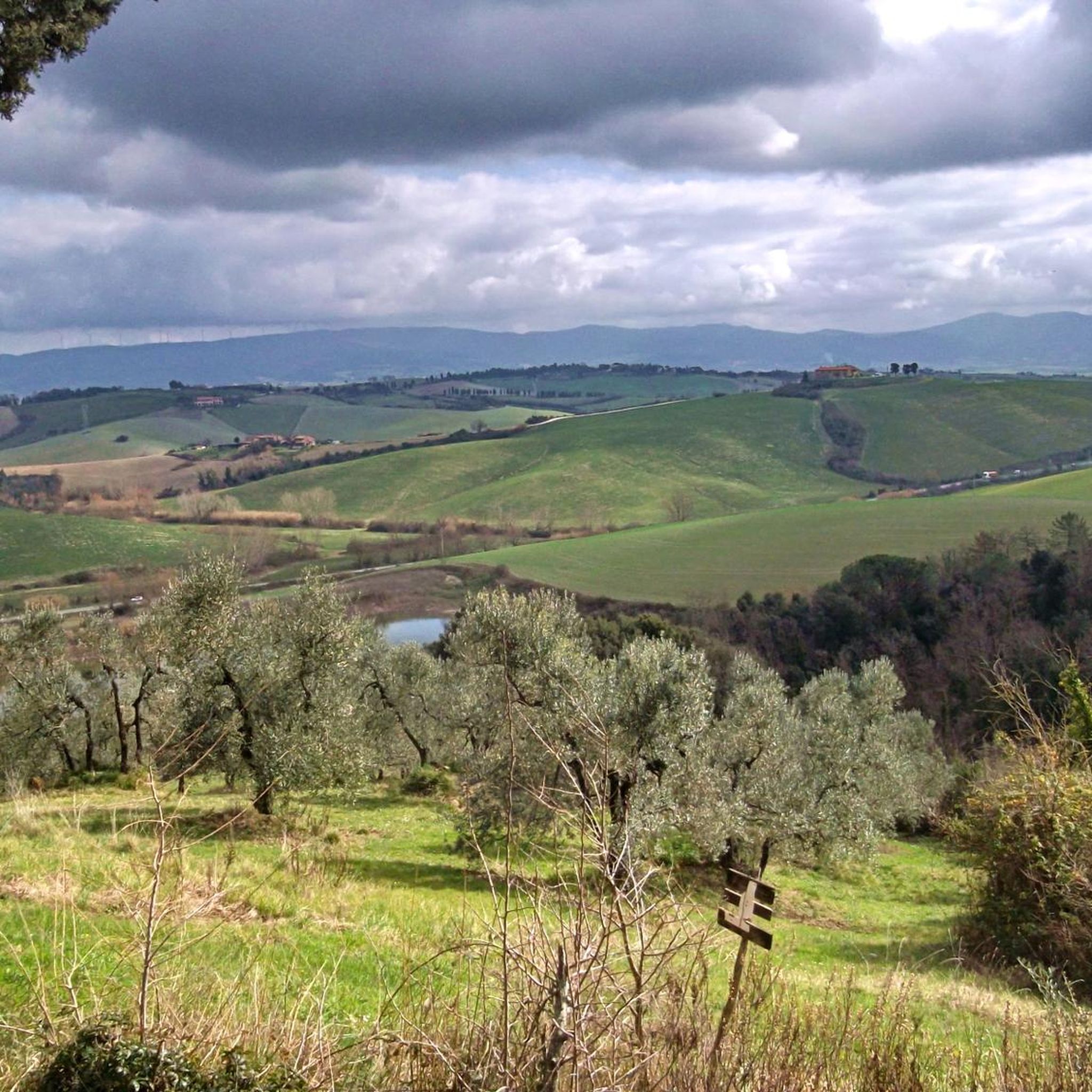
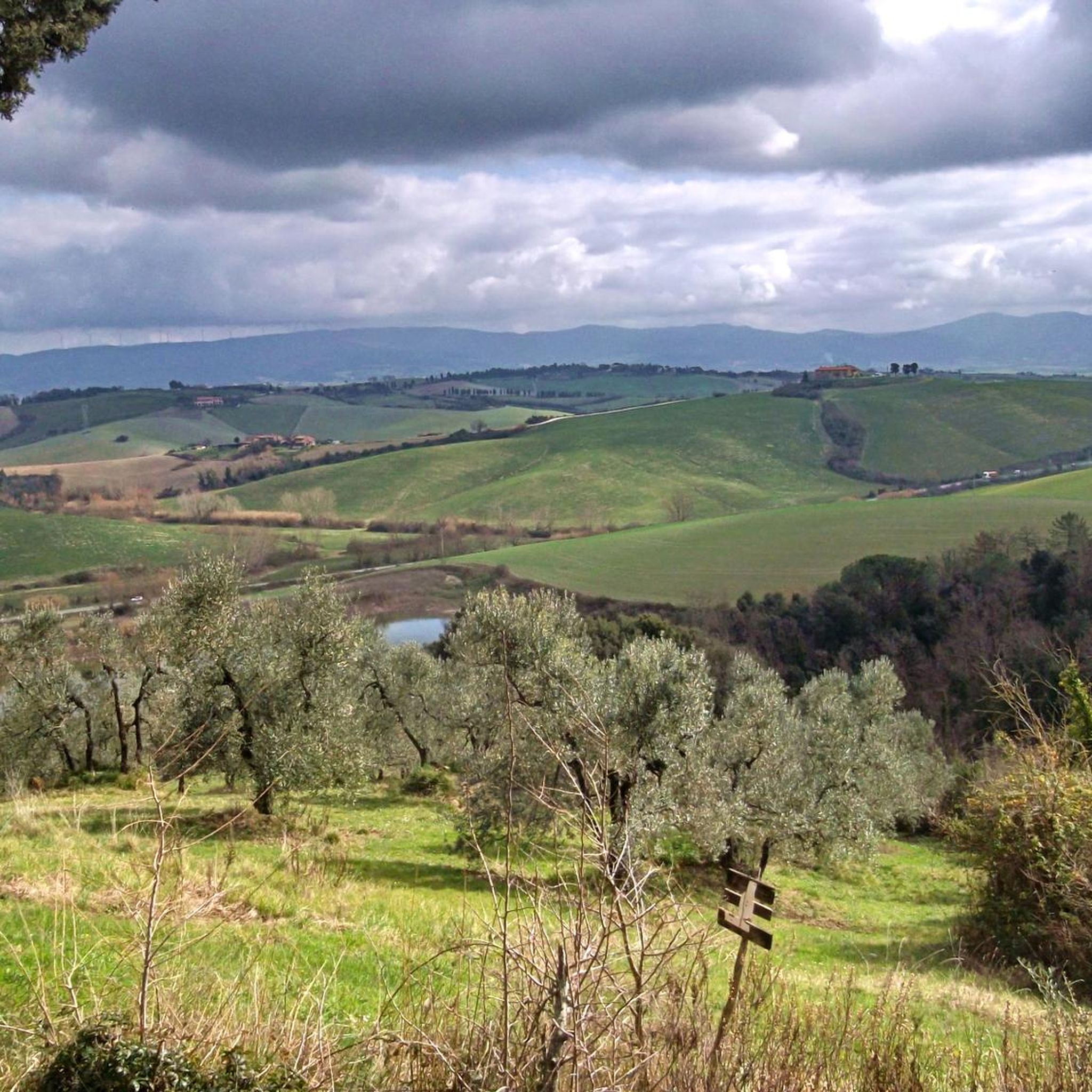
Hiking around Collesalvetti offers routes through green, rolling hills, vineyards, and extensive wooded areas, characterized by Mediterranean scrubland and ancient forests of holm oaks and pines. The region is part of the Natural Reserve of the Livorno Mountains and features streams, including the Torrente Ugione with its small waterfalls. Trails often follow ancient pathways and the historic Leopoldino Aqueduct, providing a diverse landscape for exploration.
Best hiking trails around Collesalvetti
- The most popular hiking route is Ruins of Poggio ai…
Last updated: June 24, 2026
4.1
(22)
49
hikers
9.80km
03:01
320m
320m
Moderate hike. Good fitness required. Mostly accessible paths. Sure-footedness required.
4.7
(9)
25
hikers
Easy hike. Great for any fitness level. Easily-accessible paths. Suitable for all skill levels.

Sign up for free
3.8
(10)
13
hikers
4.55km
01:26
140m
140m
Moderate hike. Great for any fitness level. Mostly accessible paths. Sure-footedness required.
5.0
(6)
27
hikers
13.1km
03:49
300m
300m
Moderate hike. Good fitness required. Mostly accessible paths. Sure-footedness required.
5.0
(2)
12
hikers
17.3km
05:13
530m
530m
Hard hike. Very good fitness required. Mostly accessible paths. Sure-footedness required.
Get access to more routes and recommendations from other explorers.
Sign up for free
Already have an account?
Our route recommendations are based on thousands of hikes, rides, and runs completed by other people on komoot.
Start today with a free account
Your next adventure awaits.
Login or Signup

Tips from the Community

Please take into account that it is very technical and some roads are closed.
0
0

An 18th-century masterpiece just waiting for you Also known as the Poccianti Aqueduct or the Colognole Aqueduct, this ambitious project, begun in 1793, was conceived by order of Grand Duke Ferdinand III in response to the growing water needs of an expanding Livorno. Thanks to its port, in fact, the city was experiencing a significant population increase. However, it was Leopold II who brought it to completion, inaugurating the work only in 1852. The project of the aqueduct, which supplied water to the city of Livorno from 1816 to 1912 and still serves the neighboring towns, was conceived by the skilled Florentine architect Giuseppe Salvetti, the first to trace the path through the hills of Colognole, where various springs gush generously. Due to his premature death, the work was assigned to the architect Calocchieri and completed by Pasquale Poccianti. The latter in particular left an indelible mark on the structure, creating the three imposing cisterns visible in Livorno: the Cisternone, the Cisternino di Città and the Cisternino di Pian di Rota.
0
0


Eremo della Sambuca (Valle Benedetta - Livorno) The hermitage is located south of the Valle Benedetta in the forest of the Livorno Mountains. Already known in the 13th century as an Augustinian hermitage, one of the many that flourished throughout the Christian West to welcome those who wanted to retreat in prayer far from the noise of the world, in 1390 it took the name of Eremo di Santa Maria in Parrana Among others, the Gesuati penitential friars settled there. The Gesuati (not to be confused with the Jesuits) were born as an association of lay penitents founded in the 14th century by St. Giovanni de' Colombini from Siena. They preached peace, poverty and their main function, in addition to prayer, was to assist the sick, the poor and the needy. They spread throughout Italy and, in particular in Tuscany, founded many convents. The Augustinian hermitage was expanded and strengthened by them with other interventions in the vicinity (cultivations, a water mill, "icehouses"). Precisely because of the holy life that these monks led and because of its position sunken into the valley of the Ugione stream, the hermitage took the name of Santa Buca, or Sambuca. Over time, the Gesuati also took over the administration of the Sanctuary of Montenero. After the Gesuati order was suppressed in 1668 by Pope Clement IX (and their assets confiscated to support the war against the Turks), the complex passed to a series of private owners and followed a long period of decline. The structure consisting of a small church (with a single nave, divided into three bays with a circular apse, cross vaults and remains of frescoes, including an Annunciation), cells, guesthouse, refectory, kitchen, granary, cellar, is in poor condition. Since 1950 the structure has been a state-owned building of the Municipality of Collesalvetti. In 1912 it was declared a national monument and a few years ago it was entrusted to the Parish of Giovanni Gualberto in Valle Benedetta.
2
0

Villa Cristina is a scout house. In the summer of 2023 I was also lucky enough to go camping with the Salesians
1
0
Nice dirt road at times with large stones but nothing complicated, all pedalable.
1
0
Ancient Hermitage, whose oldest nucleus dates back to 1100 (small church of Santa Maria di Parrana, with a few cells, Augustinian Fathers of S. Jacopo in Acquaviva), located in the valley of the Ugione torrent, in the Provincial Natural Park of the Livornesi Mountains and in the complex regional agricultural-forestry Livornesi Hills (Valle Benedetta Forest). From 1390 the hermitage took the name of Santa Maria della Sambuca and the penitential Gesuati friars settled there (until 1668, the year of dissolution of the order), with consequent expansion of the structure (church, cells, guesthouse, refectory, kitchen, barn, cellar). A state property since 1950, the Hermitage has been partly renovated with CIPE funds, but is in a state of abandonment and the other two wings (including the beautiful cloister) require urgent conservative restoration. Of great interest for the circuit of existing routes that touch other cultural emergencies such as the remains of mills on the Ugione stream (late 1600s - early 1700s), the ice houses (late 1700s) and other historical-cultural testimonies, as well as naturalistic and geological emergencies.
2
0
Valle Benedetta is a fraction of the municipality of Livorno, located in the middle of the Livorno hills and, more precisely, on the slopes of Poggio Lecceta; it is about 9 kilometers from the city center. Near this small settlement there is a weather station and an astronomical observatory.
2
0
Frequently Asked Questions
What kind of terrain can I expect on hiking trails around Collesalvetti?
Collesalvetti's hiking trails traverse a diverse landscape of green, rolling hills, vineyards, and extensive wooded areas. You'll find fragrant Mediterranean scrubland and ancient forests of holm oaks, cork oaks, pines, and brooms. Many paths follow streams and historical aqueducts, offering varied natural and historical elements.
Are there any easy hiking trails suitable for beginners or families in Collesalvetti?
Yes, Collesalvetti offers a good selection of easy trails. Out of the over 20 routes available, 8 are classified as easy, making them suitable for beginners or families looking for a gentle walk. These routes allow you to enjoy the natural beauty without significant physical challenge.
Can I find trails with waterfalls in the Collesalvetti area?
Absolutely. The Torrente Ugione stream is notable for its small waterfalls, particularly the Cascata dell'Infernaccio. You can explore this suggestive natural setting on routes like the Infernaccio Small Waterfall – Fornaci del Corbolone loop from Acquedotto Leopoldino, which is a moderate 7.0 km path, or the longer Infernaccio Small Waterfall – Eremo della Sambuca loop from Acquedotto Leopoldino.
What historical landmarks or points of interest can I discover while hiking in Collesalvetti?
Collesalvetti's trails are rich in history. You can follow sections of the majestic Leopoldino Aqueduct, a grand ducal work that once supplied water to Livorno. Other historical traces include ancient mills, farmhouses, and even protohistoric necropolises. The Infernaccio Small Waterfall – Eremo della Sambuca loop from Acquedotto Leopoldino, for example, leads past the 13th-century Sambuca Hermitage.
Are there any circular hiking routes available in Collesalvetti?
Yes, many of the trails in Collesalvetti are designed as circular routes, allowing you to start and end at the same point. Examples include the Ruins of Poggio ai Tre Molini loop from Colognole, a 9.5 km moderate trail, and the View of Poggio Lecceta loop from Colognole, which offers expansive views.
What kind of wildlife can I expect to see in the Collesalvetti area?
Collesalvetti is situated within the Natural Reserve of the Livorno Mountains, providing a protected environment rich in wildlife. Hikers might spot wild boars, roe deer, foxes, and weasels. The Contessa Oasis, a regional nature reserve, is particularly excellent for birdwatching, with opportunities to observe various water birds like red herons, marsh harriers, and kingfishers.
What do other hikers say about the trails in Collesalvetti?
The routes in Collesalvetti are highly rated by the komoot community, with an average score of 4.5 stars from over 680 reviews. Hikers often praise the diverse terrain, the blend of natural beauty with historical sites, and the well-maintained paths that offer a regenerating journey into nature.
Are there any specific viewpoints or panoramic spots along the trails?
Yes, the region offers several spots with expansive views. Poggio Lecceta, the highest peak in the Livorno Hills, provides stunning panoramas of the surrounding landscape. You can experience this on routes such as the View of Poggio Lecceta loop from Colognole.
What are some notable natural features to look out for while hiking?
Beyond the rolling hills and forests, keep an eye out for the unique Mediterranean scrubland and ancient trees like holm oaks and cork oaks. The area is also characterized by numerous streams, including the Rio Maggiore and Torrente Ugione, which contribute to the 'green island' feel of Collesalvetti.
Are there any lakes or water bodies near the hiking trails in Collesalvetti?
Yes, the Collesalvetti area is close to several beautiful lakes. You can find highlights such as Lake Santa Luce, Lago delle Serre, and the Santa Luce Lake Nature Reserve, which are excellent for birdwatching and enjoying tranquil waterscapes.
What is the best time of year to go hiking in Collesalvetti?
Collesalvetti offers a fulfilling outdoor experience throughout the year. The mild Tuscan climate makes it suitable for hiking in spring and autumn when temperatures are pleasant and the landscape is vibrant. Even in winter, many trails remain accessible, offering a serene escape into nature, though some areas might require more sure-footedness.
Are there any ancient aqueducts or Roman sites to explore?
Yes, the hiking trails often weave through centuries of history. A prominent feature is the ancient path of the majestic Leopoldino Aqueduct, a grand ducal work. You can also find traces of ancient roads like the Aemilia Scauri and remnants of Etruscan and Roman archaeological sites, offering a glimpse into past civilizations.
Most popular routes around Collesalvetti
Most popular attractions around Collesalvetti

Get inspired with the komoot mobile app


Explore more
Browse the best Hikes in other regions.
