The best walks and hikes around Monte Romano
4.3
(158)
660
hikers
43
hikes
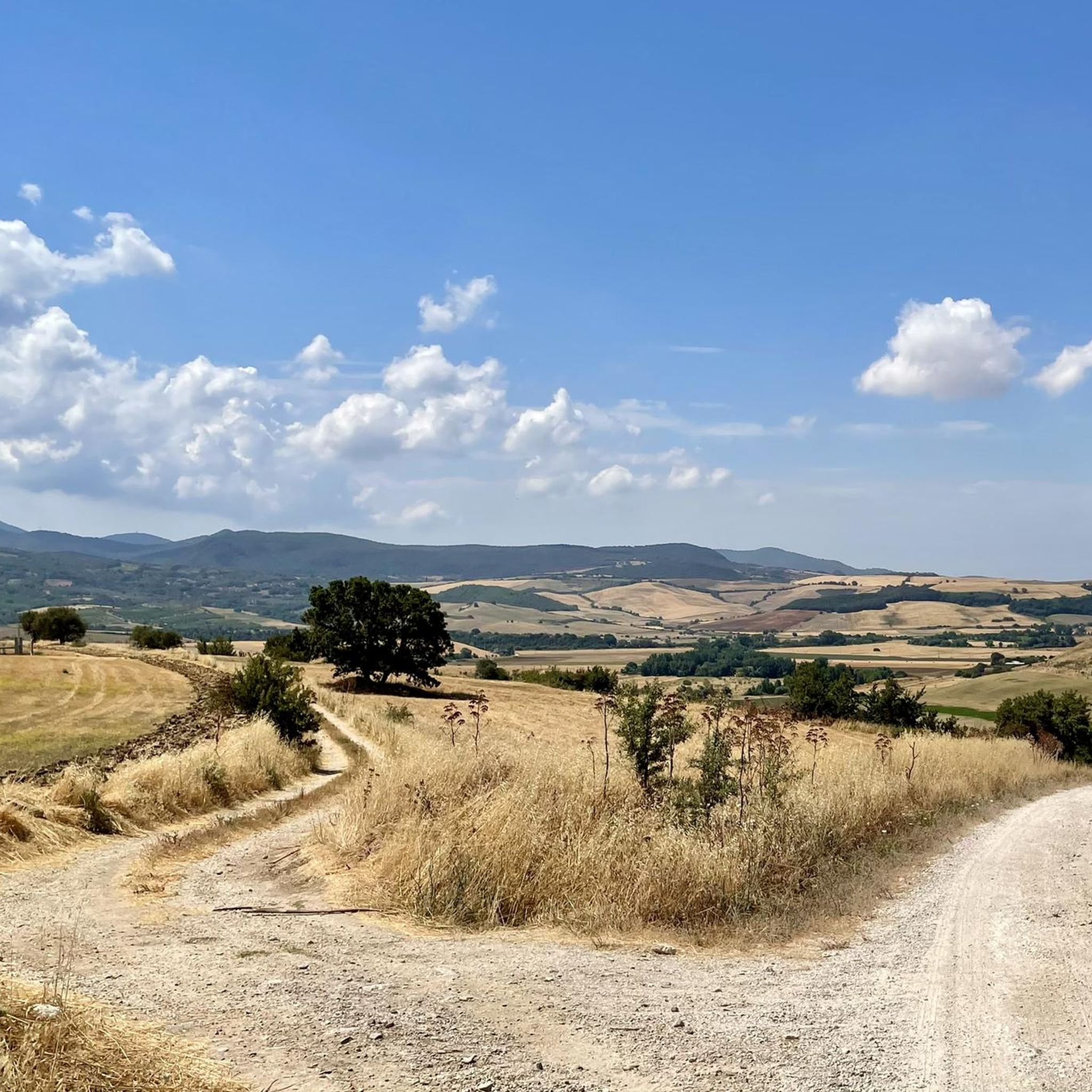
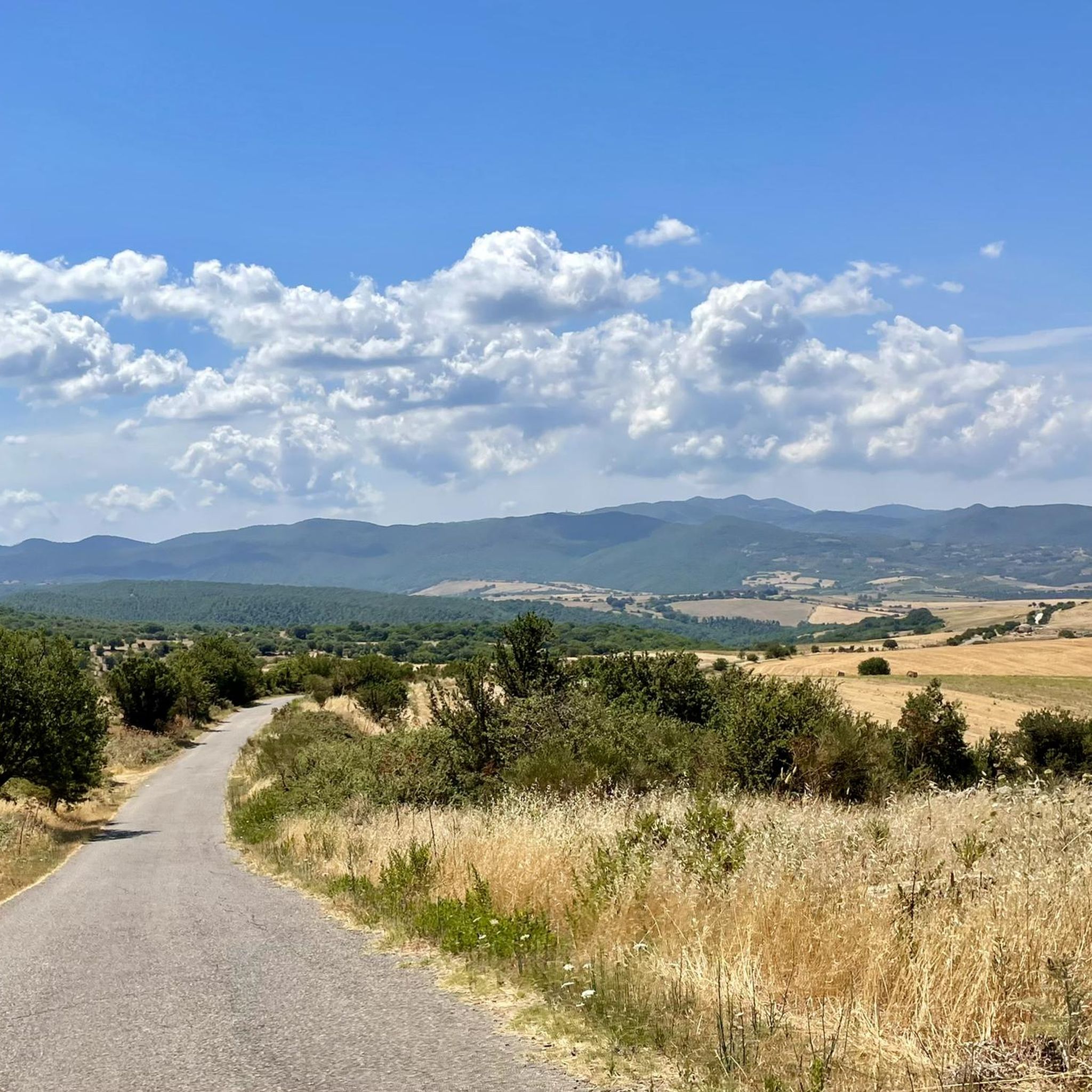
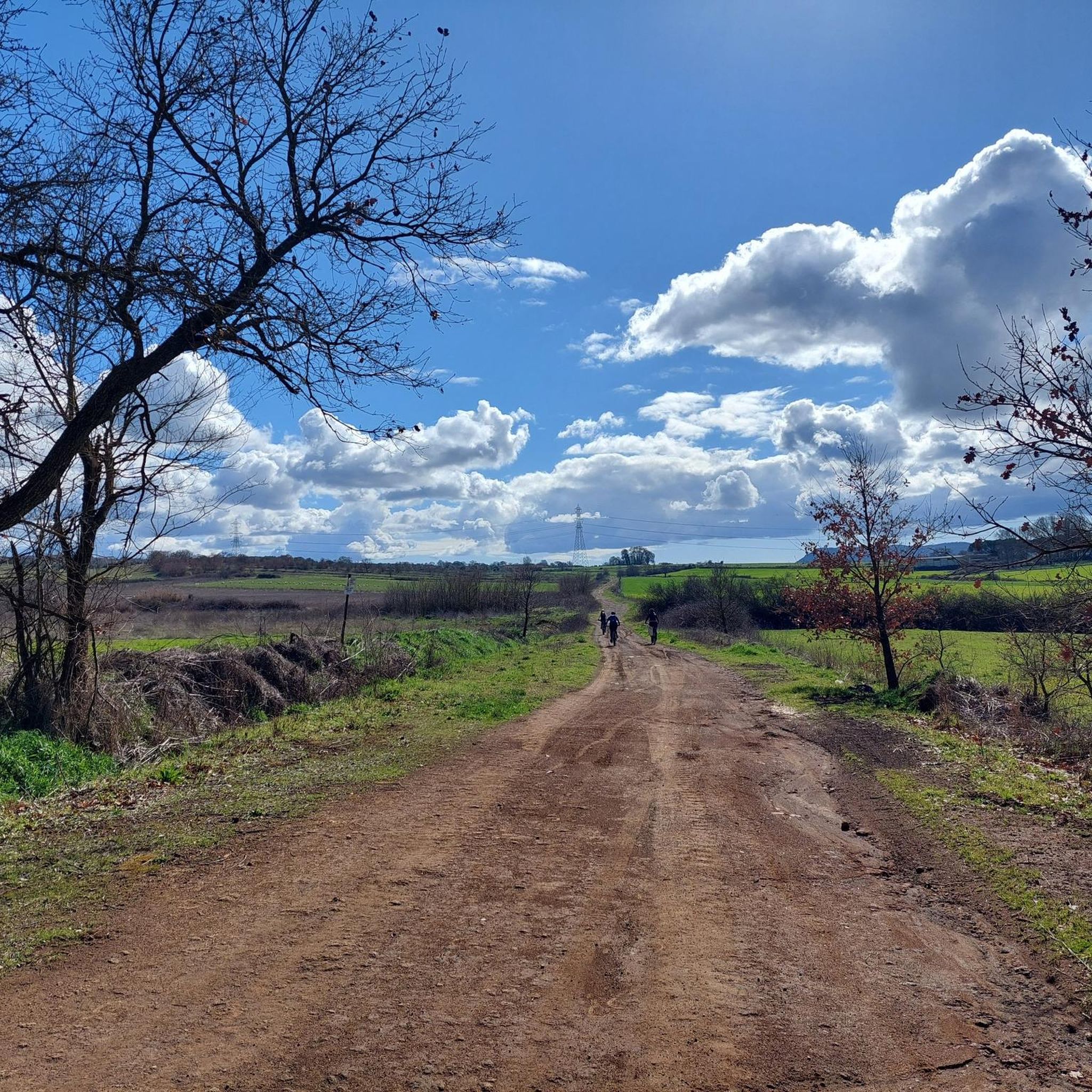
Hiking around Monte Romano offers access to a landscape characterized by ancient pathways, historical ruins, and natural features such as cliffs and rolling terrain. The region, situated in Viterbo, Italy, provides a mix of open countryside and wooded sections. Trails often follow historical routes, connecting points of interest from past eras. The elevation changes are generally moderate, making the area accessible for various hiking abilities.
Best hiking trails around Monte Romano
- The most popular hiking route is Ancient Via Clodia Stage 08 Loop, a 10.1 miles (16.2 km) trail that takes 4 hours 24 minutes to complete. This moderate route follows a segment of the historic Via Clodia, offering insights into ancient Roman infrastructure.
- Another top favourite among local hikers is Ripa Maiale Cliff – Ruins of Cencelle loop from Allumiere, a difficult 11.3 miles (18.1 km) path. This trail features views of Ripa Maiale Cliff and explores the historical Ruins of Cencelle.
- Local hikers also love the Ripa Maiale Cliff loop from Borgo della Farnesiana, a 5.4 miles (8.7 km) trail leading through varied terrain including views of Ripa Maiale Cliff, often completed in about 2 hours 35 minutes.
- Hiking around Monte Romano is defined by ancient paths, historical sites, and natural cliffs, offering a blend of cultural and natural exploration. The network includes routes for easy, moderate, and difficult skill levels, accommodating different hiking preferences.
- The routes in Monte Romano are highly rated by the komoot community with an average score of 4.5 stars from over 130 reviews. More than 500 hikers have used komoot to explore Monte Romano's varied terrain.
Last updated: June 21, 2026
2.5
(2)
3
hikers
16.2km
04:24
230m
230m
Moderate hike. Good fitness required. Easily-accessible paths. Suitable for all skill levels.
4.2
(5)
27
hikers
18.1km
05:11
430m
430m
Hard hike. Very good fitness required. Easily-accessible paths. Suitable for all skill levels.

Sign up for free
4.0
(3)
7
hikers
8.70km
02:35
280m
280m
Moderate hike. Good fitness required. Easily-accessible paths. Suitable for all skill levels.
3.0
(1)
12
hikers
Moderate hike. Good fitness required. Easily-accessible paths. Suitable for all skill levels.
4.7
(3)
7
hikers
4.93km
01:25
120m
120m
Easy hike. Great for any fitness level. Easily-accessible paths. Suitable for all skill levels.
Get access to more routes and recommendations from other explorers.
Sign up for free
Already have an account?
Our route recommendations are based on thousands of hikes, rides, and runs completed by other people on komoot.
Start today with a free account
Your next adventure awaits.
Login or Signup

Tips from the Community

The current Palazzo del Comune of Tuscania overlooks Piazza Basile, between the Church of San Lorenzo and the former Church of Santa Croce, currently home to the Historical Archives and the Municipal Library. Previously, the administrators of the municipality resided in the ancient Palazzo del Rivellino, on the hill of the same name; the structure was so called because it was similar to a fortress. Subsequently, the podestà was transferred first to the palace that today is home to the Teatro Comunale, and then to the current one. The latter is accessed via a beautiful external staircase, which features a bronze plaque in memory of the restoration, in 1912, of the ancient name of the city that had been changed by Boniface VIII to Toscanella. (c) https://www.italiavirtualtour.it/dettaglio_member.php?id=96308
0
0
The church and the convent belonged to the Augustinian order. The buildings date back to the end of the 13th century and were completely rebuilt in the 18th century. Of the original church, only the single-nave plan remains, with no internal divisions and a rectilinear apse. The façade, which dates back to the 18th century, has a window on the outside. The interior is characterized by Baroque-style altars. In the apse, behind the 18th-century stucco altar, 15th-century frescoes were found. To the right of the entrance, a Renaissance stone arch gives access to the stone Chapel of San Giobbe, with beautiful reliefs. It is also known as the Ludovisi Chapel, named after the client who had it built in 1486. In the apse of the chapel, there is a fresco from the Viterbo school with a carved stone frame that was painted in 1492 and which represents the Ludovisi family in prayer at the sides of a Crucifixion. Next to the church is the building of the former convent of Sant'Agostino characterized by a beautiful cloister, numerous rooms and, on the upper floor, the monks' cells. It is located within the city walls right in the middle of the town. In 1818 it became the seat of the bishop's seminary, then during the Second World War it was used as accommodation for displaced people. Restored together with the church after the 1971 earthquake, it was finally abandoned around 1980. (c) https://www.cassiciaco.it/navigazione/monachesimo/chiese/italia/lazio/tuscania.html
0
0
Fontana Grande, also known as the Fontana di San Giacomo, is a stunning 17th-century fountain located in the heart of Tuscania's historic center. It stands prominently in Piazza Domenico Bastianini and was part of a renewal project led by Cardinal Cambara. The fountain's basin, carved from a single block of stone sourced from a nearby quarry, showcases impressive craftsmanship. (c) https://wanderlog.com/place/details/8697871/fontana-grande
0
0
Porta di Poggio is one of the entrance gates to the medieval citadel of Tuscania
0
0
Ancient fountain located in the heart of the historic center of Tuscania, famous for the seven masks that compose it from which the water flows. The coats of arms of some noble families of the time appear on the structure. In the small square that towards the end of the Middle Ages was the market square, there is the ancient source of the Seven Spouts, also known as the Fontana del Butinale, so called because the water comes out of the mouth of seven masks, the Fountain of the Seven Spouts is the oldest of the cities of Tuscania, of Etruscan-Roman age the fountain was completed in 1309 by the podestà Lorenzo da Guglielmo, to better serve the needs of the city. The source seems to have fed the Roman baths existing near the church of Santa Maria Maggiore. In more recent times it seems to have fed a mill near the small square. (c) https://fondoambiente.it/luoghi/fontana-delle-sette-cannelle?ldc
0
0

from Wiki: "According to what is reported in the Liber Pontificalis, the city was founded by Pope Leo IV on 15 August of the year 854 to give a safer seat to the citizens of Centumcellae (Civitavecchia) and the related diocese[1], being the city hit by the raids of the Saracens on the Tyrrhenian coast. According to his biographer, the pope gave the new city the name of Leopoli, but in all the documents, in the first centuries, the name of Centumcellae - civitas or castrum centumcellensis, later changed, is found in Centucelle - Cincelle - Cencelle. The new city was founded on a branch of the Via Aurelia, on an easily defensible hill between the Mignone river and its tributary Melledra, which had also been occupied in ancient times by the Etruscans. At the time of the foundation, the city walls were built, a first church, an episcopal seat, with an adjoining cemetery and wooden houses, later replaced by brick houses and buildings. The main church dedicated to Saint Peter was rebuilt larger between the end of the 11th and the beginning of the 12th century. The city was damaged by the earthquake of 1349 and the buildings were subsequently restored. It progressively declined and at the beginning of the 15th century the lands were, according to sources, "destroyed and uninhabited". In the second half of the fifteenth century the city area was used for the exploitation of the alum mines in the Tolfa mountains and in the seventeenth century it was probably the center of an agricultural company".
0
0

Beautiful square in the historic center of Tuscania.
0
0
Definitely worth a detour. You should take a few hours to a whole day because there is a lot to discover and visit.
0
0
Frequently Asked Questions
How many hiking trails are available in Monte Romano?
Monte Romano offers a diverse network of over 45 hiking trails. These routes cater to various skill levels, ranging from easy strolls to more challenging treks, allowing you to explore the region's ancient pathways and natural landscapes.
What is the best time of year to hike in Monte Romano?
The ideal time for hiking in Monte Romano is typically during spring (April-June) and autumn (September-November). During these seasons, the weather is mild and pleasant, making for comfortable conditions to explore the historical sites and natural beauty without the intense heat of summer or the cooler, potentially wetter conditions of winter.
Are there easy hiking trails suitable for beginners or families in Monte Romano?
Yes, Monte Romano has 15 easy hiking routes perfect for beginners or families. These trails generally feature moderate elevation changes and are well-suited for a relaxed outdoor experience. An example is the Hiking loop from Borgo della Farnesiana, which is about 3 miles (4.9 km) long and takes around 1 hour 25 minutes.
Are there any challenging hikes for experienced trekkers in Monte Romano?
For experienced trekkers, Monte Romano offers 5 difficult routes that provide a more strenuous adventure. These trails often feature greater elevation changes and longer distances. A notable challenging option is the Ripa Maiale Cliff – Ruins of Cencelle loop from Allumiere, an 11.3-mile (18.1 km) path that explores historical ruins and offers expansive views.
What historical sites or natural landmarks can I see while hiking in Monte Romano?
The hiking trails around Monte Romano are rich with historical and natural landmarks. You can encounter ancient Roman infrastructure, Etruscan tombs, and impressive natural formations. Highlights include the Grotta Porcina Etruscan Tomb, the dramatic Ripa Maiale Cliff, and the Etruscan Necropolis of Castel d'Asso. Many routes follow ancient pathways, offering a journey through history.
Are there circular hiking routes in Monte Romano?
Yes, many of the trails in Monte Romano are designed as circular routes, allowing you to start and end at the same point without retracing your steps. This is ideal for exploring different facets of the landscape. An example is the Ripa Maiale Cliff loop from Borgo della Farnesiana, which offers varied terrain and views.
Can I bring my dog on the hiking trails in Monte Romano?
Generally, dogs are welcome on most hiking trails in the Monte Romano area, especially on public paths through natural landscapes. However, it's always advisable to keep your dog on a leash, especially in areas with wildlife or near historical sites, and to check for any specific local regulations or signage along your chosen route.
What are the parking options for hikers in Monte Romano?
Parking availability varies depending on the specific trailhead. Many routes start from small towns or villages like Allumiere or Borgo della Farnesiana, where street parking or small public parking areas might be available. For more remote trailheads, roadside parking might be an option. It's recommended to check the route details on komoot for specific parking suggestions near your chosen starting point.
Is public transport available to reach the hiking trails in Monte Romano?
Public transport options to reach specific trailheads directly in Monte Romano can be limited, as many routes start from smaller, less accessible locations. While regional buses might connect larger towns in the Viterbo province, reaching the exact starting point of a hike often requires a car. Planning your route in advance and checking local bus schedules for nearby towns is recommended.
What do other hikers enjoy most about hiking in Monte Romano?
The hiking experience in Monte Romano is highly rated by the komoot community, with an average score of 4.5 stars from over 130 reviews. Hikers frequently praise the blend of historical exploration with natural beauty, highlighting the ancient pathways, the views from cliffs like Ripa Maiale, and the tranquil atmosphere of the wooded sections and rolling terrain.
Are there any specific natural features like rivers or thermal springs to explore?
Yes, the region around Monte Romano features interesting natural elements. You can find the Biedano River, which carves through parts of the landscape. Additionally, the Bagnaccio Thermal Park is a notable natural monument nearby, offering a unique experience after a hike.
What kind of terrain can I expect on the trails around Monte Romano?
The terrain around Monte Romano is varied, characterized by rolling hills, open countryside, and wooded sections. You'll often find yourself on ancient dirt paths, some rocky sections, and occasionally paved or gravel roads connecting different points of interest. Elevation changes are generally moderate, but some difficult routes include steeper ascents and descents.
Most popular attractions around Monte Romano

Get inspired with the komoot mobile app


Explore more
Browse the best Hikes in other regions.
