Attractions and Places To See around Scoppito - Top 20
Best attractions and places to see around Scoppito, a town in the province of L'Aquila, Italy, offer a blend of historical and natural sites. Situated at the foot of the Monti Sirente-Velino, the area features a hilly landscape. The region provides opportunities to explore ancient Roman ruins and enjoy mountain views. Many significant sites are located in the immediate surrounding area, particularly in L'Aquila and the broader Abruzzo region.
Best attractions and places to see around Scoppito
- The most popular…
Last updated: June 23, 2026
Amiternum Archaeological Site
Highlight • Historical Site
Translated by Google •
Tip by

Fountain of the 99 Spouts
Highlight • Monument
Showing Translation
Tip by

Sign up now to discover places like this
Get recommendations on the best single tracks, peaks, & plenty of other exciting outdoor places.
Sign up for free
Basilica of San Bernardino
Highlight • Religious Site
The Basilica di San Bernardino is one of the most beautiful Renaissance monuments in Abruzzo and tells the story of faith, art, and resilience.
Showing Translation
Tip by
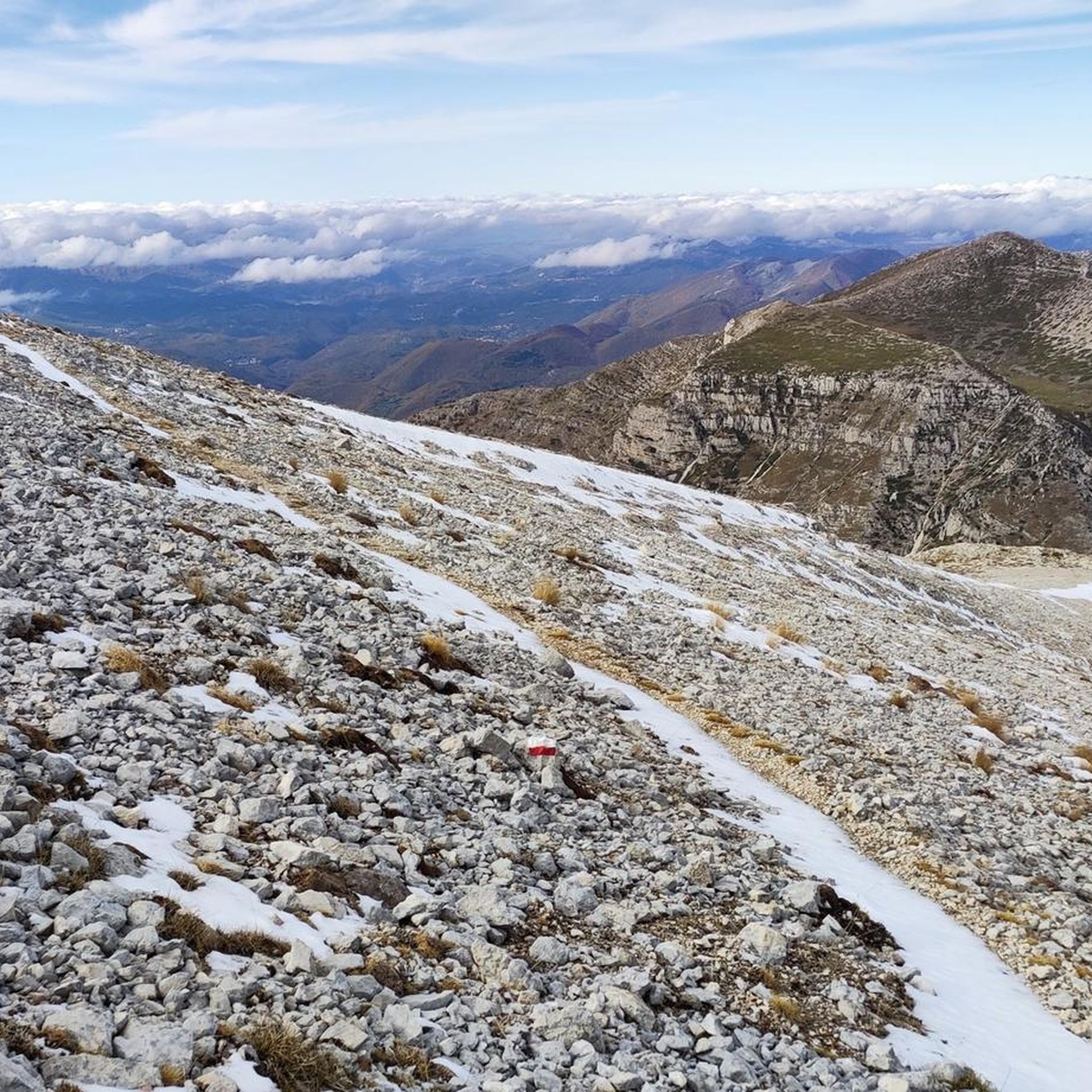
Monte Pettino Summit
Highlight • Summit
Translated by Google •
Tip by

Forte Spagnolo (Cinquecento Castle), L'Aquila
Highlight • Castle
Translated by Google •
Tip by

Sign up for free to discover even more attractions around Scoppito.
Sign up for free
Already have an account?
Start today with a free account
Your next adventure awaits.
Login or Signup
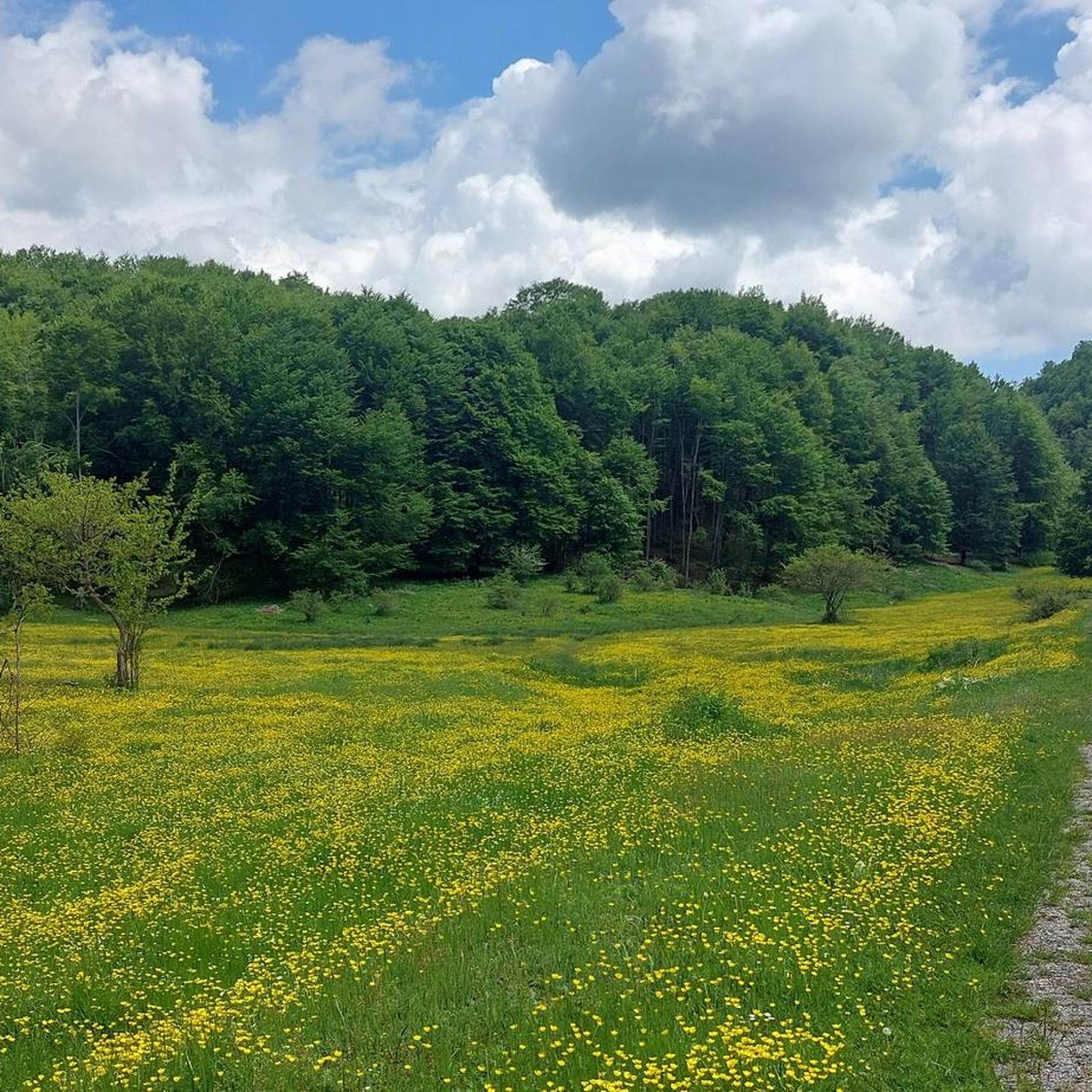
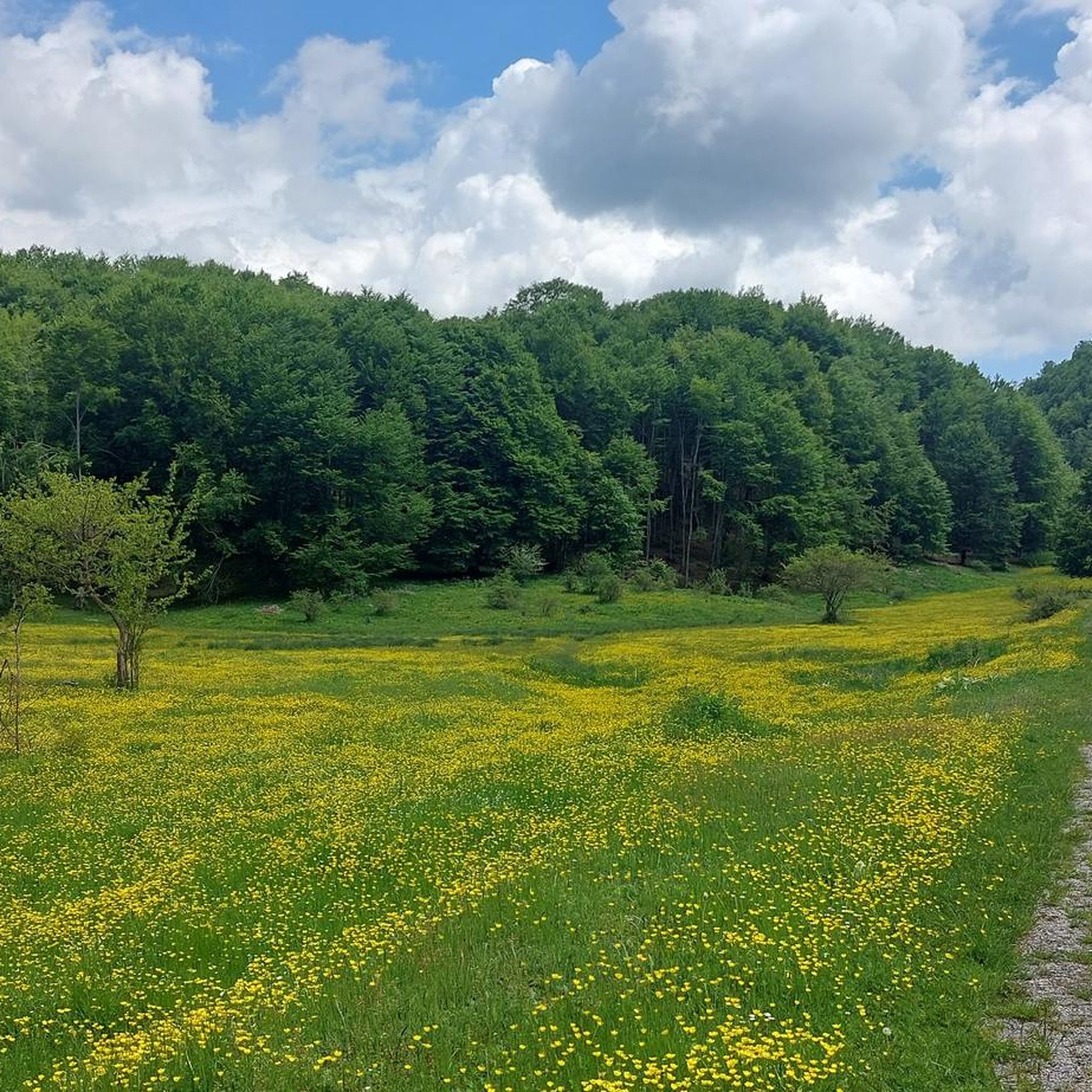
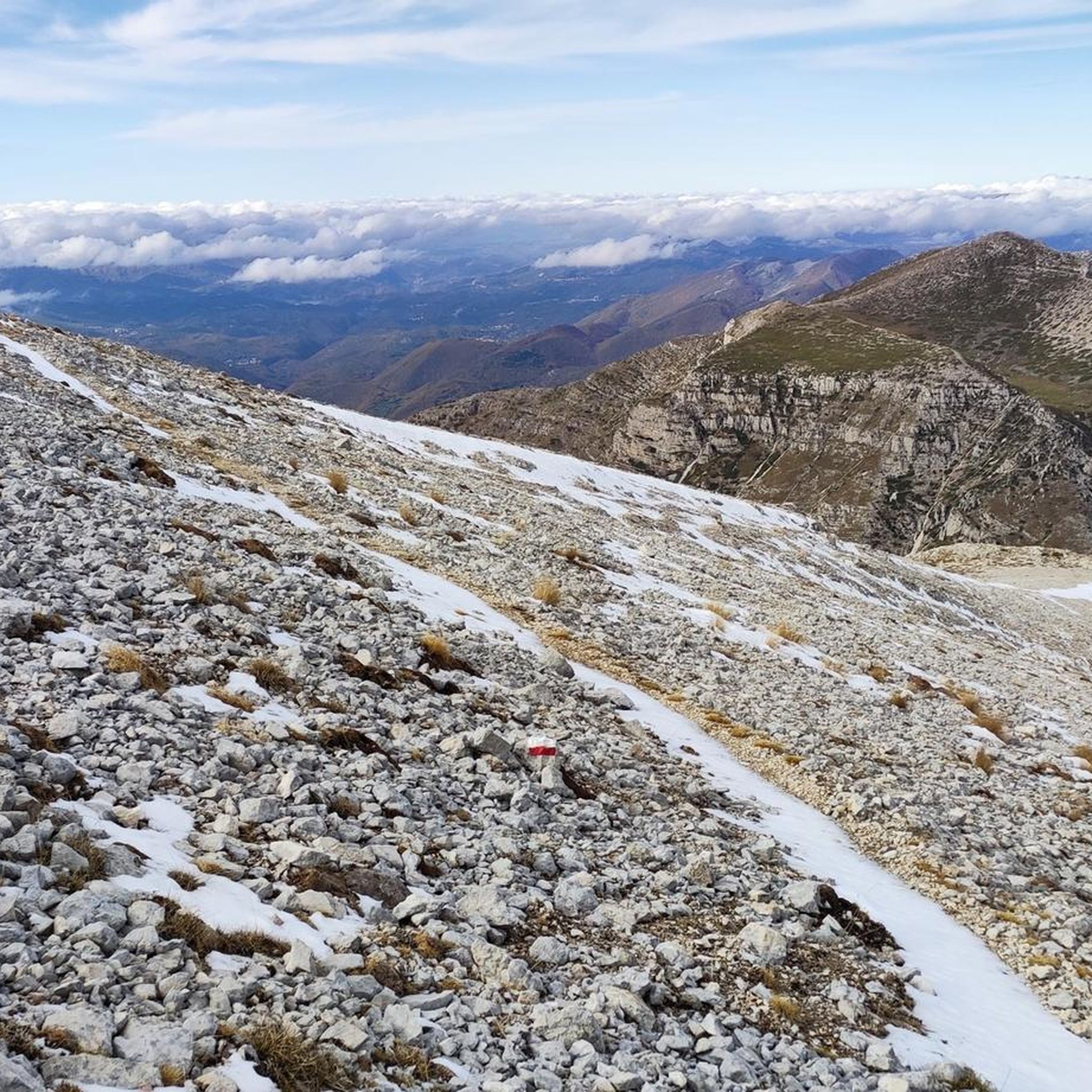
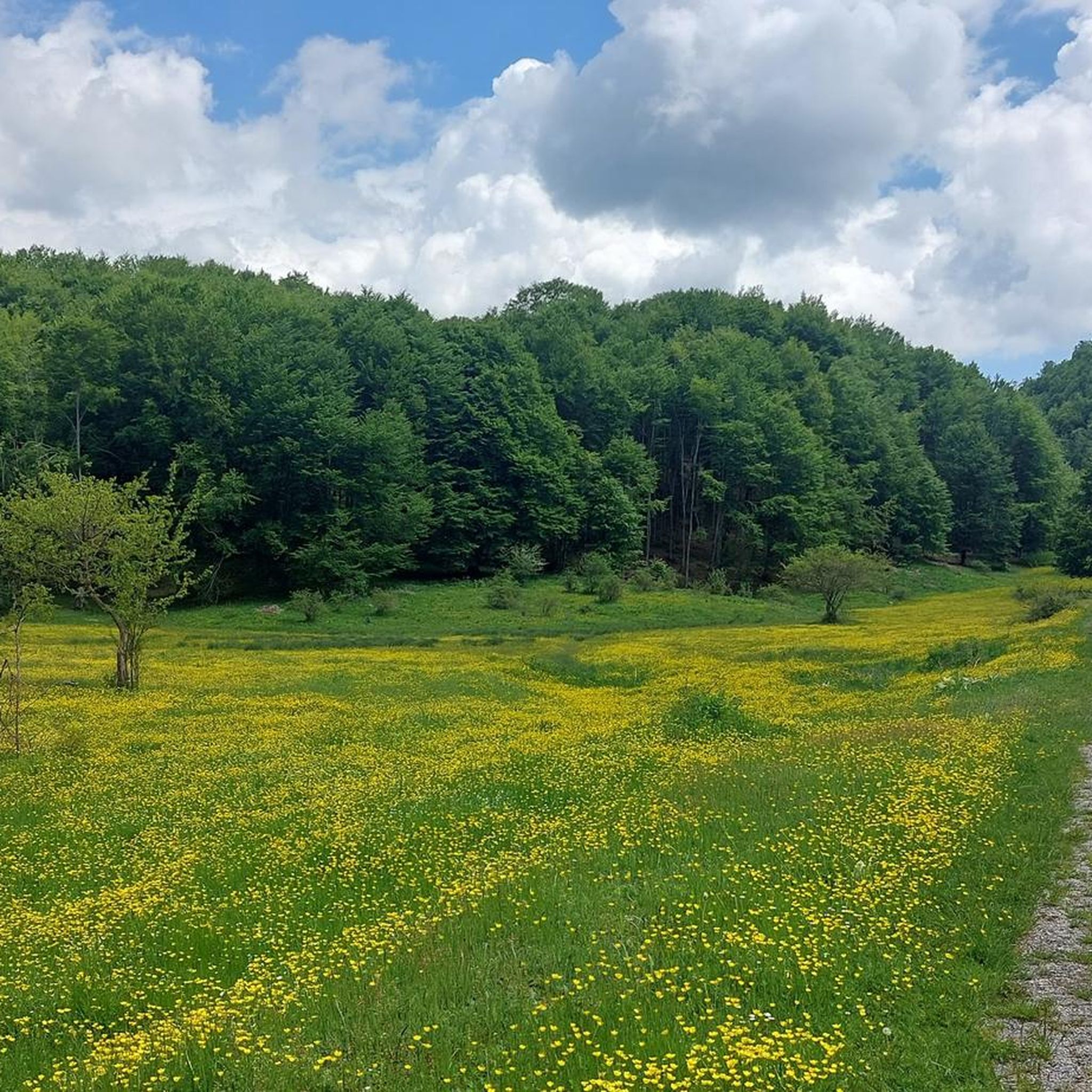
Tips from the Community

Explanation for the difference in the number of gargoyles! One of the most striking facts about the Fontana delle 99 Cannelle is that the fountain has 99 water jets, but only 93 sculpted mask heads. According to legend, L'Aquila was founded by 99 villages, but historical research indicates that there were actually 93. Therefore, in 1272, architect Tancredi da Pentima equipped the fountain with 93 stone masks. To later complete the famous legend of the 99, six additional gargoyles without mask faces were added. According to tradition, these six simple spouts refer to the six wounds of Christ. Thus, the fountain is not only a magnificent monument, but also a unique blend of history, symbolism, and legend. Moreover, for many visitors, it remains a fun challenge to count all 99 water jets themselves.
2
0
The Forte Spagnolo (also known as Castello Cinquecentesco) is one of the most impressive 16th-century military strongholds of Central and Southern Italy. Although it is a defensive work, its true historical significance lies in the fact that it was never built to protect the city, but rather to suppress it. After the Spanish threat diminished over time, the complex successively served as the residence of the Spanish governor, barracks for French troops in the 19th century, and headquarters for the German occupier during World War II. In 1902, it was officially declared a national monument. Shortly after World War II, it became the home of the National Museum of Abruzzo (MuNDA). Since the devastating earthquake of 2009, the fort has been undergoing a lengthy and complex restoration, but it remains one of the most impressive symbols of the city when viewed from the outside.
1
0
The monumental Scalinata di San Bernardino in L'Aquila is one of the most characteristic and photogenic urban elements of the city. This wide, stately staircase connects the lower Via Fortebraccio with the higher Piazza di San Bernardino. Origin and architecture (16th century) Simultaneous construction: the staircase was built in the 16th century, at the same time as the Renaissance facade of the Basilica di San Bernardino (designed by architect Cola dell'Amatrice between 1525 and 1542). It served as the perfect extension of the religious complex. Urban planning purpose: the staircase had two functions. Practically, it was intended to connect the lower districts around the city walls with the centre. Aesthetically, it created a theatrical and baroque visual axis; pilgrims coming from below saw the monumental church facade slowly tower above them. Imposing dimensions: The staircase is no less than 30 metres wide and 68 metres long. The steps were deliberately designed to be very low and deep, so that large groups of worshippers and processions could comfortably ascend the slope. Striking features and details. The watchtowers: at the beginning (bottom) and end (top) of the staircase are a total of four small, robust turrets (torrette) that flank the staircase and give it a slightly military or monumental character. The edicolae: along the sides of the staircase are three stone niches or chapels (edicole) per side. These historically served during religious festivals and processions.
2
0
Did you know that the Fontana delle 99 Cannelle legend says it has 99 gargoyles, in tribute to the 99 villages that founded L'Aquila? Those who look closely will see stone masks above the gargoyles, which according to tradition represent castle lords or protective spirits. It is striking that there are only 93 mask heads. Historians believe that the remaining six gargoyles were added later to complete the symbolic number 99. The fountain dates back to 1272, and its five water basins were formerly used as a wash place. Numerous legends also circulate around the fountain: for example, the architect is said to have taken the secret of the water source to his grave, and knights would have ritually cleansed themselves here before entering the Basilica di Collemaggio.
2
0
Basilica di San Bernardino – a Renaissance pearl of L’Aquila The Basilica di San Bernardino is one of the most beautiful Renaissance monuments in Abruzzo and tells the story of faith, art, and resilience. The impressive facade, designed by Cola dell'Amatrice, is inspired by classical Greek and Roman architecture. The three layers show the different styles: Doric at the bottom, Ionic above it, and Corinthian at the top. On the facade and in the interior, the golden IHS monogram shines with sunbeams, a symbol that Bernardino of Siena used during his sermons to reconcile rival families. Inside is the beautiful marble mausoleum of Saint Bernardino, created by Silvestro dell'Aquila. After his death in 1444, L’Aquila grew into an important pilgrimage site around his tomb. The basilica also symbolizes the city's reconstruction. The 2009 earthquake caused severe damage, including the collapse of part of the bell tower. After a six-year restoration, the church was reopened in 2015 and shines again as one of L’Aquila's major attractions.
3
0

The Amiternum amphitheater is a solemn testament to Abruzzo's glorious Roman past, located on the San Vittorino plain a few kilometers from L'Aquila. Built in the 1st century AD on the edge of the ancient Sabine city, it still retains its imposing elliptical structure with two tiers of arches that once accommodated up to six thousand spectators. Today, it offers a striking blend of the austere monumentality of ancient brickwork and the rural tranquility of the Aterno Valley.
0
0

At this site, you can see the ancient ruins of Amiternum, a city founded by the Sabines. Also in the area, in addition to the theater, amphitheater, and remains of a domus, you can see the remains of the ancient Via Cecilia, which connected Rome with the Abruzzo colonies in the present-day province of Teramo.
0
0

Fascinating church with a magnificent organ, impressive ceiling, interesting dome, wide staircase...
1
0
Frequently Asked Questions
What historical sites can I explore near Scoppito?
Near Scoppito, you can visit the Amiternum Archaeological Site, an ancient Roman settlement featuring well-preserved ruins like an amphitheater, public baths, and an aqueduct. In L'Aquila, the Forte Spagnolo (Cinquecento Castle), a 16th-century fortress, also houses the National Museum of Abruzzo (MUNDA) where a mammoth skeleton discovered near Scoppito is exhibited. Additionally, the 14th-century Church of San Giacomo Apostolo in Scoppito, though awaiting restoration, is a notable historical landmark.
Are there any natural attractions or viewpoints around Scoppito?
Yes, the region offers several natural highlights. You can ascend Monte Pettino Summit in L'Aquila for great views of the surrounding mountains. Mount Calvo, at 1898 meters above sea level, also provides numerous paths for hiking. Scoppito is situated at the foot of the Monti Sirente-Velino, offering a beautiful hilly landscape, and the nearby Gran Sasso and Monti della Laga National Park offers breathtaking scenery.
What family-friendly activities are available in the Scoppito area?
Many attractions around Scoppito are suitable for families. The Amiternum Archaeological Site offers an engaging historical experience. In L'Aquila, families can enjoy the unique Fountain of the 99 Spouts and explore the Forte Spagnolo (Cinquecento Castle). For outdoor fun, the natural park in Sella di Corno offers a lake for sport fishing, mountain bike rentals, and horseback riding.
What outdoor activities, like cycling or hiking, can I do near these attractions?
The area around Scoppito is excellent for outdoor enthusiasts. You can find various cycling routes, including touring, road, and gravel biking options. For example, there are routes like the 'L'Aquila – Fountain of the Nine Martyrs loop' or the 'Gravel Path Along the River – Roman Theatre of Amiternum loop'. Many paths for hiking are available on Mount Calvo, and the broader region, including the Gran Sasso and Monti della Laga National Park, offers extensive opportunities for hiking, climbing, and even canoeing on the Tirino River. You can find more details on cycling routes at Cycling around Scoppito, Road Cycling Routes around Scoppito, and Gravel biking around Scoppito.
What are some cultural landmarks to visit in L'Aquila?
The city of L'Aquila, the capital of Abruzzo, is rich in cultural landmarks. Don't miss the iconic Fountain of the 99 Spouts, the impressive Basilica of Collemaggio, the L'Aquila Cathedral, and the Fontana Luminosa (Luminous Fountain). The Forte Spagnolo (Cinquecento Castle) is also a significant historical and cultural site.
Are there any specific tips for visiting the Amiternum Archaeological Site?
The Amiternum Archaeological Site, located in the Aterno Valley, showcases well-preserved Roman ruins including an amphitheater, public baths, and an aqueduct. It's a testament to Abruzzo's Roman past and offers a striking blend of ancient architecture and rural tranquility. The site also features remains of an ancient Sabine town, including a theater and a *domus*. Allow ample time to explore the various structures.
What makes the Fountain of the 99 Spouts in L'Aquila unique?
The Fountain of the 99 Spouts, also known as the Rivera fountain, is a symbolic monument in L'Aquila. It features ninety-three stone masks and six individual spouts, from which water flows. Tradition holds that these spouts represent the 99 castles that contributed to the foundation of L'Aquila in the 13th century, making it a place of historical and legendary significance.
Can I rent mountain bikes or go horseback riding near Scoppito?
Yes, in Sella di Corno, a hamlet of Scoppito, you can rent mountain bikes to explore the landscapes. This area also offers opportunities for horseback riding, allowing you to experience the natural beauty of the region in a unique way.
What is the significance of the Forte Spagnolo (Cinquecento Castle) in L'Aquila?
The Forte Spagnolo (Cinquecento Castle) is a 16th-century fortress built during Spanish domination. Despite its military origins, it was never used for war, serving instead as a residence for the Spanish governor and later as soldier accommodation. Today, it stands as one of Europe's largest and best-preserved examples of modern military architecture and houses the National Museum of Abruzzo (MUNDA).
Are there any less crowded outdoor activities or hidden gems around Scoppito?
Beyond the main attractions, the region around Scoppito is full of hidden gems for outdoor exploration. Consider hiking the numerous paths on Mount Calvo for a quieter experience. The natural park in Sella di Corno offers a serene lake for sport fishing. Exploring the smaller villages and their surrounding hilly landscapes, which sit at the foot of the Monti Sirente-Velino, can also lead to peaceful discoveries away from larger crowds.
What is the best way to experience the natural beauty of the Abruzzo region near Scoppito?
To fully experience the natural beauty, consider exploring the areas around Mount Calvo and the Monti Sirente-Velino, which offer a hilly landscape and numerous hiking paths. The nearby Gran Sasso and Monti della Laga National Park is also a must-visit for its extensive protected areas, offering opportunities for hiking, climbing, and enjoying the pristine Tirino River. For a unique experience, try mountain biking or horseback riding in Sella di Corno.
Most popular attractions around Scoppito

Get inspired with the komoot mobile app


Explore more
Still not found the Highlight you’re looking for? See guides of the top attractions in other regions:
