The best walks and hikes around Grumo Nevano
4.4
(293)
5,107
hikers
73
hikes
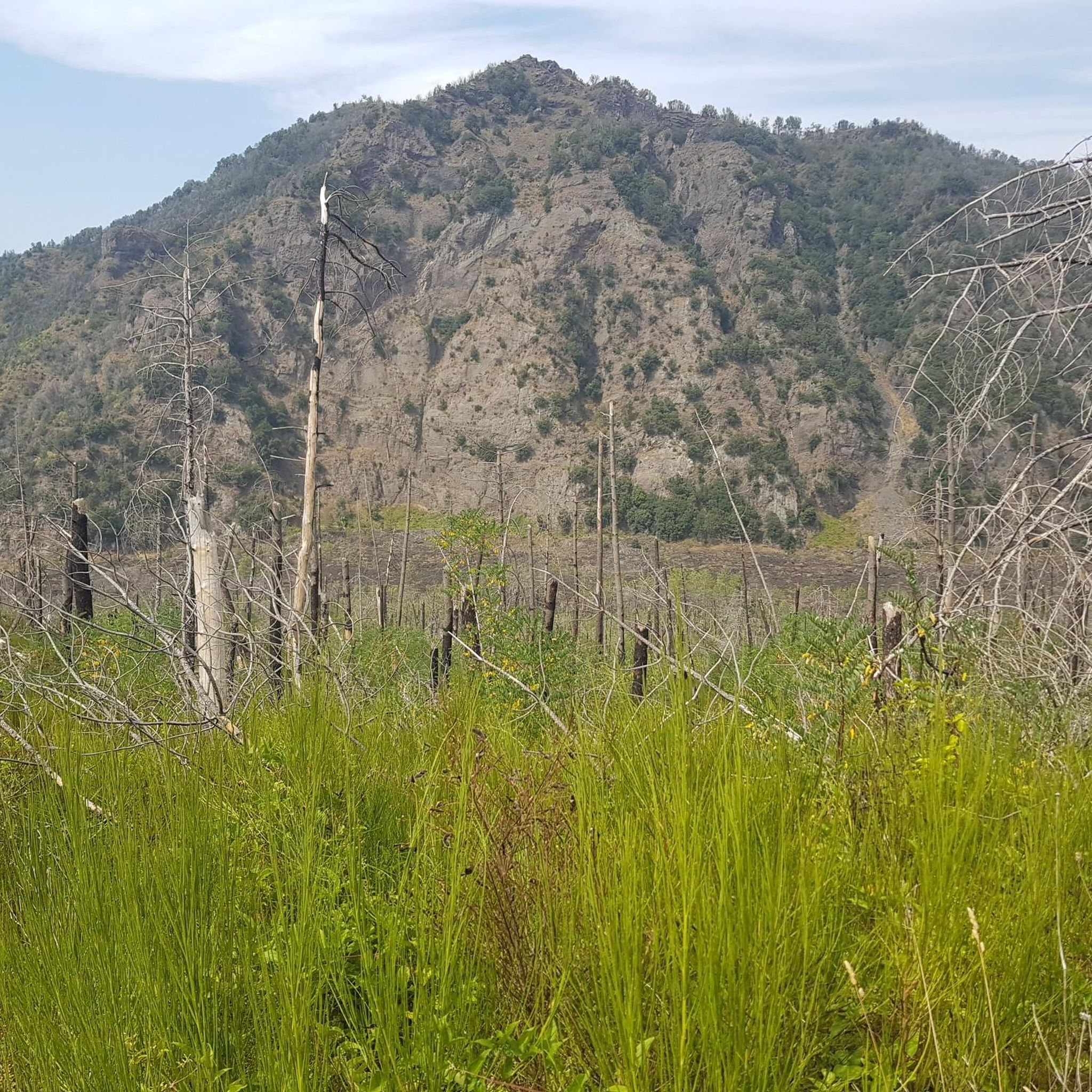
Hiking around Grumo Nevano offers access to diverse natural landscapes within the wider Campania region. While Grumo Nevano itself is an urban area, its location provides a base for exploring significant natural features. The region is characterized by volcanic terrain, including Mount Vesuvius, and a varied coastline along the Tyrrhenian Sea. Numerous regional parks, such as Vesuvius National Park and Matese Regional Park, provide extensive networks of trails through diverse ecosystems.
Best hiking trails around Grumo Nevano
- The most popular…
Last updated: June 24, 2026
4.9
(17)
50
hikers
11.5km
03:08
170m
170m
Moderate hike. Good fitness required. Easily-accessible paths. Suitable for all skill levels.
23
hikers
Easy hike. Great for any fitness level. Easily-accessible paths. Suitable for all skill levels.

Sign up for free
5.0
(1)
29
hikers
Easy hike. Great for any fitness level. Easily-accessible paths. Suitable for all skill levels.
4.0
(1)
24
hikers
12.9km
03:39
280m
280m
Moderate hike. Good fitness required. Easily-accessible paths. Suitable for all skill levels.
5.0
(2)
22
hikers
18.5km
05:08
330m
330m
Hard hike. Very good fitness required. Easily-accessible paths. Suitable for all skill levels.
Get access to more routes and recommendations from other explorers.
Sign up for free
Already have an account?
Our route recommendations are based on thousands of hikes, rides, and runs completed by other people on komoot.
Start today with a free account
Your next adventure awaits.
Login or Signup

Tips from the Community

Salvo Rosario Antonio D'Acquisto (Naples, 17 October 1920 – Palidoro, 23 September 1943) was a brigadier in the Carabinieri who received the Gold Medal for Military Valour for sacrificing himself on 23 September 1943 to save a group of civilians during a raid by Nazi troops during World War II.
1
0

The Palazzo Doria d'Angri is one of the most important historic buildings in Naples, located in Piazza Sette Settembre along via Toledo. It is especially famous because from its main balcony, on September 7, 1860, Giuseppe Garibaldi announced the annexation of the Kingdom of the Two Sicilies to Italy.
1
0

Piazza Municipio is one of the largest squares in Europe and represents the administrative center of Naples. It is bordered by Palazzo San Giacomo (seat of the Municipality) and the Maschio Angioino (Castel Nuovo), extending to the port area of the Stazione Marittima. The square has recently taken on a new architectural configuration that integrates the archaeological remains of the ancient Roman port discovered during the subway excavations. It is a fundamental interchange hub between the monumental center, the port, and the artery of via Toledo.
2
0
The Historic Centre of Naples is the largest UNESCO site in Europe and encompasses 27 centuries of history. It is laid out on the ancient Greco-Roman grid, characterized by the three main decumani (including Spaccanapoli) that intersect perpendicularly with the cardines. The area is a complex network of alleys that hosts the highest concentration of churches, noble palaces, and archaeological sites in the city. It includes the monumental centres of Piazza del Gesù, Piazza San Domenico Maggiore, and the Duomo area, extending to the borders of via Toledo and the port area.
3
0
Piazza del Plebiscito is the largest and most representative square in Naples, located between the seafront and via Toledo. Its shape is defined by the semicircular colonnade of the Basilica of San Francesco di Paola and the facade of the Palazzo Reale, which face each other on opposite sides. The pedestrian area, paved with lava stone, hosts the two equestrian statues of Charles III and Ferdinand I of Bourbon. Due to its size and central location, the square is the city's main venue for large events, ceremonies, and concerts, acting as a link between the monumental center and the port area.
4
0
The Royal Palace of Naples overlooks Piazza del Plebiscito and was founded in 1600 as the residence of the Spanish viceroys, later becoming the seat of the Bourbons and the Savoys. The building houses the Historic Apartment, with rooms decorated in Baroque and Neoclassical style, and the National Library. The main facade is famous for the eight statues in the external niches depicting the sovereigns of the ruling dynasties of Naples. It is located a short walk from Galleria Umberto I and the Teatro San Carlo, representing the heart of the city's monumental center. Another unmissable stop!
3
0
The Pescheria Azzurra is a traditional fish market in the center of Naples, located near the Pignasecca market, within walking distance of the Quartieri Spagnoli. The name refers to “blue fish” (pesce azzurro), such as anchovies, sardines, and mackerel, which have been a staple of Neapolitan cuisine for centuries. Every day, local fishermen and traders sell fresh fish and seafood here, sourced directly from the Gulf of Naples. The market is known for its lively atmosphere: shouting vendors, quick negotiations, and fish being cleaned on the spot.
3
0
The world-famous mural of Diego Armando Maradona in the Quartieri Spagnoli in Naples was originally painted in 1990 by the Neapolitan artist Mario Filardi, following SSC Napoli's second league title. Over the years, the work was damaged by weather influences and structural interventions. At the end of the 1990s, a window was even installed where Maradona's face was, severely disfiguring the portrait. In 2016, the mural was restored for the first time by local artist Salvatore Iodice, who stabilized the work and gave it new color. A year later, in 2017, the Argentine street artist Francisco Bosoletti was asked to specifically rework Maradona's face. Bosoletti redrew the face entirely, with more expression and realism, while the rest of the mural was preserved.
2
0
Frequently Asked Questions
How many hiking trails are available around Grumo Nevano?
There are nearly 60 hiking trails available around Grumo Nevano. These routes offer a variety of experiences, from urban walks to more challenging trails in the wider Campania region.
What types of landscapes can I expect to see while hiking near Grumo Nevano?
Hiking near Grumo Nevano offers access to diverse landscapes. While Grumo Nevano itself is urban, its location provides a gateway to volcanic terrains like Mount Vesuvius, varied coastlines along the Tyrrhenian Sea, and extensive networks of trails within regional parks such as Vesuvius National Park and Matese Regional Park. You can experience everything from historic urban paths to lush natural ecosystems.
Are there easy hiking trails suitable for beginners or casual walkers?
Yes, there are plenty of easy options. Out of the nearly 60 trails, 40 are rated as easy. An example of an easy route is the San Gennaro Gate – Dante Square loop from Naples National Archaeological Museum, which is 3.8 miles (6.2 km) long and takes about 1 hour 40 minutes, leading through urban historical sites.
What do other hikers say about the trails around Grumo Nevano?
The trails around Grumo Nevano are highly rated by the komoot community, with an average score of 4.3 stars from over 200 reviews. Hikers often praise the diverse terrain, from urban historical walks to the natural beauty found in nearby regional parks, and the variety of options available for different skill levels.
Are there any family-friendly hiking options near Grumo Nevano?
Many of the easier trails are suitable for families. For instance, the Monument to Dante Alighieri – Dante Square loop from Naples National Archaeological Museum is an easy 2.9-mile (4.7 km) route that explores historical sites, making it a good option for a family outing. The Capodimonte Wood trails also offer pleasant, accessible walks.
Can I find circular hiking routes in the area?
Yes, many of the routes around Grumo Nevano are circular, offering convenient starting and ending points. For example, the Capodimonte Royal Palace – Palazzina dei Principi loop from Museo Nazionale di Capodimonte is a moderate 5.0-mile (8.1 km) circular trail through historic grounds.
What interesting landmarks or attractions can I see along the hiking trails?
Many trails, especially those closer to Naples, pass by significant landmarks. You can explore sites like Galleria Umberto I, Dante Square, and the Via dei Tribunali. Further afield, the region offers access to iconic sites like Mount Vesuvius and the stunning Amalfi Coast.
Are there dog-friendly hiking trails near Grumo Nevano?
While specific dog-friendly designations for every trail are not always available, many natural parks and open spaces in the wider Campania region generally welcome dogs on leash. When planning a hike, consider routes in less crowded areas or check local park regulations for specific rules regarding pets, especially in protected areas like Vesuvius National Park.
What is the best time of year to go hiking in the Campania region?
The Campania region, including areas accessible from Grumo Nevano, is generally pleasant for hiking in spring (April-May) and autumn (September-October). During these seasons, the weather is mild, and the landscapes are vibrant. Summer can be very hot, especially for more strenuous hikes, while winter offers cooler temperatures but some higher-altitude trails might be less accessible.
How can I reach regional parks like Vesuvius National Park or Matese Regional Park from Grumo Nevano using public transport?
Grumo Nevano's strategic location within the Metropolitan City of Naples makes it a convenient base for accessing regional parks. Public transportation options, including local buses and regional trains, can connect you to major hubs in Naples, from where you can typically find further connections to the entrances of parks like Vesuvius National Park. For Matese Regional Park, connections might require more planning and potentially involve a combination of train and local bus services to reach trailheads.
Are there any trails that offer views of Mount Vesuvius?
While Grumo Nevano itself is inland, its proximity to Mount Vesuvius means that many trails within the Vesuvius National Park offer spectacular views of the volcano and the surrounding Bay of Naples. The park features a dense network of 11 trails, totaling 54 kilometers, providing numerous opportunities to experience this iconic landscape.
Most popular attractions around Grumo Nevano

Get inspired with the komoot mobile app


Explore more
Browse the best Hikes in other regions.
