The best walks and hikes around Pokrent
4.4
(426)
1,588
hikers
110
hikes
Hiking around Pokrent offers diverse experiences within the UNESCO Schaalsee Biosphere Reserve in Mecklenburg-Vorpommern, Germany. The region features a landscape shaped by glacial activity, including the deep Schaalsee, surrounding wetlands, and extensive forests. Hikers can explore lowlands, traditional pastures, and varied ecosystems, providing accessible paths for different skill levels.
Best hiking trails around Pokrent
- The most popular hiking route is Burgsee Gadebusch – Gadebusch Town Hall loop from Gadebusch, a 1.6 miles (2.6 km) trail that takes 40 minutes…
Last updated: June 26, 2026
4.0
(4)
25
hikers
2.59km
00:40
10m
10m
Easy hike. Great for any fitness level. Easily-accessible paths. Suitable for all skill levels.
8
hikers
4.68km
01:13
30m
30m
Easy hike. Great for any fitness level. Easily-accessible paths. Suitable for all skill levels.

Sign up for free
4.5
(4)
9
hikers
9.65km
02:29
40m
40m
Moderate hike. Good fitness required. Easily-accessible paths. Suitable for all skill levels.
5.0
(2)
13
hikers
7.93km
02:02
40m
40m
Moderate hike. Good fitness required. Easily-accessible paths. Suitable for all skill levels.
4.0
(1)
12
hikers
Easy hike. Great for any fitness level. Easily-accessible paths. Suitable for all skill levels.
Get access to more routes and recommendations from other explorers.
Sign up for free
Already have an account?
Our route recommendations are based on thousands of hikes, rides, and runs completed by other people on komoot.
Start today with a free account
Your next adventure awaits.
Login or Signup

Tips from the Community

“But perhaps the time is not yet ripe for that (...) lest one day they bring misfortune upon each other, along with their peoples. And if they should nevertheless do so, may the dear Lord, in his will, ordain that at least afterwards, when the calamity has already befallen them all, they find their way back to each other and make peace once and for all in this world.” So writes Otfried Preußler (born in 1923 in Reichenberg, Bohemia), best known as a children's author, in his work “The Flight to Egypt. Royal Bohemian Part.” While his words, within the context of the story, refer to the German and Czech inhabitants of the Kingdom of Bohemia, his statement is actually universal and timeless.
2
0

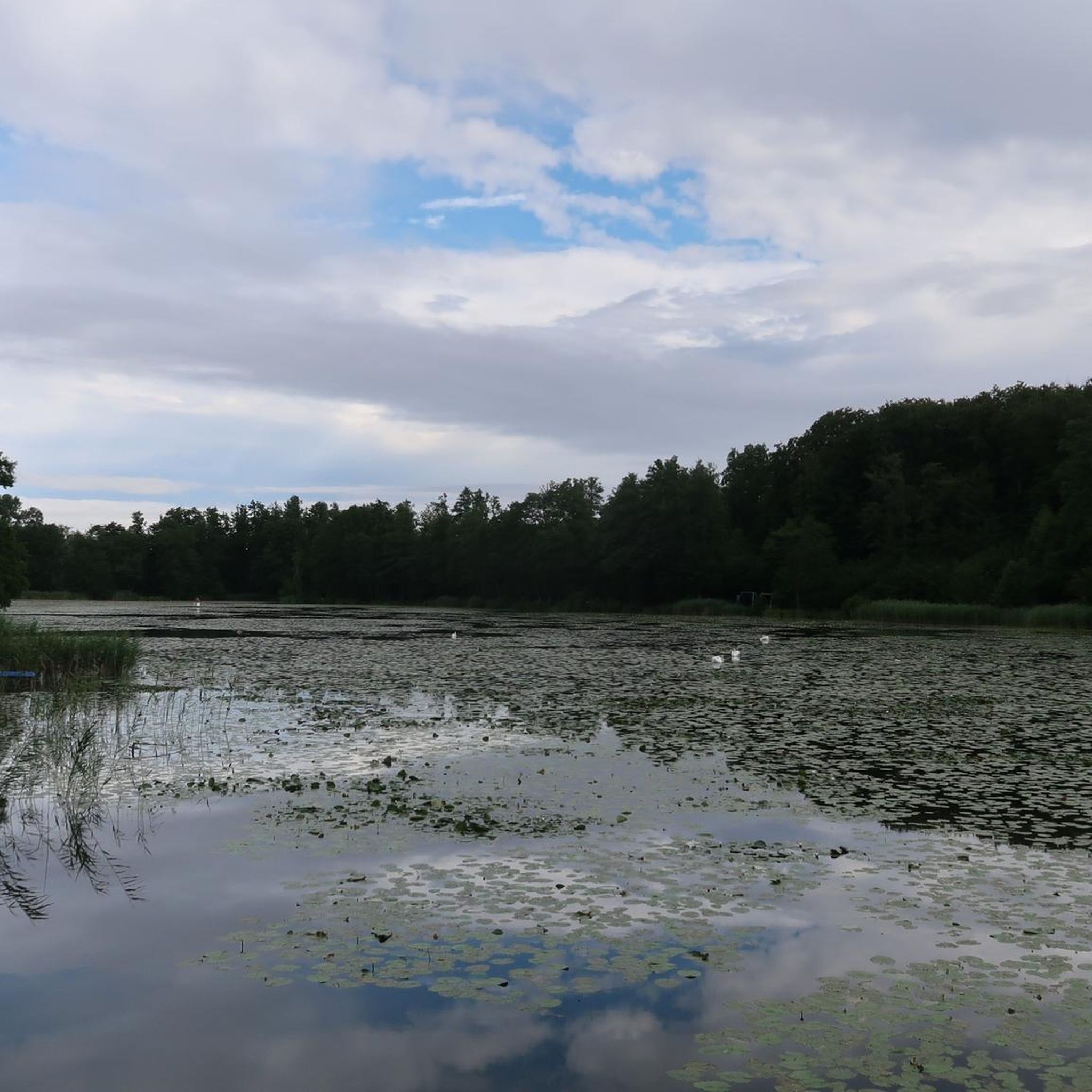
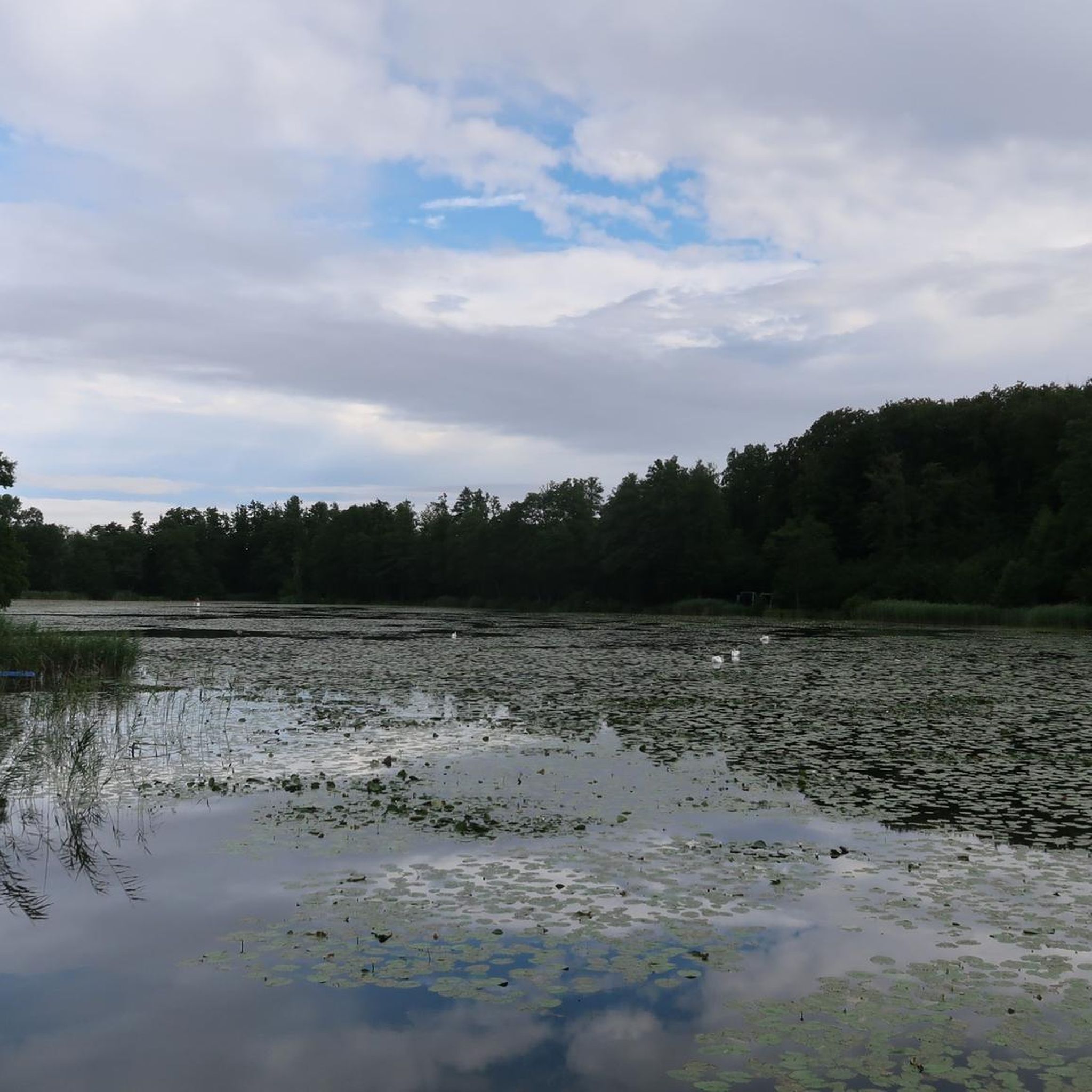
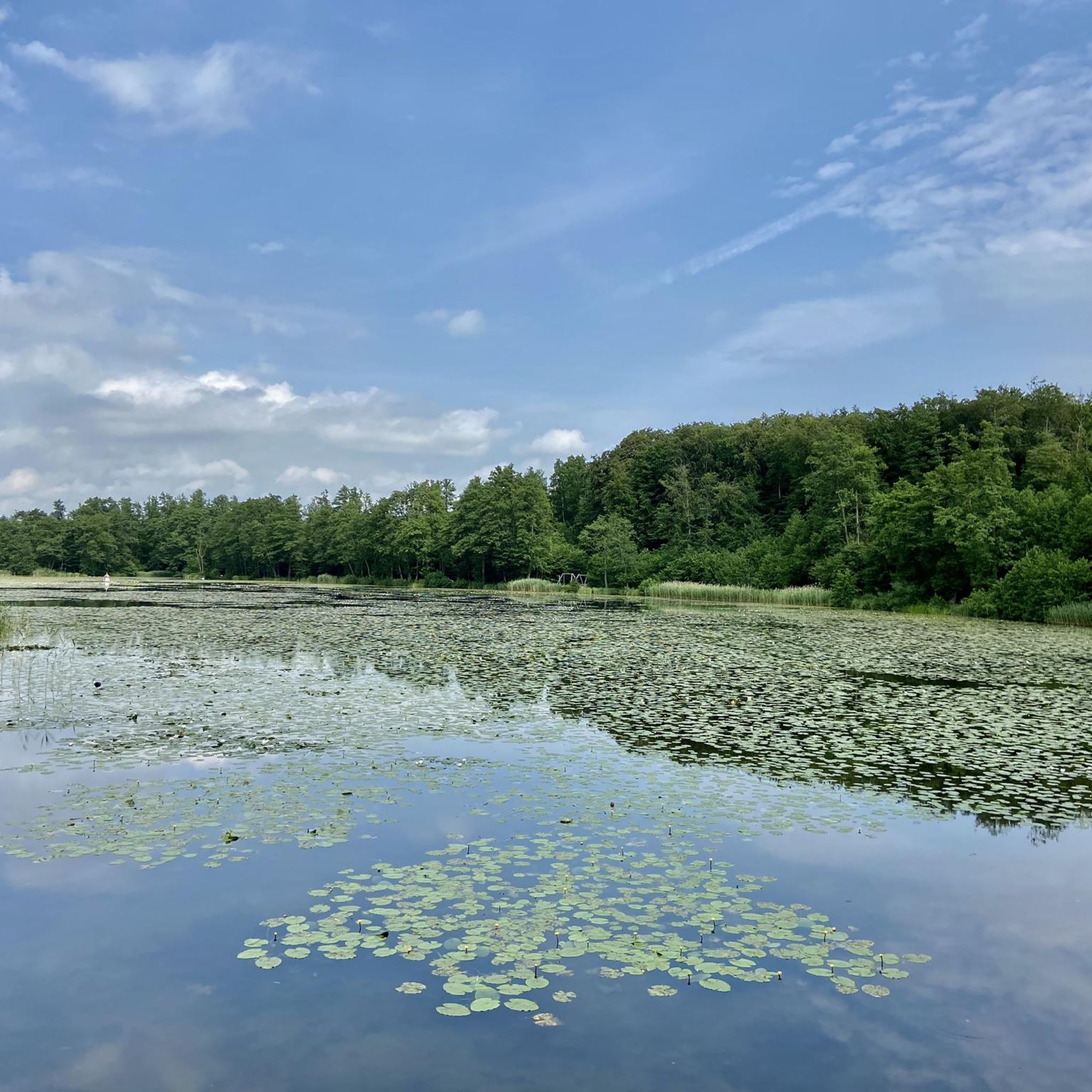
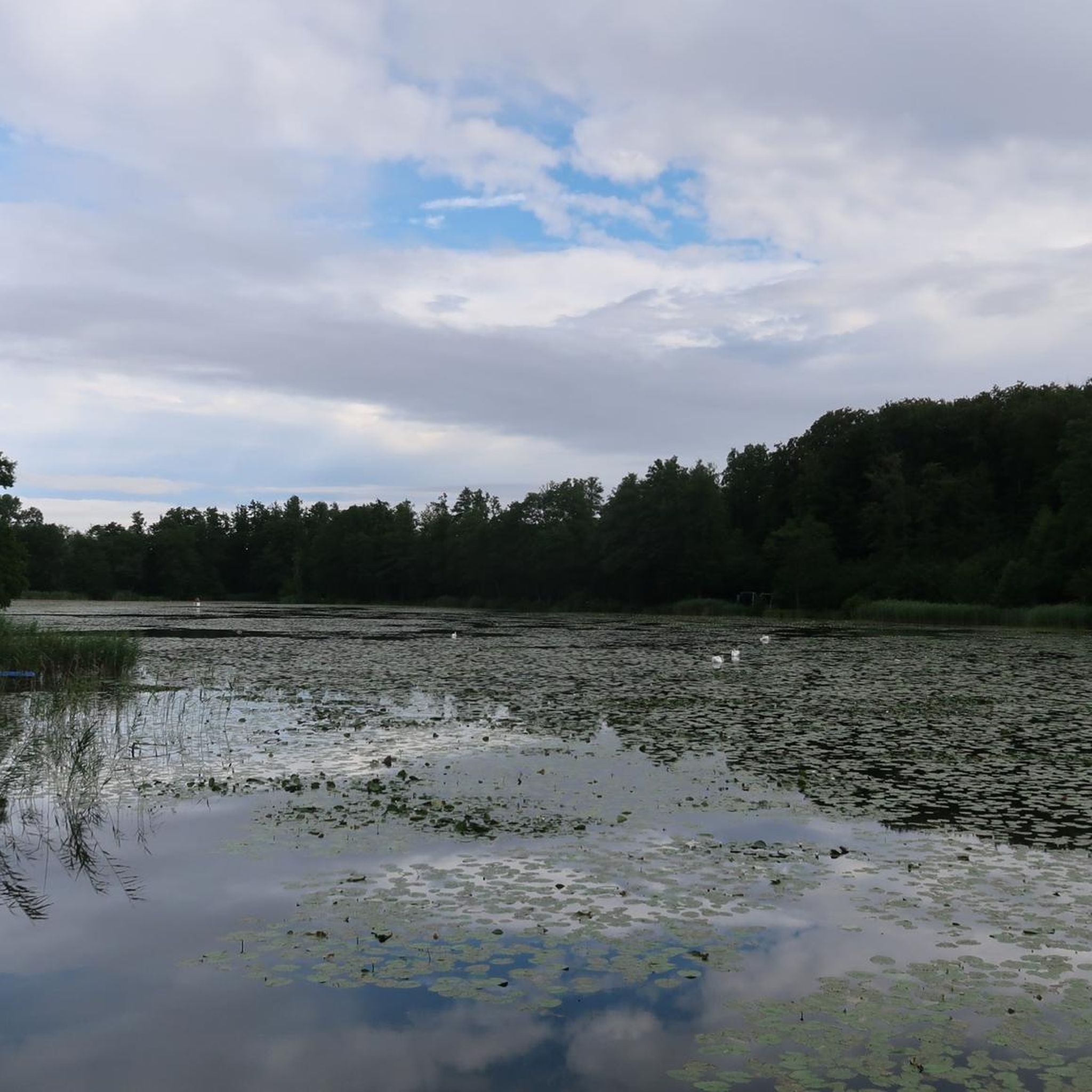
The current shape of the Burgsee was created by a weir in a natural depression. The lake is fed by the hillside spring to the east. A large population of yellow water lilies is typical for the water body.
0
0

In the Battle of Wakenstädt, Swedish troops defeated the allied Danish and Saxon troops on December 20, 1712 near Gadebusch in West Mecklenburg during the Great Northern War. The Swedish commander-in-chief, Magnus Stenbock, had previously positioned himself between the Russian-Saxon troops stationed south of Stralsund and the Danish troops gathered near Hamburg in order to prevent the allies from uniting. As coordination difficulties delayed the deployment of the Russian artillery in particular, it was not used in the Battle of Gadebusch, so Stenbock was able to win a victory against a Danish-Saxon army. It was also the last major victory for the Swedes in the Great Northern War. Although the Swedes won the battle, it exacerbated the existing problems of their own army: around 1,500 men were killed or wounded, and the infantry regiments were short of many officers. Furthermore, many horses were killed, which weakened the artillery and cavalry. The supply situation remained tense for the Swedes. The Danish infantry had been fragmented and suffered heavy losses, but was soon able to reorganize and recover. The Danish cavalry suffered only a few losses in the battle. The fate of this Swedish army was to be sealed by a union of the Danes with the Saxons and Russians in Holstein during the siege of Tönning in 1713/14. Since 2000, a memorial complex has been built in Wakenstädt, in the middle of the historic battlefield. Today it consists of several international memorial stones, large information boards and the "Swedish hut". The Swedish hut was modeled on a Swedish soldier's hut from the 18th century. Since August 2016, there has been a completely redesigned exhibition inside on the archaeology of the Battle of Gadebusch with information boards and archaeological finds recovered from the battlefield. Another part of the hut was decorated in the style of the 18th century. It also serves as the centre for events as part of the Gadebusch-Åmål town twinning, where the events of over 300 years ago are remembered together. https://de.wikipedia.org/wiki/Schlacht_bei_Gadebusch
3
0
This memorial is located on the large meadow opposite the train station. Unfortunately, it is very old and urgently needs to be renovated.
2
0
The historic train station in Gadebusch is a real adventure station. In addition to the Station Burgsee Restaurant and various event locations, the station has a very special highlight in store. Like various politicians and athletes before you, you can spend the night in the former GDR government train. The saloon sleeping car, built in 1968, has six double sleeping compartments, a toilet and a shared shower. https://www.mecklenburg-schwerin.de/unsere-region/staedte-und-orte/gadebusch/nicht-verpassen/#
2
0
The historic train station in Gadebusch, which was completely restored in 2012 and is a listed building, offers you fresh, regional and modern cuisine in the "Station Burgsee" restaurant. Located directly in the Gadebusch city forest and on the Burgsee, you can enjoy typical Mecklenburg hospitality and excellent service here. In addition to its first-class "Station Burgsee" restaurant, the historic Gadebusch train station offers other options for active leisure and vacation planning. From August 2014, guests can stay in an original sleeping car from the former GDR government train, which is located right next to the train station. In addition, rooms are offered for companies to hold product presentations, seminars and demonstrations. Complete, individually put together incentive packages can also be booked. Whether you want to roam the area with tanks on a closed-off track, discover the Mecklenburg landscape in American vintage cars or camp by a pond in the middle of the nature of northwest Mecklenburg - there are great options here. https://www.mecklenburg-Schwerin.de/unsere-region/regionen/vom-schaalsee-bis-zur-ostsee/restaurant-station-burgsee/index.html
3
0
When you enter the Gadebusch cemetery through the wrought iron gate, you will come across a large sandstone grave on the right, reminiscent of Argentinian cemeteries. It is the grave of probably the most famous Gadebusch citizen of his time: Johann Friedrich Leopold Hühn. Hühn was born in Gadebusch on March 9, 1830. Like many young people, he sought his fortune abroad. He must have been a good businessman, because he made a huge fortune. On September 30, 1891, Hühn died in Lübeck without an heir. In his will, he left his entire fortune of 1,661,852.00 marks to his hometown of Gadebusch. By 1919, this amount had increased to 3,416,622.59 Reichsmarks due to interest. Gadebusch was probably the richest city in Mecklenburg at that time. The city fathers were overwhelmed by this huge sum. A lack of decisiveness, a lack of financial knowledge and endless debates led to chaos that ended in inflation in 1923. The great fortune was lost. As a consolation, however, the people of Gadebusch were able to keep their beautiful old Renaissance town hall. https://www.maurine-radegast-land.de/erleben/kultur/erinnerungsorte/friedhof-gadebusch
3
0
A walk through the Gadebusch cemetery reads like a history book of the city. In the past, the additional professions on the gravestones such as medical officer, city councilor, master locksmith, building officer, master mason, master vulcanizer, teacher, farmer, pastor, provost and many others showed the civic pride. Today, unfortunately, we are experiencing a change in cemetery culture towards anonymity. More and more, other forms of burial are being chosen. On the top level of the Gadebusch cemetery, under beautiful copper beeches and linden trees, there are 21 war graves from the Second World War. The graves are covered in ivy and each individual grave has a nameplate, although no one knows the name anymore. The grave complex is very well maintained and leaves a deep sense of sadness. https://www.maurine-radegast-land.de/erleben/kultur/erinnerungsorte/friedhof-gadebusch
3
0
Frequently Asked Questions
How many hiking trails are available around Pokrent?
There are over 110 hiking trails around Pokrent, offering a wide variety of experiences within the UNESCO Schaalsee Biosphere Reserve. These routes cater to different preferences and skill levels.
What kind of terrain can I expect on hikes around Pokrent?
The terrain around Pokrent is characterized by a generally gentle topography with rolling hills, making most paths accessible and suitable for relaxed walks. You'll encounter a diverse landscape shaped by glacial activity, including extensive forests, wetlands, fields, pastures, and the shores of lakes like the Schaalsee.
Are there many easy hiking trails suitable for beginners or families in Pokrent?
Yes, Pokrent is an excellent destination for beginners and families. Over 60 of the available routes are rated as easy, featuring accessible paths and gentle ascents. The region's natural environment is perfect for relaxed walks and nature observation.
What natural features or landmarks can I see while hiking near Pokrent?
Hikers can explore a rich mosaic of natural features. The centerpiece is the Schaalsee, the deepest lake in Northern Germany, surrounded by islands and reedbeds. You can also visit the Lake Schaalsee itself, or discover other beautiful bodies of water like Dutzower Lake. The Lakeside Trail at Neuenkirchener See is also a popular spot.
Are there any viewpoints or observation towers in the Pokrent area?
Yes, the region offers opportunities for panoramic views. The Observation Tower Kneese East, located within the Biosphere Reserve Schaalsee, provides hikers with excellent vistas of the surrounding lowlands and is ideal for wildlife observation.
What do other hikers enjoy most about the trails in Pokrent?
The komoot community highly rates the trails around Pokrent, with an average score of 4.3 stars from over 400 reviews. Hikers often praise the peaceful natural environment, the diverse landscapes of the biosphere reserve, and the accessibility of the paths for various skill levels.
Are there any circular hiking routes around Pokrent?
Many of the trails around Pokrent are designed as circular routes, allowing you to start and end at the same point. For example, the Burgsee Gadebusch – Gadebusch Town Hall loop from Gadebusch is an easy circular path, and the Burgsee Bridge Gadebusch – Burgsee Gadebusch loop from Gadebusch offers a longer, moderate option.
What is the best time of year to go hiking in Pokrent?
Pokrent offers unique experiences throughout the year. In spring, the Kirchensee loop trail is noted for snowdrops. Summer brings diverse bird songs, while autumn provides beautiful foliage. In colder months, the region serves as an important resting place for migratory birds like cranes and northern geese, making it ideal for birdwatching.
Can I bring my dog on the hiking trails around Pokrent?
The diverse natural landscapes and accessible paths around Pokrent are generally suitable for walks with dogs. As the area is part of a biosphere reserve, it's always recommended to keep dogs on a leash to protect wildlife and ensure a pleasant experience for all visitors.
Are there any historical sites or castles to explore near Pokrent?
Yes, the region around Pokrent also features historical attractions. You can explore several castles, such as Lützow Castle, Gadebusch Castle, and Neuhof Castle, which add a cultural dimension to your hiking trip.
What kind of wildlife can I expect to see in the Schaalsee Biosphere Reserve?
The Schaalsee Biosphere Reserve is known for its rich biodiversity. It's an important resting place for migratory birds like cranes and northern geese in winter, and a breeding ground for numerous duck species and greylag geese in summer. Birdwatching is a popular activity, and you might also spot various other animals in the forests and wetlands.
Are there any longer, more challenging hikes available?
While many trails are easy, there are also moderate options for those seeking a bit more challenge. For instance, the Bench by the paved path loop from Gadebusch is a moderate 7.9 km route. There are 44 moderate and 3 difficult routes in total, offering varied distances and slight elevation changes.
Most popular attractions around Pokrent

Get inspired with the komoot mobile app


Explore more
Browse the best Hikes in other regions.
