The best road cycling routes around Río Guadaira
4.1
(13)
1,717
riders
88
rides
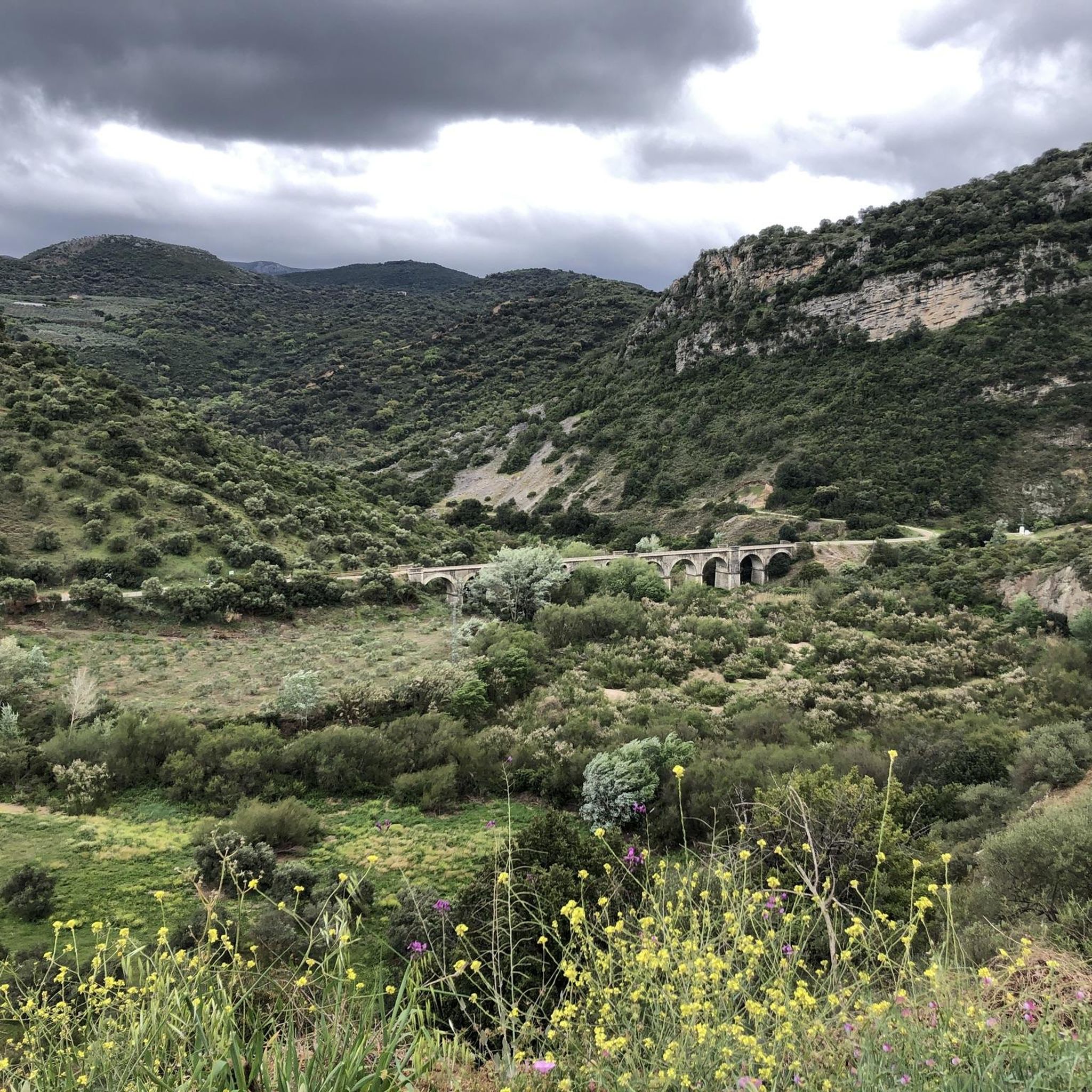
Road cycling around Río Guadaira is characterized by a landscape that combines natural riverine environments with historical elements. The region features the Riberas del Guadaíra Natural Monument, encompassing riverside parks and green areas with diverse flora. Geological formations of "albero" chalky sand add a unique natural history to the terrain. Cyclists will encounter historical landmarks such as ancient water flour mills of Arab origin and the fortified Alcalá de Guadaíra Castle perched on a hill.
Best road cycling routes around…
Last updated: July 11, 2026
3.0
(1)
42
riders
46.6km
01:56
280m
280m
Easy road ride. Great for any fitness level. Mostly well-paved surfaces and easy to ride.
6
riders
61.0km
02:35
410m
410m
Moderate road ride. Good fitness required. Mostly well-paved surfaces and easy to ride.

Sign up for free
52
riders
78.9km
03:35
870m
870m
Moderate road ride. Good fitness required. Mostly well-paved surfaces and easy to ride.
50
riders
66.6km
02:48
470m
470m
Moderate road ride. Good fitness required. Mostly well-paved surfaces and easy to ride.
5.0
(1)
41
riders
46.4km
02:13
630m
630m
Moderate road ride. Good fitness required. Mostly well-paved surfaces and easy to ride.
43
riders
97.9km
04:03
630m
630m
Moderate road ride. Good fitness required. Mostly well-paved surfaces and easy to ride.
39
riders
46.0km
01:57
370m
380m
Moderate road ride. Good fitness required. Mostly well-paved surfaces and easy to ride.
5.0
(1)
42
riders
51.1km
02:23
650m
650m
Moderate road ride. Good fitness required. Mostly well-paved surfaces and easy to ride.
3.0
(1)
31
riders
Hard road ride. Very good fitness required. Mostly well-paved surfaces and easy to ride.
31
riders
32.6km
01:27
340m
340m
Moderate road ride. Good fitness required. Mostly well-paved surfaces and easy to ride.
Get access to more routes and recommendations from other explorers.
Sign up for free
Already have an account?
Our route recommendations are based on thousands of hikes, rides, and runs completed by other people on komoot.
Start today with a free account
Your next adventure awaits.
Login or Signup
Tips from the Community

L'Alameda de Alfonso XIII and the Fuente de los Leones form a suggestive historical and landscape complex located in the city of Carmona, Andalusia (Seville). Originally designed in the 18th century, they took on their current Andalusian appearance in 1925, in preparation for the Ibero-American Exposition.
1
0

Declared a Historic-Artistic Monument in 1906, even before the Giralda of Seville. Today it houses the Tourist Information Center and is used for cultural events and guided tours.
8
0
The Alcázar of the Seville Gate is one of Carmona's most iconic monuments and an exceptional example of defensive architecture with over 2,500 years of history. Remains dating back to the 9th century BC have been found, although the current structure began to take shape under the Carthaginians, who built a bastion atop an earlier tower to withstand Roman attacks.
13
0
The Alameda de Alfonso XIII and the Fountain of the Lions are two emblematic spaces in the Carmona suburb, with great historical and cultural value. Fountain of the Lions: It was built in the 16th century after authorization from Joanna I of Castile (Joanna the Mad), who granted funds to build a public fountain and troughs for livestock. Before then, residents drew water from an unsanitary pool in the Roman mine of San Antón. This fountain became the social center of the suburb, known as the Lower Square, in contrast to the Upper Square (present-day Plaza San Fernando) where the nobility resided. Alameda de Alfonso XIII: It originated as a recreational space around the fountain. Its current appearance was consolidated in 1925, influenced by the Sevillian regionalist style prior to the 1929 Ibero-American Exposition. Gardens, benches, ceramics, wrought iron, and tiles were added, following the aesthetic of Aníbal González.
13
0
The Roman Necropolis of Carmona is one of the most important and best-preserved funerary complexes on the Iberian Peninsula. It is located in the western part of the city, next to the amphitheater, and covers approximately 8 hectares.
14
0
The old town of Carmona is one of the most monumental and historic in Andalusia. Situated on a hill, it retains a medieval structure with narrow streets, whitewashed facades, and numerous Baroque palaces and churches.
13
1

A medium-sized municipality near Seville. It boasts a rich historical and natural heritage, including a castle of Almohad origin with later Christian reconstructions, a natural area along the banks of the Guadaíra River and its fortified mills. The Riberas del Guadaíra Natural Monument, which includes the Oromana Park and Pine Forest, and the Gandul Archaeological Zone, are among the highlights.
0
1
A fountain was built in what was then the outskirts of the town, which after being re-modelled in the time of Joanna I, was called the Fountain of the Lions. This fountain, surrounded by stone benches, became a popular place of recreation, which years later led to the construction of the adjoining promenade or boulevard. It was in the 1920s, under the influence of the 1929 Ibero-American Exhibition held in Seville, that the old promenade was renovated and named after the Spanish king, becoming the “Alameda – “promenade” – de Alfonso XIII”. The fountain was known as the “Plaza de Abajo” in contrast to the highest part of the walled town, known as the “Plaza de Arriba” or the “San Fernando” square. The Alameda was re-modelled and renovated with the use of exposed bricks, tiles, wrought iron, giving it the appearance it has today, Mudejar- styled with certain Baroque elements so typical of that period.
4
2
Frequently Asked Questions
How many road cycling routes are available in Río Guadaira?
There are over 70 road cycling routes around Río Guadaira, offering a wide range of options for different skill levels and preferences. These routes are highly rated by the komoot community, with an average score of 4.0 stars.
What kind of terrain can I expect on road cycling routes around Río Guadaira?
Road cycling routes in Río Guadaira offer a diverse terrain. You'll find a mix of paved roads and secondary routes, with some sections potentially incorporating gravel tracks. The landscape features natural riverine environments, green areas, and unique 'albero' chalky sand formations, providing varied surfaces and scenic backdrops.
Are there road cycling routes suitable for beginners or families in Río Guadaira?
Yes, Río Guadaira offers several routes suitable for beginners and families. There are 5 easy routes available, such as the Morón de la Frontera and Arahal Loop, which is 29.0 miles (46.6 km) long and offers gentle gradients through the countryside. These routes provide a great way to enjoy the region's beauty without significant challenges.
What historical landmarks can I see along the road cycling routes in Río Guadaira?
The region is rich in history. Many road cycling routes will take you past ancient water flour mills of Arab origin, some dating back to the Moorish period. You can also enjoy views of the imposing Alcalá de Guadaíra Castle, perched atop a hill, and cross notable bridges like the Puente Jesús Nazareno (Roman Bridge) and the modern Dragon Bridge.
What natural features are prominent on road cycling routes in Río Guadaira?
Cyclists in Río Guadaira will experience the Riberas del Guadaíra Natural Monument, which includes extensive riverside parks and green areas like Oromana Park and pine forest. The riverbanks are covered with diverse trees and vegetation, creating beautiful natural settings. The unique 'albero' chalky sand formations, ancient coastal banks preserving marine fossils, also add a distinct natural history element to the landscape.
Are there challenging road cycling routes for experienced riders in Río Guadaira?
Absolutely. For experienced riders seeking more challenge, Río Guadaira offers 30 difficult routes. An example is the Towards Coripe – Puerto del Castaño loop from Morón de la Frontera, which covers 60.4 km with over 1000 meters of elevation gain, providing a demanding ride through varied rural landscapes.
What is the best time of year to go road cycling in Río Guadaira?
While specific seasonal recommendations are not provided, the region's generally mild climate makes it suitable for cycling for much of the year. It's advisable to check local weather forecasts, especially during summer months when temperatures can be high, and plan your rides for cooler parts of the day.
Are there circular road cycling routes available in Río Guadaira?
Yes, many of the road cycling routes in Río Guadaira are designed as loops, allowing you to start and finish at the same point. For example, the Morón, Marchena, and La Puebla de Cazalla Loop is a moderate 61.0 km circular path that connects several towns.
How accessible is Río Guadaira for cyclists using public transport?
The region around Río Guadaira, particularly Alcalá de Guadaíra, is easily accessible from Seville, making it convenient for cyclists who wish to use public transport to reach the starting points of routes. It's recommended to check specific public transport options and bike carriage policies with local operators.
What amenities like cafes or pubs are available along the road cycling routes?
While specific establishments are not listed, many routes traverse or pass near towns and villages where you can find cafes, pubs, and restaurants. The presence of historical mills and parks also suggests areas where amenities might be available for a break. For example, routes connecting Morón, Marchena, and La Puebla de Cazalla would offer opportunities for refreshments.
What do other road cyclists enjoy most about road cycling in Río Guadaira?
The area is highly rated by the komoot community, with an average score of 4.0 stars from over 10 reviews. Reviewers often praise the combination of natural beauty, such as the riverside parks and green areas, with the rich historical elements like the ancient water mills and views of Alcalá de Guadaíra Castle. The varied terrain and options for different ability levels are also frequently highlighted.
Can I find long-distance road cycling routes in Río Guadaira?
Yes, Río Guadaira offers several longer routes for those looking for extended rides. For instance, the Historic Center of Carmona – Carmona Old Town loop from Morón de la Frontera is a challenging 128.4 km route, providing a full day's adventure through the region's landscapes.
Most popular routes around Río Guadaira

Get inspired with the komoot mobile app


Explore more
Browse the best Road cycling routes in other regions.
