The best traffic-free bike rides around Olsztyn
4.6
(131)
2,336
riders
33
rides
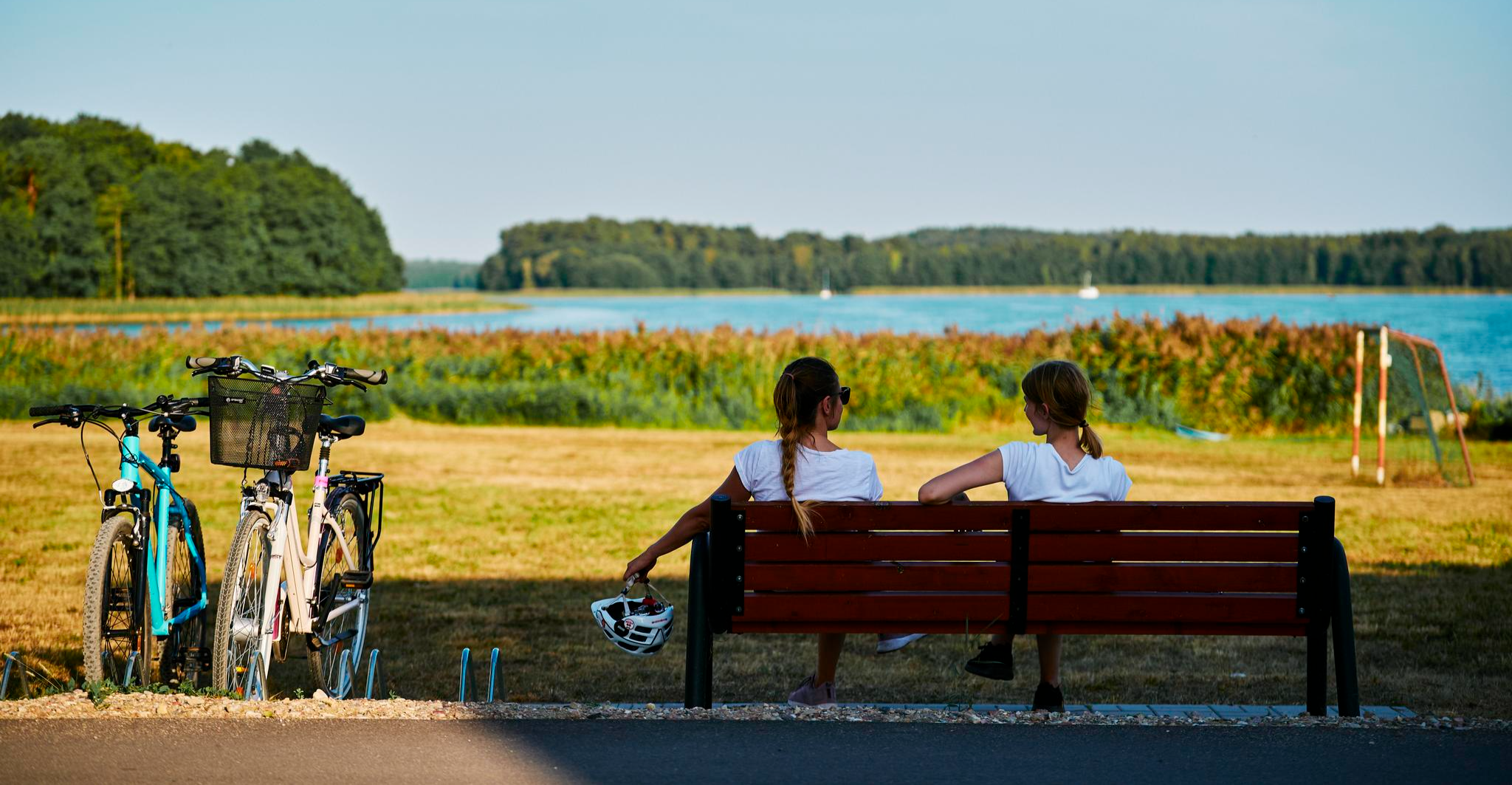
No traffic road cycling routes around Olsztyn offer a diverse landscape characterized by numerous lakes, extensive forests, and varied terrain. The region, situated in northeastern Poland, features 11 lakes within the city limits, providing scenic paths along their shorelines. Cyclists can explore vast forest complexes like the City Forest and the Napiwodzko-Ramucka Forest, which offer shaded routes away from urban traffic. The terrain ranges from gentle inclines around the lakes to rolling hills and winding roads through woodlands, catering to…
Last updated: October 13, 2026
5.0
(2)
56
riders
63.6km
02:46
520m
520m
Moderate road ride. Good fitness required. Mostly well-paved surfaces and easy to ride.
27
riders
75.9km
03:12
510m
510m
Moderate road ride. Good fitness required. Mostly well-paved surfaces and easy to ride.

5.0
(2)
22
riders
32.4km
01:24
240m
240m
Easy road ride. Great for any fitness level. Mostly well-paved surfaces and easy to ride.
16
riders
Moderate road ride. Good fitness required. Some segments of this route may be unpaved and difficult to ride.
13
riders
50.9km
02:18
320m
320m
Moderate road ride. Good fitness required. Some segments of this route may be unpaved and difficult to ride.
Get access to more routes and recommendations from other explorers.
Already have an account?
Our route recommendations are based on thousands of hikes, rides, and runs completed by other people on komoot.
Start today with a free account
Your next adventure awaits.


Other adventures around Olsztyn

Tips from the Community

The queen of the region, the Łyna river, completely changes its character over a 6.5 km stretch inside the nature reserve! The water flows here in a rushing, fast current through a 35-meter-deep gorge, undermining roots and throwing tree trunks across the riverbed.
0
0

Probably the most prominent structure of the Brick Gothic style in northern Poland, rhe church was probably built between 1370 and 1380, after Allenstein was granted city rights in 1352. The impressive east gable was built shortly after 1429. During the Fourth Coalition War, the church was used as a prison for 1,500 Prussian and Russian soldiers in the winter of 1806/07, who used the furnishings as firewood. The current furnishings were then created, which fortunately survived the end of the war in 1945 thanks to the work of Pastor Johannes Hanowski. The baroque interior design that had been installed in the meantime was removed in 1866. In 1896, the main altar with its valuable Flemish paintings, which had been installed from the castle's St. Anne's Chapel, fell victim to a fire. In 1899, the roof was replaced. Around 1900, the composer Feliks Nowowiejski worked as an organist at St. James' Church. On June 28, 1972, the church became a co-cathedral of the archdiocese. In 1991, Pope John Paul II visited it, and in 2004, he elevated St. James' Church to a minor basilica. The three-aisled hall church was built without a choir. The tower was initially built free-standing only up to the church roof and was only raised to its current size between 1582 and 1596. With the construction of the side chapels, which were added between 1715 and 1721 together with a general restoration, the tower became part of the church. The current spire was added in 1867/68, with the golden star dating from the original building in 1596. At the same time, the façade was redesigned in a neo-Gothic style, with Ferdinand von Quast and August Stüler contributing. In 2001, the church received a representative main portal made of bronze.
5
0
In 1334, a watchtower was established on the Łyna River. In 1346, the forest was cleared at the location for a new settlement, mentioned in a historical document from 1348. The following year, the Teutonic Knights began the construction of an Ordensburg (castle) as a stronghold against the Baltic Prussians. Allenstein was granted municipal rights by the cathedral chapter of the Bishopric of Warmia in October 1353. The German "Allenstein" referred to the river's Baltic Prussian name Alna, which meant a hind. Local Poles, having arrived along with German settlers, called it Holstin and Olsztyn, which are Polonizations of the German name. The castle was completed in 1397. The town was captured by the Kingdom of Poland during the Polish-Lithuanian-Teutonic War in 1410, and again in 1414 during the Hunger War, but it was returned to the monastic state of the Teutonic Knights after hostilities ended.
5
0

Delicious coffee in various variants, which you can drink alone or with a delicious cake or sandwich.
0
0

Allenstein Castle was built in the 14th century and served as the residence of the grand masters of the Teutonic Order. Today the castle houses a museum that presents a variety of exhibitions and exhibits on the history of the Teutonic Order and the city of Allenstein.
8
1
The old town hall presents itself in a wonderfully restored Gothic look. It was built in the second half of the 14th century and rebuilt after a fire in 1620 and expanded over time.
4
0

A small hydroelectric power plant, a canoe trail and a carry-on.
0
0

Frequently Asked Questions
How many no-traffic road cycling routes are available in Olsztyn?
There are over 30 dedicated no-traffic road cycling routes around Olsztyn, offering a variety of distances and difficulty levels. You'll find 5 easy routes perfect for a relaxed ride, and 28 moderate routes for those seeking a bit more challenge.
What do other road cyclists enjoy most about the no-traffic routes in Olsztyn?
The komoot community highly rates the no-traffic road cycling routes in Olsztyn, with an average score of 4.75 stars from 119 reviews. Cyclists frequently praise the serene lake views, extensive forest paths, and the overall tranquility of riding away from vehicle traffic.
Are there any easy, shorter no-traffic road cycling routes suitable for beginners?
Yes, Olsztyn offers several easy no-traffic routes. A great option for beginners is the Bicycle Dismount Point – St. Lawrence Church loop from Olsztyn Śródmieście, which is just under 30 km long and features minimal elevation gain, making it a pleasant ride for those new to road cycling.
Can I find circular no-traffic road cycling routes around Olsztyn?
Absolutely! Many of the no-traffic road cycling routes in Olsztyn are designed as loops, allowing you to start and end at the same point. For example, the Bicycle Dismount Point – Warmia Caffe loop from Olsztyn Główny offers a moderate 73.9 km circular ride through varied landscapes.
What natural attractions can I see along the no-traffic road cycling routes?
Olsztyn's no-traffic routes often weave through its beautiful natural surroundings. You can cycle past numerous lakes, including Lake Ukiel and Lake Długie, and through extensive forest complexes like the City Forest. Many routes offer scenic views, such as the Bike Path along Żurawia Street with a View of Lake Krzywe or the Bridge Over Lake Długie.
Are there any historical or cultural landmarks accessible from the no-traffic cycling routes?
Yes, several routes allow you to combine natural beauty with historical exploration. You can cycle near significant sites like the Castle of the Warmian Chapter or the Olsztyn Castle (Zamek w Olsztynie), where Nicolaus Copernicus once resided. The High Gate (Wysoka Brama) in Olsztyn's Old Town is another notable landmark you might encounter.
Can I find routes that pass by beaches or swimming spots?
Many routes in Olsztyn are designed around its numerous lakes, providing opportunities to stop at beaches or swimming spots. The Beach at Lake Skanda – View of Lake Patryckie loop from Olsztyn Główny is a great example, passing by the Beach at Lake Skanda, perfect for a refreshing break.
Are there any longer, more challenging no-traffic road cycling routes for experienced riders?
For experienced riders seeking a longer challenge, routes like the Bicycle Dismount Point – Warmia Caffe loop from Olsztyn Główny offer a substantial distance of nearly 74 km with moderate elevation changes. The region's varied terrain, including rolling hills and forest sections, provides an engaging ride.
What kind of terrain can I expect on the no-traffic road cycling routes around Olsztyn?
The terrain around Olsztyn is quite varied, even on no-traffic routes. You'll encounter everything from flat, smooth paths along lake shores to gently rolling hills and winding roads through dense forests. This diversity caters to different cycling preferences and skill levels.
Are there any routes that explore the extensive forest areas near Olsztyn?
Yes, Olsztyn is surrounded by vast forest complexes, and many no-traffic routes take you deep into these natural areas. The City Forest, one of Europe's largest municipal forests, is crisscrossed with marked bike trails, offering shaded and tranquil rides away from urban noise. The Napiwodzko-Ramucka Forest to the south also provides extensive cycling opportunities.
Are there any no-traffic routes that offer views of the Łyna River?
Yes, the Warmińska Łynostrada, a significant cycling and trekking route, follows the Łyna River and passes through Olsztyn. While not exclusively no-traffic, sections of it are designed to be low-traffic or traffic-free, offering beautiful views along the river. You might also encounter highlights like the Ustrych Hydroelectric Power Plant on the Łyna River on some routes.
Most popular routes around Olsztyn
Most popular attractions around Olsztyn

Get inspired with the komoot mobile app


Explore more
Browse the best Road cycling routes in other regions.
