The best traffic-free bike rides around Cluny
4.6
(131)
952
riders
27
rides
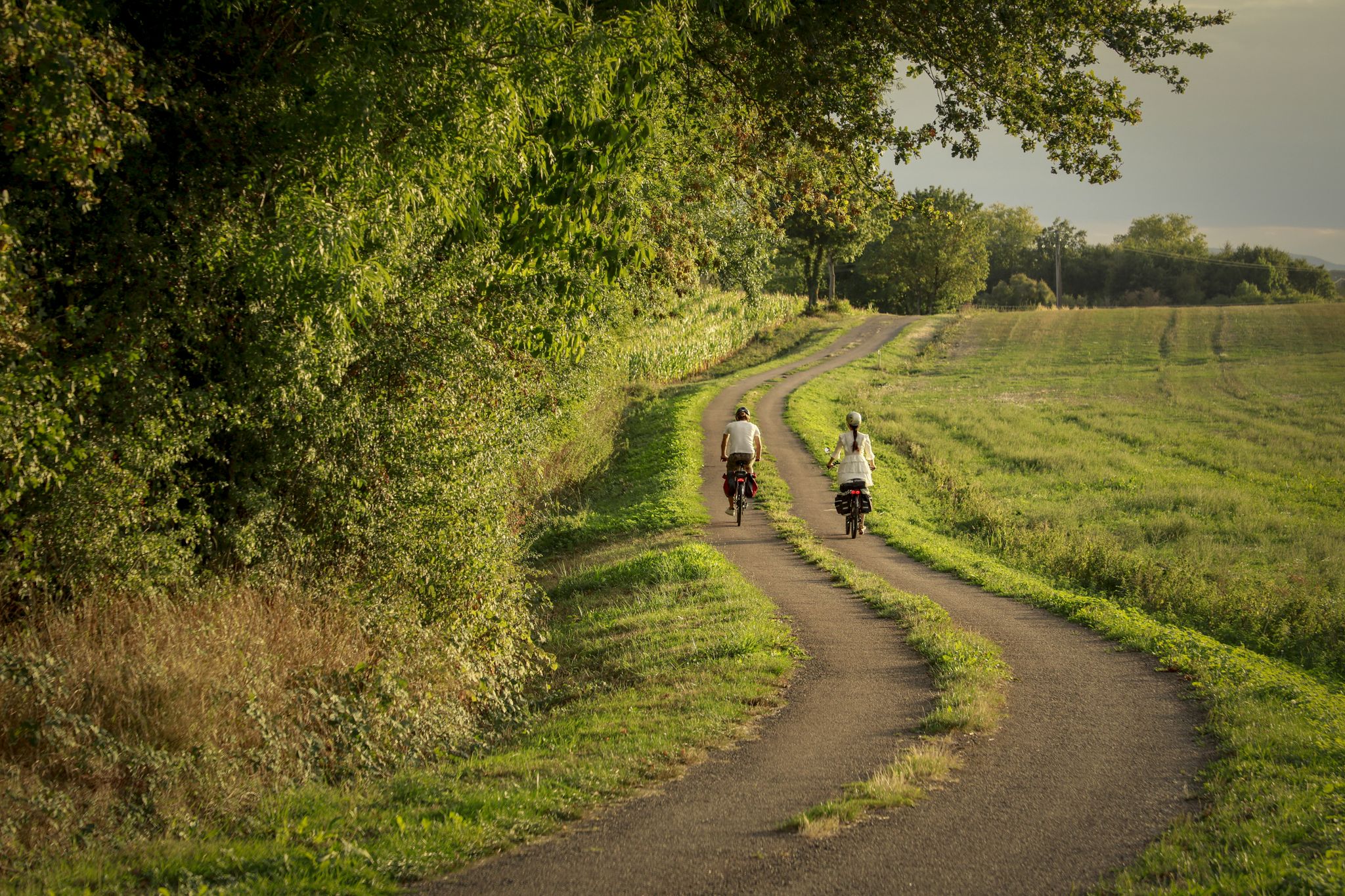
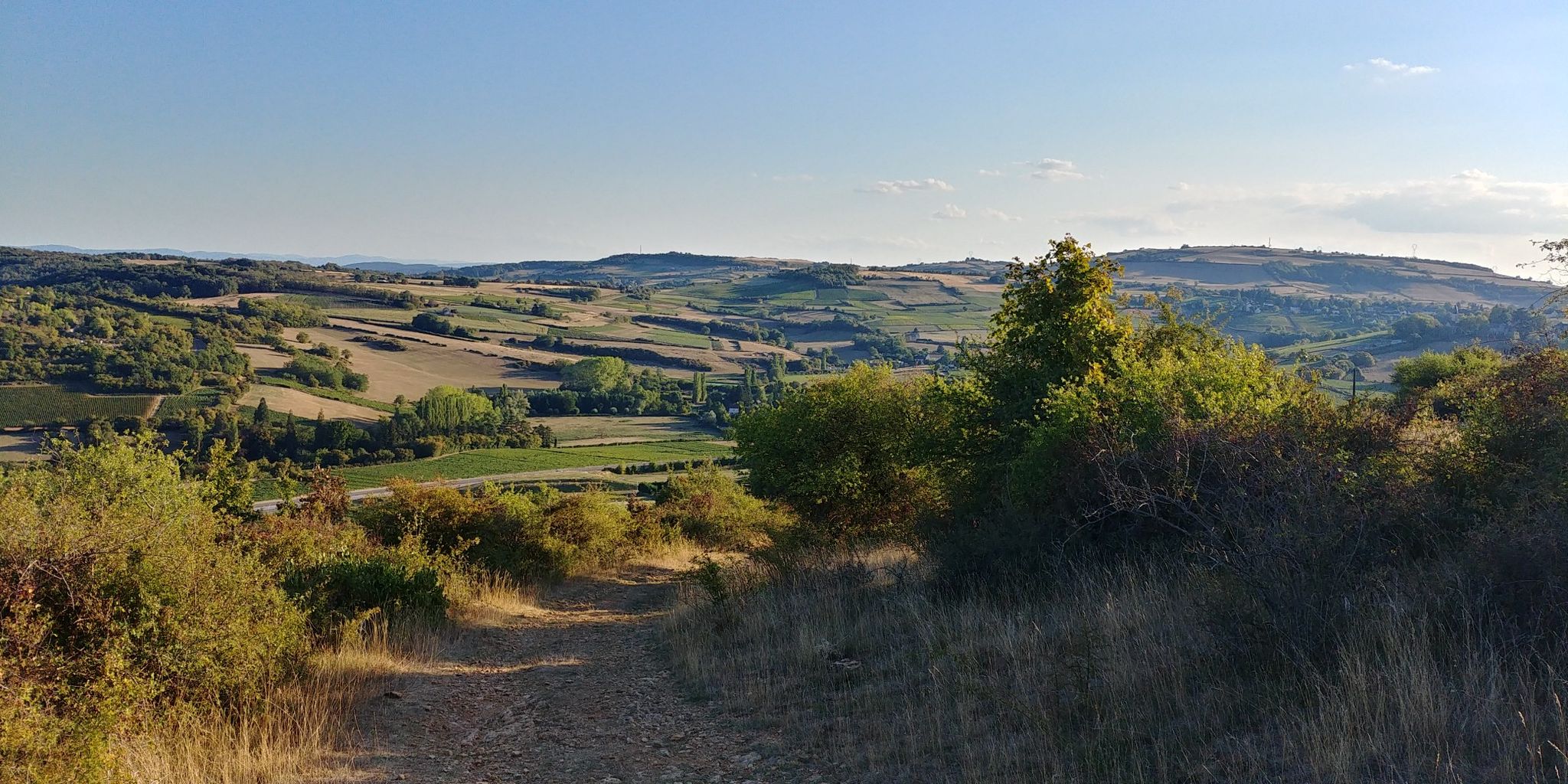
No traffic touring cycling routes around Cluny are predominantly found along the region's well-developed "Voies Vertes" (Greenways), which are former railway lines converted into secure paths. The landscape is characterized by rolling hills, extensive vineyards of the Mâconnais and Côte Chalonnaise, and picturesque river valleys like the Grosne. Limestone cliffs and tranquil wooded areas also feature prominently, offering varied scenery for cyclists. This area provides a blend of cultural heritage with opportunities for active exploration on dedicated cycling paths.
Best…
Last updated: July 5, 2026
4.8
(5)
13
riders
40.8km
02:45
590m
590m
Hard bike ride. Very good fitness required. Mostly paved surfaces. Suitable for all skill levels.
4.9
(13)
50
riders
36.4km
02:12
270m
270m
Moderate bike ride. Good fitness required. Mostly paved surfaces. Suitable for all skill levels.

Sign up for free
4.7
(6)
21
riders
36.2km
02:15
320m
320m
Moderate bike ride. Good fitness required. Mostly paved surfaces. Suitable for all skill levels.
9
riders
20.4km
01:53
390m
390m
Moderate bike ride. Good fitness required. Mostly paved surfaces. Suitable for all skill levels.
8
riders
17.0km
01:09
280m
280m
Moderate bike ride. Good fitness required. Mostly paved surfaces. Suitable for all skill levels.
Get access to more routes and recommendations from other explorers.
Sign up for free
Already have an account?
Our route recommendations are based on thousands of hikes, rides, and runs completed by other people on komoot.
Start today with a free account
Your next adventure awaits.
Login or Signup



Tips from the Community

A route through a green corridor, that brings joy.
1
0
The abbey was founded in 910 by Duke William I of Aquitaine. In the Middle Ages, Cluny was the starting point of a huge monastic reform (the "Cluniac Reforms"). At its peak in the 11th and 12th centuries, around 1,500 monasteries and over 20,000 monks throughout Europe were under its jurisdiction. The main church of the abbey (Cluny III or Major Ecclesia), over 187 meters long, was the largest house of worship in Christendom until St. Peter's Basilica in Rome was built. During the French Revolution, the monastery was closed. Under Napoleon's rule, the gigantic church was almost completely demolished and used as a quarry. Today, only about 8% of the original vast complex remains.
2
0
The Saint-Martin church in Chapaize is a beautiful, old church. Its huge, 35-meter-high tower can be seen from afar. The church was built almost 1000 years ago in the Romanesque style, it has thick stone walls and round arches.
4
0
The Château de Cormatin is a magnificent moated castle from the early 17th century. The castle was built between 1606 and 1625 by the Marquises d'Huxelles. It houses the best-preserved state rooms from the Louis XIII era in all of France. Famous are the "Gilded Rooms" (Salles Dorées) with lavish paintings, sculptures, and gilded ceilings. The extensive grounds, covering around 12 hectares, are among the most beautiful gardens in France. Highlights in the outdoor area include a large boxwood labyrinth, an open-air Baroque theatre, water features, and a historic vegetable garden. This spot only offers a brief glimpse of the rear grounds.
3
0
Great route through picturesque hilly cultural landscape.
1
0
The historic town of Cluny, located in the Bourgogne-Franche-Comté region, can best be admired from the viewing platform of the famous Cheese Tower (Tour des Fromages), from which you can enjoy a striking 360-degree view over the historic rooftops and the gentle, green hills of Southern Burgundy. Cluny is world-renowned for its Benedictine abbey, founded in 910 AD. In the High Middle Ages, the abbey was the starting point of the pioneering Cluniac reform movement and developed into the head of a Europe-wide monastic order with over 1,200 monasteries.
0
0
The church of Saint-Valentin de Jalogny is a historic Roman Catholic church in the municipality of Jalogny in the Saône-et-Loire department. Built in the Romanesque style, the structure was erected in the 12th century. It replaced an earlier place of worship from 969, which had been built by the famous monks of the nearby Cluny Abbey. The striking, four-story bell tower with a pyramidal tent roof was built directly next to the choir. The lower part is preserved in its original state, while the upper floor was raised in the 19th century.
0
0
Founded in 910, the Benedictine abbey developed into the starting point of the Cluniac reform movement. In the High Middle Ages, it was one of the most influential religious and political centers in Western Europe. At its peak, the Cluny congregation comprised around 1,200 monasteries with over 20,000 monks across the continent. Cluny was independent of secular rulers and local bishops. It was directly subordinate to the Pope in Rome.
1
0
Frequently Asked Questions
How many no-traffic touring cycling routes are available around Cluny?
There are over 25 dedicated no-traffic touring cycling routes around Cluny, catering to various skill levels. You'll find a good mix of easy, moderate, and challenging options to explore the region's beautiful landscapes.
What kind of terrain can I expect on the no-traffic cycling routes near Cluny?
The no-traffic routes around Cluny primarily utilize the region's 'Voies Vertes' (Greenways), which are former railway lines offering smooth, secure paths. You'll cycle through diverse landscapes including the extensive vineyards of the Mâconnais and Côte Chalonnaise, gentle hills, tranquil wooded areas, and picturesque riverine scenery along the Saône. Some sections may feature striking limestone cliffs.
Are there any circular no-traffic touring routes around Cluny?
Yes, several excellent circular no-traffic touring routes start and end in Cluny. For example, the Cormatin Castle – Voie verte of Southern Burgundy loop from Cluny offers a moderate 36 km ride, while the Cluny Abbey town – Voie verte of Southern Burgundy loop from Cluny is a shorter 21 km option that keeps you close to the town's historical heart.
Are the no-traffic cycling routes around Cluny suitable for families?
Absolutely. The 'Voies Vertes' are ideal for family cycling due to their flat, car-free nature. Routes like the Cluny Abbey town – Voie verte of Southern Burgundy loop from Cluny are particularly well-suited for families looking for an enjoyable and safe ride. The region's focus on greenways ensures a pleasant experience for all ages.
What historical or natural landmarks can I see along the no-traffic cycling routes?
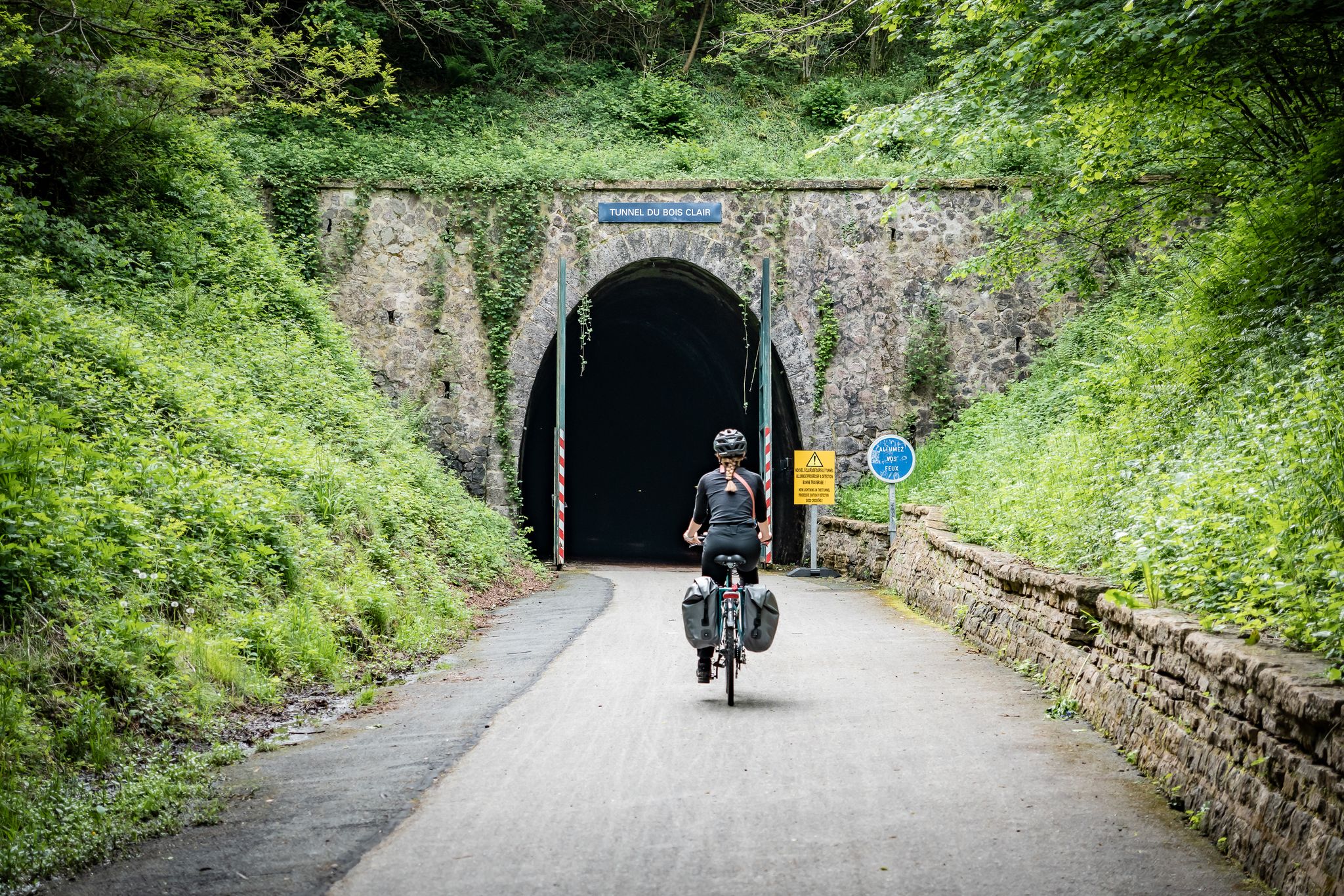
You'll encounter a wealth of landmarks. The routes often pass through or near the historic town of Cluny itself, with its famous Abbey. A popular highlight is the Cormatin Castle, a stunning 17th-century château. You might also pass through the unique Tunnel du Bois Clair, Europe's longest tunnel open to cyclists (check seasonal closures). Other points of interest include charming churches like Sainte-Marie-Madeleine Church and Church of the Assumption of Ameugny.
What is the best time of year for no-traffic bike touring in Cluny?
The best time for no-traffic bike touring in Cluny is typically from spring (April) to early autumn (October). During these months, the weather is generally pleasant, and the vineyards are at their most beautiful. Be aware that the Tunnel du Bois Clair is closed seasonally from October 15 to March 31 to protect bats, with an alternative route available during this period.
Are there options for public transport access to the no-traffic cycling paths around Cluny?
Yes, the region supports cycle tourism with public transport options. The Southern Burgundy county bus line (Chalon > Cluny > Mâcon) offers limited spaces for bikes. Additionally, train services from Mâcon often have bike carriage options, providing convenient access to the greenways around Cluny.
Where can I find parking for the no-traffic touring bike routes in Cluny?
Cluny, being a central hub for the greenways, offers various parking options within the town. Look for designated parking areas near the start of the Voie Verte sections, which are usually well-signposted. Many accommodations also provide parking for cyclists.
What do other touring cyclists enjoy the most about no-traffic cycling in Cluny?
The Cluny area is highly rated by the komoot community, with an average score of 4.66 stars. Reviewers often praise the peaceful, car-free nature of the greenways, the stunning vineyard landscapes, and the rich historical sites like Cluny Abbey and Cormatin Castle that are easily accessible by bike. The well-maintained paths and clear signage also receive frequent positive mentions.
Can I find cafes or pubs along the no-traffic bike trails in Cluny?
Yes, the greenways are well-equipped with amenities. You'll find charming cafes, restaurants, and local pubs in the villages and towns along the routes, perfect for a break or a meal. Cluny itself offers numerous options, and smaller establishments are dotted along the Voie Verte sections, especially in popular stopping points like Cormatin.
Are there any challenging no-traffic routes for experienced touring cyclists?
While the greenways are generally easy to moderate, some routes incorporate sections with more significant elevation gains, offering a challenge for experienced touring cyclists. For instance, the The hills of Bourgogne from Cluny — Mont de Gremoi — circuit is a difficult 40 km route with nearly 600 meters of elevation gain, providing a more demanding experience while still prioritizing quiet roads and paths.
What is the average length of the no-traffic touring cycling routes around Cluny?
The no-traffic touring cycling routes around Cluny vary in length, but many popular options range from 15 km to 40 km. For example, the Jalogny Church – Notre-Dame Church loop from Cluny is about 17 km, while the Cluny – Voie verte of Southern Burgundy loop from Cluny covers approximately 20 km, offering a good balance for a half-day ride.
Most popular attractions around Cluny

Get inspired with the komoot mobile app


Explore more
Browse the best Cycling routes in other regions.
