The best traffic-free bike rides around Plats
4.5
(11)
107
riders
15
rides
Gravel biking around Plats offers a network of no traffic gravel bike trails, primarily following the Rhône river valley. The region is characterized by its riverine landscapes, vineyards, and rolling hills, providing varied terrain for cyclists. These routes often combine riverside paths with sections through agricultural areas and quiet country roads. The elevation gains indicate a mix of flatter sections and more challenging climbs, typical of the Rhône Valley's transition zones.
Best no traffic gravel bike trails around Plats
- The…
Last updated: July 4, 2026
4.0
(1)
10
riders
Hard gravel ride. Very good fitness required. Mostly paved surfaces. Suitable for all skill levels.
4.5
(2)
14
riders
Hard gravel ride. Very good fitness required. Mostly paved surfaces. Suitable for all skill levels.

Sign up for free
4
riders
37.2km
02:48
510m
510m
Hard gravel ride. Very good fitness required. Mostly paved surfaces. Suitable for all skill levels.
5.0
(1)
9
riders
Hard gravel ride. Very good fitness required. Mostly paved surfaces. Suitable for all skill levels.
2
riders
31.9km
02:39
750m
750m
Hard gravel ride. Very good fitness required. Mostly paved surfaces. Suitable for all skill levels.
Get access to more routes and recommendations from other explorers.
Sign up for free
Already have an account?
Our route recommendations are based on thousands of hikes, rides, and runs completed by other people on komoot.
Start today with a free account
Your next adventure awaits.
Login or Signup
Popular around Plats

Tips from the Community

It is classified as a historical monument and houses a museum designated as a Museum of France. Primarily built between the 15th and 16th centuries, the Château de Tournon stands on the remains of a first building from the 10th century. (...) The site still presents exceptional works of art today, such as a triptych by Giovanni Capassini, but also collections on river navigation or the history of the town and the castle. Reconstructions of rooms, as well as sculptures, paintings, drawings or engravings, highlight the tour.
0
0
The FRANCE VOYAGE website reports on the origin of the current place name with Saint DONATUS: "With the advent of Christianity, Saint-Donat bore the name Jovincieu or Jovenzieux. In 732, during the invasion of the Saracens, Corbus, the bishop of Grenoble, fled to Jovenzieux and brought with him the relics of Saint Donatus, who died in the 6th century, on his way to Sisteron – hence the name Saint-Donat." However, the collegiate church located in the town has a different patron saint than the place name; here, the choice was made for the two prince of the apostles, SAINTS PIERRE et PAUL, whose common feast day is celebrated on June 29th in the calendar.
0
0

A rare testimony of Gothic architecture in Ardèche, the Saint-Julien church is one of the best-preserved in the region. Listed as a historical monument, it recalls the ancient character of Tournon's heritage. https://www.tournon-sur-rhone.fr/ma-ville/decouvrir-tournon-sur-rhone/patrimoine/eglise-saint-julien/
0
0
The Château de Tournon is one of the most beautiful castles in the Ardèche. Its massive character and elevated position give it an imposing appearance. Built between the 15th and 16th centuries, its architecture bears witness to the evolution of society, between the medieval period and the dawn of the Renaissance. http://www.chateaumusee-tournon.com/index.php?option=com_content&view=article&id=549&Itemid=443
1
0
The first footbridge built by Marc Seguin between Tournon and Tain in 1825 was revolutionary for its time. It was the world's first iron cable suspension bridge, a true technical feat for the era. This footbridge helped facilitate trade and strengthen ties between the two towns. However, the original footbridge underwent several transformations over time. It was first raised to allow the passage of steamships, then a second footbridge was built by Marc Seguin in 1847, still based on the iron cable suspension principle. The two footbridges coexisted for a time, the first being used for pedestrian traffic and the second for road traffic. As road traffic intensified over time, it became necessary to build a new bridge to facilitate circulation. This is how the Gustave Toursier bridge was built in 1958. Located about 350 meters downstream from the Marc Seguin footbridge, this suspension bridge over 240 meters long comprises three spans. It is designed to support road traffic, thus facilitating exchanges between the two municipalities. The current footbridge, inaugurated in 1972, is therefore the fourth of its name. It was designed to resemble the 1847 footbridge, while meeting current safety standards and needs. https://www.ardeche-hermitage.com/fr/zoom-sur/la-passerelle-marc-seguin-celebre-son-bicentenaire/
0
0
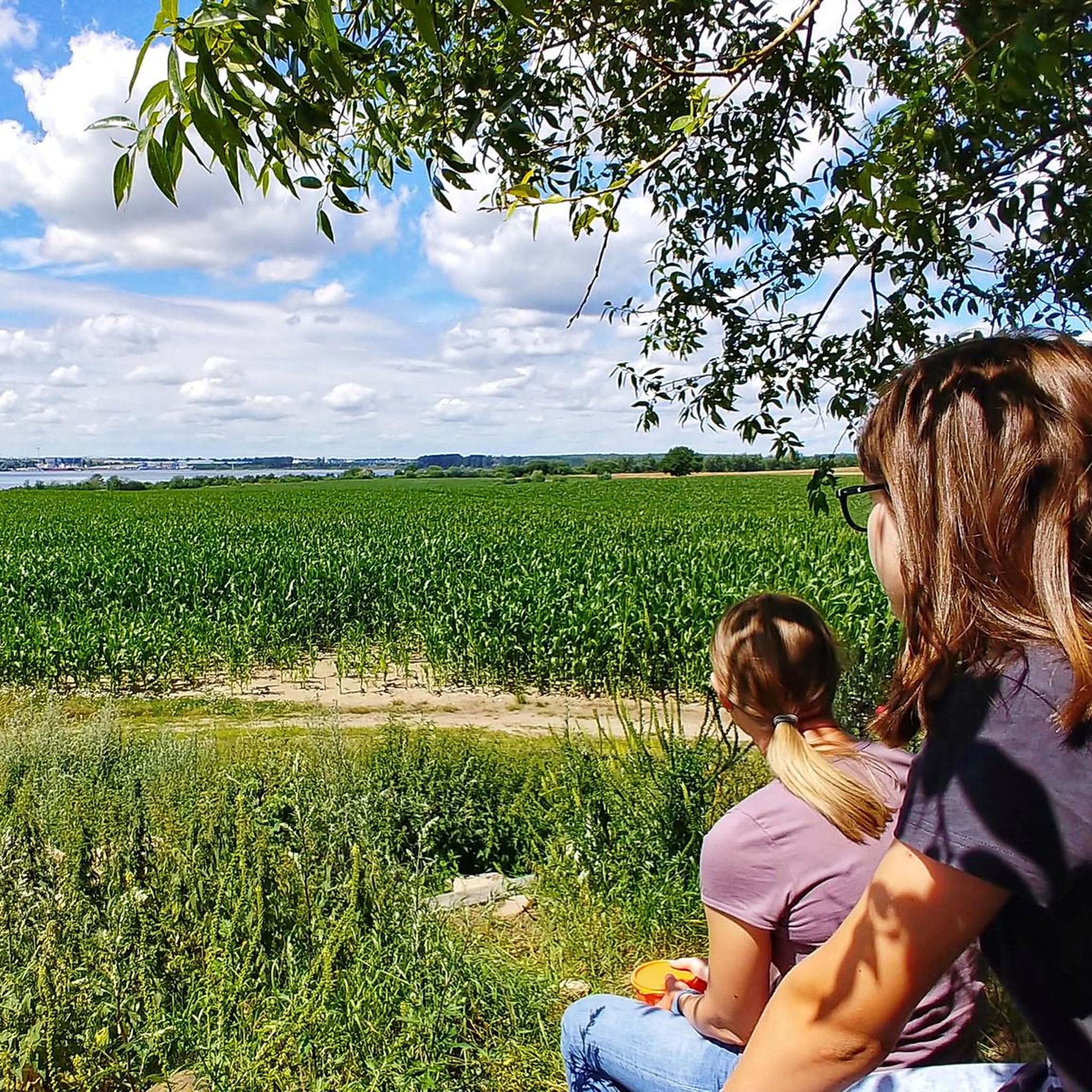
Belvédère de Veaunes: you will admire a superb panorama up to the Vercors mountains.
0
0

A truly beautiful stretch of the route! The stunning scenery and excellent cycle paths make cycling on the ViaRhôna a very special experience! :-)
0
0
Delicious, but expensive. Opposite is a small, lovely bakery with local baked goods. Yummy!!!!
0
0
Frequently Asked Questions
How many no-traffic gravel bike trails are available around Plats?
There are 10 dedicated no-traffic gravel bike trails around Plats, offering a variety of experiences for different skill levels. These routes are designed to keep you away from vehicular traffic, providing a peaceful and safe cycling environment.
Are there any beginner-friendly no-traffic gravel bike routes in Plats?
While many routes around Plats are rated moderate to difficult, the 'no traffic' aspect makes them generally safer. For a challenging but rewarding experience, consider the Esplanade du Champ de Mars – Le Rioudard in Glun loop from Cornas, which is rated moderate and offers a good introduction to gravel biking in the area.
What is the typical length of the car-free gravel bike paths in Plats?
The car-free gravel bike paths around Plats vary in length. For example, the Ardéchois landscape. – point of view loop from TAD Biousse is approximately 31.8 km long, while the ViaRhôna at Arras-sur-Rhône – Passerelle Marc-Seguin loop from Tain l'Hermitage - Tournon extends to about 49 km, offering options for both shorter and longer rides.
What kind of scenery can I expect on the no-traffic gravel bike trails around Plats?
The no-traffic gravel bike trails around Plats often feature diverse terrain and scenic landscapes. You can expect routes that combine different surfaces, offering views of natural features and potentially traversing areas with extensive networks of unpaved roads. The region's general characteristics suggest visually appealing exploration.
Are there any circular no-traffic gravel bike routes in Plats?
Yes, many of the no-traffic gravel bike routes around Plats are designed as loops. For instance, the ViaRhôna at Arras-sur-Rhône – Passerelle Marc-Seguin loop from Tain l'Hermitage - Tournon and the Esplanade du Champ de Mars – Le Rioudard in Glun loop from Cornas are excellent circular options, allowing you to start and end your ride in the same location without retracing your steps.
What are some hidden gem no-traffic gravel bike routes in Plats?
For a route that combines scenic beauty with a good challenge, consider the Ardéchois landscape. – point of view loop from TAD Biousse. This difficult route offers rewarding views and a true sense of exploration away from traffic.
What attractions can I see along the no-traffic gravel bike trails in Plats?
Many routes pass by interesting landmarks. For example, you might encounter the Passerelle Marc-Seguin or the Marc Seguin Suspension Bridge. Some trails also offer views of historical sites like Crussol Castle, adding cultural interest to your ride.
Are there any routes that follow the ViaRhôna in Plats?
Yes, the ViaRhôna offers excellent no-traffic sections for gravel biking in Plats. You can explore routes like the ViaRhôna at Arras-sur-Rhône – Passerelle Marc-Seguin loop from Tain l'Hermitage - Tournon or the ViaRhôna - Tournon-sur-Rhône – Passerelle Marc-Seguin loop from Tain l'Hermitage - Tournon, which utilize this dedicated cycle path for a smooth, car-free experience.
What do other gravel bikers enjoy most about the no-traffic trails in Plats?
The komoot community highly rates the gravel biking experience in Plats, with an average score of 4.5 stars. Reviewers often praise the ability to ride long distances on unpaved roads without encountering traffic, highlighting the peaceful and immersive nature of the trails and the diverse landscapes encountered.
Are there any castles or historical sites accessible from the no-traffic gravel routes?
Yes, several routes offer glimpses of historical landmarks. While riding, you might spot Crussol Castle or the Tournon-sur-Rhône Castle and Museum. These add a rich historical dimension to your car-free cycling adventure.
Most popular attractions around Plats

Get inspired with the komoot mobile app


Explore more
Browse the best Gravel rides in other regions.
