The best traffic-free bike rides around Mont
4.2
(91)
698
riders
88
rides
No traffic touring cycling routes around Mont traverse a landscape characterized by varied terrain, from valley floors to areas with significant elevation changes. The region features a mix of natural habitats, including forests and open areas, providing diverse scenery for cyclists. This area offers a range of microclimates and geological formations, including crystalline rocks, which contribute to its distinct character. The altitudinal gradients present opportunities for both challenging ascents and rewarding descents on touring cycling routes.
Best no traffic touring…
Last updated: July 4, 2026
4.6
(24)
98
riders
127km
07:42
880m
890m
Hard bike ride. Very good fitness required. Mostly paved surfaces. Suitable for all skill levels.
10
riders
36.0km
02:59
420m
420m
Hard bike ride. Good fitness required. You may need to push your bike for some segments of this route.

Sign up for free
7
riders
49.2km
03:05
520m
520m
Hard bike ride. Very good fitness required. Mostly paved surfaces. Suitable for all skill levels.
7
riders
27.3km
02:11
150m
150m
Moderate bike ride. Good fitness required. Mostly paved surfaces. Suitable for all skill levels.
3
riders
27.8km
02:18
410m
410m
Moderate bike ride. Good fitness required. Mostly paved surfaces. Suitable for all skill levels.
Get access to more routes and recommendations from other explorers.
Sign up for free
Already have an account?
Our route recommendations are based on thousands of hikes, rides, and runs completed by other people on komoot.
Start today with a free account
Your next adventure awaits.
Login or Signup
Popular around Mont
Tips from the Community

Built between 1250 and 1280 by Gaston VII, Viscount of Béarn, on a rocky outcrop overlooking the gave. Gaston Fébus had the castle reinforced in 1370.
0
0

Considered the little Béarn Venice, Salies-de-Béarn is mainly known for its saltwater spring. The town reveals an old centre with narrow streets and atypical houses.
0
0

## The tunnel The tunnel, located between the Puyoô and Salies-de-Béarn stations, is one of the significant structures on line n° 662.000 connecting Puyoô to Mauléon. It is a single-track tunnel 848.5 m long and 5.00 m wide between the abutments. The height under the crown is 6.00 m. It is a multi-radius arch. The structure is generally oriented North-South, with a curve of R400 m for the first 250 meters on the North side, then a straight section to the South end. The longitudinal profile has a constant gradient of 0.01 m/m from the North. A central aqueduct equips the structure along its entire route. The maximum cover is 49 m. The tunnel is built in the Campanian flysch (Upper Cretaceous). The construction of the tunnel (1879-1883) was carried out from two headings via shafts approximately 35 m deep, located at PM219 and PM632. The shafts were retained as ventilation shafts. The masonry thicknesses (limestone rubble set in lime mortar) vary from 0.50 m to 1.20 m. The length of the tunnel, initially projected at 400 m, was increased to 787 m following the decision to lower the profile (from 20‰ to 16‰). During construction, ground instabilities encountered during the excavation of access trenches led to a further extension of the structure, which finally reached a length of 848.5 m. Numerous ground instabilities (landslides) caused significant delays in the progress of the work. The tunnel was electrified in 1930 and the overhead line equipment was removed in 1971.
0
0

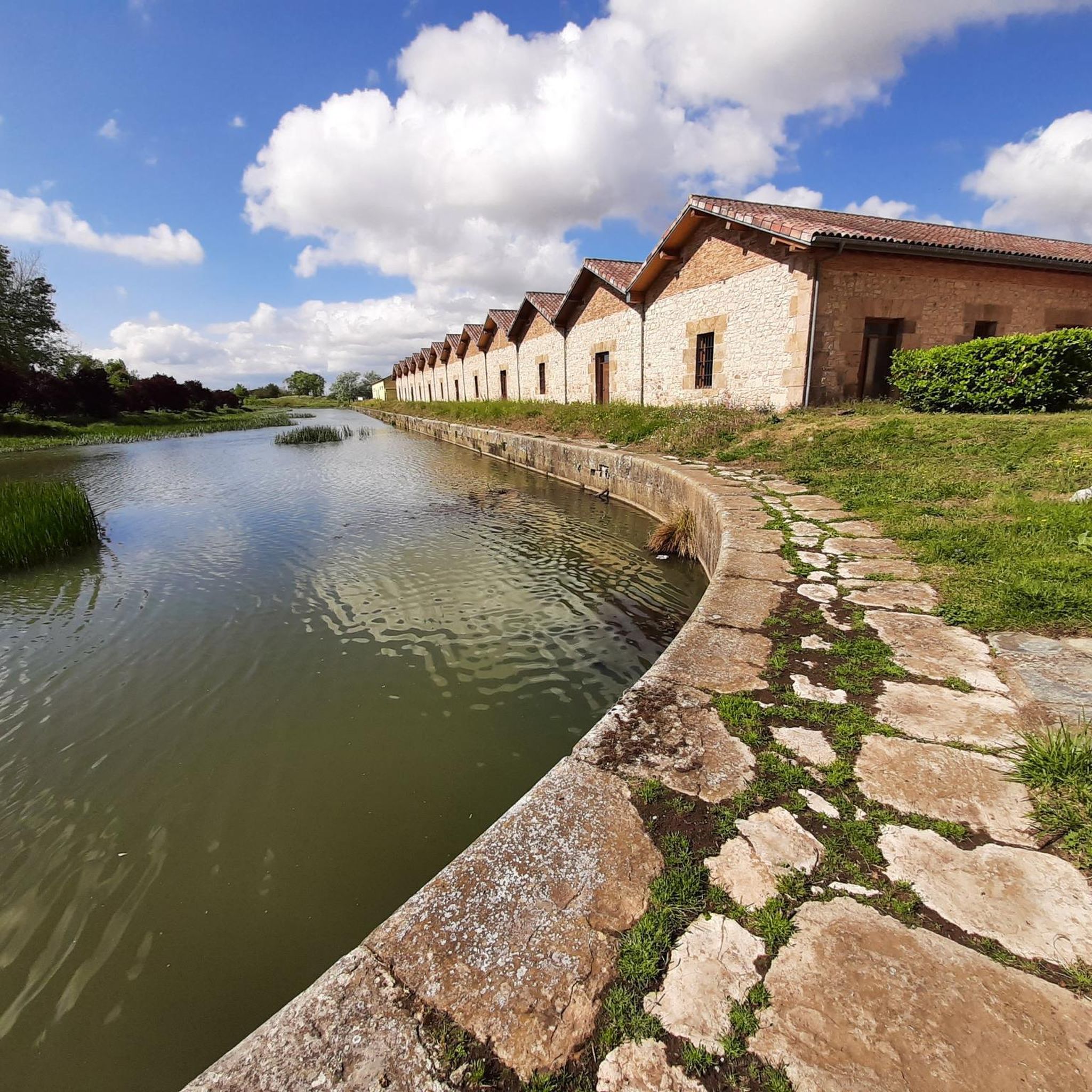
A great and beautiful landscape.
1
0


Gaston Fébus, Jeanne d'Albret and Henri IV lived there.
1
0

Frequently Asked Questions
How many no-traffic touring cycling routes are available around Mont?
There are over 85 dedicated no-traffic touring cycling routes around Mont, offering a variety of experiences for different skill levels. You can find routes ranging from easy to difficult.
Are there any easy no-traffic touring cycling routes suitable for beginners?
Yes, there are 22 easy no-traffic touring cycling routes around Mont. These routes are generally shorter and have less elevation gain, making them ideal for those new to touring cycling or looking for a relaxed ride.
What kind of attractions can I expect to see along these no-traffic routes?
The routes around Mont offer a blend of historical and natural sights. You might encounter historical landmarks like Saint Peter's Church or the serene Sauvelade Abbey. The Pont Vieux of Orthez is another notable historical bridge you could pass. For nature lovers, the Lakes of the Barthes de Biron offer a peaceful natural setting.
Are there any longer, more challenging no-traffic touring routes for experienced cyclists?
Absolutely. For those seeking a greater challenge, routes like the Pont Vieux of Orthez – Tunnel loop from Sauvelade offer a significant distance of over 123 km and more substantial elevation changes, providing a rewarding experience for seasoned touring cyclists.
What is the average rating for the no-traffic touring cycling routes in Mont?
The no-traffic touring cycling routes in Mont are highly regarded by the komoot community, with an average rating of 4.3 out of 5 stars from 85 reviews. Users often praise the quiet paths and scenic surroundings.
Are there any circular no-traffic cycling routes available?
Yes, many of the no-traffic routes around Mont are designed as loops, allowing you to start and end in the same location. An example is the Historic well in Cescau loop from Urdès, which offers a moderate ride of over 26 km.
Can I find moderate difficulty no-traffic routes around Mont?
Yes, the majority of the no-traffic touring cycling routes, 38 out of 87, are classified as moderate. These routes, such as the Mountain bike outing loop from Mourenx, strike a good balance between distance and elevation, suitable for cyclists with some experience.
What is the typical distance for these no-traffic touring cycling routes?
The distances vary significantly. You can find shorter routes around 29 km, like the Mountain bike outing loop from Mourenx, up to much longer tours exceeding 120 km, such as the Pont Vieux of Orthez – Tunnel loop from Sauvelade. This variety allows you to choose a route that fits your available time and fitness level.
Are there any routes that pass through or near historical sites?
Many routes offer glimpses of the region's history. For instance, the Historic well in Cescau – Caubin Chapel loop from Mourenx takes you past an historic well and chapel, providing cultural points of interest during your ride.
What is the elevation gain like on these no-traffic touring routes?
The elevation gain varies depending on the route's difficulty. Easier routes might have less than 200 meters of ascent, while more difficult ones, like the Solidarity Kiosk of Arbus – Mountain bike outing loop from Mourenx, can feature over 470 meters of climbing, offering a good workout amidst the quiet landscapes.
Most popular attractions around Mont

Get inspired with the komoot mobile app


Explore more
Browse the best Cycling routes in other regions.
