The best traffic-free bike rides around Saint-Didier
4.4
(86)
2,489
riders
119
rides
No traffic road cycling routes around Saint-Didier are situated in the Provence-Alpes-Côte d'Azur region of France, characterized by rolling hills, vineyards, and agricultural plains. The terrain includes moderate elevation changes, with the surrounding Vaucluse and Luberon mountains providing a diverse backdrop. This area offers varied landscapes for road cyclists, from agricultural routes to paths near historical sites.
Best no traffic road cycling routes around Saint-Didier
- The most popular no traffic road cycling route is Roadbike loop from Saint-Didier, a…
Last updated: July 4, 2026
5.0
(1)
16
riders
81.1km
03:36
560m
560m
Moderate road ride. Good fitness required. Mostly well-paved surfaces and easy to ride.
16
riders
40.8km
01:52
280m
280m
Easy road ride. Great for any fitness level. Mostly well-paved surfaces and easy to ride.

Sign up for free
5.0
(1)
15
riders
80.1km
03:38
620m
620m
Moderate road ride. Good fitness required. Mostly well-paved surfaces and easy to ride.
4.0
(2)
15
riders
84.8km
03:51
590m
590m
Moderate road ride. Good fitness required. Mostly well-paved surfaces and easy to ride.
23
riders
63.7km
02:42
410m
410m
Moderate road ride. Good fitness required. Some segments of this route may be unpaved and difficult to ride.
Get access to more routes and recommendations from other explorers.
Sign up for free
Already have an account?
Our route recommendations are based on thousands of hikes, rides, and runs completed by other people on komoot.
Start today with a free account
Your next adventure awaits.
Login or Signup
Popular around Saint-Didier

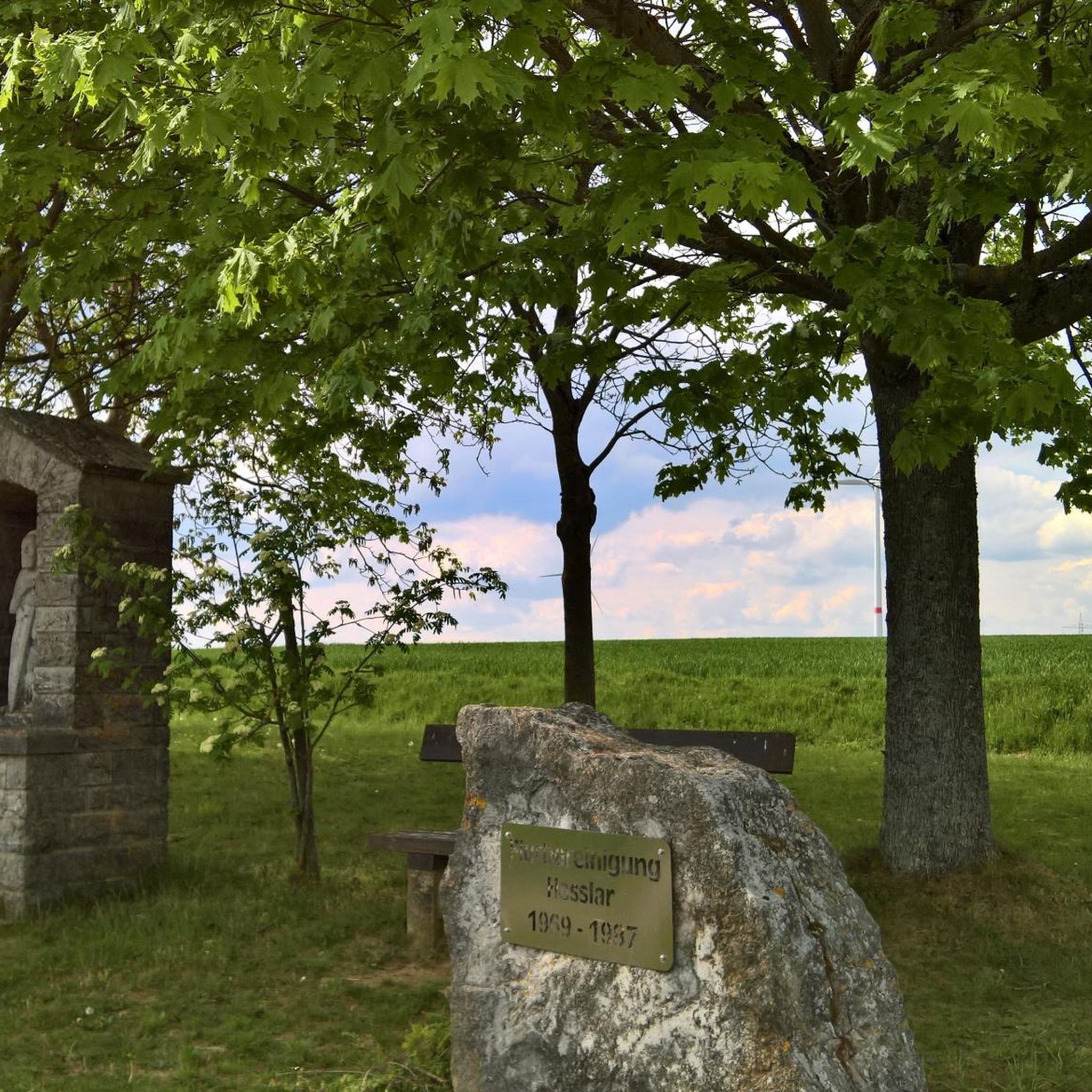
Tips from the Community

Church attested in the 12th century. Nave flanked by a north aisle, built between 1540 and 1549 (date of consecration by the bishop of Rennes), and by a south aisle, built between 1603 and 1605 (dates inscribed). Inscription on the south door: ESTANT NOBLE ET DISCRET PRESTRE : RENE DE L'ESPINAY RECTEUR DE PIRE : SIEUR DE LA GUAYE FUT CESTE EDIF : CE COMMENCE. SA (NC) TE DEUS SA (NC) TE FORTIS SA (NC) TE IMORTALIS MISERERE NOBIS SA (NC) TE PETRE ORA P (RO) NOBIS : TOUT EST A Dieu 1603. The choir was first rebuilt in 1627, then surmounted by a dome struck by lightning in 1741, then again between 1752 and 1775, flanked by side sacristies. Bell tower at the top of the nave rebuilt in 1669. In 1874, architect Aristide Tourneux had a bay added to the north of the nave and a porch-tower surmounted by a spire built. Stained glass windows signed and dated: Claudius Lavergne 1882, and also stained glass windows from the Rault workshops and the Carmel of Le Mans. South wall of the enclosure redone in the 19th century with a monumental corner staircase.
0
0
Church built in the 15th century, from that period only the choir and the chapel to the north, which became the sacristy, currently remain. The nave and transept were rebuilt in 1851 (inscription: MR. RUPIN MAIRE ET LES PAROISSIENS 1851). The tower is dated 1859, it was built by Guyon, an entrepreneur from Vitré.
0
0
New church built from 1861 by Audrouin a hundred meters south of the old one. It was completed in 1875 with the construction of the tower.
0
0
The bell tower is visible from afar and has long dominated the town and its surroundings. The Saint-Pierre church has retained its impact on the local landscape for over a century. It was indeed in 1888 that the Fabrique Council decided to entrust Arthur Régnault, the diocese's architect, with the project for a new construction. His plan was accepted and work began in October 1889, before the blessing of the first stone on March 13, 1890. As an anecdote, the stones are extracted from the quarry of La Bouëxière. Quickly, the inhabitants discovered its citadel-like appearance, Arthur Régnault having wanted to honor the city of Châteaubourg which had not had a castle for a long time! The structural work was completed on March 28, 1893, but due to lack of funds, the bells would wait until 1894. The work on the woodwork and the construction of the high altar took place in 1911, the church being due to host the important Eucharistic congress of 1913. Maintenance work continued over the years, the church having become the property of the municipality since 1905. During the bombings of the summer of 1944, the church was spared. The inhabitants would not forget it: on May 9, 1945, the day after the armistice, the men carried Notre Dame de Boulogne in procession and paraded barefoot through the streets. The centenary was celebrated in 1992 with the decision to install the current organ. The church of Châteaubourg has thus traversed local history from the 15th century – the date of construction of the previous, much smaller church – to that designed by Arthur Régnault.
0
0
The sacristy and tower of the current church were built in 1628 and 1632. A chapel was dedicated to Saint Nicholas in 1643. As for the nave, it dates from 1856. It contains a carved wooden altarpiece, bearing the coat of arms of Brignon, one of the church's financiers.
0
0
It originally consisted of a simple nave built in the 15th and 16th centuries, and whose straight chancel was rebuilt in 1700. The church, thus restored, was solemnly blessed by the rector on August 2, 1761. In 1806, a chapel dedicated to Saint Margaret was added to the south, and in 1818, to the north, the tower was partly redone, with at its base the chapel of the Virgin Mary. The lord Du Val, at Saint-Didier, has in the church of Saint-Jean-Baptiste a tomb where Jean de La Porte, lord Du Val, was buried in 1618, and in 1761 Suzanne Marion, daughter of lord Du Val and widow of Charles Du Boispéan. M. de Guersans, vicar general, erected the confraternity of the Holy Spirit at Saint-Jean-sur-Vilaine on June 25, 1746. Several foundations exist in this church: that of Le Poirier, that of La Bâte, that of La Porte. Jeanne Guyot, lady of La Hamonais, founded an annuity of 36 livres for the maintenance of candles during the octave of the Blessed Sacrament.
0
0
This parish belonged to the Collegiate Church Notre Dame de VITRE until the year 1116. It was then handed over to the Abbey of Saint Melaine (in RENNES). SAINT-DIDIER, the patron saint of the Parish, is undoubtedly the holy bishop of RENNES who lived at the end of the 7th century. His statue is part of the altarpiece of the high altar (1721), as well as that of Saint GOLVEN.
0
0
The church of Saint-Sulpice (17th century). Dedicated to Saint Sulpice, bishop of Bourges, the church of Ossé consists of a single nave ending in a straight chancel, to which two chapels have been added, forming the transepts. It has no style and may partly date back to the 16th century, as indicated by the ogival window of its chancel, now walled up. The North chapel, dedicated to the Virgin Mary, and originally reserved for the lord of Charot, was built in 1611. The other chapel, dedicated to Saint Nicholas, also seems to be from the 17th century. Le Plessix d'Ossé was the manor house of the parish. In 1440, Duke Jean V settled a dispute concerning the right of burial in the church of Ossé between the sieur du Pan, lord of Plessix, and the sieur de Montbeille, lord of Grées. The ecclesiastical superiority belonged to Ossé to the baron de Châteaugiron, but the lord of Plessix enjoyed the rights of founder and patron; this was declared in 1694 by Gabrielle Glé, marquise de la Vallière and lady of Plessix (National Archives, P. 1721). Jacques Le Prestre, baron de Châteaugiron, having acquired Plessix in 1744, took possession of all these honorary rights and had his coat of arms placed in the choir and on the high altar of the church of Ossé. As for the lord of Charot, he had his tomb, his pew, and his coat of arms in his reserved chapel. The bell tower dates from 1899. The altarpiece of the Holy Trinity dates from the 17th century.
0
0
Frequently Asked Questions
How many no traffic road cycling routes are available around Saint-Didier?
There are 11 dedicated no traffic road cycling routes around Saint-Didier, offering a variety of distances and elevations for different skill levels. You'll find 7 easy routes and 4 moderate routes.
What kind of terrain can I expect on no traffic road cycling routes near Saint-Didier?
The region around Saint-Didier features diverse terrain, from rolling hills and agricultural plains to vineyards and lavender fields. Routes often include moderate elevation changes, characteristic of the Provence-Alpes-Côte d'Azur region, providing scenic views without extreme climbs on these no-traffic paths.
Are there any easy no traffic road cycling routes suitable for beginners or families?
Yes, Saint-Didier offers 7 easy no traffic road cycling routes. A great option for a relaxed ride is the Roadbike loop from Saint-Didier, which covers about 26 km with gentle elevation changes, perfect for beginners or a family outing.
Can I find circular no traffic road cycling routes in Saint-Didier?
Many of the no traffic road cycling routes around Saint-Didier are designed as circular loops, allowing you to start and end in the same location. For example, the Châteaugiron Castle – Châteaugiron Castle loop from Saint-Didier is a circular route of approximately 43 km.
What are some scenic viewpoints or landmarks I can see along these routes?
While cycling, you can enjoy views of the Provençal landscape, including vineyards and rolling hills. Some routes pass by historical sites. For example, the Châteaugiron Castle – Hôtel de Ville loop from Saint-Didier takes you near Châteaugiron Castle. You might also encounter charming villages and natural features like the Étang de la Corbière, which offers beautiful viewpoints.
Are there any historical sites accessible by no traffic road cycling routes?
Yes, the region combines natural beauty with cultural experiences. Several routes allow you to explore areas with historical significance. The Fathers' Castle – Miniatures Henri Chesnais loop from Saint-Didier is a moderate route that brings you close to historical points of interest.
What is the best time of year to go no traffic road cycling in Saint-Didier?
The spring and autumn months are generally ideal for road cycling in Saint-Didier, offering pleasant temperatures and beautiful Provençal scenery. Summers can be hot, but early mornings or late afternoons are still enjoyable. The region's mild climate often allows for cycling into late autumn.
Are there any moderate no traffic road cycling routes for a bit more challenge?
Yes, there are 4 moderate no traffic road cycling routes for those seeking a slightly greater challenge. The Miniatures Henri Chesnais – Saint-Marse Church of Bais loop from Saint-Didier is a good option, covering about 44 km with over 300 meters of elevation gain.
What do other cyclists say about the no traffic road cycling routes in Saint-Didier?
The no traffic road cycling routes around Saint-Didier are highly rated by the komoot community, with an average score of 4.5 stars from 44 ratings. Cyclists often praise the quiet roads, the picturesque Provençal landscapes, and the variety of routes available for different skill levels.
Are there any routes that pass by natural water features?
While the immediate routes listed focus on the local countryside, the broader region of Provence is known for its natural water features. The Sorgue River, for instance, is a prominent feature in the area, and while not directly on these specific no-traffic routes, it's a significant natural landmark nearby.
Can I find routes that explore the agricultural or wine-growing landscapes?
Absolutely. The region around Saint-Didier is rich in agricultural and wine-growing landscapes, particularly within the Comtat Venaissin. Many of the no traffic road cycling routes will take you through these picturesque areas, offering views of vineyards and fields characteristic of Provence.
Most popular routes around Saint-Didier
Most popular attractions around Saint-Didier

Get inspired with the komoot mobile app


Explore more
Browse the best Road cycling routes in other regions.
