The best traffic-free bike rides around Sandwich
4.7
(480)
4,502
riders
10
rides
No traffic touring cycling routes around Sandwich offer a diverse landscape characterized by flat, traffic-free sections, coastal paths, and quiet country lanes. The region features significant natural assets such as the Sandwich & Pegwell Bay National Nature Reserve with its inter-tidal mudflats and shingle beaches, and the River Stour. The terrain generally presents minimal elevation changes, making it well-suited for touring cyclists seeking accessible routes.
Best no traffic touring cycling routes around Sandwich
- The most popular no traffic touring cycling…
Last updated: August 24, 2026
4.6
(7)
126
riders
22.6km
01:17
30m
30m
Easy bike ride. Great for any fitness level. Mostly paved surfaces. Suitable for all skill levels.
4.4
(8)
7
riders
53.9km
03:18
410m
410m
Moderate bike ride. Good fitness required. Mostly paved surfaces. Suitable for all skill levels.

Sign up for free
9
riders
74.3km
04:32
590m
590m
Hard bike ride. Very good fitness required. Mostly paved surfaces. Suitable for all skill levels.
5
riders
Moderate bike ride. Good fitness required. Mostly paved surfaces. Suitable for all skill levels.
3
riders
Easy bike ride. Great for any fitness level. Mostly paved surfaces. Suitable for all skill levels.
Get access to more routes and recommendations from other explorers.
Sign up for free
Already have an account?
Our route recommendations are based on thousands of hikes, rides, and runs completed by other people on komoot.
Start today with a free account
Your next adventure awaits.
Login or Signup



Tips from the Community

The oldest church in England in which services are held without interruption. It was the parish church of Queen Berta of Tours in the 6th century. Queen Berta supported St. Augustine of Canterbury in his mission.
0
0

St. Martin's is the oldest church in the English-speaking world and is referred to as the mother church of Canterbury Cathedral. The chancel is the oldest part of the church, with Roman brickwork, and may therefore date from the Roman era or have been built in the mid-6th century from salvaged bricks. The church was gifted in the late 6th century by the pagan King Ethelbert of Kent to his French bride Bertha, who was a Christian, as a place of worship. In 595, Pope Gregory sent Augustine and a group of monks to evangelize the population of England. Upon Augustine's arrival in 597, Ethelbert allowed them to worship in St. Martin's. Soon after, Ethelbert was baptized a Christian here by Augustine. Augustine established his mission at St. Martin's before founding the first St. Augustine's Abbey and Canterbury Cathedral.
0
0

Information about this 153-mile hiking trail in southeast England—which can be explored not only on foot but also by bike, if you're feeling energetic—is available not only on printed maps or books, but also in the digital world. Anyone interested in exploring the North Downs Way online can, for example, visit the official website recommended below =>> https://www.nationaltrail.co.uk/en_GB/trails/north-downs-way/
1
0

Bridge village high street crossing
1
0
St Martin's is the oldest church in the English-speaking world that is still in use. we we were there at Christmas
1
0
Often used in the town to hold a defibrillator as they have power and watertight
0
0
The history of this village runs back to the time of the Roman invasion, B.C. 55, for it was just here that the battle raged when Romans and Britons fought the great pitched battle, the Romans advancing from their camp on Barham Downs, and by the sheer force of the weight of their legions swept down into this valley, slaughtering and scattering the British forces, who never again made such a determined stand against the invaders as they did at “Old England’s Hole” on the north-east side of this parish, when the Stour, then a rapid river, was reddened with blood, and the bodies of our British forefathers were buried in impromptu graves which their heroism hallowed. Of Saxon days, the church is the most tangible record left. Most of its fabric and its architectural adornment is now Norman, but the church itself was built in the Saxon period, and the rude but massive masonry of the piers of the south aisle are probably a portion of the early work. The beauty of the situation and the fertility of the land made Patrixbourn attractive to Odo, Bishop of Baieux, who included it in his many possessions. At the beginning of the Norman period it was held by Richard, son of William, under lease from Odo, and there were then attached to the manor six sulings (about 1400 acres), and in addition to Richard’s household there were on the manor 47 other families, 43 being villiens and four borderers—a population quite equal to that of to-day. These facts, taken from the Domesday survey, were recorded in the year 1084, and four years later, on the disgrace of Odo, the manor was broken up into sections of Merton, Cheney, Renville, and Higham, which were for many generations accounted separate manors. The Manor of Merton, afterwards called the Manor of Patrixbourn, was first held by the de Bornes, and Margerie, a daughter of the last of the Bornes, carried it in marriage to a Norman named John de Pratellis, who gave it to the Priory of Beaulieu in Normandy, with whom the possession remained until the time of Henry IV., when by the King’s licence it was given to the Merton Priory, Surrey, and so remained until the 31st year of the reign of Henry VIII, when the manor, coming into the hands of the Crown, was granted to Sir Thomas Cheney, as a Knight’s fee, and Edward VI. confirmed the Cheney’s in the freehold possession of it. Very soon after, however, the property was several times sold—first to Sir Thomas Herbert, and next to William Partherich. The grandson of the latter, Sir Edward Partherich, of Bridge, sold it in 1638 to Mr., afterwards Sir Arnold Braems, a Dover merchant, who built the Elizabethan Dover Custom House, and his son, Walter Braems, sold the manor in 1704 to John Taylor, Esq.. At that time the manor, which had been known as Merton, came to be called the Manor of Patrixbourne, and was united with other manors of the parish. The other part of the ancient manor, called Cheney, after the disgrace of Odo was held by the Say family, until Sir Edward de Say in the reign of Henry III. sold it to Sir Alexander Cheney, who resided there for several generations, and the Manor of Merton was united with it in the possession of Sir Thomas Cheney in the 31st year of Henry VIII., both Manors of Merton and Cheney taking the same line of succession and possession, until this also came into the possession of Edward Taylor, Esq., beforenamed. There was also the subsidiary Manor of Hode, or Hothe, which was anciently the possession of a family named Isaac. John Isaac was its owner in the time of Edward III, and continued in that family till the reign of Henry VIII., when by special Act of Parliament the lands were disgovelled. It afterwards went to the Palmers of Howlets, then by sale to Edward Merriweather, who in 1680 sold it to Thomas Adrian, who in 1694 sold it to John Taylor, Esq. There were also the two other small Manors of Renville and Higham. The separate possession of the former is recorded from the time of James I., when it was owned by the Crippens, next by the Naylors, and in 1638 it was sold to Archdeacon William Kingley, of Canterbury, who left a numerous issue, and it continued in that family’s possession until the Nineteenth Century. Higham Manor, which adjoins the northern side of Barham Downs, was in the possession of William de Higham, and descended to his son Nicholas by deed in the 13th year of Edward III.; subsequently it seems for many generations, to have been possessed by the owners of the Manor of Bishopsbourne until the year 1768, when Ignatius Geohagan built the present house, called Higham Place, which in 1781 came into the possession of the Hallets, and it has continued in the possession of that family till the present time.
1
0
Frequently Asked Questions
How many no-traffic touring cycling routes are available around Sandwich?
There are currently 13 dedicated no-traffic touring cycling routes around Sandwich listed in this guide. These routes vary in difficulty, with 4 easy, 7 moderate, and 2 more challenging options to explore.
Are there easy, traffic-free cycling routes suitable for beginners or families with children?
Yes, Sandwich offers several easy, traffic-free routes perfect for beginners and families. For instance, the Sandwich Town Centre – Deal Seafront loop from Sandwich is an easy 22.8 km ride with minimal elevation, offering scenic coastal views. Another great option is The Black Pig Country Inn loop from Sandwich, which is a shorter 14.6 km easy route.
What kind of scenery and natural features can I expect on these routes?
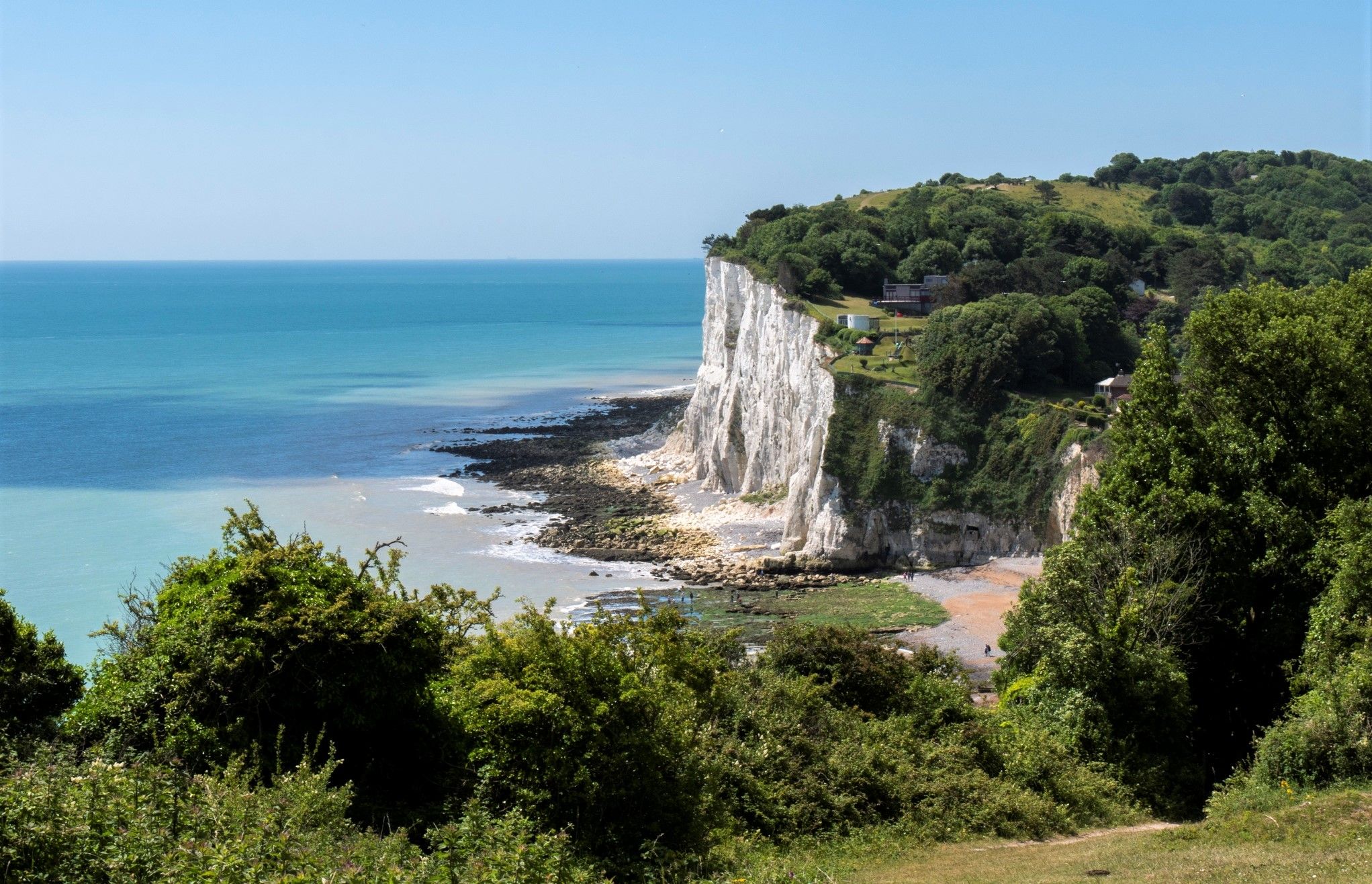
The no-traffic routes around Sandwich offer a diverse range of scenery. You'll encounter picturesque coastal paths with views of the English Channel, such as the stretches near Deal Seafront, as well as tranquil paths along the River Stour. The region is rich in natural beauty, including the Sandwich & Pegwell Bay National Nature Reserve, known for its inter-tidal mudflats, saltmarsh, and diverse bird populations. You might even spot seals in autumn and winter.
Are there any circular no-traffic touring cycling routes around Sandwich?
Yes, many of the routes in this guide are circular, allowing you to start and finish in the same location. Examples include the Sandwich Town Centre – Deal Seafront loop and Sandwich Town Centre – St Peter and St Paul Church loop, which provide convenient options for exploring the area without retracing your steps.
What attractions or points of interest can I visit along the no-traffic cycling routes?
Several routes pass by or near interesting attractions. You can cycle through the historic Sandwich Town Centre itself, or along the Deal Seafront. The wider area also features sites like Richborough Roman Fort and Amphitheatre, and Pegwell Bay Country Park, which offers stunning views and surfaced paths suitable for cycling. For nature lovers, the Sandwich Bay Bird Observatory is also nearby.
What is the best time of year to go touring cycling in Sandwich?
The best time for touring cycling in Sandwich is generally from spring through early autumn (April to October). During these months, the weather is typically milder and more stable, making for pleasant riding conditions. The coastal paths can be exposed to wind, so checking the forecast is always advisable. Winter cycling is possible, especially on paved, traffic-free sections, but be prepared for cooler temperatures and potentially wet conditions.
Can I bring my dog on these no-traffic cycling routes?
While many outdoor areas in Kent are dog-friendly, specific rules for cycling with dogs can vary. Nature reserves like Sandwich & Pegwell Bay often require dogs to be on a lead to protect wildlife. It's always best to check local signage or the specific reserve's guidelines before setting out. Generally, well-behaved dogs on a lead are welcome on many public paths, but ensure they are comfortable with cycling speeds and other users.
Are there places to eat or drink along the no-traffic cycling routes?
Yes, many routes pass through or near towns and villages where you can find cafes, pubs, and restaurants. Sandwich Town Centre itself offers numerous options. Coastal routes often lead to towns like Deal, which has a vibrant seafront with eateries. For example, the St Mary's Church, Patrixbourne – The Black Pig Country Inn loop suggests a route that includes a country inn, providing a convenient stop for refreshments.
What do other touring cyclists enjoy most about cycling in Sandwich?
The komoot community highly rates the touring cycling experience in Sandwich, with an average score of 4.7 out of 5 stars from over 500 ratings. Reviewers frequently praise the area for its flat, traffic-free paths, scenic coastal views, and the opportunity to explore historic towns and nature reserves. The ease of access to diverse landscapes, from marshlands to beaches, is also a common highlight.
Where can I find truly traffic-free sections for cycling near Sandwich?
Beyond the routes in this guide, the region offers specific traffic-free sections. The National Cycle Network (NCN) routes 1 and 2 incorporate dedicated seawall cycle paths and quiet country lanes. Notably, there's a 2-mile traffic-free section at Samphire Hoe near Dover, offering views of the English Channel, and a 6-mile almost entirely traffic-free path along the seawall from Folkestone to Hythe. Pegwell Bay Country Park also has surfaced paths suitable for cycling, forming part of NCN Route 15.
Is there public transport access to the starting points of these routes?
Sandwich is well-connected by public transport. Sandwich railway station provides train services, making it accessible for cyclists arriving by rail. Many routes start from or pass through Sandwich Town Centre, which is easily reachable from the station. Local bus services also operate in the area, though carrying bicycles on buses may be subject to restrictions, so it's best to check with the operator beforehand.
Most popular routes around Sandwich
Most popular attractions around Sandwich

Get inspired with the komoot mobile app


Explore more
Browse the best Cycling routes in other regions.
