The best traffic-free bike rides around Staden
4.4
(8)
179
riders
27
rides
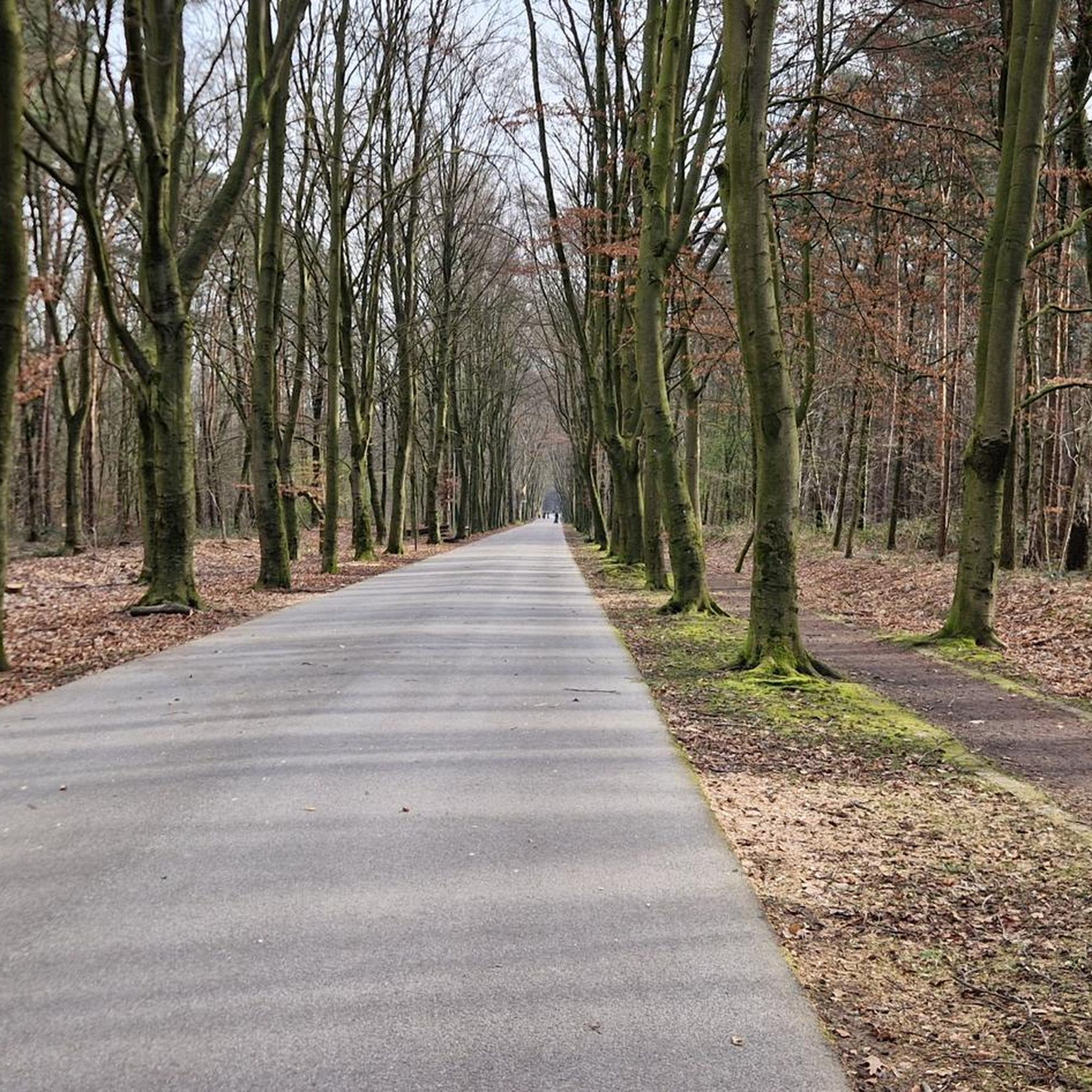
No traffic road cycling routes around Staden traverse a landscape characterized by a mix of flat farmlands and gently rolling countryside in West Flanders, Belgium. The region integrates natural greenery, including sections of the Vrijbos forest, into its cycling network. Cyclists can explore historical sites related to World War I, which are often incorporated into routes. The area offers a well-established system of cycling routes and nodes, connecting Staden with neighboring villages like Oostnieuwkerke and Westrozebeke.
Best no traffic road…
Last updated: July 14, 2026
20
riders
72.5km
03:14
420m
420m
Moderate road ride. Good fitness required. Mostly well-paved surfaces and easy to ride.
4.0
(1)
13
riders
49.6km
03:09
130m
130m
Moderate road ride. Good fitness required. Mostly well-paved surfaces and easy to ride.

Sign up for free
3.7
(3)
12
riders
38.6km
02:35
80m
80m
Moderate road ride. Good fitness required. Mostly well-paved surfaces and easy to ride.
12
riders
55.9km
02:32
190m
190m
Moderate road ride. Good fitness required. Mostly well-paved surfaces and easy to ride.
7
riders
53.8km
02:24
160m
160m
Moderate road ride. Good fitness required. Mostly well-paved surfaces and easy to ride.
Get access to more routes and recommendations from other explorers.
Sign up for free
Already have an account?
Our route recommendations are based on thousands of hikes, rides, and runs completed by other people on komoot.
Start today with a free account
Your next adventure awaits.
Login or Signup
Popular around Staden

Tips from the Community

So that every visitor becomes aware of the horror and hell of war in the past. That humanity learns nothing by slaughtering each other for nothing. But we are led by idiots and power-hungry people!!
0
0

The harbor in Ypres, known locally as "De Kaaie," is actually the Ieperlee, which runs beneath the city of Ypres and becomes visible again there. At the Drie Grachten (Three Canals), the Ieperlee is joined by the Martjevaart canal, which originates in Merkem. Drie Grachten is a hamlet in the west of Merkem where the three canals converge: the Martjevaart canal, the Ypres-IJzer canal (also known as the Ieperlee Canal), and the Ieperlee itself. Drie Grachten is also known for the battles during World War I, in which the French, including the Zouaves, fought against the Germans. After a failed attack on the German outpost at Luigem, the Germans captured a number of Zouaves. They launched a counterattack but hid behind the captured Zouaves to prevent the French Zouaves from firing on them, thinking they were their own men returning. At one point, one of the captured Zouaves reportedly shouted: "Tirez donc au nom de Dieu, ce sont les Boches!" (For God's sake, these are the Boches!). Immediately after the warning, a French salvo erupted, mowing down both the Germans and the captured Zouaves. The Zouaves of Northern France (Union des Zouaves du Nord) continued to commemorate this after the war. Luigem is a hamlet 1 kilometer east of Drie Grachten and 1 kilometer west of the center of Noordschote. The Zouaves (French: zouaves) were a light infantry unit of the French Army, associated with French North Africa.
0
0

Tyne Cot Cemetery is the largest Commonwealth cemetery in the world, located near Passchendaele. It was established in October 1917 and contains over 11,000 graves of soldiers who died during the First World War. The site was strategically important during the Battle of Passchendaele and was used as an advanced dressing station after its capture by the 3rd Australian Division on 4 October 1917. The cemetery was designed by Sir Herbert Baker and includes an impressive Cross of Sacrifice, built on a former German bunker. The cemetery was significantly expanded after the Armistice to include graves from nearby battlefields and smaller cemeteries.
7
0
The Welsh National Memorial Park in Langemark, near Ypres, Belgium, commemorates the men and women of Wales who fought in the First World War. The memorial was unveiled on 16 August 2014 and is located on Pilkem Ridge, a key location during the Third Battle of Ypres. The park features a cromlech, a traditional Celtic structure, topped by a bronze dragon. The park honours the efforts of the 38th (Welsh) Division, which played a crucial role in the battle on 31 July 1917. Poet Ellis Humphrey Evans, known as Hedd Wyn, was killed here on the same day.
8
0
An interesting anecdote concerns the explosion of one of the mines on 17 July 1955 by lightning. This mine had not been detonated during the war and was still underground. The explosion created a new crater and reminded the local population of the lasting impact of the war.
6
0
The Spanbroekmolen crater, also known as the Pool of Peace, is an impressive mine crater in Wijtschate. This crater was formed on June 7, 1917, during the Second Battle of Messines, when British troops detonated 19 underground mines. The explosion created a crater 27 meters deep and 129 meters in diameter. After nearly 100 years of erosion, the crater is now a peaceful pool 12 meters deep and 76 meters in diameter.
9
0
An interesting anecdote concerns the battles around the pond during the war. Soldiers used the pond as a natural barrier and shelter. There are stories of soldiers wading through the water at night to reach enemy lines, which gave the pond strategic significance.
7
0
A particularly poignant anecdote about the Brothers In Arms Memorial involves Australian brothers John and James Hunter. During the Battle of Polygon Wood on 26 September 1917, John was killed in the arms of his brother James. John was buried in a temporary cemetery, but his body was not recovered until 2006 by an archaeological team led by Johan Vandewalle . James returned to Australia after the war, always hoping that he would one day be reunited with his brother. Thanks to DNA testing, John's body was identified and in 2007 he was reburied with military honours at the Buttes New British Cemetery, just a few hundred metres from the Brothers In Arms Memorial . The memorial, which shows James embracing his dying brother John, symbolises the deep emotional impact of war on families .
5
0
Frequently Asked Questions
How many no-traffic road cycling routes are available around Staden?
There are over 25 dedicated no-traffic road cycling routes around Staden, offering a variety of distances and experiences. These routes are designed to provide a smooth and enjoyable ride away from busy roads.
What is the typical terrain like on no-traffic road cycling routes in Staden?
The terrain around Staden generally features a mix of flat farmlands and gently rolling countryside, characteristic of West Flanders. While you won't find major climbs directly within Staden, some routes may include slight undulations. The broader West Flanders region offers more challenging climbs for those seeking them, but our featured routes focus on accessible, low-traffic roads.
Are there any historical sites or landmarks along these no-traffic road cycling routes?
Yes, many routes incorporate significant historical sites, particularly those related to World War I. For example, the Scherpenbergweg – Tyne Cot Cemetery loop from Westrozebeke passes by the renowned Tyne Cot Cemetery. Other routes might lead you past the Passchendaele Memorial Gardens or the Welsh National Memorial Park, offering a blend of cycling and historical reflection.
Can I find circular no-traffic road cycling routes in Staden?
Absolutely. Most of the no-traffic road cycling routes around Staden are designed as loops, allowing you to start and finish at the same point. An example is the Ypres Canal – Stadenberg Monument loop from Staden, which offers a convenient circular journey.
What is the best time of year to enjoy no-traffic road cycling in Staden?
The best time for road cycling in Staden is typically from spring through early autumn (April to October). During these months, the weather is generally milder and more predictable, with longer daylight hours. Summer offers pleasant conditions, while spring and autumn provide beautiful scenery with fewer crowds.
Are there any easy no-traffic road cycling routes suitable for beginners or families?
Yes, there are several easy routes perfect for those new to road cycling or looking for a relaxed ride. The Stadenberg Monument – Welsh National Memorial Park loop from Staden is classified as easy, covering a distance of just over 30 km with minimal elevation gain, making it a great option for a leisurely outing.
Where can I park my car when starting a no-traffic road cycling route in Staden?
Staden and its surrounding villages, like Westrozebeke, generally offer public parking options. It's advisable to check local parking regulations upon arrival, but you can often find suitable spots near the start points of many routes, especially in village centers or designated public areas.
What do other road cyclists enjoy most about the no-traffic routes in Staden?
The komoot community highly rates the no-traffic road cycling experience in Staden, with an average score of 4.4 out of 5 stars. Reviewers often praise the peacefulness of the routes, the well-maintained roads, and the opportunity to explore the region's historical sites and natural beauty without the distraction of heavy traffic.
Are there any natural features or forests to explore on these routes?
While Staden is known for its open farmlands, some routes venture near natural green spaces. The nearby Vrijbos forest, for instance, is a nature-rich area that cycling routes often pass through, offering a pleasant change of scenery with natural greenery. You might also encounter highlights like Polygon Wood on some longer tours.
Can I access these routes using public transport with my bike?
Public transport options in West Flanders, including buses and trains, can often accommodate bicycles, though restrictions may apply during peak hours or for larger groups. It's recommended to check the specific policies of De Lijn (for buses) or NMBS/SNCB (for trains) regarding bicycle transport before planning your journey to Staden.
Are there any cafes or places to stop for refreshments along the no-traffic routes?
Yes, many routes pass through or near picturesque villages like Oostnieuwkerke and Westrozebeke, where you can find local cafes, bakeries, and pubs. These provide excellent opportunities to refuel and experience local hospitality. Planning your route with komoot allows you to see points of interest and potential stops along the way.
Most popular attractions around Staden

Get inspired with the komoot mobile app


Explore more
Browse the best Road cycling routes in other regions.
