The best traffic-free bike rides around Arnad
4.6
(10)
51
riders
7
rides
Gravel biking around Arnad, located in Italy's Aosta Valley, offers diverse terrain suitable for various skill levels. The region features a mix of quiet rural roads, unpaved sections, and mountain passes, providing engaging routes for gravel cyclists. The landscape is characterized by river valleys, such as the Dora Baltea, and significant elevation changes leading to panoramic views. This area provides a blend of challenging ascents and scenic paths through natural and historical settings.
Best no traffic gravel bike trails around…
Last updated: June 30, 2026
1
riders
16.1km
01:25
430m
430m
Moderate gravel ride. Good fitness required. Mostly paved surfaces. Suitable for all skill levels.
16
riders
27.9km
03:10
1,200m
1,200m
Hard gravel ride. Very good fitness required. Mostly paved surfaces. Suitable for all skill levels.

Sign up for free
4.3
(3)
13
riders
27.1km
02:16
870m
870m
Hard gravel ride. Very good fitness required. Mostly paved surfaces. Suitable for all skill levels.
7
riders
74.9km
05:50
2,100m
2,100m
Hard gravel ride. Very good fitness required. Mostly paved surfaces. Suitable for all skill levels.
4.0
(1)
4
riders
31.3km
03:12
1,310m
1,300m
Hard gravel ride. Very good fitness required. Mostly paved surfaces. Suitable for all skill levels.
Get access to more routes and recommendations from other explorers.
Sign up for free
Already have an account?
Our route recommendations are based on thousands of hikes, rides, and runs completed by other people on komoot.
Start today with a free account
Your next adventure awaits.
Login or Signup




Tips from the Community


The Castello di Suzey stands on an inaccessible rocky spur, in a position that in the 14th century guaranteed absolute control over the transit of the Lys valley. The structure is a classic example of a medieval enclosure castle, dominated by a massive quadrangular tower and surrounded by the remains of a fortified village now swallowed by vegetation. This stronghold was the headquarters of the lords of Suzey, a branch of the Vallaise known for their bellicose nature and independence from central powers. A famous anecdote concerns the family's determination to defend their privileges: it is said that the lords of Suzey imposed such severe transit taxes that they sparked fierce disputes with merchants and neighboring communities, turning the castle into a sort of armed customs post. A local legend also tells that the castle was connected to the other Vallaise properties in Perloz via a network of secret passages dug directly into the rock, used to move troops and riches away from prying eyes during sieges. Another popular tale describes the castle's end as a dramatic event: a devastating fire, which broke out during an enemy attack, would have marked the definitive abandonment of the structure.
0
0
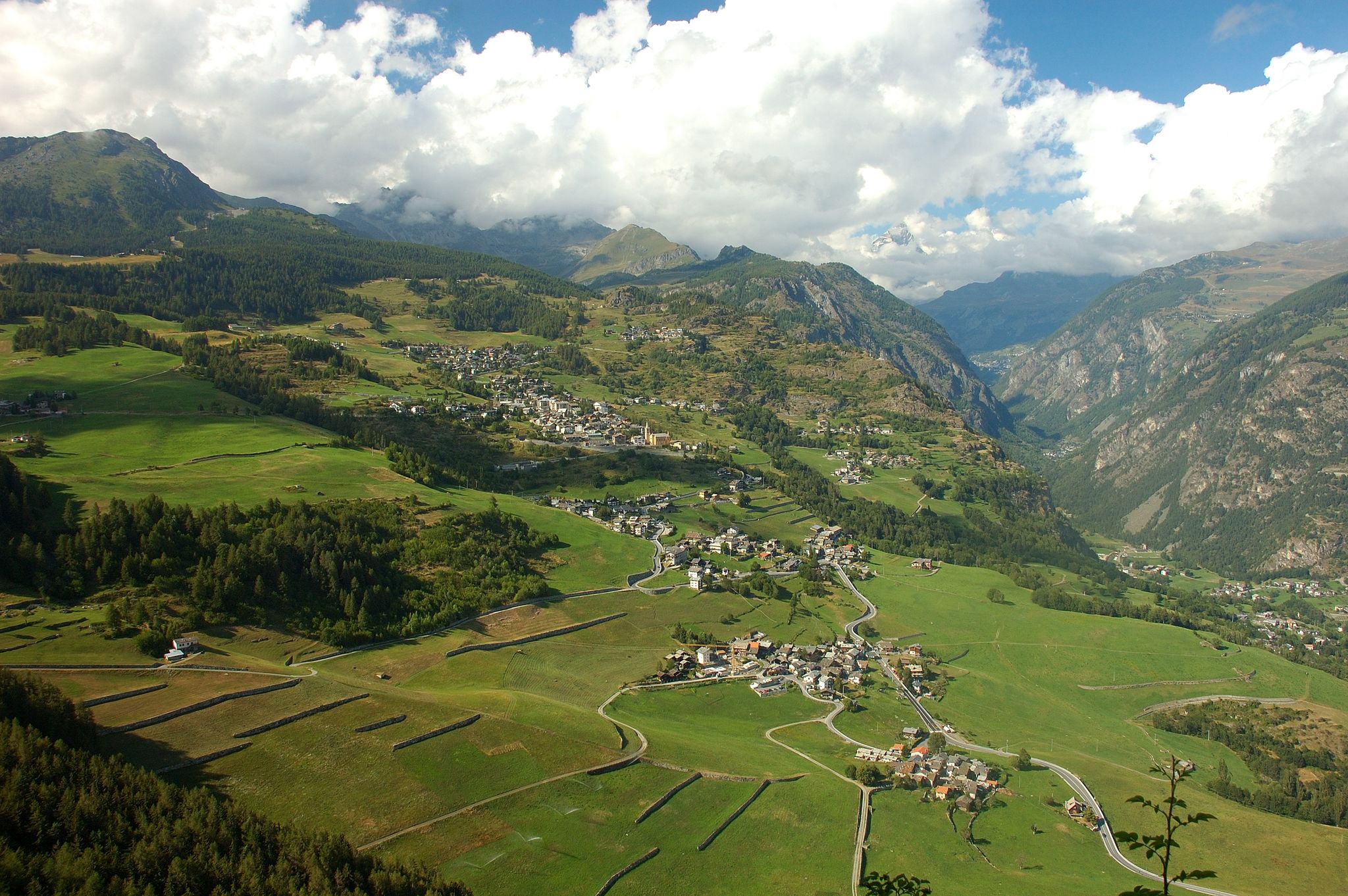
The village is situated on a natural terrace offering a panoramic view of the Lys valley. An e-bike charging station is available.
0
0
The historic center of Perloz constitutes an architectural nucleus of considerable interest for understanding the social and political dynamics of the lower Aosta Valley. The heart of the settlement is represented by the Casaforte Vallaise, a 14th-century quadrangular structure that served as the administrative and judicial center for the noble family of the same name. The building preserves medieval construction elements, including the coat of arms carved on the portals, a testament to the exercise of jurisdictional power over the territory. A short distance away stands the parish church of San Salvatore, characterized by a facade entirely frescoed with a representation of the Last Judgment dating back to the 17th century, a work that served as a tool for religious instruction for the local population. The monumental route continues with the Museum of the Resistance, housed in premises that recall the historical memory of the "Brigata Lys". Here, documents and artifacts related to the events of 1944 are preserved, when the village became a fundamental operational center for the partisan formations in the area. Walking through the narrow stone streets, one also notices the presence of numerous stone fountains and community ovens, symbols of the collective management of rural resources. This stratification of different eras, from medieval feudalism to contemporary history, makes the center of Perloz a relevant technical and cultural stop for those crossing the slopes of the Lys valley.
0
0

In this stretch, the Via Francigena follows the ancient Roman route of the Via delle Gallie, where the paving retains the ruts of millennia-old carts. Connecting Augusta Prætoria to the Alpine passes, this strategic road shaped the landscape with rest stops and villages, some of whose names still indicate the distance in miles from the city. Traveling it today means experiencing a direct connection between the spiritual journey of medieval pilgrims and the engineering of the Romans.
0
0
Saint-Germain Castle (or Montjovet Castle), of uncertain origins, marked the history of the Aosta Valley, passing from the Savoy to the Challant family, before finally returning to the Savoy in 1438. Used as a military garrison by Amadeus VIII, it was abandoned in 1661 when the garrison was transferred to the Bard Fort. Completing the site is the Church of Saint-Germain: a small Romanesque building that, through frescoes and architectural details, preserves the spiritual memory of the local community.
1
0
The hamlet of Le Bourg can be easily reached by bicycle, passing under the highway overpass. The village is worth a visit for its characteristic keeled-arch windows, frescoes, and ancient signs that tell the story of the town. Also not to be missed is the church of San Rocco, perched on a rocky outcrop and offering a panoramic view of the valley.
2
0
The Champrocher Royal Road is a charming historical route commissioned in the 18th century by the House of Savoy. It connected the valley floor with the hunting lodges, facilitating the travel of the nobility and their entourage. Today, it is a beautiful path immersed in greenery, with stone sections and splendid panoramic views of the valley.
2
0
Frequently Asked Questions
What kind of terrain can I expect on the no-traffic gravel bike trails around Arnad?
The no-traffic gravel bike trails around Arnad offer a diverse mix of terrain, perfect for gravel cyclists. You'll find quiet rural roads, unpaved paths, and sections that blend touring routes along rivers with more demanding mountain passes. The landscape seamlessly combines natural elements with challenging ascents and descents, providing a varied and engaging riding experience.
Are there any easy no-traffic gravel routes suitable for beginners in Arnad?
While many of the no-traffic gravel routes around Arnad are rated as difficult, there is one moderate route available: On the hill of Montjovet. This 16 km route with 425m of elevation gain offers a good introduction to the region's gravel biking without being overly strenuous. For a gentler experience, the region also features paths like the Dora Baltea Cycle Path, which, while mostly paved, can be a scenic and easy option for gravel bikes.
What are some of the more challenging no-traffic gravel bike trails in the Arnad area?
For experienced gravel bikers seeking a challenge, Arnad offers several difficult no-traffic routes. Consider the Andrate – Croce Serra Castle loop from Pont-Saint-Martin, which spans nearly 75 km with over 2100m of elevation gain. Another demanding option is the Ecomuseum of the Mid-Mountain – Cascata del Bouro loop from Carema, covering almost 39 km with 1479m of ascent. These routes demand good fitness and offer significant elevation changes.
What historical landmarks can I see along the no-traffic gravel bike trails near Arnad?
The region around Arnad is rich in history, and several no-traffic gravel routes pass by impressive landmarks. You can encounter the dramatic Fort Bard, a prominent historic fortress, or the imposing Verrès Castle. The Andrate – Croce Serra Castle loop from Pont-Saint-Martin specifically includes a castle in its name, promising historical sights along the way.
Are there any scenic viewpoints or natural features to discover on these routes?
Absolutely! The no-traffic gravel trails in Arnad offer breathtaking views and natural beauty. You can find stunning vistas like the View from Colle du Lac Blanc. The region is also home to various mountain passes such as Col Tzecore and Colle Carisey, which provide expansive views of the Alpine landscape. Keep an eye out for natural monuments and waterfalls mentioned in the region's research, adding to the picturesque scenery.
What do other gravel bikers say about the no-traffic trails in Arnad?
The no-traffic gravel bike trails around Arnad are highly regarded by the komoot community, boasting an impressive average rating of 4.9 stars. Reviewers often praise the diverse terrain, the challenging yet rewarding climbs, and the stunning historical landmarks and natural beauty encountered along the routes. The quiet, unpaved sections are particularly appreciated for offering a true escape into nature.
Are there any circular no-traffic gravel bike routes available?
Yes, several no-traffic gravel bike routes around Arnad are designed as loops, allowing you to start and end in the same location. Examples include the challenging Dondena Hut – Lake Miserin loop from Champorcher and the Andrate – Croce Serra Castle loop from Pont-Saint-Martin. These circular routes are ideal for exploring the region without needing to arrange return transport.
What is the best time of year to gravel bike in Arnad?
The best time to gravel bike in Arnad, especially on the more elevated no-traffic routes, is typically from late spring through early autumn (May to October). During these months, the weather is generally milder, and mountain passes are more likely to be clear of snow. Always check local weather conditions before heading out, as conditions can change rapidly in mountainous terrain.
Are there any no-traffic gravel routes that pass by lakes or water features?
Yes, you can find no-traffic gravel routes that incorporate beautiful water features. The Dondena Hut – Lake Miserin loop from Champorcher specifically highlights a lake, offering serene views and a refreshing stop. Additionally, the region's research mentions the Dora Baltea river and the lake near Brusson as scenic spots, which can be incorporated into longer rides or visited separately.
Can I find routes that offer a mix of historical sites and natural beauty?
Many no-traffic gravel routes in Arnad perfectly blend historical exploration with natural beauty. For instance, the View of Donnas – Pont-Saint-Martin loop from Donnas offers scenic views while connecting historical towns. Routes that pass by Fort Bard or Verrès Castle often traverse stunning natural landscapes, providing a rich experience for both history buffs and nature lovers.
Are there any specific mountain passes that are popular for gravel biking in the Arnad area?
The Arnad area is known for its challenging and scenic mountain passes, many of which are suitable for gravel biking. Notable passes include Ascent to Col Tzecore from Challand and the Col de Joux Climb from Saint-Vincent. These passes offer significant elevation gains and provide rewarding views, making them popular among experienced gravel cyclists seeking a true Alpine adventure.
Most popular attractions around Arnad

Get inspired with the komoot mobile app


Explore more
Browse the best Gravel rides in other regions.
