The best hikes from bus stations around Max-Eyth-See
4.5
(11078)
59,897
hikers
594
hikes
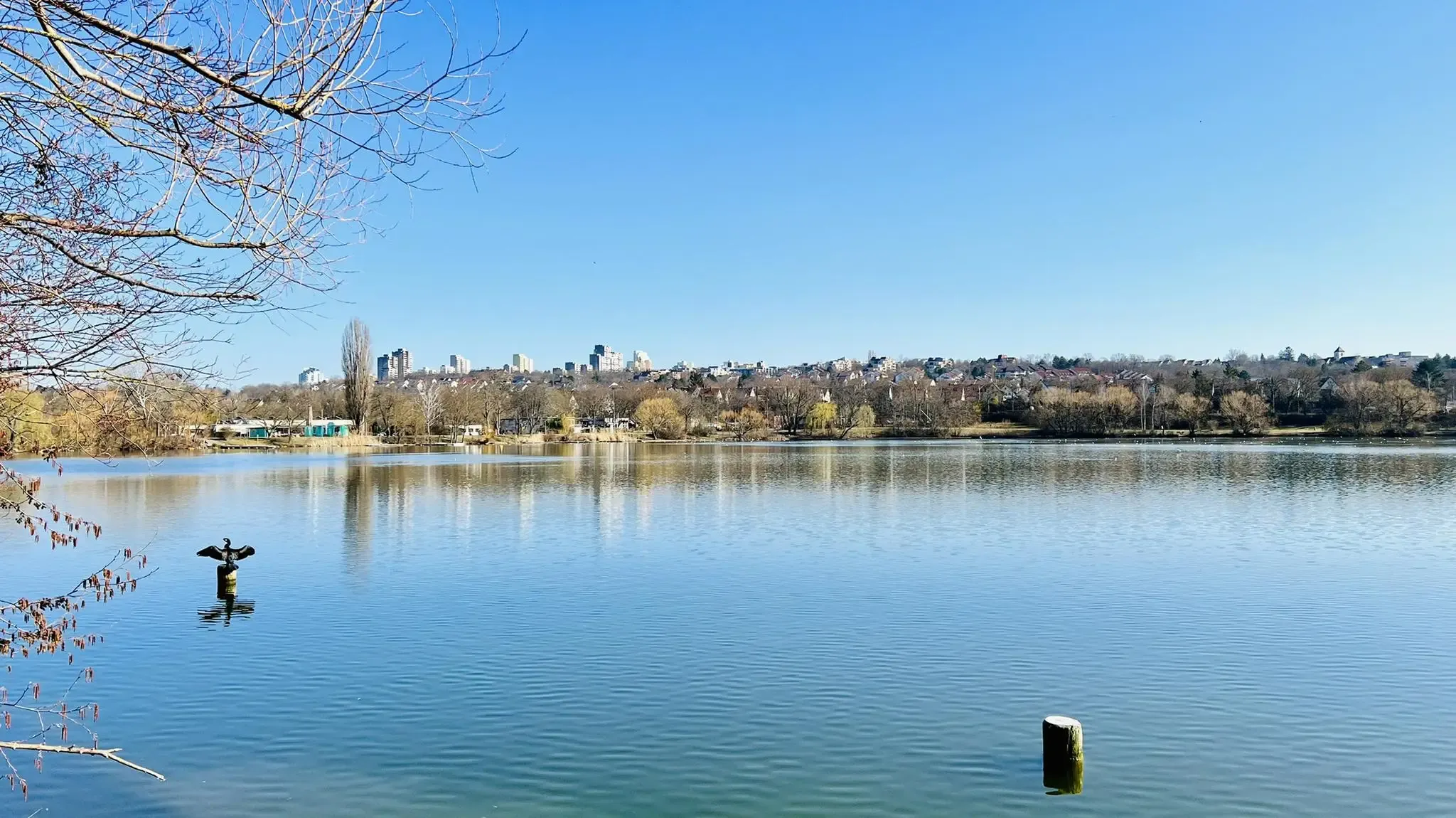
Bus station hiking trails around Max-Eyth-See navigate a landscape shaped by the tranquil Max-Eyth-See lake and the Neckar River. The area features expansive green spaces, surrounding forests, and distant vineyards, some with historic structures. The northwestern part of the lake is designated as a bird sanctuary, adding to the natural diversity.
Best bus station hiking trails around Max-Eyth-See
- The most popular bus station hiking route is Stuttgart-Hofen Vineyards – Steinhaldenfeld above-ground bunker loop from Mühlhausen, a 2.4 miles (3.8…
Last updated: June 29, 2026
2
hikers
Easy hike. Great for any fitness level. Easily-accessible paths. Suitable for all skill levels.
4
hikers
Easy hike. Great for any fitness level. Easily-accessible paths. Suitable for all skill levels.

Sign up for free
4.0
(2)
20
hikers
6.75km
01:47
60m
60m
Easy hike. Great for any fitness level. Easily-accessible paths. Suitable for all skill levels.
5.0
(2)
10
hikers
6.06km
01:42
120m
120m
Easy hike. Great for any fitness level. Easily-accessible paths. Suitable for all skill levels.
4.0
(2)
4
hikers
6.38km
01:43
80m
80m
Easy hike. Great for any fitness level. Easily-accessible paths. Suitable for all skill levels.
Get access to more routes and recommendations from other explorers.
Sign up for free
Already have an account?
Our route recommendations are based on thousands of hikes, rides, and runs completed by other people on komoot.
Start today with a free account
Your next adventure awaits.
Login or Signup
Popular around Max-Eyth-See


Tips from the Community

From 1728, the Palm'sche Schloss was the residence of the Barons von Palm. The castle dates back to a manor house built around 1595, which was rebuilt and expanded several times. The castle complex included outbuildings, stables, and kitchen gardens, as well as the well from 1735. Since 1990, the district town hall of the Mühlhausen district has been established here.
2
0
The ruin with the three wooden gates and the three vaults behind them, located at the foot of the Engelburg, was built as a tithe barn in 1732. The building, called "Fruchtkasten", served, among other things, as a receiving point for in-kind contributions. During the Second World War, women and men from Mühlhausen built a bunker system into the mountain from the cellar rooms for protection against air raids.
1
0
The "upper" church is about 200 years older than the Veitskapelle. Its year of construction is estimated at 1185/1187. Since the Reformation in Mühlhausen (1567), it was the Protestant village church until 1943. Today, parts of the walls of the nave and the bell tower (defense tower of the former castle) can still be seen.
2
0
The Veitskapelle is considered the most beautiful and artistically most significant church interior of the Middle Ages in Stuttgart and is an outstanding example of medieval sacral architecture and a gem of the late Gothic period. It was founded by the "venerable Reinhart von Mühlhausen", who came from the local nobility and later became a citizen of Prague. The foundation stone was laid in the year 1380. The purpose of the foundation, to read an eternal (daily) mass for the salvation of his soul and that of his older brother Eberhart, has been preserved beyond the Reformation in Mühlhausen in 1567. The rich furnishings of the chapel are among the most valuable in the region. It contains altars and wall paintings from the 14th and 15th centuries. In 1510, the current high altar (Ulm workshop) replaced the first high altar originating from Prague, with which the chapel was consecrated in 1385.
1
0
The Hofener Lourdes Grotto in Stuttgart-Hofen was consecrated on November 20, 1887, under the then parish priest Theophil Faßnacht. It is located in the Old Churchyard directly next to the historic pilgrimage church of St. Barbara, which is known for its famous "Stuttgart Madonna".
2
0
The Church of St. Barbara remains a place of attraction and a destination for many pilgrims from near and far to this day. It houses the miraculous image 'Our Lady of Stuttgart' on the left side altar, the Marian altar. This Gothic statue, dating from around 1500 and crafted by a master of the Ulm school, depicts Mary with her child Jesus. It was brought to Hofen on February 2, 1535, by Paul Korner, one of the last parish priests to remain faithful to his Catholic belief, from the Stuttgart Collegiate Church. Since then, in honor of the Virgin Mary, it has enjoyed unbroken high veneration in Hofen, especially during the Marian months of May and October.
2
0
It all started in December 1967, when the poplar was felled for the first boat - it all began at the children's home in Münster. Together with educator Peter Sonder (*1931, † 2016), young people carved the first wooden boat out of this poplar - a so-called dugout canoe. From 1967 to '69, they built the outrigger boat based on South Sea models. It was christened "Tigekadopemic", a compound name from the initial letters of the builders (Till, Gerd, Karl, Dorle, Peter, Michael, Claudio). The boat was launched for the first time in 1969. So that this and other boats would find a suitable home, the boathouse was built in 1971 at the Max-Eyth-See. The "Bootshausschuppen" (boathouse shed) was ceremoniously opened on July 10, 1971. New boats were added, old ones had to withstand the weather. They sailed, went kayaking and canoeing, and even back then, there was a weekly supervised, open paddling offer. The "Tigekadopemic" made its last tour in 1986 on the Max-Eyth-See. In addition to smaller outrigger boats, there were two sailing dinghies and surfboards at that time. These were made available then, as they are today, to children, young people, and institutions.
3
0
The former ferry house presumably dates from the early 19th century. Various flood marks can be found on the door frame. Directly by the former ferry house, there is a large information board about its history - for example, the royal chamber administration of Cannstatt leased the ferry boat for 85 guilders annually. The residents of Hofen, Mühlhausen, and Oeffingen probably paid for the crossing with fixed quantities of agricultural products. Others paid one to two Kreuzer. The poet Ludwig Uhland immortalized the ferry with "Auf der Überfahrt".
3
0
Frequently Asked Questions
How many bus station hiking trails are available around Max-Eyth-See?
There are over 590 hiking trails around Max-Eyth-See that are easily accessible from bus stations. The majority of these, more than 470, are rated as easy, making the area very welcoming for casual walkers and families.
What kind of landscapes can I expect on bus-accessible hikes near Max-Eyth-See?
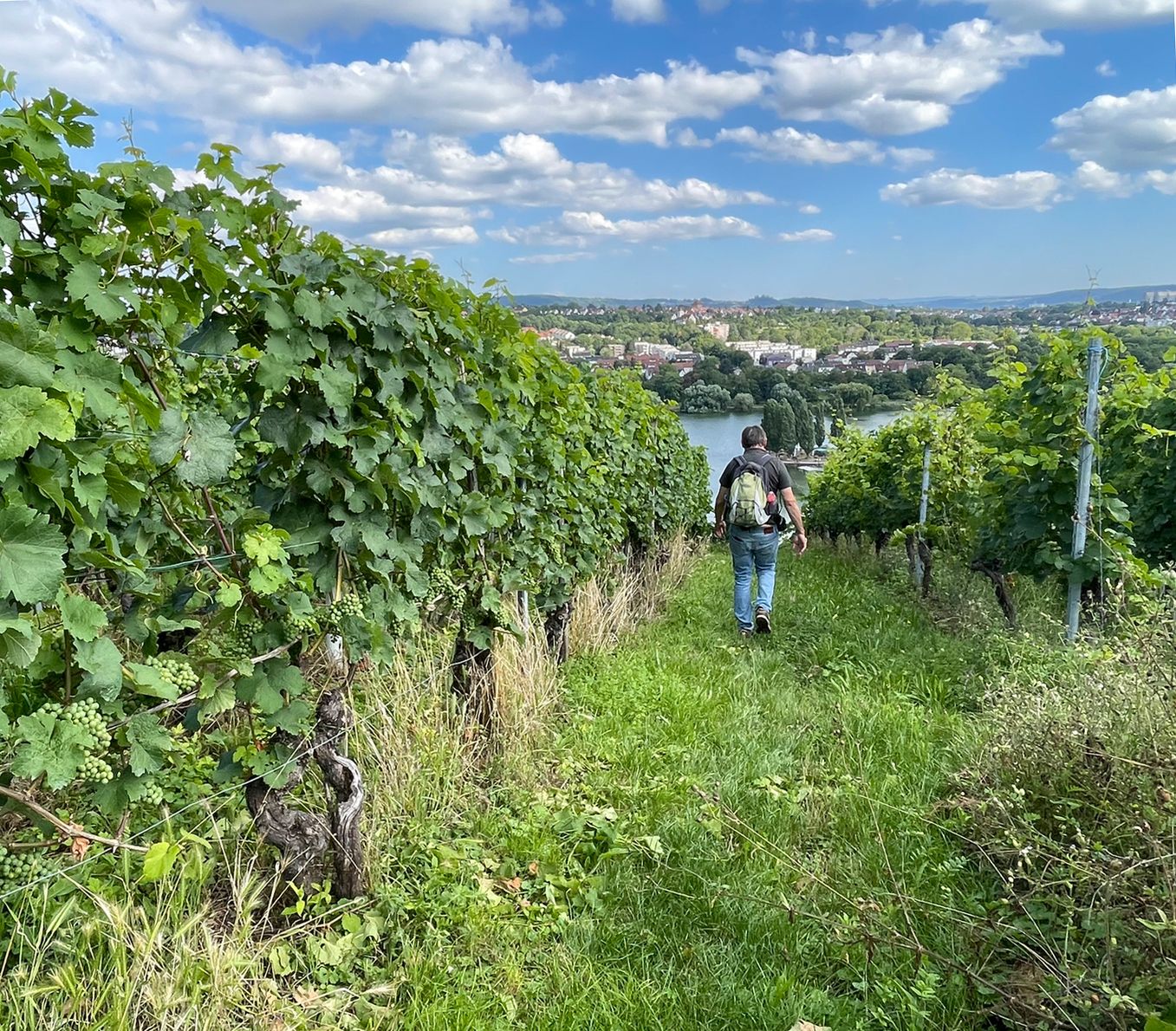
You'll experience a diverse range of landscapes. Many trails offer serene views of the Max-Eyth-See itself, often leading along its tranquil shores. You can also expect paths winding through expansive green areas, alongside the Neckar River, and even past distant vineyards with historic 'Wengerter-Häuschen'. The northwestern part of the lake is a designated bird sanctuary, adding a natural highlight.
Are there any family-friendly hiking routes accessible by bus around Max-Eyth-See?
Yes, Max-Eyth-See is very family-friendly. Most of the bus-accessible routes are rated as easy, with gentle elevations. The area offers playgrounds, sunbathing lawns, and opportunities for pedal boating, making it ideal for a day out with children. A route like the Max Eyth Footbridge – Max-Eyth Lake loop from Mühlhausen is a great option, offering pleasant lake views and easy terrain.
Can I bring my dog on these bus-accessible hiking trails?
Yes, the hiking trails around Max-Eyth-See are generally dog-friendly. The varied landscapes, from open green spaces to paths along the lake and river, provide plenty of interesting smells and sights for your canine companion. Always remember to keep your dog on a leash, especially in designated nature protection areas like the bird sanctuary, and to clean up after them.
Are there circular hiking routes that start and end near a bus station?
Absolutely. Many of the trails are designed as loops, allowing you to start and finish your hike conveniently at the same bus stop. For example, the Hiking loop from Mühlhausen is a great circular option, offering a pleasant walk without needing to retrace your steps.
What interesting landmarks or viewpoints can I find along these routes?
The area is rich in points of interest. You can enjoy a View of the vineyards on the Neckar, or relax at a Bench by the Max-Eyth-See dock with scenic lake views. History enthusiasts might be interested in the site of The Heidenschloss – Roman Estate at Max-Eyth-See. The trails often provide opportunities to observe local wildlife, especially in the bird sanctuary.
Are there any routes that pass through vineyards?
Yes, some trails offer glimpses of the region's viticulture. You can find routes that lead past distant vineyards above the Neckar River, some featuring historic 'Wengerter-Häuschen'. The Stuttgart-Hofen Vineyards – Steinhaldenfeld above-ground bunker loop from Mühlhausen is an excellent example, combining vineyard views with a touch of local history.
What is the best time of year to hike around Max-Eyth-See?
Max-Eyth-See is enjoyable year-round. Spring brings blooming nature, while summer allows for lake activities and sunbathing. Autumn offers beautiful foliage, especially around the vineyards. Even in winter, the tranquil lake and surrounding paths provide a peaceful escape, though some amenities might have reduced hours. The easy terrain makes it accessible in most conditions.
Are there places to eat or grab a snack near the bus-accessible trails?
Yes, the Max-Eyth-See area is well-equipped with amenities. You'll find shops and snack stalls, especially around the main lake area. For a more substantial meal, the Meeting Point Am See Beer Garden & Restaurant is a popular spot conveniently located near the lake.
What do other hikers enjoy most about the bus-accessible trails in Max-Eyth-See?
The komoot community highly rates the trails around Max-Eyth-See, with an average score of 4.5 stars from over 10,600 ratings. Hikers often praise the easy accessibility by public transport, the beautiful lake views, the well-maintained paths, and the peaceful atmosphere that makes it a perfect escape from the city. The variety of landscapes, from green spaces to vineyards, is also frequently highlighted.
Are there any longer, moderate hikes accessible by bus?
While many routes are easy, there are also moderate options for those looking for a bit more challenge, with over 120 such routes available. These might involve slightly longer distances or more varied terrain, often venturing further into the surrounding green spaces and along the Neckar. An example is the Tapach Valley Green Space – Schnarrenberg Weather Station loop from Mühlhausen, which offers a good distance and some elevation changes.
Most popular routes around Max-Eyth-See
Most popular attractions around Max-Eyth-See

Get inspired with the komoot mobile app


Explore more
Browse the best Hikes in other regions.
