The best city hikes and walks around Großer Bischofsweiher
4.5
(5673)
28,963
hikers
113
hikes
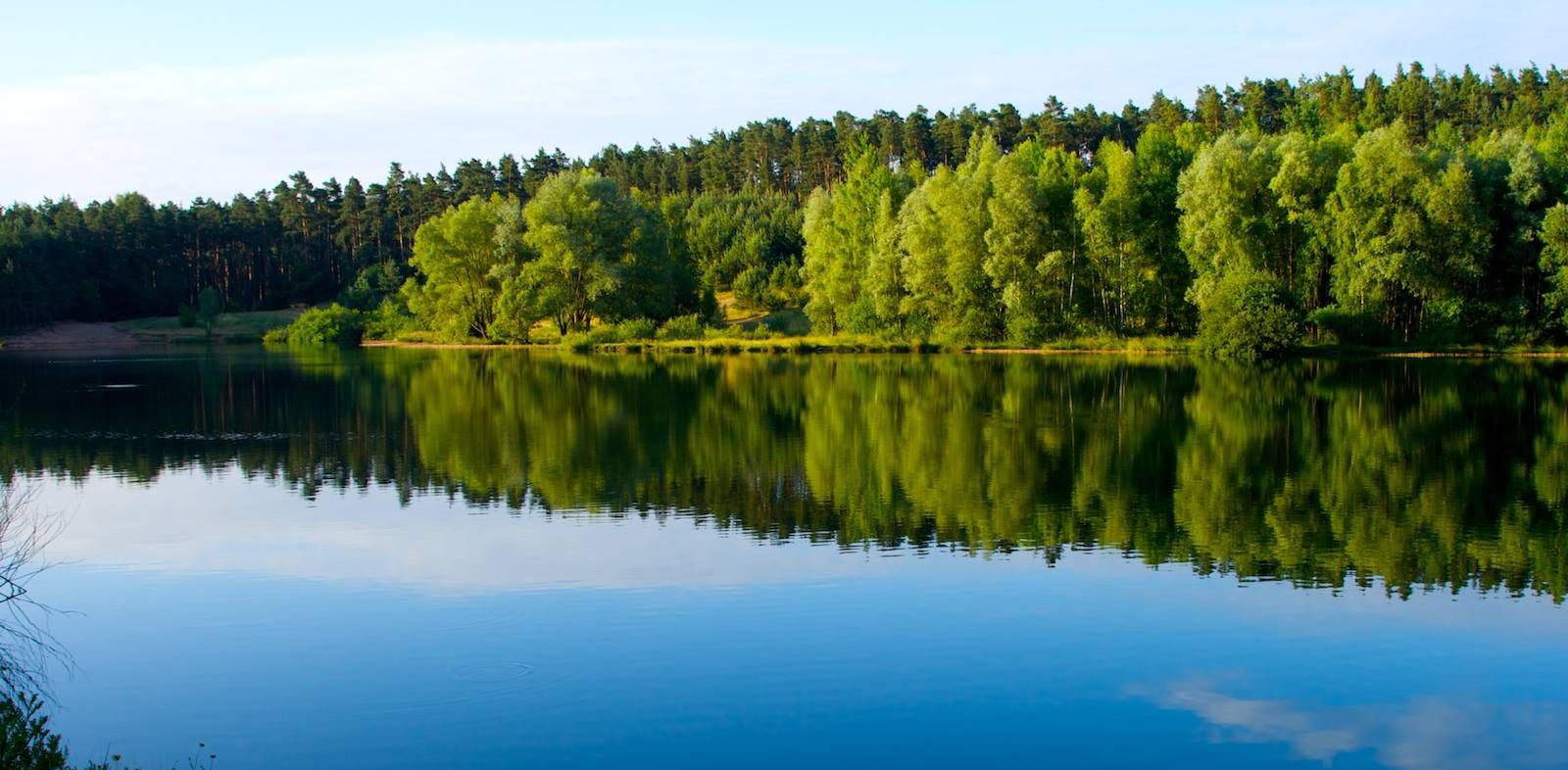
Urban hiking trails around Großer Bischofsweiher offer a diverse landscape centered on the large carp pond, part of a chain of approximately 60 such bodies of water. The area features well-maintained circular paths around the lake, providing continuous water views and accessible terrain. Hikers will find a mix of open water, reed belts, and adjacent forest areas, particularly in the quieter northern sections. The region is also designated as a landscape protection area, encompassing varied habitats including the Markwald forest…
Last updated: August 23, 2026
5.0
(1)
19
hikers
6.80km
01:44
20m
20m
Easy hike. Great for any fitness level. Easily-accessible paths. Suitable for all skill levels.
12
hikers
2.70km
00:42
10m
10m
Easy hike. Great for any fitness level. Easily-accessible paths. Suitable for all skill levels.

Sign up for free
4.8
(4)
99
hikers
4.04km
01:03
20m
20m
Easy hike. Great for any fitness level. Easily-accessible paths. Suitable for all skill levels.
4.3
(8)
22
hikers
6.37km
01:40
50m
50m
Easy hike. Great for any fitness level. Easily-accessible paths. Suitable for all skill levels.
4.3
(9)
34
hikers
5.61km
01:27
30m
30m
Easy hike. Great for any fitness level. Easily-accessible paths. Suitable for all skill levels.
Get access to more routes and recommendations from other explorers.
Sign up for free
Already have an account?
Our route recommendations are based on thousands of hikes, rides, and runs completed by other people on komoot.
Start today with a free account
Your next adventure awaits.
Login or Signup
Popular around Großer Bischofsweiher
Other adventures around Großer Bischofsweiher

Tips from the Community

Friedrich Wanderer created the design for the Paulibrunnen fountain in the late Renaissance style in 1889, which was then realized by Georg Leistner (sculptor), Christoph Lenz (bronze caster) and Georg Suter (stonemason). Two allegorical figures in ancient robes stand above the main basin: Erlangia with the signs of local industry and trade and Alma Mater with the symbols of science. In the center of the fountain, one can see relief portraits of the Margraves Christian Ernst and Alexander, as well as Prince Regent Luitpold of Bavaria.
3
0
The margravial palace, 65 meters wide and 21 meters high, with its palace garden, orangery, and Concordienkirche, was built from 1700 onwards in Erlangen as the first self-contained Baroque ensemble in Franconia, commissioned by Georg Wilhelm, Hereditary Prince of Brandenburg-Bayreuth and later Margrave of Bayreuth. Antonio della Porta and Jaques Bourdin de la Fond adopted the Baroque style under the influence of French Classicism. In 1703, Georg Wilhelm's father, Margrave Christian Ernst, bought the still unfinished palace to gift it to his third wife, Elisabeth Sophie. After Christian Ernst's death in 1712, it served as a widow's residence for Elisabeth Sophie, then for Sophia of Saxe-Weissenfels. In 1764, the widowed Margravine Sophie Caroline Marie moved into Erlangen Palace and lived there with her court of around 40 people for almost 50 years. She received numerous guests at the palace, including King Frederick William of Prussia twice. Erlangen society met at the palace: above all the professors, who presented their latest scientific findings to Sophie. In her will, the Margravine bequeathed the palace with its outbuildings to the university. Since 1945, it has served exclusively for the university administration.
3
0
The Bayreuth court sculptor Elias Räntz created the Huguenot Fountain in 1706. In an oval fountain basin stands a cone-shaped rocky mountain. On its lowest level, noble Huguenot families are depicted, above them ancient deities, and at the very top Margrave Christian Ernst. An opening in the rock cone allows a view through to the equestrian statue of the Margrave.
3
0

The Botanical Garden's outdoor area is located right next to the palace gardens – peaceful, green, and surprisingly diverse. Admission is free, but small donations are welcome. The garden is open from mid-April to September from 8:00 a.m. to 5:30 p.m., and from October to March until 4:00 p.m. Definitely worth a short visit.
0
0


With a great view of the skyscrapers, it is one of the most beautiful canal sections.
1
0
The Huguenot Fountain is an important monument in Erlangen, commemorating the history of the Huguenots in the city. It is located in the extensive palace gardens, one of the earliest Baroque gardens in Franconia. In the 17th century, after the revocation of the Edict of Nantes by Louis XIV in 1685, numerous Protestant Huguenots fled France. Margrave Christian Ernst of Brandenburg-Bayreuth offered them refuge in Erlangen. The Huguenot Fountain was designed and erected by Elias Räntz in 1706. It was intended to honor the settlement of the French religious refugees and the Margrave's achievements.
5
0

It's strange that you always have a headwind on the canal🤣
0
0
Frequently Asked Questions
How many urban hiking trails are available around Großer Bischofsweiher?
There are nearly 120 urban hiking trails in the Großer Bischofsweiher area, offering a wide variety of options for exploration. Most of these, over 100, are rated as easy, making them accessible for many hikers.
What is the typical terrain like on urban hikes around Großer Bischofsweiher?
The terrain around Großer Bischofsweiher is generally flat and well-maintained, featuring a mix of gravel paths, paved sections, and natural trails. The main circular path around the lake is largely accessible, though some sections can become muddy after rain. You'll find a blend of open water views, reed belts, and forest paths.
Are there any circular urban hiking routes in the area?
Yes, circular routes are a highlight of urban hiking around Großer Bischofsweiher. The most prominent is the path directly around the lake, which is about 3.8 to 4 kilometers long. For a slightly longer urban loop, consider the Pauli Fountain – Burgberg, Erlangen loop from Erlangen, which covers approximately 4 kilometers.
What can I see along the urban hiking trails around Großer Bischofsweiher?
Urban hikes around Großer Bischofsweiher offer diverse sights. You can enjoy continuous views of the water, observe rich birdlife in the designated European bird sanctuary, and explore adjacent forest areas like Markwald. Notable highlights include the Great Bishop's Pond itself and its tranquil North Shore, as well as the Dechsendorfer Pond.
Are the urban hiking trails around Großer Bischofsweiher suitable for families with children?
Absolutely! The urban hiking trails around Großer Bischofsweiher are very family-friendly. The paths are generally flat and well-maintained, making them suitable for all ages. The main circular path around the lake is even accessible for strollers and wheelchairs. There's also a playground near the main parking area for children to enjoy.
Can I bring my dog on the urban hiking trails?
Yes, the urban hiking trails around Großer Bischofsweiher are generally dog-friendly. Many visitors enjoy walking their dogs here. However, please remember to keep your dog on a leash, especially in protected areas and near wildlife habitats, and always clean up after your pet to maintain the natural beauty for everyone.
What is the best time of year for urban hiking around Großer Bischofsweiher?
Großer Bischofsweiher is accessible year-round, offering different charms with each season. Spring and autumn provide pleasant temperatures and beautiful natural colors, while summer allows for combining hikes with swimming or other water activities. Even in winter, the paths offer serene views, though they can be muddy after rain or snow.
Where can I park when visiting Großer Bischofsweiher for urban hikes?
There are parking facilities available, particularly near the main recreational areas of Großer Bischofsweiher. These parking spots often provide convenient access to the circular path around the lake and other trailheads.
Are there any cafes or places to eat near the urban hiking trails?
Yes, you'll find options for refreshments directly by the lake, including an inn and various beer gardens in the vicinity. These spots are perfect for a break before or after your urban hike.
What do other hikers enjoy most about urban hiking in Großer Bischofsweiher?
The area is highly rated by the komoot community, with an average score of 4.56 stars from over 5,000 ratings. Reviewers often praise the easy accessibility, the beautiful lake views, the diverse birdlife, and the overall peaceful atmosphere that makes it a perfect escape for urban hiking.
Are there any longer urban hiking routes that combine multiple points of interest?
For those seeking a longer urban hike, routes that encompass both the Großer Bischofsweiher and the adjacent Kleiner Bischofsweiher offer extended walking opportunities, with some routes reaching around 10 to 10.6 km. You could also explore the Burgberg, Erlangen – Erlangen Palace Garden loop from Erlangen for a 6.4 km urban adventure.
How can I reach Großer Bischofsweiher using public transport for urban hikes?
Großer Bischofsweiher is located north of Erlangen-Dechsendorf. Public transport options are available to reach the Erlangen area, from where local buses or a short walk can take you to the lake. It's advisable to check local bus schedules for the most current information on connections to Dechsendorf.
Most popular routes around Großer Bischofsweiher
Most popular attractions around Großer Bischofsweiher

Get inspired with the komoot mobile app


Explore more
Browse the best Hikes in other regions.
