Attractions and Places To See around Espai Natural de les Guilleries-Savassona - Top 20
Best attractions and places to see around Espai Natural de les Guilleries-Savassona include a diverse landscape of lush forests, dramatic cliffs, and significant cultural heritage. This protected area, spanning over 8,000 hectares, is characterized by its transition zone between Mediterranean and Pyrenean ecosystems, featuring various forest types. Key geographic features include the Sau Reservoir and the cliffs of Tavertet, alongside numerous historical sites such as Romanesque chapels and prehistoric remains. The region offers a blend of natural beauty and historical significance.
Best attractions and places to see around Espai Natural de les Guilleries-Savassona
- The most popular attractions is Church of Sant Romà de Sau (Submerged Bell Tower), a religious building that is part of the submerged town of San Román de Sau. Its bell tower is visible when the Sau Reservoir's water level is low and is recognized as the oldest standing in water globally.
- Another must-see spot is Sant Feliuet de Savassona Hermitage, a religious building located on a hill near the old Castle of Savassona. This hermitage, with its pre-Romanesque apse and medieval remains, offers views over the Ter river meander.
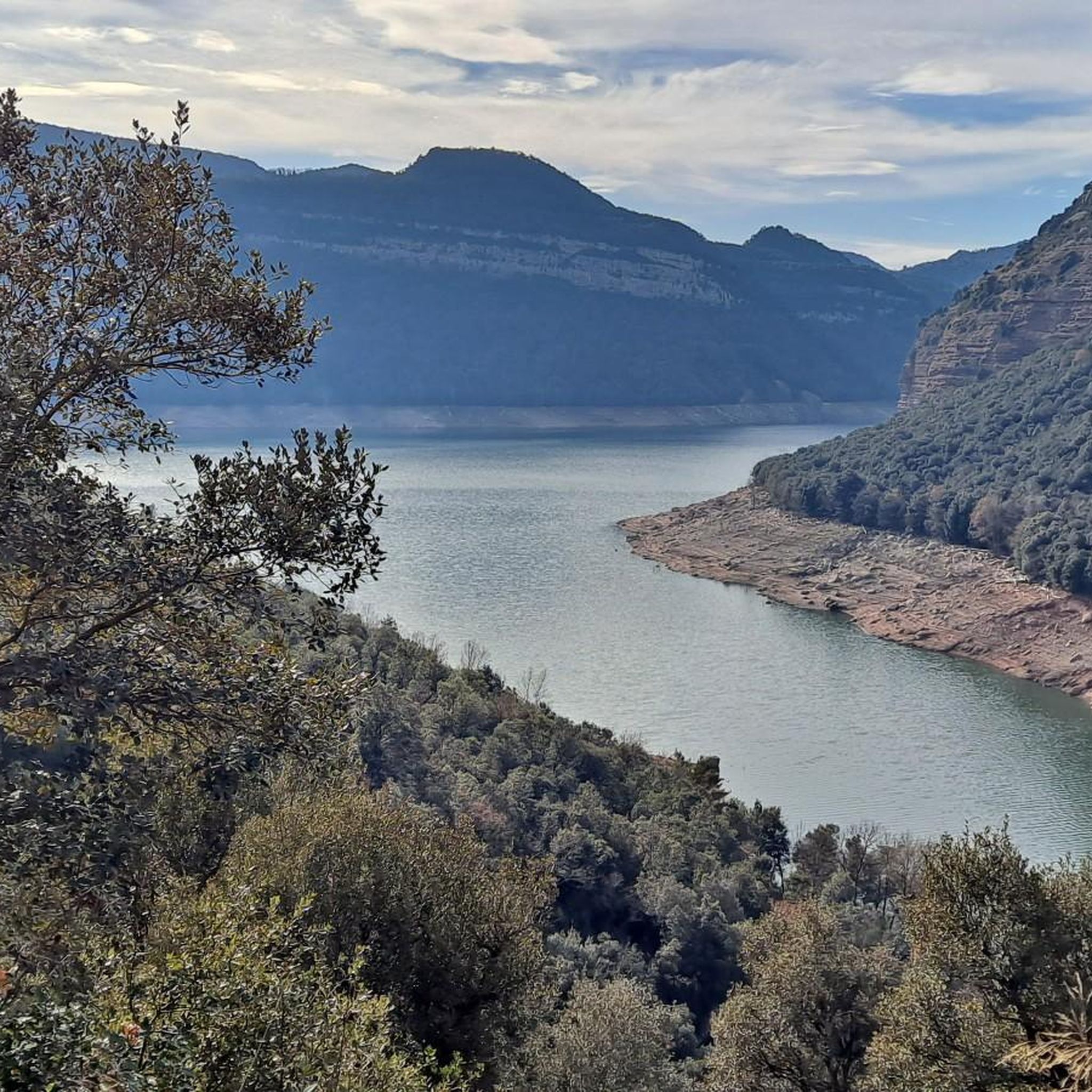
- Visitors also love Sau Dam, a hydraulic infrastructure on the Ter river. It is part of a system of three reservoirs and provides sweeping views of the turquoise reservoir framed by cliffs and forests.
- Espai Natural de les Guilleries-Savassona is known for its natural landmarks, historical sites, and religious buildings. The area offers a variety of attractions to see and explore, from ancient structures to significant natural features.
- The attractions around Espai Natural de les Guilleries-Savassona are appreciated by the komoot community, with more than 80 upvotes and 27 photos shared across the highlights.
Last updated: April 25, 2026
Church of Sant Romà de Sau (Submerged Bell Tower)
Highlight • Religious Site
It is part of a system of three reservoirs, together with those of Susqueda and Pasteral, which joins the counties of Osona and La Selva. The reservoir, inaugurated in 1962, covered the town of San Román de Sau, the remains of which, especially the bell tower of the temple, are visible when the water level is low and, even in times of prolonged drought, the town is left to the discovered and it is possible to visit it.
The church of the Sau swamp is registered as the oldest in the world that is preserved standing in the water. This is confirmed by a study promoted by the international entity for world record records Official World Record with the collaboration of a research group from the University of Barcelona in the year 2021.
Translated by Google •
Tip by

Sau Dam
Highlight • Lake
It is part of a system of three reservoirs, together with those of Susqueda and Pasteral, which joins the counties of Osona and La Selva. The reservoir, inaugurated in 1962, covered the town of San Román de Sau, the remains of which, especially the bell tower of the temple, are visible when the water level is low and, even in times of prolonged drought, the town is left to the discovered and it is possible to visit it.
The church of the Sau swamp is registered as the oldest in the world that is preserved standing in the water. [2] This is confirmed by a study promoted by the international entity of world record records Official World Record with the collaboration of a research group from the University of Barcelona in the year 2021.
Translated by Google •
Tip by
Sign up now to discover places like this
Get recommendations on the best single tracks, peaks, & plenty of other exciting outdoor places.
Sign up for free
Sant Feliuet de Savassona Hermitage
Highlight • Religious Site
The church was erected on the occasion of the repopulation in a place where there are signs of a very old population. This place begins to take on a more pronounced personality since it emerges from the Castle of Sant Llorenç that covered a wide territory. There is little historical news that refers to the chapel. The oldest is from 1037, when a certain Guifred donates some land in the parish of Sant Pere de Savassona and several instruments to the house of Sant Felio, later it was called Sant Felio de Roca according to a document from the year 1302 in which Pere Torrent, rector of Savassona, allocates some money to the worship of the chapel.
So from the pre-Romanesque building (apse), in the 11th century the nave had to be redone in order to make it more solid. In the 16th century, it was reformed and the western portal was built, and the southern one was temporarily cancelled.
It was later restored by the Vic Excursionist Centre, which restored it to its original appearance.
Anthropomorphic graves:
The remains found in Savassona testify to the existence of very remote habitats in this area, often taking advantage of the natural dens offered by the landscape.
These tombs and the apse of the pre-Romanesque church demonstrate the existence of a settlement prior to the 10th century. From this century the place of Savassona acquires a more pronounced personality, as it emerges from the jurisdiction of Sant Llorenç del Munt and becomes part of the heritage of the Viscounts of Osona. The settlement of the Lloc de Sant Felio, which in the 13th century was renamed Sant Felio de la Roca, continued, since in the 11th century the nave of the church was rebuilt to make it more solid and in the In the 16th century, it was reformed by adding a door to the west. Reform that shows us the existence of a nucleus of inhabitants, important given that the church of Sant Pere de Tavernolers is very close by and that if it were like that, it could have replaced it.
Translated by Google •
Tip by

Sant Esteve de Tavèrnoles Church
Highlight • Religious Site
It was built by the viscounts of Osona around 1069 in one of their fiefdoms and was recognized nine years later by the bishop of Vic to viscount Ramon Folc, who, when he died at the hands of the Saracens in 1086, gave it up together with the church of Sant Pere in Vigata canonical.
As the majority of churches in the region in the Baroque period were enlarged and transformed, so, as the inscription indicates, around 1728 it was raised, side chapels were built, one of which was abolished during the restoration and open the western portal. Despite everything, the Romanesque beauty of the temple can still be admired.
The first tombstone belongs to the tomb of Miquel Galles, rector of the parish of Tavernoles, who died on August 20, 1839.
The second corresponds to Jacinto Verdaguer, who died in 1868. It is probably Jacint Verdaguer i Ordeix, uncle and godfather of the poet from Folgueroles.
The other two tombstones correspond to the inhabitants of the neighboring houses: the Cos and the Ruquet.
Translated by Google •
Tip by
Pedra de les Bruixes Rock Engravings
Highlight • Historical Site
Translated by Google •
Tip by

Sign up for free to discover even more attractions around Espai Natural de les Guilleries-Savassona.
Sign up for free
Already have an account?
Start today with a free account
Your next adventure awaits.
Login or Signup
Popular around Espai Natural de les Guilleries-Savassona
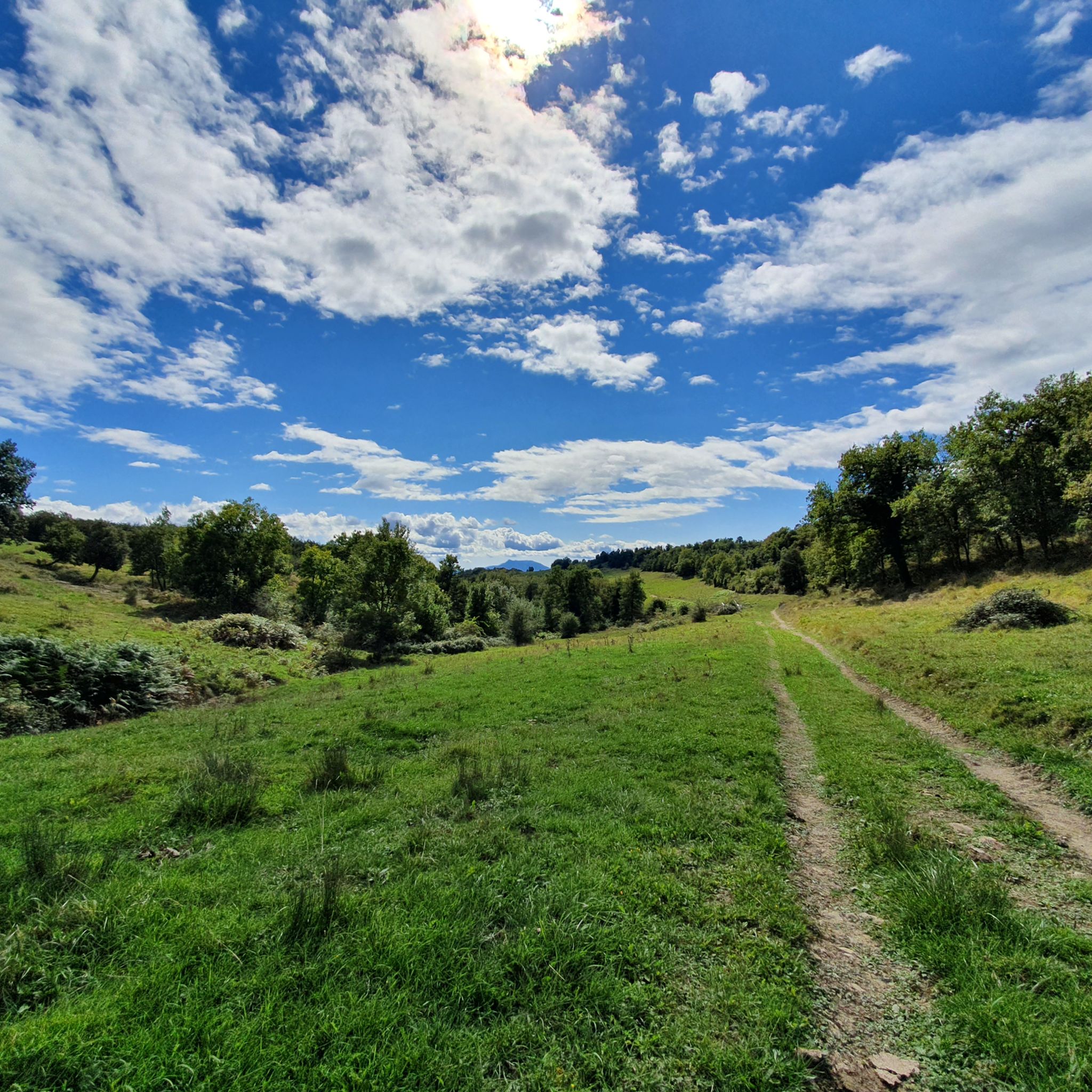
Hiking around Espai Natural de les Guilleries-Savassona
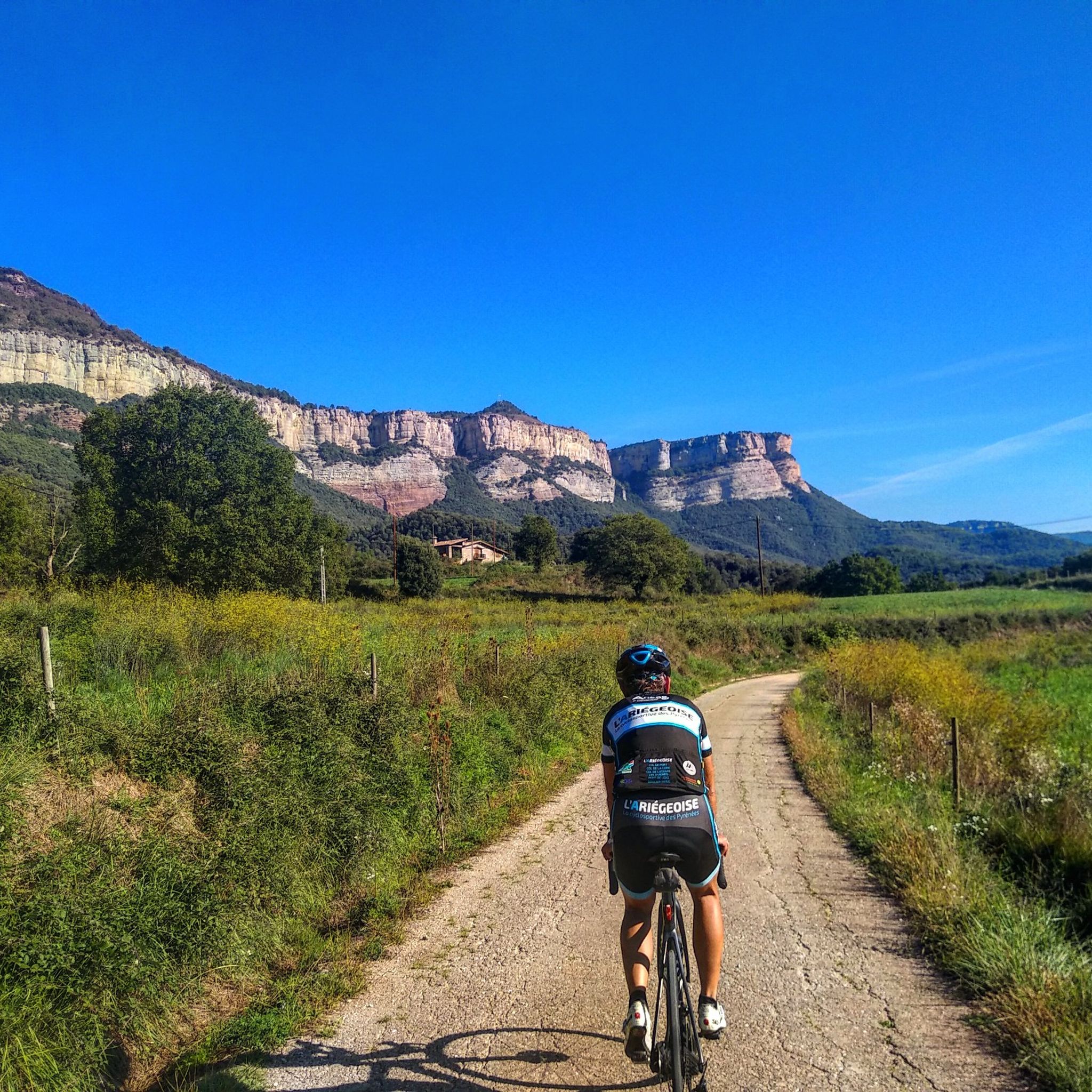
Road Cycling Routes around Espai Natural de les Guilleries-Savassona
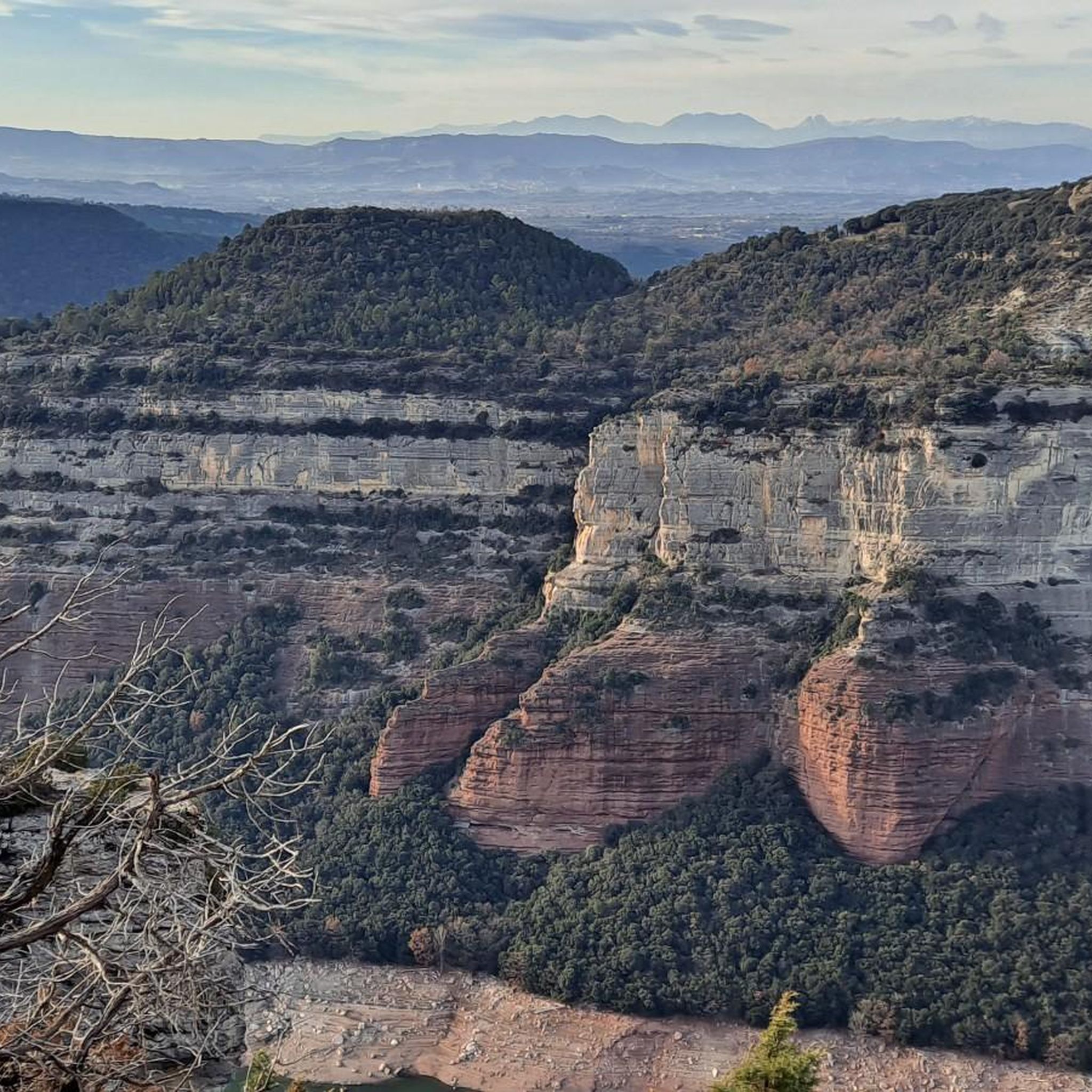
Cycling around Espai Natural de les Guilleries-Savassona
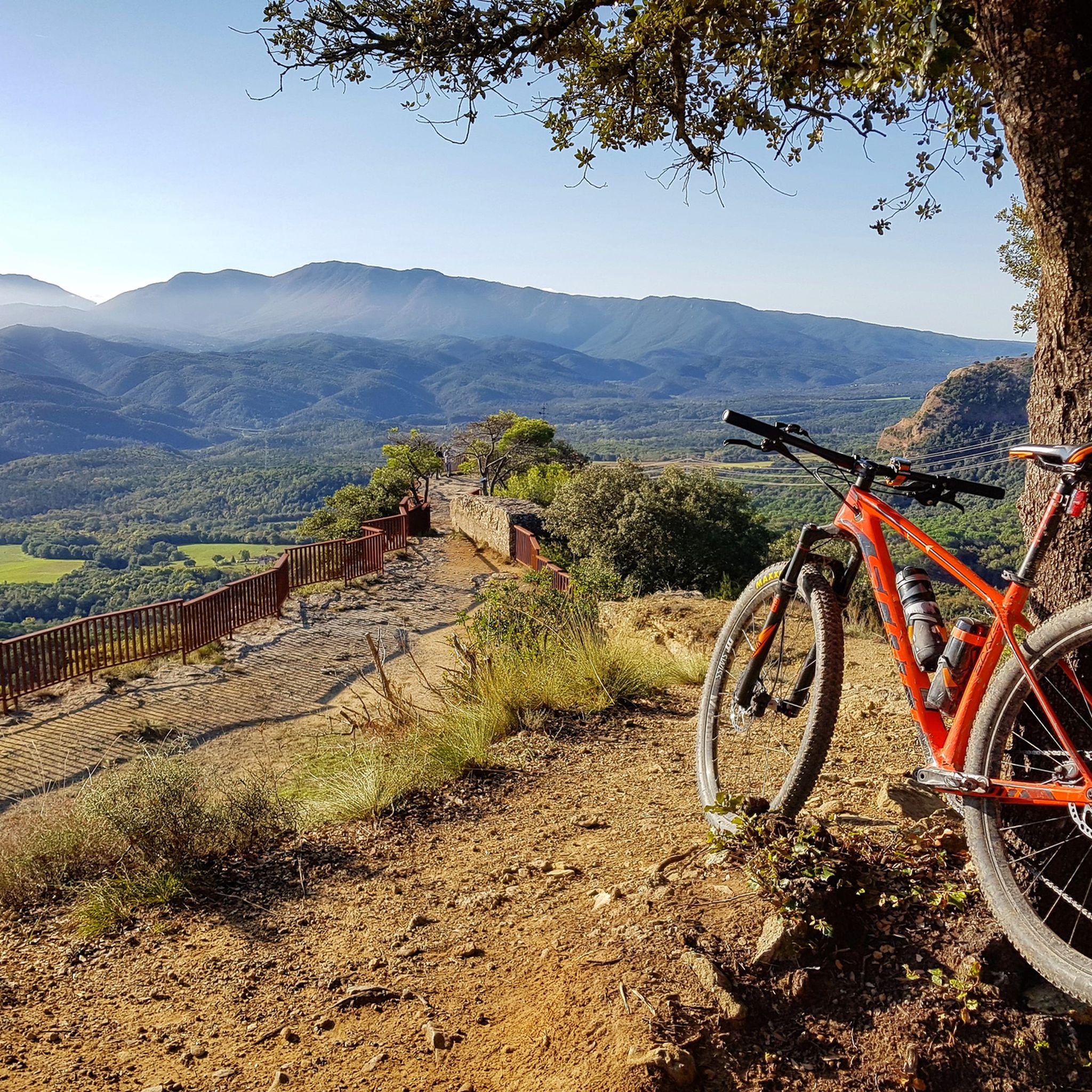
MTB Trails around Espai Natural de les Guilleries-Savassona
Running Trails around Espai Natural de les Guilleries-Savassona
Gravel biking around Espai Natural de les Guilleries-Savassona
Tips from the Community

Sau Dam Tip for Bikepackers When riding near the Pantà de Sau (Sau Reservoir), don’t miss stopping at the Sau Dam viewpoint. It’s a spectacular spot to catch your breath and take in the sweeping views of the turquoise reservoir framed by steep cliffs and lush forests. 🌊 If water levels are low, you might even spot the famous submerged bell tower of the old village of Sant Romà de Sau poking out of the water — a haunting and iconic sight that adds a unique story to your ride. 🛑 Keep in mind the area around the dam can be a bit steep and technical on gravel roads, so take it easy if you’re loaded up. 💡 Pro tip: Early morning or late afternoon light here is magical for photos and gives you cooler temperatures for climbing or descending.
1
0

Here you can see some impressive sunsets, with specially placed benches, to enjoy some views, and incredible sunsets 🤩
0
0

A great place even if the reason why this village reappears after 60 years is more than sad. Water shortage in Catalonia.
2
0
Amazing views of the Del Ter ravine
3
0

Itinerary through the Plan de Savassona that includes the Romanesque hermitage of Sant Feliu as well as medieval remains such as anthropomorphic tombs, medieval stairs, several engraved stones used for sacrifices and magical acts: The Dau, Stone of Sacrifices, Stone of the Witches, Stone of the 'Man. https://parcs.diba.cat/documents/75109/15894265/p02d067.pdf/9ed9c436-da7a-4c78-b59a-bab3ad98e942
0
0

It is a large stone with a central cleft that divides it into two halves, which has a great density and diversity of engravings. There are more than a hundred representations: fifty cruciform elements dominated by the Latin cross topped with small bowls at the ends; nine horseshoes; six casseroles; several circles; and other figures among which stand out two V-shaped, two 8-shaped, and three combinations of peculiar elements. The variety of motifs and techniques used do not allow defining a single meaning or a single chronology. The most frequent chronological attributions range from the Bronze Age to the medieval period.
1
1

The Stone of the Witches is a large natural stone with a large central crack that divides it into two halves. On this stone you can see a lot of medieval engravings - more than 50 crosses, 9 horseshoes, 6 bowls, various circles and other figures. According to legend, these marks were made by witches who were at odds with the Baron of Savassona. It seems that the Baron of Savassona was connected to the Inquisition and the witches wanted to send him a warning.
1
1

Is it gravel compatible?
1
1
Frequently Asked Questions
What natural landmarks can I explore in Espai Natural de les Guilleries-Savassona?
The region is rich in natural beauty. You can visit the iconic Sau Reservoir, a prominent hydraulic infrastructure on the Ter River, offering picturesque views. When water levels are low, the Church of Sant Romà de Sau (Submerged Bell Tower) becomes visible. The dramatic Cliffs of Tavertet and the dense forests of the Guilleries Massif are also significant natural features. For panoramic vistas, consider viewpoints like Munts, Puig del Far, or the Sanctuary of El Far.
Are there any historical or cultural sites to visit in the area?
Yes, the area boasts a rich historical and cultural heritage. You can explore well-preserved Romanesque chapels and churches, such as the Sant Feliuet de Savassona Hermitage, which offers views over the Ter river meander, and the Sant Esteve de Tavèrnoles Church, built around 1069. Prehistoric sites like the Puigseslloses Dolmen and the intriguing Pedra de les Bruixes Rock Engravings also offer a glimpse into the region's ancient past.
What outdoor activities can I do near these attractions?
Espai Natural de les Guilleries-Savassona is ideal for outdoor enthusiasts. You can enjoy hiking, climbing, and mountain biking on numerous marked trails. For specific routes, explore the guides for Hiking around Espai Natural de les Guilleries-Savassona, Cycling around Espai Natural de les Guilleries-Savassona, and Running Trails around Espai Natural de les Guilleries-Savassona.
Are there family-friendly attractions or activities in the Espai Natural de les Guilleries-Savassona?
Yes, the area offers options for families. The Can Mateu Itinerary is an easy and short route within the natural space, fully adapted for people with reduced mobility, providing views of the Sant Romà de Sau bell tower. Exploring the visible parts of the submerged village of San Román de Sau when the reservoir levels are low can also be a unique and engaging experience for all ages.
What are the best viewpoints in Espai Natural de les Guilleries-Savassona?
For breathtaking views, consider visiting the Munts and Puig del Far viewpoints, located in Tavèrnoles, which offer panoramic vistas from over 800 meters in altitude. The Sanctuary of El Far is another key point of interest known for its stunning outlooks. Additionally, the Sau Dam provides sweeping views of the turquoise reservoir framed by cliffs and forests.
What is the significance of the Sau Reservoir and its submerged church?
The Sau Reservoir is a major hydraulic infrastructure on the Ter River, part of a system of three reservoirs. It notably submerged the town of San Román de Sau in 1962. The remains of the town, particularly the bell tower of the Church of Sant Romà de Sau, become visible when water levels are low. This bell tower is recognized as the oldest standing in water globally, making it a unique and poignant sight.
What kind of forests can I expect to see in the natural park?
The Espai Natural de les Guilleries-Savassona is a transition zone between Mediterranean and Pyrenean ecosystems, resulting in a diverse range of forests. You can find lush forests of beech, oak, and holm oak, alongside riparian forests in the valley bottoms. This variety contributes to the rich biodiversity and scenic beauty of the area.
Are there any easy hiking trails suitable for beginners?
Yes, there are trails suitable for various skill levels. The Can Mateu Itinerary is an easy and accessible route. For other easy options, you can check the Hiking around Espai Natural de les Guilleries-Savassona guide, which includes routes like the 'Sant Feliuet de Savassona - return from Tavèrnoles' which is rated as easy.
What is the highest point in the Espai Natural de les Guilleries-Savassona?
The highest point within the natural space is Turó del Faig Verd, standing at 1,187 meters. It is located in Vilanova de Sau and offers a challenging yet rewarding destination for hikers seeking elevated views and a sense of accomplishment.
What do visitors enjoy most about the attractions around Espai Natural de les Guilleries-Savassona?
Visitors particularly appreciate the unique blend of natural beauty and historical intrigue. The sight of the submerged bell tower at the Church of Sant Romà de Sau is often highlighted as a memorable experience. The sweeping views from the Sau Dam and the serene atmosphere of historical sites like the Sant Feliuet de Savassona Hermitage are also highly valued by the komoot community.
Can I find Romanesque architecture in the region?
Absolutely. The region is renowned for its Romanesque heritage. Key examples include the Sant Esteve de Tavèrnoles Church, a well-preserved structure from around 1069, and the Sant Feliuet de Savassona Hermitage, which features a pre-Romanesque apse and medieval remains. These sites offer a deep dive into the architectural and historical past of the area.
Most popular routes around Espai Natural de les Guilleries-Savassona
Most popular attractions around Espai Natural de les Guilleries-Savassona

Get inspired with the komoot mobile app


Explore more
Still not found the Highlight you’re looking for? See guides of the top attractions in other regions:
