The best city hikes and walks in L'Aquila
4.5
(10461)
53,816
hikers
52
hikes
Urban hiking trails in L'Aquila offer a diverse range of paths within and around the city, providing opportunities to explore its historic center and surrounding green spaces. The terrain typically features gentle ascents and descents, characteristic of an urban environment, with routes often connecting significant landmarks and public areas. These trails navigate through city streets, parks, and along historical structures, showcasing the urban landscape.
Best urban hiking trails in L'Aquila
- The most popular urban hiking route is L'Aquila Historic Center Loop, a 3.2 miles (5.1 km) trail that takes 1 hour 28 minutes to complete, exploring the city's historical core.
- Another top favourite among local hikers is L'Aquila – Forte Spagnolo loop from L'Aquila, a moderate 5.5 miles (8.8 km) path. This route offers views of the city and includes the historic Forte Spagnolo.
- Local hikers also love the Fountain of the 99 Spouts – Fontana Luminosa loop from L'Aquila, a 5.7 miles (9.2 km) trail leading through urban landmarks, often completed in about 2 hours 36 minutes.
- Hiking in L'Aquila is defined by historic cityscapes, urban parks, and gentle inclines. The network offers options for different ability levels, from easy strolls to moderate urban explorations.
- The routes in L'Aquila are highly rated by the komoot community with an average score of 4.5 stars from over 8,900 reviews. More than 47,000 hikers have used komoot to explore L'Aquila's varied terrain.
Last updated: October 14, 2026
4.5
(2)
3
hikers
5.09km
01:29
140m
140m
Easy hike. Great for any fitness level. Easily-accessible paths. Suitable for all skill levels.
4.5
(14)
148
hikers
8.78km
02:26
150m
150m
Moderate hike. Good fitness required. Easily-accessible paths. Suitable for all skill levels.

5.0
(1)
60
hikers
2.76km
00:46
50m
50m
Easy hike. Great for any fitness level. Easily-accessible paths. Suitable for all skill levels.
5.0
(2)
37
hikers
3.32km
00:53
40m
40m
Easy hike. Great for any fitness level. Easily-accessible paths. Suitable for all skill levels.
5.0
(2)
34
hikers
3.27km
00:55
60m
60m
Easy hike. Great for any fitness level. Easily-accessible paths. Suitable for all skill levels.
Get access to more routes and recommendations from other explorers.
Already have an account?
Our route recommendations are based on thousands of hikes, rides, and runs completed by other people on komoot.
Start today with a free account
Your next adventure awaits.
Popular around L'Aquila

City hikes in Boschi Aquilani

City hikes around Parco naturale regionale Sirente-Velino

City hikes around Parco Nazionale della Majella
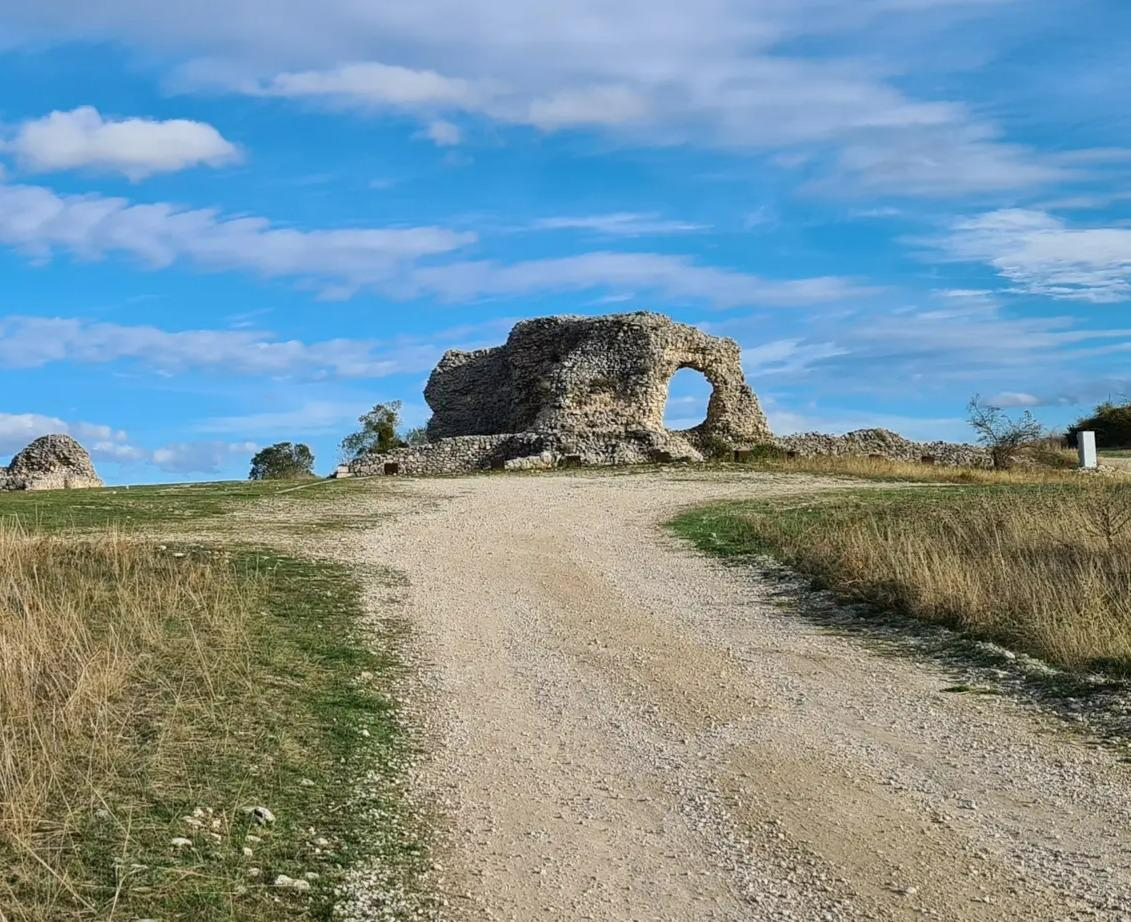
Tratturo Magno – On the roads of transhumance
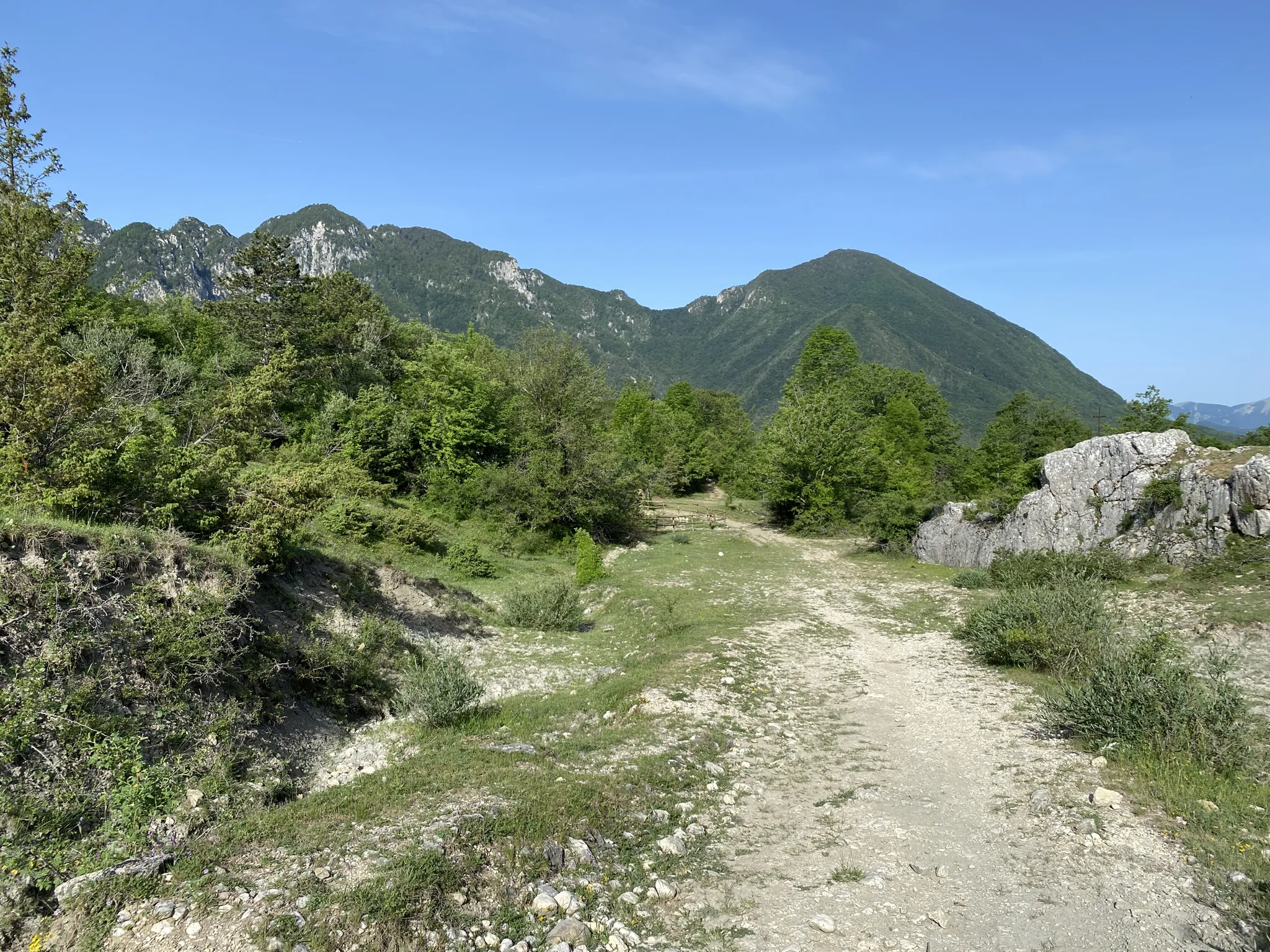
Hike along shepherds tracks in Italy – Via del Tratturo
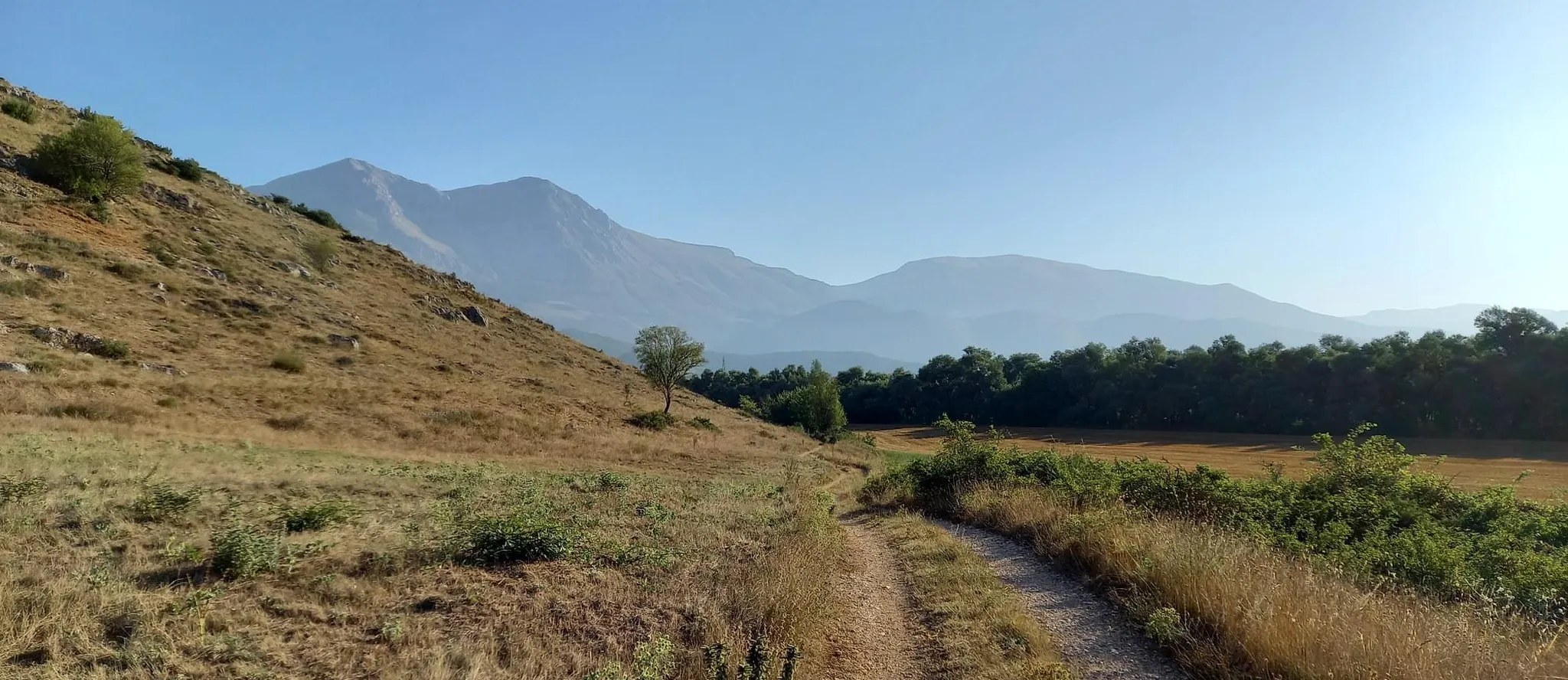
Hike from Rome to the Adriatic Sea – Way of St. Thomas
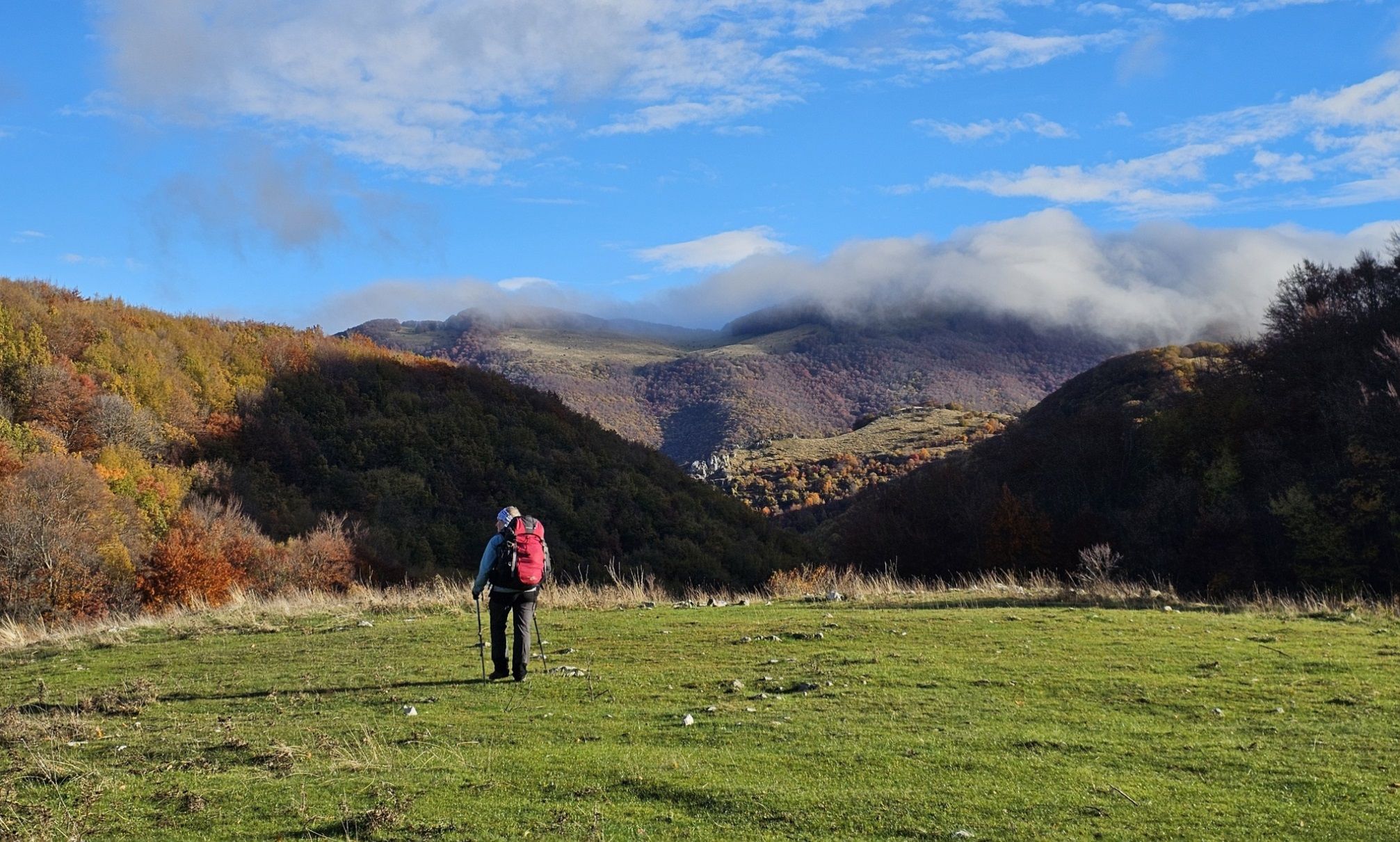
A colourful journey – hike in the Simbruini Mountains
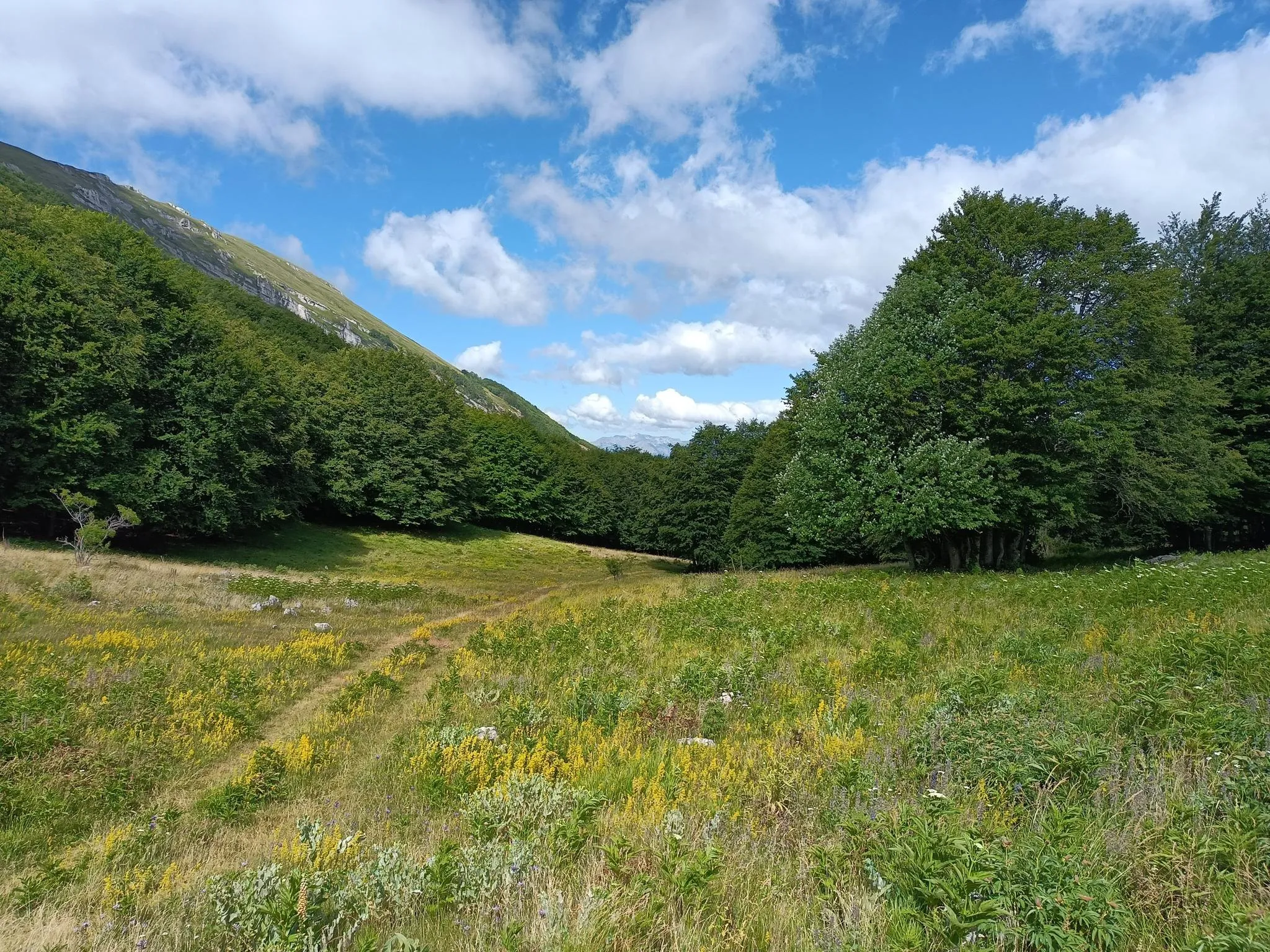
Natural Park Walk – part 4 from Accumoli to L'Aquila
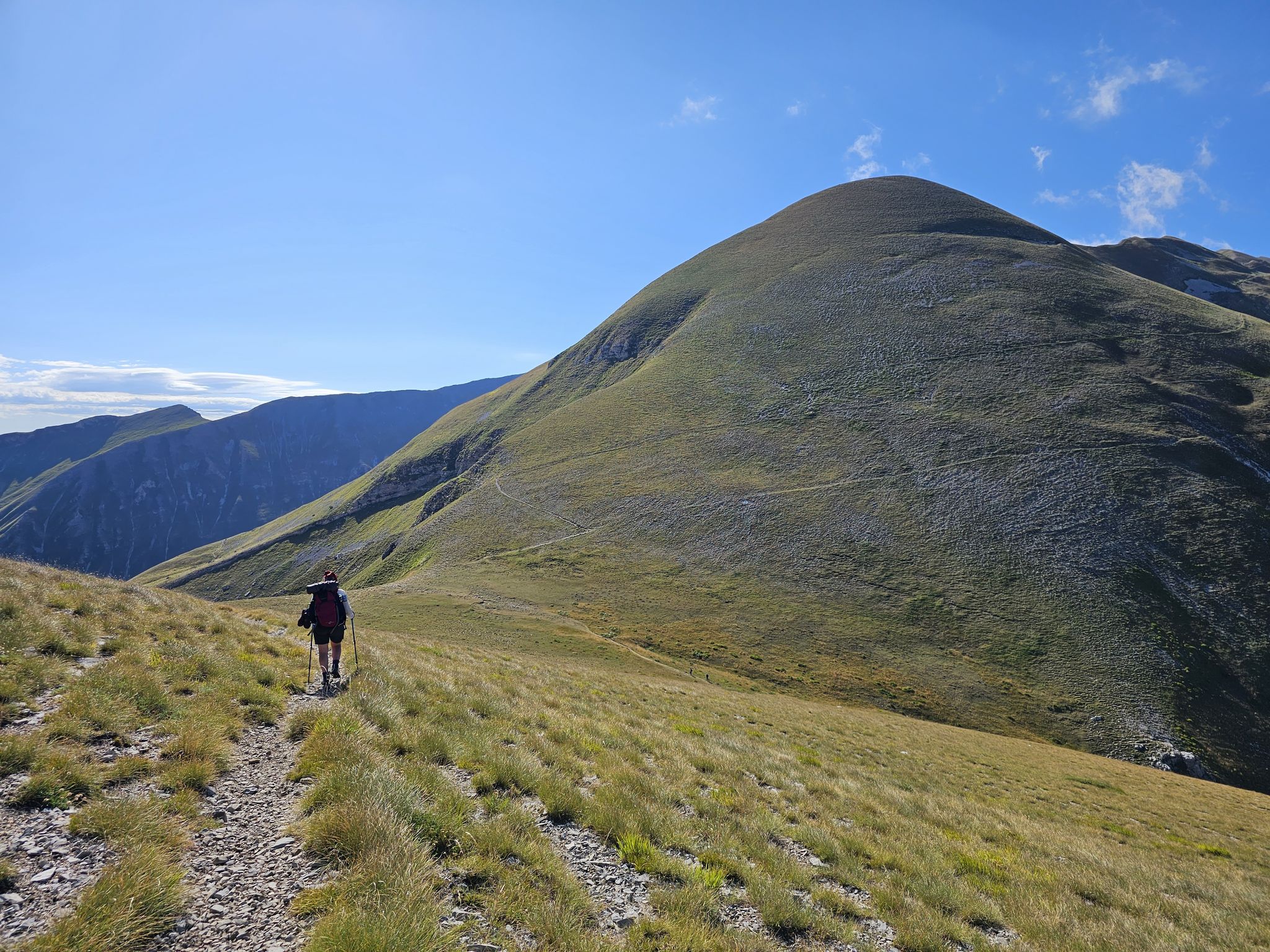
The Sibillini Mountains to Gran Sasso – the Great Apennine Crossing
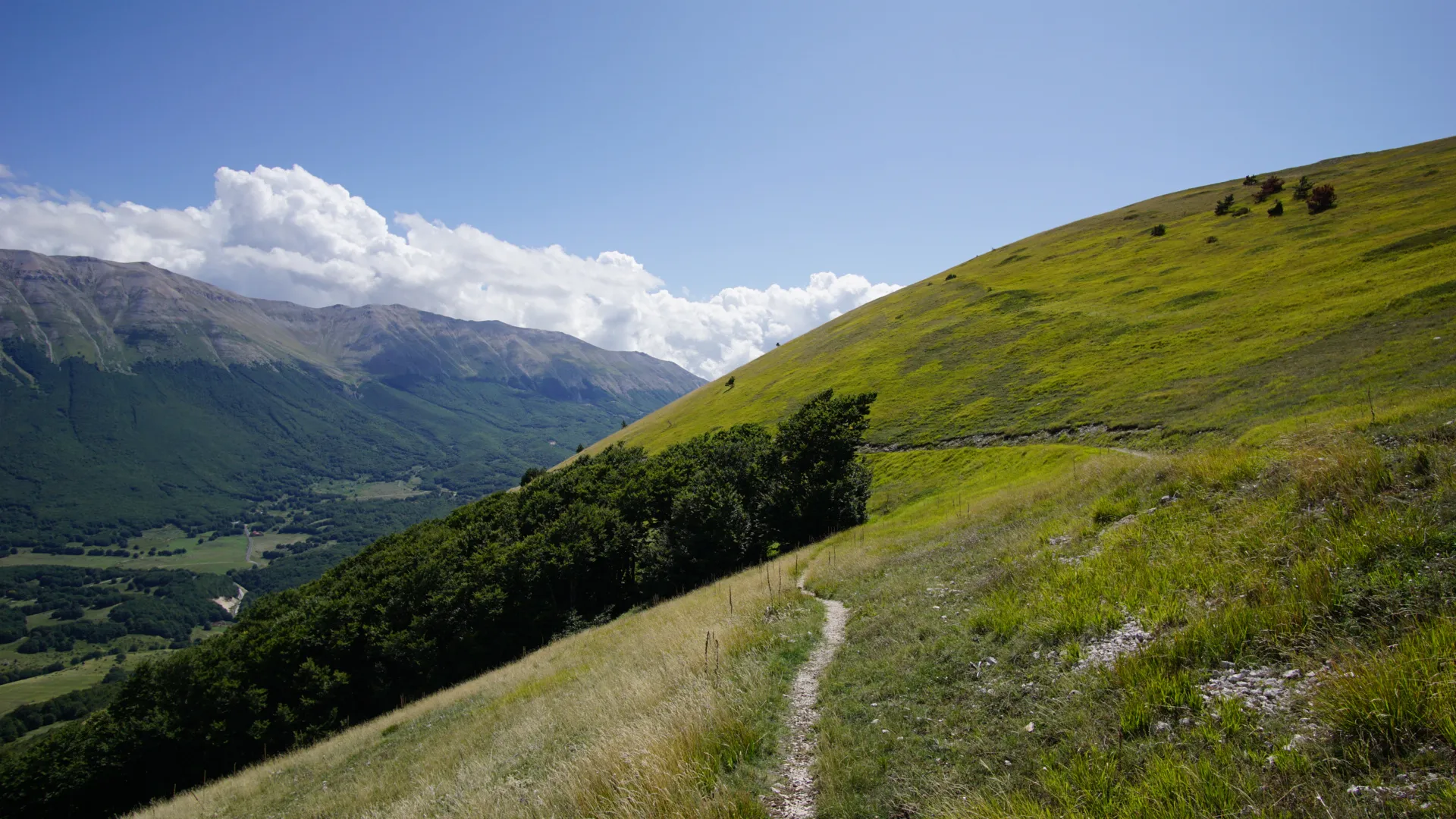
Exploring Italy’s Majella – Cammino di Celestino
Other adventures in L'Aquila


Tips from the Community

Historical tidbit: the pope who said 'no' The pontificate of Pope Celestine V lasted only five months. The simple hermit did not feel at all at home amidst the political intrigues and corruption of Rome. That is why he made a decision that was unprecedented at the time: he voluntarily resigned from his office to return to his humble life in the mountains. He thus became the first pope in history to abdicate of his own accord. After his death, his body was interred in the Basilica of Collemaggio. His impressive crystal mausoleum can still be admired there today. A special link with Pope Benedict XVI After the severe earthquake that struck L'Aquila in 2009, Pope Benedict XVI visited the heavily damaged basilica. At the tomb of Celestine V, he silently laid down his own pallium, the woolen shoulder band he had received at his papal inauguration. At that moment, it seemed like a subdued tribute to his predecessor. Only four years later did this gesture take on a deeper meaning. In 2013, Benedict XVI himself voluntarily resigned as pope, the first since the late Middle Ages. His symbolic tribute to Celestine V proved, in retrospect, to be a remarkable harbinger of his own historic decision. Thus, centuries after Celestine V's abdication, the Basilica of Collemaggio once again closed a special chapter in papal history.
5
0
The Basilica of Santa Maria di Collemaggio is undoubtedly the architectural and spiritual jewel of L'Aquila. Located at the end of an impressive green lawn just outside the city walls, this 13th-century church combines a unique Abruzzian Romanesque-Gothic style with a history that forever changed the Catholic Church. The history of the basilica is closely linked to Pietro da Morrone, a devout hermit who had retreated to the remote mountains of Abruzzo. According to tradition, the Virgin Mary appeared to him with the instruction to build a church on the hill of Collemaggio. Construction began in 1287. A few years later, in 1294, the Church found itself in a deep crisis. After the death of the pope, the cardinals had failed to elect a successor for more than two years. Finally, they appointed the simple hermit Pietro as a compromise. To everyone's surprise, he accepted the choice and was crowned Pope Celestine V in this basilica – and not in Rome. Shortly after his coronation, Celestine V issued the "Bulla del Perdono", a papal bull that granted believers full forgiveness of their sins if, with sincere repentance, they passed through the Holy Door (Porta Santa) of the basilica on August 28 or 29. This created the very first Holy Year or Jubilee in the history of the Catholic Church, six years before Rome introduced its own official jubilee. This special tradition, known as "La Perdonanza Celestiniana", is still celebrated every year and has been recognized as intangible cultural heritage by UNESCO.
5
0
In L'Aquila, a rich medieval past effortlessly merges with admirable modern resilience. The proud capital of Abruzzo rises in full glory and is best discovered on foot. Wandering through the atmospheric streets, you'll encounter one architectural treasure after another. For example, start at the iconic Fontana delle 99 Cannelle, where 99 mystical stone masks continuously spout water. Climbing further up, you'll reach the massive 16th-century Forte Spagnolo. From this impressive fortress, you can enjoy a sweeping view of the rugged, often snow-capped peaks of the Gran Sasso massif. The city's rich history is also palpable in the many beautifully restored palazzi and churches. For instance, the Basilica di San Bernardino overwhelms every visitor with a breathtaking baroque ceiling adorned with gold leaf. After all the cultural immersion, lively squares like Piazza del Duomo invite you for a well-deserved break. It's the perfect place to enjoy the local cuisine and a good glass of Abruzzese wine at an outdoor cafe. As a grand finale, the Basilica di Santa Maria di Collemaggio should not be missed. This striking, pink-and-white checkered church houses a true world first: the very first Holy Door in the world. Thanks to the central, free parking facilities just outside the city walls, this compact art city is the ideal destination for a carefree and inspiring cultural walking holiday.
4
0
Palazzo Ardinghelli – where baroque and modern art meet Palazzo Ardinghelli is one of L'Aquila's most beautiful baroque palaces and tells the impressive story of the city itself. It was built after the devastating earthquake of 1703 and grew into an architectural masterpiece, with its monumental baroque staircase and the magnificent frescoes by Vincenzo Damini as the focal point. After the severe earthquake of 2009, the palace seemed lost, but thanks to a restoration funded by the Russian government, it was given new life. Since 2021, it has housed MAXXI L'Aquila, a branch of the national museum of contemporary art. Inside, contemporary art installations create a surprising contrast with the richly decorated 18th-century halls. The visit to this palace is absolutely worthwhile for the splendid staircase, the restored frescoes, and the special combination of historical architecture and modern art alone.
4
0
The Forte Spagnolo (also known as Castello Cinquecentesco) is one of the most impressive 16th-century military strongholds of Central and Southern Italy. Although it is a defensive work, its true historical significance lies in the fact that it was never built to protect the city, but rather to suppress it. After the Spanish threat diminished over time, the complex successively served as the residence of the Spanish governor, barracks for French troops in the 19th century, and headquarters for the German occupier during World War II. In 1902, it was officially declared a national monument. Shortly after World War II, it became the home of the National Museum of Abruzzo (MuNDA). Since the devastating earthquake of 2009, the fort has been undergoing a lengthy and complex restoration, but it remains one of the most impressive symbols of the city when viewed from the outside.
4
0
The Fontana del Nettuno (Neptune Fountain) on the atmospheric Piazza Regina Margherita is one of the most elegant, monumental fountains in the historic center of L'Aquila. Although the monument has a clear classical appearance, the fountain dates from the end of the 19th century. The fountain was completed in January 1881. Its construction was part of an extensive urban modernization project at the end of the 19th century. After Italy became unified, the city council of L'Aquila wanted to give the axis around Corso Vittorio Emanuele II a stately and European appearance. A new square was created, dedicated to the popular Italian queen Margherita of Savoy (Regina Margherita). As a monumental centerpiece and eye-catcher of this new square, the Neptune Fountain was built against the facade of an existing palace. The historical and technical fact: "Fake" bronzeThe most fun and surprising fact about this fountain lies in the material of the statue itself. Anyone standing in front of the fountain sees an imposing, dark green God of the Sea rising from a large mussel shell, leaning firmly on his trident.Although the statue looks like a heavy, precious antique bronze artwork at first glance, it is actually made of painted terracotta (baked clay). Because the city at the time preferred a quick and budget-friendly beautification of the square, a skilled imitation technique was chosen. The clay was painted with special green pigments to mimic patinated bronze. Only the internal supporting structure of the trident is made of iron.
4
0
From this viewpoint, you can enjoy a magnificent panorama of the impressive Gran Sasso massif. Here stands the monument to Francesco De Marchi, the pioneer who was the first to climb the highest peak of the Apennines in 1573 and, a day later, also carried out the first documented speleological exploration. An ideal place to rest for a while, enjoy the view, and reflect on a special piece of Italian mountaineering history.
4
0
The Auditorium del Parco in L'Aquila was designed by the world-renowned Italian architect Renzo Piano and officially opened in October 2012. The striking building is located in the park right next to the Spanish Fort (Forte Spagnolo). Musical lifeline: The primary function of the auditorium was to immediately give back a concert hall and a cultural meeting place to the city. The original concert hall in the Forte Spagnolo had been severely damaged and rendered unusable by the 2009 earthquake.Capacity: The complex consists of three interconnected wooden cubes. The largest, central cube houses a concert hall with 238 seats and a stage that can accommodate an orchestra of up to 40 musicians. The two flanking cubes function as a foyer and dressing rooms. : The three cubes stand at strange, oblique angles to each other. The architect wanted to create the illusion of three dice thrown randomly on the grass, providing a playful contrast to the strict, perpendicular Spanish Fort next to it.
4
0
Frequently Asked Questions
How many urban hiking trails are available in L'Aquila?
There are nearly 40 urban hiking trails in L'Aquila, offering a variety of experiences within and around the city. Most of these, about 36, are rated as easy, making them accessible for many hikers.
What kind of terrain can I expect on L'Aquila's urban hikes?
L'Aquila's urban hikes generally feature gentle ascents and descents, navigating through the city's historic center and surrounding areas. You'll encounter paved paths, cobblestone streets, and some unpaved sections, providing a mix of urban exploration and natural elements.
Are there any circular urban hiking routes in L'Aquila?
Yes, many urban routes in L'Aquila are circular, allowing you to start and end at the same point. An example is the L'Aquila Historic Center Loop, which takes you through the heart of the city.
What are some notable landmarks or points of interest to see on urban hikes in L'Aquila?
Urban hikes in L'Aquila often pass by significant historical and cultural sites. You can explore the impressive Forte Spagnolo, the beautiful Fountain of the 99 Spouts, and the modern Fontana Luminosa. Routes like the L'Aquila – Forte Spagnolo loop or the Fountain of the 99 Spouts – Fontana Luminosa loop are great for discovering these attractions.
What do other hikers enjoy most about urban hiking in L'Aquila?
The komoot community highly rates urban hiking in L'Aquila, with an average score of 4.5 stars. Hikers often praise the blend of historical architecture with accessible paths, the charming atmosphere of the city, and the opportunity to discover hidden gems within the urban landscape.
Are L'Aquila's urban hiking trails suitable for families with children?
Many of L'Aquila's urban trails are considered easy and are suitable for families. The relatively short distances and minimal elevation changes make them enjoyable for all ages. Consider routes like the Fontana Luminosa – Old Fountain loop for a pleasant family outing.
Can I bring my dog on urban hikes in L'Aquila?
Yes, dogs are generally welcome on L'Aquila's urban hiking trails, provided they are kept on a leash and you clean up after them. The city's parks and pedestrian areas offer pleasant environments for walks with your canine companion.
Where can I find parking for urban hikes in L'Aquila?
L'Aquila offers various parking options around its city center, including paid parking lots and street parking. It's advisable to check local signage for specific regulations and availability, especially during peak times.
What is the best season for urban hiking in L'Aquila?
Spring and autumn are ideal for urban hiking in L'Aquila, offering pleasant temperatures and beautiful scenery. Summer can be warm, but early mornings or late afternoons are still enjoyable. Winter hikes are possible, but be prepared for cooler temperatures and potentially icy conditions on some paths.
Are there cafes or places to eat near the urban hiking trails?
Absolutely. As you hike through L'Aquila's city center, you'll find numerous cafes, restaurants, and bars where you can stop for a refreshment or a meal. The historic areas are particularly well-equipped with dining options to enhance your hiking experience.
What is the typical duration and distance of urban hikes in L'Aquila?
Urban hikes in L'Aquila vary in length, with many easy routes ranging from 2 to 5 kilometers, taking about 1 to 2 hours to complete. Moderate routes can extend up to 9 kilometers, requiring around 2 to 3 hours. For example, the Forte Spagnolo – L'Aquila loop is an easy 3 km walk, while the Fountain of the 99 Spouts – Fontana Luminosa loop is a moderate 9.2 km option.
Most popular routes in L'Aquila
Most popular attractions in L'Aquila

Get inspired with the komoot mobile app


Didn’t find what you were looking for?
Check out more Hikes throughout L'Aquila below and find the perfect route in your destination.
