The best traffic-free bike rides around Haldensleben
4.4
(559)
1,624
riders
88
rides
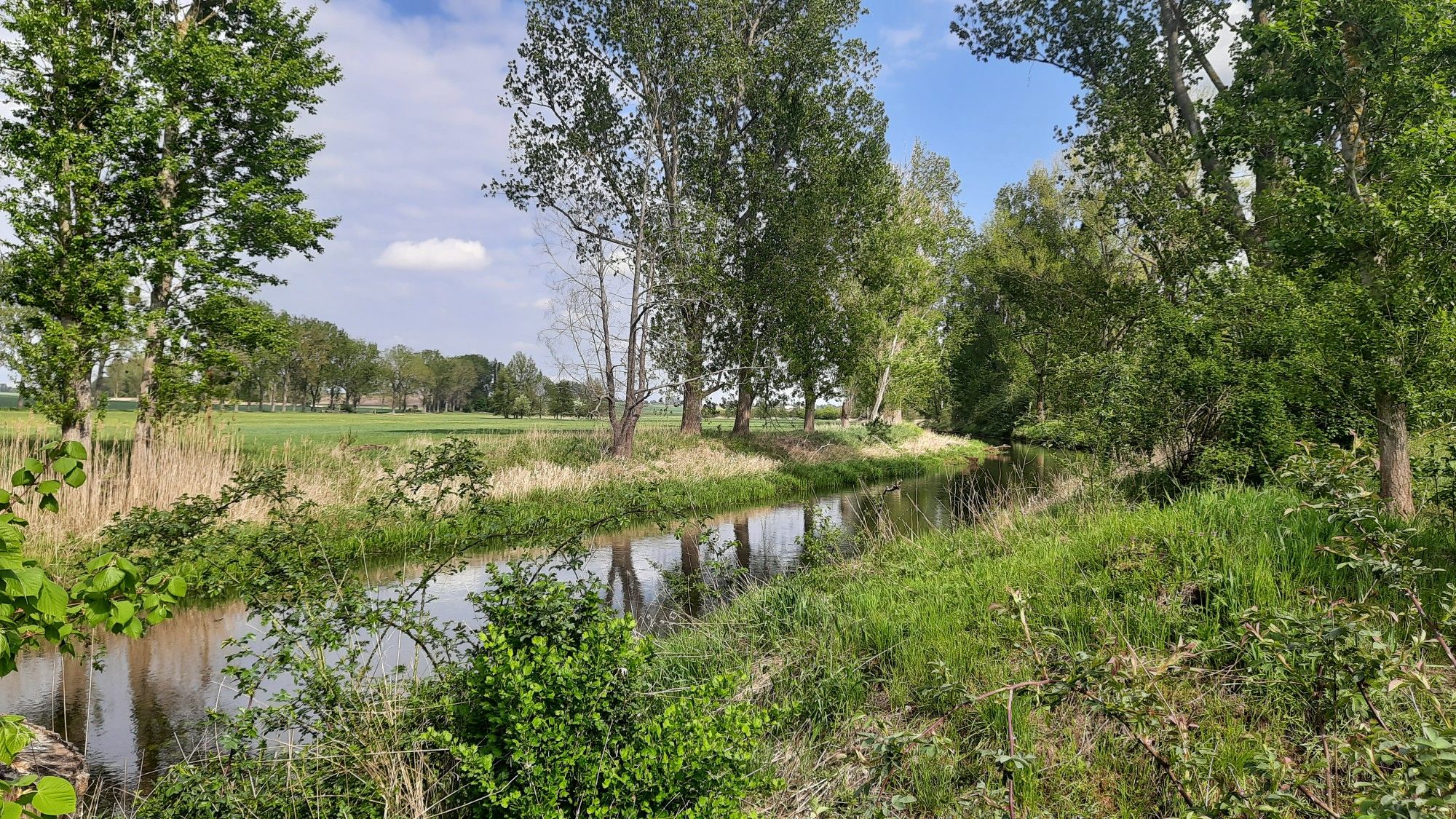
No traffic touring cycling routes around Haldensleben traverse a diverse landscape featuring the flat expanses of the Ohre lowlands, sections of the Haldensleben Forest, and paths alongside the Mittelland Canal. The terrain generally presents mild elevation changes, making it accessible for various fitness levels. Cyclists can explore agricultural fields, forested areas, and waterways, with some routes offering gentle ascents and descents.
Best no traffic touring cycling routes around Haldensleben
- The most popular no traffic touring cycling route is Waldsee Zernitz…
Last updated: August 21, 2026
4.7
(27)
57
riders
25.5km
01:44
110m
110m
Easy bike ride. Great for any fitness level. Mostly paved surfaces. Suitable for all skill levels.
4.5
(32)
85
riders
Moderate bike ride. Good fitness required. Mostly paved surfaces. Suitable for all skill levels.

Sign up for free
4.3
(35)
115
riders
45.6km
02:52
80m
80m
Moderate bike ride. Good fitness required. Mostly paved surfaces. Suitable for all skill levels.
4.2
(21)
61
riders
Easy bike ride. Great for any fitness level. Mostly paved surfaces. Suitable for all skill levels.
4.2
(41)
41
riders
Easy bike ride. Great for any fitness level. Mostly paved surfaces. Suitable for all skill levels.
Get access to more routes and recommendations from other explorers.
Sign up for free
Already have an account?
Our route recommendations are based on thousands of hikes, rides, and runs completed by other people on komoot.
Start today with a free account
Your next adventure awaits.
Login or Signup

Other adventures around Haldensleben

Tips from the Community

The development of water transport technology becomes clear during a visit to the historic Rothensee ship lift. In 1938, the ship lift was put into operation. Leipzig designers opted at the time for a principle that had not yet been practically applied anywhere for a structure of this magnitude: A lift whose trough rested on two movable floats. With the help of the water-filled trough, which together with the two floats and the support structures has a total weight of around 5,400 tons, ships could thus "descend" from the Mittellandkanal and towards the Elbe. Depending on the water level of the Elbe, a gradient between 11 and 18 meters is compensated. With a trough length of 85 meters, a width of 12 meters, and a water depth in the trough of 2.5 meters, the dimensions are, however, too small for today's large motor cargo ships. For this reason, the ship lift was decommissioned in 2006. Since then, the state capital Magdeburg, supported by various stakeholders and with broad public approval, has been committed to its seasonal continued operation. With success: Since the summer of 2013, the ship lift has been seasonally operated again for tourist purposes. The ship lift in Magdeburg-Rothensee is a unique monument due to its technology and history. It is a brilliant design, its construction was an engineering masterpiece. It is the second oldest of only four ship lifts still in operation in Germany and the only two-float ship lift in Germany still in operation. A visit is worthwhile for this reason alone, as the immediate proximity of the state-of-the-art Sparschleuse to the ship lift, as a historical technical monument, makes the developments in water transport technology visible. Data and facts: Usable length: 85 meters Usable width: 12 meters Lift height: 10.45 to 18.46 meters depending on the Elbe water level Water depth in the trough: 2.58 meters Usable size: 82 meters x 9.5 meters x 2 meters Total moving weight: 5,400 tons https://www.magdeburg-tourist.de/Tourismus-Freizeit/System/Schiffshebewerk/
2
0

Currently being restored
0
0
The historic Haldensleben town hall is a noteworthy, listed, two-story building on the east side of the market square in Haldensleben. With its distinctive neoclassical facade, it shapes the historic center of the city. A building from 1579 previously stood on this site, which is still remembered today by a relief plaque with a coat of arms. The current building was originally erected in the Baroque style between 1701 and 1703. The town hall received its current appearance through a renovation between 1815 and 1823. It has an eleven-bay facade and a three-bay central projection with a gable. In 1910, an extension was added on the east side, whose staircase features noteworthy Art Nouveau glazing. From the year 2000 onwards, historic half-timbered houses located to the north were also integrated into the complex. At the entrance, there is a plaque from 1905, created by the sculptor Rudolf Uffrecht for the 100th anniversary of Friedrich Schiller's death. Directly in front of the town hall on the market square stands the statue of the "Riding Roland". It is the city's landmark and symbolizes the old market and town rights. A historic crossroads and legal stone is the "Breite Stein", which is also located on the square in front of the building. https://pages.destination.one/de/niedersachsen-contenthub/streaming/detail/POI/p_100235502/rathaus-haldensleben
2
0
In 1882, a brick factory was founded in Hundisburg, which produced bricks until 1990. After its closure, a support association was founded in 1991, which transformed the former factory and the grounds into a technical monument. Today, the Technical Monument offers a unique insight into the history of brick production for Germany. In the former clay pit, a wetland biotope was created, and in the drying barn of the facility, a ceramics workshop that finds versatile appreciation from schools and artists. Many visitors are attracted by the annual Brickmakers' Festival, which takes place in May as part of the International Museum Day. Guided tours, rides on the narrow-gauge railway, and creative work with clay in the coarse ceramics workshop are not only well and gladly utilized on this day. Furthermore, the support association integrates the brick factory into the cultural scene in Hundisburg with its own regular concert events. The annual jazz concert as part of the SommerMusikAkademie at Hundisburg Castle has become an event of supra-regional importance. Scientific conferences and seminars make Hundisburg known throughout Germany. Admission: Adults: €3.00 Children (5 to 14 years): €1.50 https://www.haldensleben.de/Kultur-Tourismus/Tourismus/Sehensw%C3%BCrdigkeiten/
2
0
The Protestant Church of St. Marien in Haldensleben was built on the foundations of older church buildings. A church already stood here before the destruction of the town of Haldensleben by troops of the Magdeburg Archbishop Wichmann in 1181. This one was also destroyed in 1181. Together with the reconstruction of the town, the construction of a new church began in 1223. Starting in 1375, the construction of a three-nave church in the Gothic style began. However, during a town fire in 1661, this building was also largely destroyed. The reconstruction was completed in 1675. The church had two towers and otherwise essentially corresponded to its current form. After the collapse of the southern tower, the northern tower was also demolished in 1808. A new tower was erected starting in 1812. In the southern church wall are the gravestones of the well-known Haldensleben mayors Joachim and Sebastian Alstein. The altar and pulpit were newly created in Baroque forms after the town fire in 1666. https://www.haldensleben.de/Kultur-Tourismus/Tourismus/Sehensw%C3%BCrdigkeiten/
2
0

On the Gräberweg east of the 'Küchentannen' grave, you can find further mostly destroyed graves: a Stone Age cemetery with 'row graves'
0
0

Highlight 4 of the 4 Million Years of Man cycle route: It's still too early for a rest at the very beginning of the tour, but the mill pond is definitely worth a stop.
0
0
A church worth seeing with beautiful stained glass windows, open from 10am to 6pm from May to October.
0
0
Frequently Asked Questions
How many no-traffic touring cycling routes are available around Haldensleben?
There are over 80 dedicated no-traffic touring cycling routes around Haldensleben. The majority, about 63, are classified as easy, with 22 moderate and a few more challenging options available.
What kind of terrain can I expect on no-traffic touring cycling routes in Haldensleben?
The no-traffic routes in Haldensleben primarily feature mild elevation changes, making them accessible for various fitness levels. You'll cycle through diverse landscapes including the flat expanses of the Ohre lowlands, alongside the Mittelland Canal, and through sections of the Haldensleben Forest. Expect a mix of agricultural fields, forested areas, and tranquil paths along waterways.
Are there any family-friendly no-traffic cycling routes in the Haldensleben area?
Yes, many of the no-traffic routes are suitable for families due to their easy difficulty and gentle terrain. The paths along the Mittelland Canal, such as the Elbe-Havel Canal Path – Haldensleben Market Square loop, offer a quiet and easy-to-ride experience. The "4 Million Years of Human History" cycle path is also a great circular option, designed to be engaging for all ages with informational points and picnic spots.
Can I bring my dog on the no-traffic touring cycling routes?
Many of the no-traffic routes, especially those through forests and along canals, are suitable for cycling with dogs, provided they are well-behaved and kept on a leash where necessary. Always ensure your dog is comfortable with the distance and terrain, and carry enough water for both of you. Routes like the Waldsee Zernitz – Bülstringen Canal Bridge loop offer natural surroundings ideal for pets.
What natural features or landmarks can I see along these routes?
The routes offer a blend of natural beauty and historical sites. You can cycle alongside the picturesque Ohre River and the Mittelland Canal. Notable natural features include the extensive Haldensleben Forest and the ancient trees of the Althaldensleben-Hundisburg Landscape Park. For historical landmarks, consider visiting Hundisburg Castle and Baroque Garden, the Nonnenspring Spring and Templar Castle Ruins in Wichmannsdorf, or the well-preserved medieval town center of Haldensleben.
Are there any circular no-traffic touring routes available?
Yes, many no-traffic routes around Haldensleben are circular, allowing you to start and end at the same point. An example is the Mittelland Canal – Mittelland Canal loop, which offers a longer ride. The Ohre-Beber Cycle Path is another excellent circular option, leading through forests and fields, and touching upon the Althaldensleben-Hundisburg Landscape Park.
What is the best time of year to go touring cycling in Haldensleben?
Spring, summer, and early autumn are generally the best times for touring cycling in Haldensleben. During these seasons, the weather is most favorable, and the landscapes are vibrant. Spring brings blooming fields, summer offers warm days for canal-side rides, and autumn provides beautiful foliage in the forested areas. Always check local weather forecasts before heading out.
How long are the no-traffic touring cycling routes around Haldensleben?
The no-traffic touring cycling routes vary in length. You can find shorter, easy loops like the Elbe-Havel Canal Path – Haldensleben Market Square loop at approximately 24 km, or longer, moderate rides such as the Mittelland Canal – Mittelland Canal loop which is around 45 km. This variety ensures options for different preferences and fitness levels.
Are there places to eat or rest along the no-traffic routes?
Yes, you'll find opportunities for refreshment and rest. The region has several villages and towns along the routes where you can find cafes or pubs. For instance, the Bülstringen Canal Bridge – Alte Schmiede Restaurant loop specifically passes by the Alte Schmiede Restaurant. The Althaldensleben-Hundisburg Landscape Park also offers pleasant spots for picnics.
What do other touring cyclists enjoy most about the no-traffic routes in Haldensleben?
The no-traffic touring routes in Haldensleben are highly rated by the komoot community, with an average score of 4.45 stars. Reviewers often praise the peacefulness of the car-free paths, the diverse and scenic landscapes, and the well-maintained routes that make for a relaxing and enjoyable cycling experience.
Is parking available near the starting points of these routes?
Yes, Haldensleben and its surrounding villages typically offer parking options. Many routes can be accessed from the town center of Haldensleben, where public parking is available. For routes starting outside the main town, look for designated parking areas in nearby villages or at popular attractions like Hundisburg Castle, which often have facilities for visitors.
Can I access these no-traffic routes using public transport?
Haldensleben is connected by regional train services, making it possible to reach the area with your bike. From the train station, you can often connect directly to the start of many routes or cycle a short distance into the town center to begin your tour. Check local public transport schedules for specific connections and bike carriage policies.
Most popular routes around Haldensleben
Most popular attractions around Haldensleben

Get inspired with the komoot mobile app


Explore more
Browse the best Cycling routes in other regions.
