The best traffic-free bike rides around Ebermannsdorf
4.6
(528)
8,703
riders
139
rides
No traffic road cycling routes around Ebermannsdorf are characterized by diverse landscapes, including river valleys, forests, and open fields. The region features well-maintained cycle paths, often utilizing former railway lines, which provide smooth riding surfaces. While some areas present increasingly hilly terrain suitable for challenging rides, numerous routes offer gentle inclines, making them accessible for various fitness levels.
Best no traffic road cycling routes around Ebermannsdorf
- The most popular no traffic road cycling route is Amberg's "Stadtbrille" – Wolfsbach Chapel…
Last updated: July 11, 2026
5.0
(3)
51
riders
29.7km
01:39
170m
170m
Moderate road ride. Great for any fitness level. Some segments of this route may be unpaved and difficult to ride.
28
riders
23.1km
00:59
190m
190m
Easy road ride. Great for any fitness level. Mostly well-paved surfaces and easy to ride.

Sign up for free
22
riders
65.5km
02:52
550m
550m
Moderate road ride. Good fitness required. Mostly well-paved surfaces and easy to ride.
5.0
(1)
8
riders
24.0km
01:10
300m
300m
Easy road ride. Great for any fitness level. Mostly well-paved surfaces and easy to ride.
5.0
(1)
8
riders
44.4km
01:56
340m
340m
Moderate road ride. Good fitness required. Mostly well-paved surfaces and easy to ride.
Get access to more routes and recommendations from other explorers.
Sign up for free
Already have an account?
Our route recommendations are based on thousands of hikes, rides, and runs completed by other people on komoot.
Start today with a free account
Your next adventure awaits.
Login or Signup

Other adventures around Ebermannsdorf

Tips from the Community

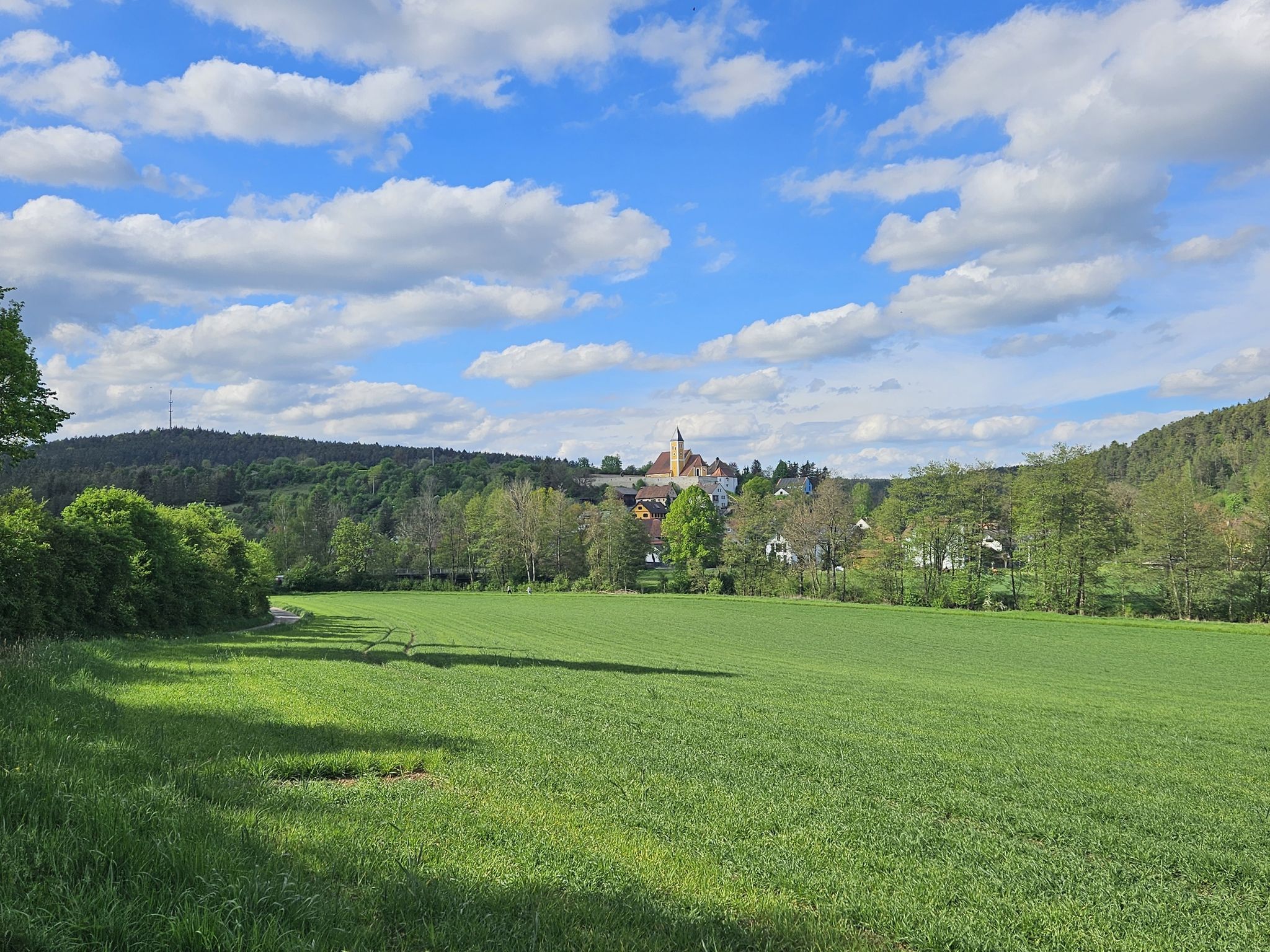
Wonderful sections of the route in a magnificent area
1
0

Theuern Castle is a castle in Theuern, in the municipality of Kümmersbruck, in the Amberg-Sulzbach district of Bavaria. The preserved buildings are listed as a historic monument under file number D-3-71-136-20. "Archaeological findings from the Middle Ages and the modern era in the area of the Catholic parish church of St. Nicholas and the former Hofmark Castle of Theuern, including traces of predecessor buildings and older construction phases of the church and the noble residence," are also listed as an archaeological monument under file number D-3-6637-0078. "Archaeological findings from the abandoned late medieval and modern iron hammer mill in Theuern" are also listed as an archaeological monument under file number D-3-6637-0118.
0
0

Gravel, sand and a mixing plant - everything you need for road construction is available here.
0
0

Today, Schwarzenfeld Castle is a conference and recreation hotel with a beautiful park on the banks of the Naab.
3
0

The Theuern church dates from the middle of the 18th century. The church tower, which was originally not connected to the church and probably also served as a defense, still shows Romanesque echoes today; its foundations date back to the middle of the 12th century. The central painting on the high altar shows scenes from the life of Saint Nicholas. Above it is a picture of the Holy Trinity. The altar is framed by statues of Saint Joseph and Saint Francis Xavier. The left side altar is dedicated to the Holy Cross, the right one to Saint John Nepomuk. The chancel contains gravestones and tombstones of some of the castle owners and priests. The pulpit, the organ and a statue of the scourged Jesus are also impressive.
8
0

Schwarzenfeld Castle The Schwarzenfeld seat was built and inhabited by Conrad Pullenhofer in 1372, before it became the property of the Plankenfelser noble family in 1389. They expanded the rather inconspicuous building and added four towers in the 15th century. In the 1580s, the Teuffel von Pirkensee family bought Schwarzenfeld. During the Thirty Years' War, the castle and the town were devastated. The castle's four towers were probably destroyed and have not been rebuilt since. From 1654, the imperial colonel Peter Pischer and his family were lords of Schwarzenfeld. In 1686, the baronial von Schneidau family took over Schwarzenfeld as a manor. In 1707, a fire destroyed the castle and the surrounding buildings, so that it had to be completely rebuilt elsewhere. A new building, called the "Plankenfelser Schlössl", was built on the foundations of the old castle. It was adapted to the period with stepped gables. In 1717, Schwarzenfeld was owned by the von Wildenau family, and in 1794 the property was purchased by the Counts of Holnstein. At the beginning of the 19th century, the main building was given its current shape by removing the stepped gables in favor of a hipped roof. Two small towers with onion tops were also added. In 1890 and 1892, Maximilian von Holnstein had the castle extended by Julius Hofmann to include the annex and the two towers in the style of the then popular historicist architectural style. At times, up to 160 workers were involved in the reconstruction, which gave the castle its final appearance. Surrounding buildings were also demolished to provide a view of the castle. Shortly after its completion, Count von Holnstein used the castle as a retirement home. He went blind in 1893 and died in the castle on February 1, 1895. After the Holnstein family moved out in 1907, the castle remained unused for a long time, except for short-term leases. The market acquired the castle in 1934, and after several changes of ownership, the main building of the castle burned down on the night of June 25, 1982 and lay abandoned for many years. In 1995, it was sold to private individuals Christine and Hans Dobler from Nabburg. They had the castle completely gutted, renovated and converted into a conference hotel, which opened in 1996 and is called "Hotel Schloß Schwarzenfeld". Source: Excerpts from www.wikipedia.de
3
0

Essentially a Gothic hall church. Northern tower with pointed helmet
0
0
Choir tower church with retracted rectangular choir. Choir tower with pyramid roof. Built at the beginning of the 15th century, essentially around 1136
0
0
Frequently Asked Questions
How many no traffic road cycling routes are available around Ebermannsdorf?
There are over 135 dedicated no traffic road cycling routes around Ebermannsdorf, offering a wide range of options for all skill levels.
What kind of terrain can I expect on no traffic road cycling routes in Ebermannsdorf?
You'll find a diverse landscape, from gentle river valleys like the Vils, often utilizing former railway lines for smooth riding, to charming stretches through forests and fields. While many routes offer leisurely rides with slight inclines, some areas present increasingly hilly terrain for those seeking more challenging climbs.
Are there any easy no traffic road cycling routes suitable for beginners in Ebermannsdorf?
Yes, Ebermannsdorf offers 19 easy no traffic road cycling routes. An example is the Wolfsbach Chapel loop from Ebermannsdorf, which is just over 23 km with moderate elevation gain, making it a great option for those new to road cycling.
What are some notable landmarks or attractions I can see along the no traffic road cycling routes?
Many routes pass by interesting sights. You might encounter Amberg's "Stadtbrille", a unique bridge in Amberg, or cycle along sections of the Five Rivers Cycle Route along the Vils. The Amberg Market Square is also accessible from some routes, offering a chance to explore historic buildings. For a historical touch, consider routes near Ebermannsdorf Castle and Castle Church.
Are there any circular no traffic road cycling routes in the area?
Yes, many of the no traffic road cycling routes around Ebermannsdorf are circular. For example, the Amberg's "Stadtbrille" – Wolfsbach Chapel loop from Kümmersbruck offers a scenic circular ride of about 30 km.
What do other road cyclists enjoy most about the no traffic routes in Ebermannsdorf?
The area is highly rated by the komoot community, with an average score of 4.6 stars from over 525 ratings. Reviewers often praise the well-maintained cycle paths, the tranquil scenery of river valleys and forests, and the opportunity to enjoy peaceful rides away from traffic.
Are there any longer, more challenging no traffic road cycling routes for experienced cyclists?
Absolutely. While there are 14 difficult routes, many of the 102 moderate routes also offer significant distances and elevation. For a longer ride, consider the Platt Brewery Inn – View of the Vils in Vilshofen loop from Kümmersbruck, which covers over 65 km with more than 550 meters of elevation gain.
Can I find places to stop for refreshments along the no traffic road cycling routes?
Yes, routes often lead through or near charming towns, providing opportunities for breaks. You might find local cafes or pubs. For instance, the Beer garden "Old Station" Theuern is a highlight along some routes, perfect for a stop.
What is the best time of year to go road cycling in Ebermannsdorf?
The region is generally pleasant for cycling from spring through autumn. During these seasons, you can expect favorable weather conditions to enjoy the scenic landscapes of river valleys, forests, and fields. Always check local weather forecasts before heading out.
Are the no traffic road cycling routes suitable for families?
Many routes, particularly those along river paths built on former railway lines, feature gentle inclines and smooth surfaces, making them very suitable for families. These paths offer a safe and enjoyable experience away from vehicle traffic.
What is the typical surface of the no traffic road cycling routes?
The routes often utilize well-maintained cycle paths, including converted railway lines, which typically feature good surfaces, often asphalted, ensuring a comfortable ride for road cyclists.
Most popular routes around Ebermannsdorf
Most popular attractions around Ebermannsdorf

Get inspired with the komoot mobile app


Explore more
Browse the best Road cycling routes in other regions.
