The best traffic-free bike rides around Langscheid
4.8
(74)
1,532
riders
2
rides
No traffic road cycling routes around Langscheid are situated within the Sauerland region, characterized by its rolling hills, dense forests, and the prominent Sorpesee. The terrain offers a mix of paved cycling paths and forest roads, providing varied gradients suitable for different fitness levels. The area's landscape is defined by the emerald-green Sorpesee and surrounding wooded hills, creating a scenic environment for road cyclists.
Best no traffic road cycling routes around Langscheid
- The most popular no traffic road cycling route is Hansen Tunnel – Hausen-1 Tunnel loop from Bell, a 25.5 miles (41.1 km) trail that takes 1 hour 58 minutes to complete. This moderate route features over 1,780 feet (540 m) of elevation gain.
- Another top favourite among local road cyclists is Hausen-1 Tunnel – Hansen Tunnel loop from Mayen West, a moderate 18.0 miles (29.0 km) path. This route offers views of the surrounding Sauerland landscape with over 1,130 feet (340 m) of ascent.
- Local road cyclists also love the Mayen City Wall – Genovevaburg Mayen loop from Mayen West, a 11.7 miles (18.8 km) trail leading through varied terrain, often completed in about 57 minutes.
- Road cycling around Langscheid is defined by rolling hills, dense forests, and the Sorpesee, with routes offering a mix of paved surfaces and dedicated cycling paths. The network provides options for easy rides and more challenging routes with significant elevation gains.
- The routes in Langscheid are highly rated by the komoot community with an average score of 4.8 stars from over 70 reviews. More than 1,500 road cyclists have used komoot to explore Langscheid's varied terrain.
Last updated: July 11, 2026
4.7
(3)
47
riders
29.2km
01:26
350m
350m
Moderate road ride. Good fitness required. Mostly well-paved surfaces and easy to ride.
4.3
(3)
12
riders
18.8km
00:57
260m
260m
Easy road ride. Great for any fitness level. Mostly well-paved surfaces and easy to ride.

Sign up for free
4
riders
50.7km
02:31
690m
690m
Moderate road ride. Good fitness required. Mostly well-paved surfaces and easy to ride.
3
riders
13.2km
00:47
260m
260m
Easy road ride. Great for any fitness level. Mostly well-paved surfaces and easy to ride.
Our route recommendations are based on thousands of hikes, rides, and runs completed by other people on komoot.
Start today with a free account
Your next adventure awaits.
Login or Signup


Tips from the Community

The Obertor is a city gate of the Mayen town fortifications that has survived to this day. It was built between 1299 and 1354. The different stone formats and corner ashlar formations make the various construction phases visible. Initially, the lower floor was built in the 14th century during the reign of Archbishop Balduin of Luxembourg (c. 1285-1354, Archbishop of Trier 1307-1354). The Obertor was only extended upwards in the 15th century. The tower was restored in 1909 and 1976 and has thus survived in good condition to this day. The gate used to provide access from the Eifel region along the northern town wall to the Brückentor, which has also survived to this day. The Obertor formerly served as a starting point for pilgrims on the Way of St. James from Mayen towards Trier. Today, weddings can be held in the registry office in the Obertor, and the city library is housed in the adjacent building. (Jonas Breithaupt, University of Koblenz-Landau, 2015)
1
0
One of the city gates from the fortifications of Mayen that has survived to this day is the Obertor. It was built between 1299 and 1354. Different stone formats and the design of the corner blocks make the different construction phases visible. Initially, the lower floor was built during the reign of Archbishop Balduin of Luxembourg (c. 1285-1354, Archbishop of Trier 1307-1354) in the 14th century. The Obertor was only extended in the 15th century. The tower was restored in 1909 and 1976 and has thus been preserved in good condition to this day. Through the gate, one used to exit the Eifel region along the northern city wall to the Brückentor, which is also preserved to this day. The Obertor formerly served pilgrims as a starting point on the Way of St. James from Mayen in the direction of Trier. Today, one can get married in the registry office in the Obertor, and the city library is housed in the adjacent building of the Obertor. Source: Jonas Breithaupt, Universität Koblenz-Landau, 2015
2
0
The northern gate of the city fortifications, which still exists today, is the gatehouse located on the Nette river, built between 1299 and 1354. It secured the crossing of the Nette and primarily served as the city entrance from the direction of Koblenz, which is why it also bears the name "Koblenzer Tor" (Koblenz Gate). Since there are no signs of a slot in the wall for a portcullis, it is assumed that a drawbridge to the bridge pier on the Nette was used to secure the gate. Due to the flood in 1598, the gatehouse collapsed along with the outer gate. However, the chiseled number 1599 testifies that the gatehouse was rebuilt just one year later. From the beginning of the 19th century until 1855, the gatehouse was used as a prison. The city coat of arms, added in 1911, is still visible today. Source: Jonas Breithaupt, University of Koblenz-Landau, 2015
4
0

The signal box for Mayen-Ost station is located here.
4
0

The Brückentor (Bridge Gate) is one of Mayen's few remaining medieval city gates and once served as the most important entrance for travelers coming from Koblenz. Today, this historic building houses the Mayen Carnival Museum, which brings the city's long tradition of "Faasenaacht" (Carnival Night) to life.
1
0

The late Gothic castle was besieged, destroyed, and rebuilt several times over the course of its eventful history. The current complex consists of the upper castle with the 34-meter-high Golo Tower and the slightly lower outer castle. The castle is protected from the city by a large castle gate, and on the other side by the keep and a moat complex. The former moat is now a ring road spanned by a 20-meter-long Gothic stone bridge. The Genovevaburg Castle houses two exhibitions of the Eifel Museum: EifelTotal and the German Slate Mine.
10
0
The Holy Spirit Chapel is a former hospital chapel that was part of a hospital in the Middle Ages. Foundations discovered in 1935 suggest that a chapel connected to the then hospital already stood here earlier. According to tradition, the chapel was looked after around 1380 by a priest and a chaplain who received a house near the hospital from the estate of a Pastor Wienand. Since 1592, the chapel has belonged to the Clemensstift.
9
1

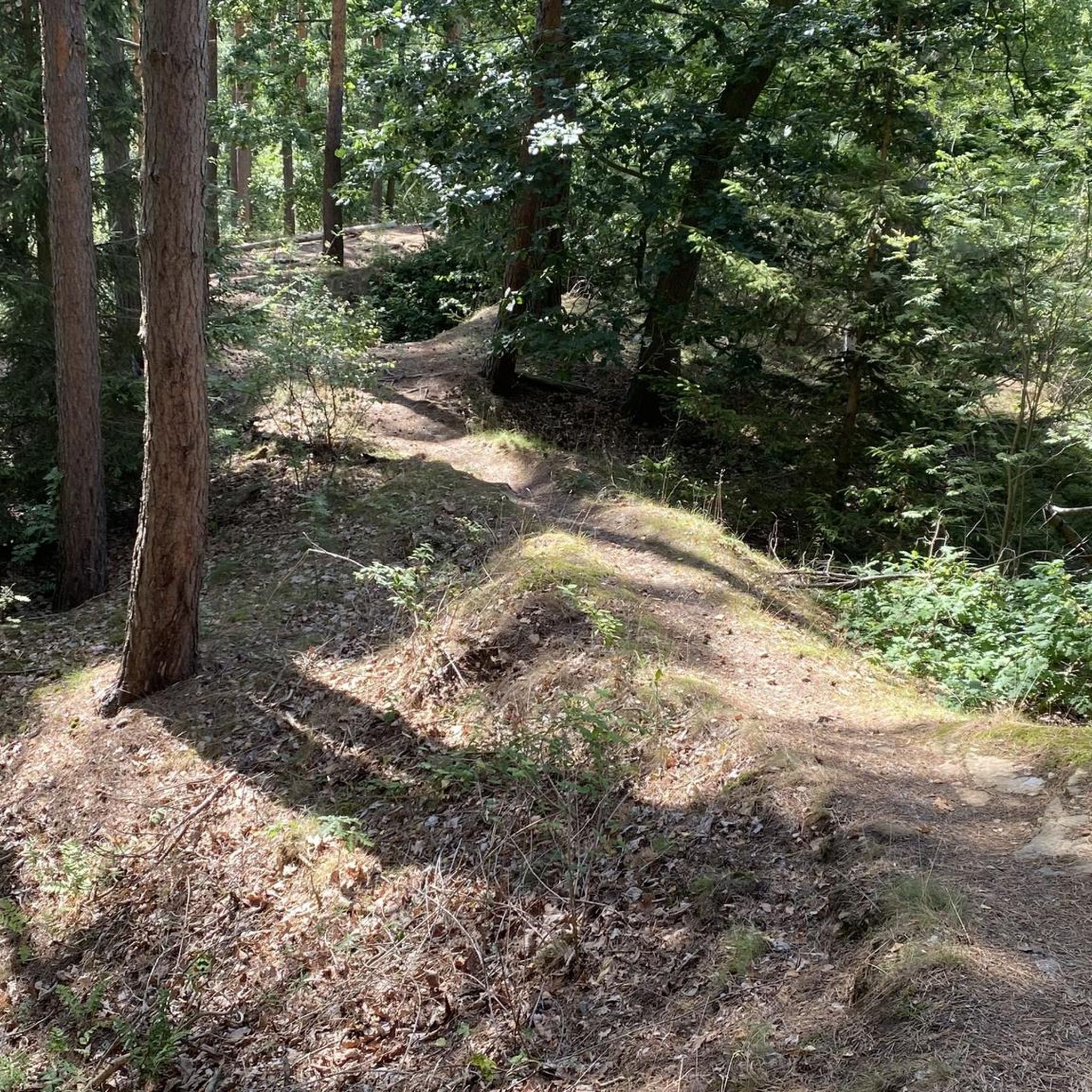
Nice back road. Rolls well. Very shady.
3
0
Frequently Asked Questions
How many traffic-free road cycling routes are available around Langscheid?
This guide features a curated selection of 3 excellent traffic-free road cycling routes around Langscheid, perfect for enjoying the scenic Sauerland region without vehicle interference. These routes offer a mix of terrain suitable for various fitness levels.
What kind of terrain can I expect on these no-traffic road cycling routes near Langscheid?
The routes around Langscheid, particularly those near the Sorpesee, feature mostly paved surfaces, ideal for road bikes. You'll encounter a balanced mix of gentle climbs, flat sections, and some more demanding passages, providing an engaging experience with stunning views of the lake and surrounding forests.
Are there any easy, beginner-friendly traffic-free road cycling options in Langscheid?
Yes, there is at least one easy route featured in this guide, making it suitable for beginners or those looking for a more relaxed ride. These routes often provide a great way to experience the beautiful Sorpesee area at a comfortable pace.
What are the best times of year for traffic-free road cycling in Langscheid?
The Sauerland region, including Langscheid, is generally best for road cycling from spring through autumn. During these seasons, the weather is typically mild, and the natural beauty of the Sorpesee and surrounding forests is at its peak. Always check local weather conditions before heading out.
What natural features or landmarks can I see along the traffic-free road cycling routes around Langscheid?
The dominant natural feature is the beautiful Sorpesee (Lake Sorpe), which many routes will offer stunning views of. The region is characterized by rolling hills and dense forests. While cycling, you might also encounter historical sites like the Monreal Historic Old Town or impressive viewpoints such as the View of Löwenburg and Philippsburg Castles in Monreal, offering picturesque breaks.
Are there any circular no-traffic road cycling routes available?
Yes, the region offers circular routes, such as the popular "Rundweg um den Sorpesee" (Sorpesee Circuit). While not exclusively traffic-free, sections are designed for cycling, providing a great way to experience the lake's beauty. For a fully traffic-free experience, routes like the Hansen Tunnel – Hausen-1 Tunnel loop offer dedicated paths.
What do other cyclists say about the traffic-free road cycling routes in Langscheid?
The routes in this guide are highly rated by the komoot community, with an average score of 4.8 stars. Reviewers often praise the stunning views of the Sorpesee, the well-maintained paths, and the peaceful experience of cycling away from traffic.
Is parking available near the starting points of these traffic-free routes?
Langscheid provides convenient starting points for tours, often with ample parking directly on the shore of the Sorpesee. This makes it easy to access the routes and begin your ride.
Are there any cafes or places to stop for refreshments along the traffic-free road cycling routes?
Yes, especially around the Sorpesee, you'll find options for breaks. The new promenade in Langscheid offers a range of local gastronomic options where you can relax and enjoy the views. Many routes are designed to pass through or near villages with cafes and pubs.
Can I reach Langscheid and the cycling routes using public transport with my bike?
The Sauerland region generally has public transport options, but specific services for transporting bikes can vary. It's advisable to check local bus or train schedules and their bike carriage policies in advance if you plan to use public transport to reach Langscheid.
Are there any challenging traffic-free road cycling routes for experienced riders?
While focusing on traffic-free paths, some routes in the broader Langscheid area, like the Hansen Tunnel – Old Ochtendung Train Station loop, offer significant elevation gains and longer distances, providing a good challenge for ambitious riders. These routes often combine dedicated paths with quiet country roads.
What kind of views can I expect on the traffic-free road cycling routes around Langscheid?
You can expect fantastic views of the emerald-green Sorpesee, especially on routes that hug the shoreline. Beyond the lake, the routes often traverse rolling hills and dense forests, offering picturesque vistas of the idyllic Sauerland landscape.
Most popular attractions around Langscheid

Get inspired with the komoot mobile app


Explore more
Browse the best Road cycling routes in other regions.
