The best traffic-free bike rides around Arft
4.6
(719)
3,660
riders
128
rides
No traffic touring bike trails around Arft are situated within the scenic Eifel and Maifeld regions of Rhineland-Palatinate, Germany. The area is characterized by diverse landscapes, including volcanic formations with rolling hills, tranquil river valleys, and extensive forests. Many routes utilize disused railway lines, offering flat, traffic-free paths through varied terrain. This region provides a well-developed cycling infrastructure integrated with natural beauty.
Best no traffic touring cycling routes around Arft
- The most popular no traffic touring cycling route is Laacher…
Last updated: July 11, 2026
4.9
(11)
37
riders
19.5km
01:22
250m
250m
Moderate bike ride. Good fitness required. Mostly paved surfaces. Suitable for all skill levels.
4.9
(9)
33
riders
Moderate bike ride. Good fitness required. Mostly paved surfaces. Suitable for all skill levels.

Sign up for free
9
riders
11.8km
00:51
200m
210m
Moderate bike ride. Good fitness required. Mostly paved surfaces. Suitable for all skill levels.
5.0
(1)
10
riders
19.2km
01:43
370m
370m
Moderate bike ride. Good fitness required. Mostly paved surfaces. Suitable for all skill levels.
5.0
(3)
7
riders
21.3km
01:40
470m
470m
Hard bike ride. Very good fitness required. Mostly paved surfaces. Suitable for all skill levels.
Get access to more routes and recommendations from other explorers.
Sign up for free
Already have an account?
Our route recommendations are based on thousands of hikes, rides, and runs completed by other people on komoot.
Start today with a free account
Your next adventure awaits.
Login or Signup


Tips from the Community

This former mine wheel serves as a reference to the nearby mine museum.
9
0
The hall church, dedicated to Saint Quirinus, was built according to the plans of the architect Gerhard Franz Langenberg (1842–1895).[1] The church in the small village is also called the Eifeldom because of its extraordinary size. The neo-Gothic church is built of local quarry stone.
9
0
The three-story columned altar dates from the 18th century. In the niches of each level are figures of a Baroque guardian angel leading a child by the hand, of St. John of Nepomuk, and a Madonna. The Archangel Michael with sword and scales crowns the altar. In 2009, the saints' figures were extensively restored. Paul Clemen (1941) described them as "good craftsmanship of the 18th century." Clemen continues: "In the niche, a new figure, above it a good Baroque figure of ... Nepomuk ... at the end, a coarse Baroque figure of the Archangel Michael..." The "new figure" he refers to is possibly the guardian angel. The current altar figure probably stood in Kempenich at the time, because in Paul Clemen's (1941) work, the figure can be seen on page 256 as illustration 213.
9
1
This extraordinary house is run by Lebenshilfe.
9
0
The church's patron saint suggests its great age. It was first mentioned in 1330 in the Taxa generalis of the Archdiocese of Trier. The Romanesque west tower dates to the beginning of the 13th century. The core of the nave, which still stands today, was built around 1470. Around 1728, the choir was enlarged, and a sacristy was added to the south side of the east bay of the nave. Along with other minor alterations over time, the expansion between 1904 and 1906 was the most significant. Under the direction of the Bonn architect Johann Adam Rüppel, the northern aisle was renovated and a southern aisle was added. This created the current four-aisled hall church. In 1919, the western gallery was built from tuff stone in neo-Gothic style.
9
0

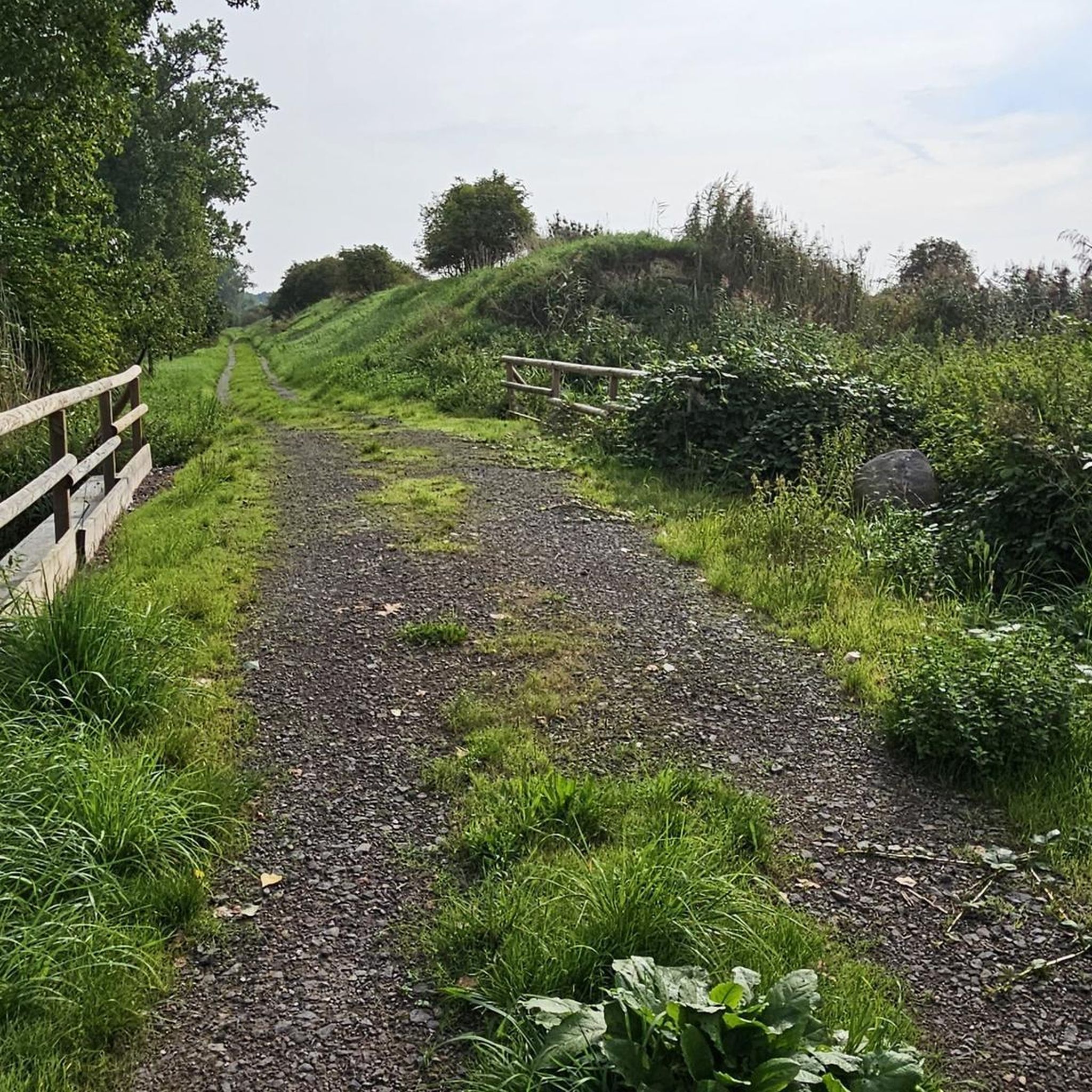
The trail is gravel throughout and in excellent condition. Perfect for a gravel ride!
0
0
I think there are nicer places to take a break. I think the hut is more suitable as a barbecue area for smaller parties.
0
0
Frequently Asked Questions
How many no-traffic touring cycling routes are available around Arft?
There are nearly 130 dedicated no-traffic touring cycling routes around Arft, offering a wide range of options for all skill levels. These routes leverage the region's unique infrastructure, including paths along disused railway lines, ensuring a peaceful and car-free cycling experience.
Are there easy no-traffic touring cycling routes suitable for beginners or families?
Yes, the region offers 14 easy no-traffic touring cycling routes, many of which are developed along disused railway lines. These paths are typically almost flat and far removed from road traffic, making them ideal for families and beginners. The Maifeld Cycle Route, for example, is known for its gentle gradients and family-friendly features like a sensory trail in Kerben and a water playground in Mertloch.
What kind of landscapes can I expect on these no-traffic routes?
The no-traffic routes around Arft traverse a diverse range of landscapes. You'll find paths winding through the volcanic formations of the Eifel, offering rolling hills and unique geological features. Other routes follow tranquil river valleys towards the Moselle and Rhine, providing serene views. Extensive forests offer shaded paths, while the Maifeld region features open fields and charming villages. Disused railway lines provide flat, scenic journeys through historical elements like viaducts and tunnels.
What are some notable attractions or landmarks along the no-traffic touring cycling routes?
Many routes offer access to historical and natural sights. You can cycle past impressive structures like Virneburg Castle Ruins, Nürburg Castle, or Bürresheim Castle. The Maifeld region also features "real-life art in the form of several sculptures" along its cycle paths, creating an open-air gallery experience. For a specific route that includes a notable landmark, consider the View of Nürburg Castle – Rothenbacher Drees loop from Herresbach.
Are there any circular no-traffic touring cycling routes around Arft?
Yes, many of the no-traffic touring cycling routes around Arft are designed as loops, allowing you to start and end at the same point. An example is the moderate Ford Across the Nette – Road to Netterhöfe loop from Kempenich, which offers a scenic circular tour. Another option is the more challenging Laacher See – Maria Laach Abbey loop from Weibern.
What do other touring cyclists enjoy most about the no-traffic routes in Arft?
The no-traffic touring cycling routes around Arft are highly rated by the komoot community, with an average score of 4.6 stars from over 600 reviews. Cyclists frequently praise the tranquility of the car-free paths, the diverse and beautiful scenery, and the well-maintained infrastructure, especially the converted railway lines that offer smooth, gentle rides away from traffic.
Can I access these routes using public transport?
The Eifel and Maifeld regions, where Arft is located, have a developing public transport network. While direct access to every trailhead by public transport might vary, many larger towns and villages in the area are connected by bus or train services that can facilitate reaching starting points for tours. It's advisable to check local public transport schedules for specific routes and connections to your desired starting location.
What is the best season for touring cycling in the Arft region?
The best season for touring cycling around Arft is typically from spring through autumn. During these months, the weather is generally mild and pleasant, and the landscapes are at their most vibrant, whether it's the blooming fields in spring, the lush forests in summer, or the colorful foliage in autumn. Some routes, particularly those along disused railway lines, can also be enjoyable in milder winter conditions, but always check local weather and path conditions.
Are there any routes that pass through the Eifel National Park?
Yes, Arft's location within the Eifel region provides access to cycle paths within the broader Eifel National Park. These dedicated routes offer opportunities to experience protected natural environments, thick forests, and rolling hills, all while enjoying a car-free cycling experience. For more information on the region's natural beauty, you can visit Rhineland-Palatinate Tourism.
Are there any longer, more challenging no-traffic touring routes for experienced cyclists?
Yes, for experienced cyclists seeking a challenge, there are 51 difficult no-traffic touring routes available. These routes often feature more significant elevation changes, characteristic of the Eifel's volcanic landscape. An example of a longer, more demanding route is the Laacher See – Maria Laach Abbey loop from Weibern, which covers over 50 kilometers with substantial elevation gain.
Where can I find information about the Mosel Cycle Path, which is mentioned as a nearby option?
The Mosel Cycle Path is a well-regarded option known for its relatively flat terrain and scenic journey through vineyards and charming villages. While not directly in Arft, it's easily accessible from the broader region. You can find more detailed information about this popular route on Visit Mosel.
Most popular attractions around Arft

Get inspired with the komoot mobile app


Explore more
Browse the best Cycling routes in other regions.
