The best city hikes and walks around Feuchtwangen
4.4
(2445)
9,965
hikers
9
hikes
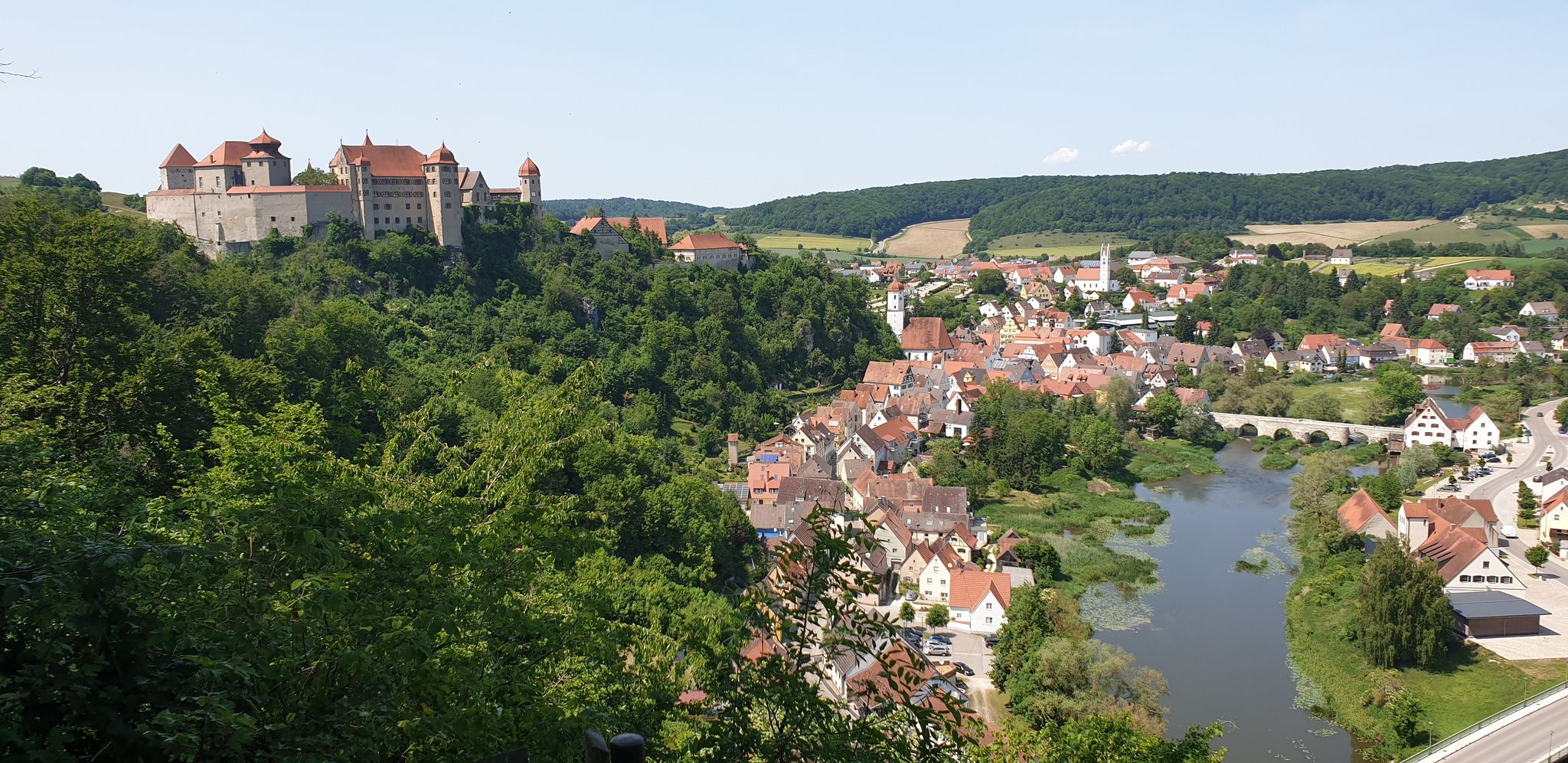
Urban hiking trails around Feuchtwangen are situated within the Frankenhöhe Nature Park, offering a blend of natural landscapes and historical town features. The region is characterized by the Sulzach River Valley, wooded ridges, and open meadows, with gentle elevation changes. Feuchtwangen's urban routes often incorporate the town's medieval center and its surrounding green spaces. This area provides accessible paths suitable for various fitness levels, connecting historical sites with tranquil natural sections.
Best urban hiking trails around Feuchtwangen
- The most popular…
Last updated: June 27, 2026
4.0
(1)
32
hikers
Easy hike. Great for any fitness level. Easily-accessible paths. Suitable for all skill levels.
5.0
(3)
17
hikers
Easy hike. Great for any fitness level. Easily-accessible paths. Suitable for all skill levels.

Sign up for free
5.0
(2)
12
hikers
Easy hike. Great for any fitness level. Easily-accessible paths. Suitable for all skill levels.
4.0
(1)
5
hikers
Easy hike. Great for any fitness level. Easily-accessible paths. Suitable for all skill levels.
3
hikers
Easy hike. Great for any fitness level. Easily-accessible paths. Suitable for all skill levels.
Get access to more routes and recommendations from other explorers.
Sign up for free
Already have an account?
Our route recommendations are based on thousands of hikes, rides, and runs completed by other people on komoot.
Start today with a free account
Your next adventure awaits.
Login or Signup
Other adventures around Feuchtwangen


Tips from the Community

The focal point of the town center is the market square, which, with its remarkable town houses and old Franconian half-timbered buildings, exhibits an unusual sense of cohesion and is widely known as the "Festival Hall of Franconia." The market square's crowning glory is the tubular fountain, built in 1727. The fountain column features the goddess Minerva, the protector of local trades. The fountain's frame is adorned with the colorful and historic coats of arms of Brandenburg and Württemberg, as well as the imperial eagle and Feuchtwangen's city coat of arms, the spruce tree.
0
0
The Marriage Fountain in Feuchtwangen is actually the Röhrenbrunnen (Tube Fountain), which still stands today on the market square and is a major landmark of the town. Built in 1726, it is a central part of the historic townscape, with its town houses and the collegiate church. Tourists can visit it at any time today, although no special "Marriage Fountain" events are listed.
1
0
The focal point of the town center is the market square, which, with its remarkable town houses and old Franconian half-timbered buildings, exhibits an unusual sense of cohesion and is widely known as the "Festival Hall of Franconia." The market square's crowning glory is the tubular fountain, built in 1727. The fountain column features the goddess Minerva, the protector of local trades. The fountain's frame is adorned with the colorful and historic coats of arms of Brandenburg and Württemberg, as well as the imperial eagle and Feuchtwangen's city coat of arms, the spruce tree. (https://www.tourismus-feuchtwangen.de/sehenswertes/stadtrundgang/marktplatz/poi.html )
0
0
Feuchtwangen The origins of the monastery and collegiate church lie shrouded in the mists of history. Some evidence suggests a foundation in the last third of the 8th century, when Benedictine monks settled here and built the first monastery church. The cloister was built no later than the first half of the 12th century. Stylistic comparisons suggest that it was built by the Hirsau School. The church was magnificently expanded during the Romanesque period. This is evident in the westwork with its unequal pair of towers and the west portal – both works of the Ellwangen workshop. Late Romanesque/early Gothic frescoes have been preserved in the vestibule. In the second half of the 12th century, the Benedictine monastery was converted into an Augustinian canonry. In the late Middle Ages, the choir underwent a Gothic remodeling. (https://www.feuchtwangen-evangelisch.de/unsere-gemeinde/kirchen-und-gebaeude/stiftskirche )
0
0
The Protestant, listed St. John's Church is a listed building. The hall church, essentially Romanesque in style and made of ashlar masonry, was built in 1414 according to the building inscription. It consists of a nave, adjoined to the east by a recessed choir with a 5/8-end aisle. At the end of this choir tower stands, which was extended octagonally in 1484. Four church bells hang in its belfry. It only received its dome in 1805. The choir walls are supported by buttresses to absorb the thrust of the cross-ribbed vault that spans its interior. The choir stalls are still in the choir. The interior of the nave, equipped with an L-shaped gallery, is covered by a wooden barrel vault. It contains a tabernacle dating from the second half of the 15th century. The pulpit and baptismal font date from the first half of the 15th century. The altar was built around 1680.
0
0

Very beautiful area
0
0

Sandstone ashlar building with a gable roof, a recessed choir with a polygonal end and buttresses and a double-tower façade, multi-story rectangular towers with pyramid or hood roofs, a sacristy extension in the northern choir angle, a three-aisled nave, built in 1197, choir first half of the 14th century, alterations in the 16th century, renovations in 1698
1
0

Fountain in Feuchtwangen
0
0
Frequently Asked Questions
How many urban hiking trails are available in Feuchtwangen?
There are 9 easy urban hiking trails around Feuchtwangen, all designed for enjoyable walks within or very close to the town.
What kind of landscapes can I expect on urban hikes in Feuchtwangen?
Urban hikes in Feuchtwangen offer a charming blend of historical townscapes and natural beauty. You'll explore the immaculate medieval city center, including the Market Square, and quickly transition to tranquil paths along the Sulzach River Valley, with glimpses of ancient forests and meadows that characterize the wider Frankenhöhe Nature Park.
Are there any easy urban walks suitable for families or beginners?
Yes, all 9 urban hiking routes in Feuchtwangen are rated as easy, making them perfect for families, beginners, or anyone looking for a relaxed stroll. A great option is the 2 km Feuchtwangen Market Square – Röhrenbrunnen, Feuchtwangen loop, which takes you through the heart of the town.
Can I find circular urban hiking routes in Feuchtwangen?
Absolutely. Most of the urban trails in Feuchtwangen are circular, allowing you to start and end at the same point. For example, the Röhrenbrunnen, Feuchtwangen – Kasten Town Hall loop offers a 6.3 km circular walk exploring different parts of the town and its immediate surroundings.
What historical landmarks or points of interest can I see on an urban hike?
Feuchtwangen's urban hikes are rich in history. You can explore the medieval city center, including the Feuchtwangen Market Square with its Baroque fountain, the Romanesque cloister (Kreuzgang), and the Collegiate Church. The Röhrenbrunnen, Feuchtwangen – Feuchtwangen Old Town loop is an excellent route to discover these historical gems.
Are the urban trails in Feuchtwangen suitable for dog walking?
Yes, the urban trails in Feuchtwangen are generally dog-friendly. The easy terrain and varied scenery, including paths along the Sulzach River and through town, provide pleasant walks for you and your canine companion. Always remember to keep your dog on a leash and clean up after them.
What is the best time of year for urban hiking in Feuchtwangen?
Feuchtwangen's urban trails are enjoyable year-round. Spring brings blooming flowers and mild temperatures, while autumn offers beautiful foliage. Summer is perfect for leisurely strolls, and even in winter, the town's historical charm combined with crisp air makes for a refreshing walk, especially if you combine it with a visit to a cozy cafe.
Are there any longer urban routes for a more extended walk?
If you're looking for a slightly longer urban walk, consider the Röhrenbrunnen, Feuchtwangen – Feuchtwangen Old Town loop, which covers approximately 6.7 km. This route allows you to immerse yourself more deeply in the town's history and natural surroundings.
What do other hikers say about the urban trails in Feuchtwangen?
The urban trails around Feuchtwangen are highly rated by the komoot community, with an average score of 4.3 stars from over 200 reviews. Hikers often praise the well-maintained paths, the blend of historical sights with natural river views, and the overall peaceful atmosphere for easy, accessible walks.
Where can I find parking for urban hikes in Feuchtwangen?
Feuchtwangen offers various parking options within the town center, making it convenient to access the urban hiking trails. Look for designated parking areas near the Market Square or other central locations, which often serve as starting points for many of the routes.
Are there any urban routes that offer views of the town?
While the urban routes primarily focus on exploring the town's streets and immediate riverbanks, some paths offer charming perspectives of Feuchtwangen's historical architecture. For broader scenic views of the town and surrounding landscape, you might explore trails slightly outside the immediate urban core, such as those near Mögersbronn mentioned in the wider region's hiking options.
Can I combine an urban hike with a visit to a cafe or restaurant?
Absolutely! Feuchtwangen's compact town center means that many urban hiking routes pass directly through or near the Market Square and other areas with numerous cafes, bakeries, and restaurants. It's easy to pause your walk for a coffee, a meal, or to sample local Franconian specialties.
Most popular routes around Feuchtwangen
Most popular attractions around Feuchtwangen

Get inspired with the komoot mobile app


Explore more
Browse the best Hikes in other regions.
