Attractions and Places To See around Tinovul Mohoș - Lake Sf. Ana - Top 5
Best attractions and places to see around Tinovul Mohoș - Lake Sf. Ana include a unique volcanic crater lake and an alpine peat bog. This region in the Eastern Carpathians of Romania features distinct natural formations within the Mohoș Nature Reserve. Visitors can explore a rare ecosystem with unique flora and geological significance, alongside cultural landmarks. The area offers diverse natural experiences stemming from its volcanic origins.
Best attractions and places to see around Tinovul Mohoș - Lake Sf. Ana
- The most popular attractions is Path Around Lake Saint Ana, a trail that encircles the volcanic lake. This narrow path offers views of the lake and its surroundings, with quieter sections on the western shore.
- Another must-see spot is Saint Anne Chapel, a religious building with historical significance. Visitors can expect a picturesque chapel located at the north end of the lake, with information about its history available on site.
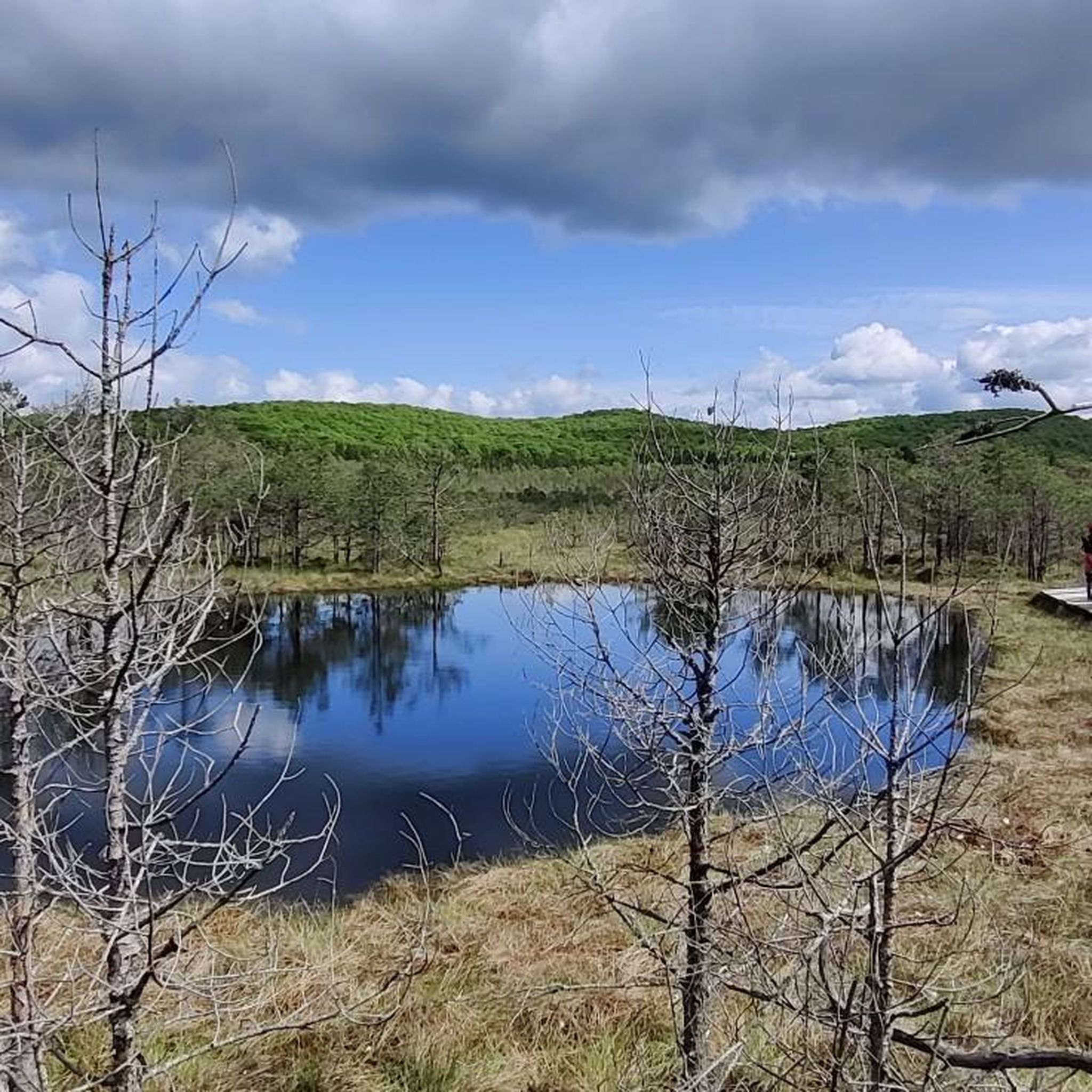
- Visitors also love Tinovul Mohoș Boardwalk Trail, a trail leading through a nature reserve. This wooden jetty provides views over small moorland lakes and unique plant life within the peat bog.
- Tinovul Mohoș - Lake Sf. Ana is known for its volcanic lake, unique peat bog, and historical sites. The region offers a variety of natural monuments and trails to explore.
- The attractions around Tinovul Mohoș - Lake Sf. Ana are appreciated by the komoot community. With 18 upvotes and 39 photos, these spots offer diverse experiences for explorers.
Last updated: July 13, 2026
Path Around Lake Saint Ana
Highlight • Trail
Translated by Google •
Tip by

Saint Anne Chapel
Highlight • Religious Site
Translated by Google •
Tip by
Sign up now to discover places like this
Get recommendations on the best single tracks, peaks, & plenty of other exciting outdoor places.
Sign up for free
Tinovul Mohoș Boardwalk Trail
Highlight (Segment) • Trail
Translated by Google •
Tip by

Lake Sfânta Ana
Highlight • Lake
It is surrounded by the steep walls of the volcanic cone of Monte Ciomat, with several higher peaks: Ciomatul Mare (1301 m), Ciomatul Mic (1238 m), Tata Hill (1174 m) or Piscul Pietros (1125 m).
The lake, unique in Europe, is located at an altitude of 946 m, has a diameter of 1737 m and a greatest depth of 7 m.
From the crater rim, 13 temporary streams formed after the rains carry water and gravel into the lake. The lake is fed by rainwater and water from snowmelt.
The lake's sedimentation process began at the northern and western edges, with the lake floor being covered by an increasingly thick layer of mud. The lake is currently 6.5 m deep at its deepest point.
In good weather, especially without wind, you can see gas bubbles rising from the bottom of the lake, which are actually an expression of post-volcanic activity. In the northern, northeastern part of the lake, you can see a layer of floating peat about a meter thick.
Translated by Google •
Tip by

Mohos Peat Bog
Highlight • Natural Monument
Translated by Google •
Tip by

Start today with a free account
Your next adventure awaits.
Login or Signup
Popular around Tinovul Mohoș - Lake Sf. Ana
Tips from the Community

Anyone visiting Lake Sfânta Ana doesn't need meteorologists to predict the weather. They have an empirically proven method at their disposal, provided by the volcano itself: two cracks in the mountain that predict the weather. Locals know: "If the fumes from the cracks burn your nose, it's a sign of a thunderstorm. If not, it will be a sunny day, perfect for hiking."
11
0
The Chapel of St. Anne was first documented in 1349. The original chapel was made of wood. Legend has it that the small church was destroyed during both the Tatar and Turkish invasions. Its restoration was documented in 1562. Between 1562 and 1764, two annual festivals were celebrated: St. Anne's Day and the Feast of the Nativity of the Virgin Mary. Up to 30,000 pilgrims came to the Feast of St. Anne. The chapel was badly damaged during the First World War and was demolished and rebuilt in 1927. Nothing remains of the nearby St. Joachim Chapel, built in 1562.
13
0

Saint Ana Lake in the Ciomatului Mare crater is the only lake of volcanic origin in Central and Eastern Europe and the most visited tourist attraction in Szeklerland. It is surrounded by the steep walls of the volcanic cone of Monte Ciomat, with several higher peaks: Ciomatul Mare (1301 m), Ciomatul Mic (1238 m), Tata Hill (1174 m) or Piscul Pietros (1125 m). The lake, unique in Europe, is located at an altitude of 946 m, has a diameter of 1737 m and a greatest depth of 7 m. From the crater rim, 13 temporary streams formed after the rains carry water and gravel into the lake. The lake is fed by rainwater and water from snowmelt. The lake's sedimentation process began at the northern and western edges, with the lake floor being covered by an increasingly thick layer of mud. The lake is currently 6.5 m deep at its deepest point. In good weather, especially without wind, you can see gas bubbles rising from the bottom of the lake, which are actually an expression of post-volcanic activity. In the northern, northeastern part of the lake, you can see a layer of floating peat about a meter thick.
0
0

Only cordoned off with a thin tape, I would doubt the video surveillance sign - but you can't just march through because then you'll probably meet a guided tour. Ditto from the rear entrance (it only says “entry prohibited” in Romanian). Apparently there are also English tours every now and then. So just be there at one of the times in the photo and see what happens.
0
0

When arriving at the lake, make sure to start circumnavigating it in a counter-clockwise fashion, to make sure that the rewarding coffee and pastry hut is at the end of your walk…
2
0

In August 2023, a ranger was on duty who spoke very good English - but the (free) tour soon had to be broken off: a bear had been wounded in a turf war and was therefore unpredictable. So I wouldn't recommend the route from the north through the moor.
0
0

A wooden pier leads through the moor with beautiful views over small moorland lakes and the enchanted plant world. Guided tours of the moor are regularly offered. Unfortunately only in Romanian language. Still highly recommended.
0
0
A nice narrow path hugs the bank of the almost circular mountain lake. While on the eastern shore, the stalls take care of the physical well-being of the visitors and there is even a boat rental, the western shore is very quiet. A circumnavigation on this Uferweg is very worthwhile. Attention: Please do not feed bears :-)
3
0
Frequently Asked Questions
What unique natural features can I explore around Tinovul Mohoș - Lake Sf. Ana?
The region is home to two distinct natural wonders: Lake Sfânta Ana, the only volcanic crater lake in Romania and Central and Eastern Europe, known for its exceptional water purity. You can also visit the Mohos Peat Bog, an alpine peat bog with a unique ecosystem, including carnivorous plants like the round-leaved sundew and rare Ice Age flora.
Are there any historical or cultural sites to visit near Lake Sfânta Ana?
Yes, near Lake Sfânta Ana, you can find the Saint Anne Chapel. This picturesque Roman Catholic chapel has a rich history, with its origins dating back to 1349, and has been rebuilt and restored multiple times over the centuries. Information about its history is often available on-site.
What kind of trails are available for exploring the Mohos Peat Bog?
The Tinovul Mohoș Boardwalk Trail offers a unique way to explore the peat bog. This wooden jetty leads through the nature reserve, providing views over small moorland lakes and its distinctive plant life. Access to the peat bog is strictly by guided tour to protect its sensitive environment, with tours often conducted in Romanian, though English-speaking rangers may occasionally be available.
Can I hike around Lake Sfânta Ana?
Absolutely! The Path Around Lake Saint Ana is a popular trail that encircles the volcanic lake. It offers scenic views, with quieter sections on the western shore. The area is also popular for hiking, with various trails around the lake and to nearby attractions. For more hiking options, check out the Hiking around Tinovul Mohoș - Lake Sf. Ana guide.
Are there family-friendly activities or attractions in the area?
Yes, several attractions are suitable for families. The Path Around Lake Saint Ana and Lake Sfânta Ana itself are considered family-friendly, offering gentle walks and scenic views. The Saint Anne Chapel is also a family-friendly historical site.
What is the best time of year to visit Tinovul Mohoș and Lake Sfânta Ana?
The region is beautiful throughout the warmer months. Spring and summer offer lush greenery and pleasant temperatures for hiking and exploring the unique flora. Autumn brings vibrant colors to the surrounding forests. While winter offers a serene, snow-covered landscape, some access might be limited, and specific tours, like those for the peat bog, might have seasonal availability.
What should I know about wildlife, especially bears, when visiting?
The area is known for potential bear sightings, particularly in the surrounding forests. It's advisable to be aware of your surroundings, especially during dawn, dusk, or late-night walks. When exploring trails like the Tinovul Mohoș Boardwalk Trail, it's recommended to follow local guidance and ranger advice regarding bear activity.
Are there any unique geological phenomena to observe at Lake Sfânta Ana?
Yes, Lake Sfânta Ana is a volcanic crater lake, and visitors can sometimes observe gas bubbles rising from its bottom, indicating ongoing post-volcanic activity. Additionally, nearby 'smelling caves' like Grota Sulfuroasa emit sulfur gases, which locals even use for traditional weather prediction.
How can I access Tinovul Mohoș and Lake Sfânta Ana, and is there parking?
Both attractions are accessible, typically by car, with parking available near Lake Sfânta Ana. Access to the Mohos Peat Bog is usually part of a guided tour. There may be charges for parking or access to certain areas. Public transport options might be limited, so checking local schedules is recommended.
What do visitors enjoy most about the <a href="https://www.komoot.com/highlight/764043" target="_blank" rel="noopener">Path Around Lake Saint Ana</a>?
Visitors appreciate the tranquil atmosphere and scenic beauty of the path. Many enjoy the quiet sections on the western shore, contrasting with the more active eastern side where stalls and boat rentals are available. The opportunity to circumnavigate the unique volcanic lake is a highlight for many.
What kind of plants can be seen in the Mohos Peat Bog?
The Mohos Peat Bog is a botanical marvel, preserving species from the last Ice Age. You can observe fascinating carnivorous plants like the round-leaved sundew (Drosera rotundifolia), as well as bog-rosemary, black crowberry, and hare's-tail cottongrass. The area also features pine trees growing on the peat layer and thick bilberry bushes.
Are there any specific hiking routes recommended for different difficulty levels?
Yes, the region offers a range of hiking routes. For example, the 'Saint Anne Chapel – Path Around Lake Saint Ana loop from Lake Saint Anne' is a moderate 10.2 km hike. More challenging options include longer loops from Băile Tușnad Hm, such as a 25.6 km difficult route. For an easy option, consider the 'Apor Spring No. 3 – Mikes Mineral Spring No. 4 loop from Băile Tușnad' at 3.2 km. You can find more details in the Hiking around Tinovul Mohoș - Lake Sf. Ana guide.
Most popular routes around Tinovul Mohoș - Lake Sf. Ana

Get inspired with the komoot mobile app


