The best city hikes and walks around Bad Soden am Taunus
4.5
(1840)
8,584
hikers
185
hikes
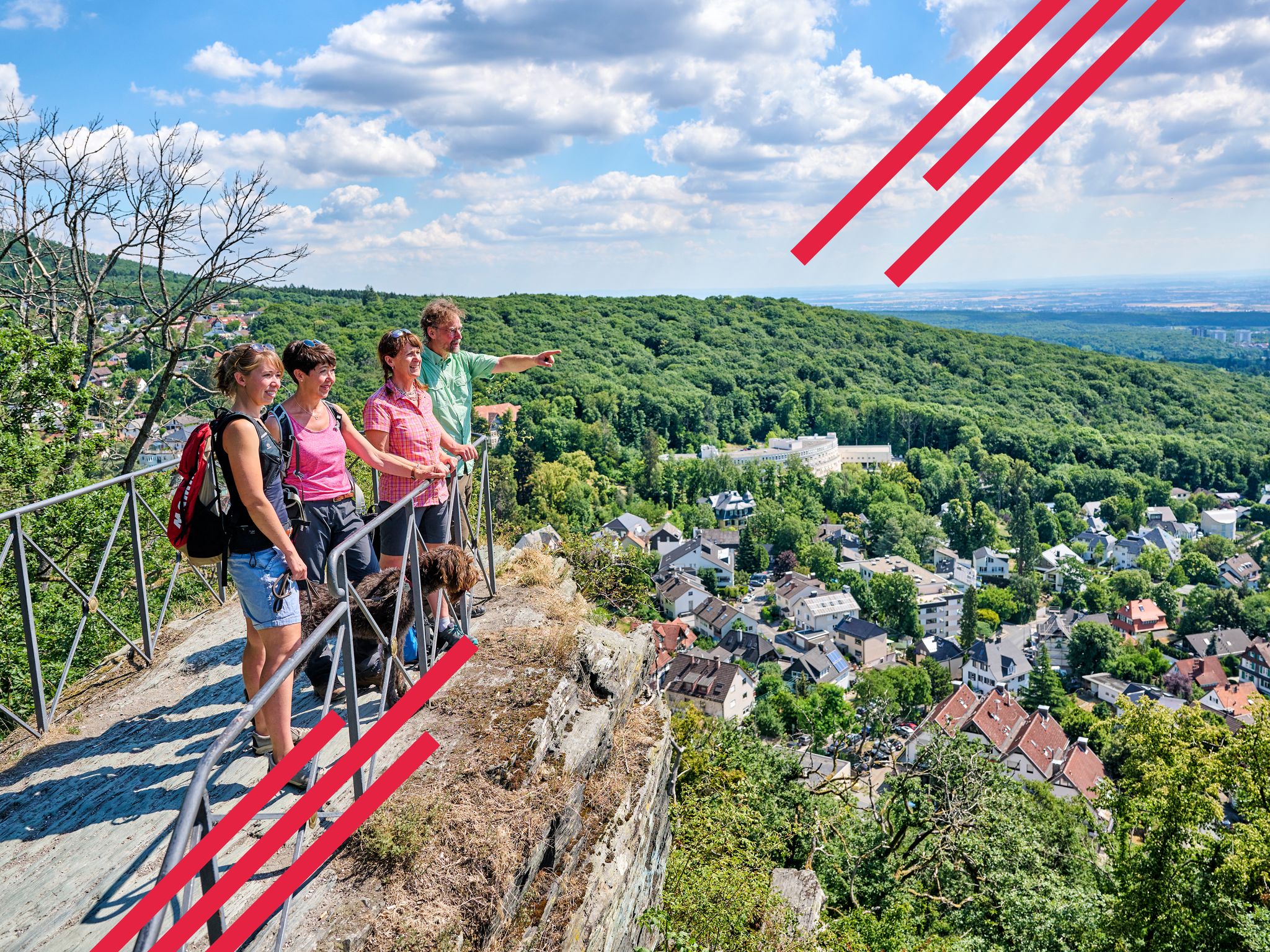
Urban hiking trails around Bad Soden am Taunus are situated on the southern slopes of the Taunus mountains, offering a diverse landscape for exploration. The region is characterized by a mix of picturesque forests, open fields, and gentle hills, providing varied terrain for urban walks. Proximity to the expansive Taunus Nature Park further enhances the natural environment, featuring both coniferous and deciduous woods. The area includes well-maintained paths suitable for exploring the town's surroundings.
Best urban hiking trails around Bad Soden am Taunus
- The most popular urban hiking route is Hundertwasser House Bad Soden – Bad Soden Old Town loop from Sulzbach (Taunus), a 1.9 miles (3.1 km) trail that takes 47 minutes to complete. This route explores the historic old town and passes by the distinctive Hundertwasser House.
- Another top favourite among local hikers is Eichwald Circular Route – New Spa Park loop from Sulzbach (Taunus), an easy 2.2 miles (3.6 km) path. This trail leads through the Eichwald forest and the tranquil New Spa Park.
- Local hikers also love the Pauline's Little Palace – Bad Soden am Taunus Station loop from Schwalbach am Taunus, a 1.8 miles (2.9 km) trail leading through urban areas and past Pauline's Little Palace, often completed in about 45 minutes.
- Hiking around Bad Soden am Taunus is defined by picturesque forests, open fields, and historic spa gardens. The network offers options for different ability levels, from leisurely strolls to more extended urban walks.
- The routes in Bad Soden am Taunus are highly rated by the komoot community with an average score of 4.5 stars from over 1,400 reviews. More than 6,500 hikers have used komoot to explore Bad Soden am Taunus's varied terrain.
Last updated: October 12, 2026
3
hikers
Easy hike. Great for any fitness level. Easily-accessible paths. Suitable for all skill levels.
1.0
(1)
3
hikers
Easy hike. Great for any fitness level. Easily-accessible paths. Suitable for all skill levels.

3
hikers
Easy hike. Great for any fitness level. Easily-accessible paths. Suitable for all skill levels.
2
hikers
Easy hike. Great for any fitness level. Easily-accessible paths. Suitable for all skill levels.
3
hikers
2.84km
00:44
10m
10m
Easy hike. Great for any fitness level. Easily-accessible paths. Suitable for all skill levels.
Get access to more routes and recommendations from other explorers.
Already have an account?
Our route recommendations are based on thousands of hikes, rides, and runs completed by other people on komoot.
Start today with a free account
Your next adventure awaits.

Other adventures around Bad Soden am Taunus


Tips from the Community

The Burgwarte (Burgbergturm) in Bad Soden am TaunusThe Burgwarte viewing tower, officially designated as Burgbergturm, is one of the most famous landmarks in Bad Soden am Taunus. It is located at an altitude of 180 meters above sea level on the Burgberg, which gives it its name, directly above the Old Kurpark. The ten-meter-high, square tower was built in 1900 by the Taunusklub in the historicizing style of a Roman watchtower with a distinctive crenellated crown. Its name goes back to the then popular, but historically never unequivocally proven, assumption that a Germanic refuge or ring castle was located on the hill in prehistoric times. In 1984 and 2008, the Burgwarte was extensively renovated through donations from citizens and associations. After climbing a total of 43 steps, the viewing platform offers visitors a wide panoramic view of the Vortaunus region, the Untermain plain, and the town of Bad Soden.
8
0
The Paulinenschlösschen is a historic, listed building in Bad Soden am Taunus, located directly on the edge of the old spa park. Its history began in 1847 when Duchess Pauline of Nassau had the three-story estate built as her personal summer residence. The Duchess had previously spent a very successful spa stay in the town in 1841 and subsequently decided to build. In addition to the main house, the original property included spacious utility rooms, gardens, agricultural land, and a coach house opposite. As early as 1855, the Duchess sold the estate to the physician Dr. Georg Thilenius. He converted the small palace into a spa guesthouse, which enjoyed an excellent reputation in the following decades and attracted high-ranking guests. In the 1870s and 1880s, Princess Bismarck and her daughter, among others, stayed here. In 1909, the town of Bad Soden finally acquired the building. After the Second World War, the house took a new direction and was used as an upscale restaurant from 1950 onwards, establishing itself as a well-known meeting place for gourmets, especially in the 1970s. After extensive renovations, the Paulinenschlösschen today serves a practical purpose and houses the central citizens' office of the town of Bad Soden.
5
0
Course: It originates in the Hoher Taunus on the southern slope of the Eichkopf above Kelkheim-Ruppertshain. From there, it flows downhill through the Kelkheim districts of Fischbach and Kelkheim-Mitte. Name Change: In the upper course (near Fischbach), it is often still called Fischbach. It officially bears this name only further downstream towards the municipality of Sulzbach. Confluence: After passing through Sulzbach, it flows on to Frankfurt-Sossenheim, where it finally flows into the Nidda. Significance: For Kelkheim and Sulzbach, it is the defining watercourse, which used to power mills and is important for local drainage and the urban climate today. Flood Protection: Due to its location on the Taunus slope, the stream can swell quickly during heavy rainfall, which is why there are special retention basins and protective measures in Kelkheim and Sulzbach.
14
0
Spa Guest Fountain: The figures depict spa guests during the Biedermeier, Rococo, Crinoline, and Modernist periods. A Roman figure recalls early history. The sun symbolizes the healing power of water. The fountain was created in 1980. • By Bonifatius Stirnberg (born 1933) Donated by "We for Bad Soden"
5
0
Inhalation: Nonspecific catarrh of the airways, chronic bronchitis, chronic rhinitis, chronic sinusitis, and functional voice disorders • Traditionally used for mucosal diseases, also as a mouthwash (caries and periodontal prophylaxis) Movement and immersion baths: Diseases of the musculoskeletal system (degenerative and functional joint diseases), inflammatory rheumatic diseases • Partial baths/compresses: Skin diseases, especially psoriasis vulgaris, atopic dermatitis, seborrheic eczema, impaired wound healing of various origins, including burns and diabetic icera Contraindications • Due to the highly hypertonic salt concentration, generally not suitable for drinking • Inhalation: In cases of pronounced sensitivity and irritability of the bronchi, strict medical monitoring of the therapy is necessary due to possible initial bronchospasms. • Full baths: not for open skin lesions and ulcers Instructions for use: Inhalations: monthly, daily as directed by the physician Rinsing: three times daily Exercise, full, and partial baths as directed by the physician • If necessary, gently warm the medicinal water to body temperature Composition according to the comprehensive medicinal water analysis by the Fresenius Institute dated June 8, 2016 Cations: Lithium (Li). ``` Sodium (Na) Potassium (K) Ammonium (NH4) Magnesium (Mg) Calcium (Ca) Strontium (Sr) Manganese (Mn) Iron (Fe) Copper (Cu) Arsenic (As) Undissociated substances Silica (H2SiO3) mg/L 6.1 6090 278 12 69.1 554 18.5 0.25 15.1 0.021 0.23 Anions Fluoride (F) Chlonide (Cl) Bromide (Br) Iodide (I) Sulfate (SO4) Bicarbonate (HCO3) Nitrate (NO3) Nitrite (NO2) mg/liter 1.35 9370 7.8 0.064 90 1931 <0.3 <0.005 30.6 Metaborsaura (HBO2) 9.32 Dissolved gases Carbon dioxide (CO2) 1140 Total mineralization 18484 pH value: Temperature in °C: 30.9
15
0

The Snail Fountain was financed by the spa and beautification association (today "Wir für Bad Soden") and inaugurated in 1967. "The fountain's water shoots up to eight meters high from 16 nozzles. At night, the water feature is illuminated from below. Just as the fountain is architecturally a product of its time, children especially love it today, dipping their hands in and balancing on its edge. The Snail Fountain doesn't bring forth any healing water. It simply soothes the eyes and the soul; a beautiful sight with St. Catherine's Church in the background." https://www.bad-soden.de/freizeit/bad-soden-am-taunus-erleben/gruene-oasen-parkanlagen/neuer-kurpark/
0
0

I find his houses original, but I prefer his paintings.
5
0
The foundation stone for the Hundertwasser House in Bad Soden was laid in 1990. It contains 17 completely different apartments ranging in size from 120 to 230 square meters, as well as a nine-story, 30-meter-high tower. Interior tours of the building are not available. The Hundertwasser House in Bad Soden is named after the Austrian artist Friedensreich Hundertwasser (1928-2000). The residential building, whose foundation stone was laid in November 1990, incorporates the first Bad Soden spa building, the Haus Bockenheimer, dating back to 1722. The building, which features a nine-story, 30-meter-high tower, contains 17 completely different apartments ranging in size from 120 to 230 square meters.
17
1
Frequently Asked Questions
How many urban hiking trails are available in Bad Soden am Taunus?
Bad Soden am Taunus offers a wide variety of urban hiking trails, with over 160 routes available. The vast majority, more than 140, are rated as easy, making them accessible for most hikers.
What is the best time of year for urban hiking in Bad Soden am Taunus?
The most pleasant seasons for urban hiking in Bad Soden am Taunus are spring and autumn. During these times, temperatures are mild, and the natural surroundings are particularly vibrant, with blooming flowers in spring and colorful foliage in autumn.
Are there family-friendly urban hikes in Bad Soden am Taunus?
Yes, many urban trails in Bad Soden am Taunus are suitable for families. For example, the Eichwald Circular Route – New Spa Park loop is an easy option that takes you through pleasant green spaces. The region also features the tranquil Liederbachsee, which has a family-friendly circular trail perfect for picnics and play.
Can I bring my dog on the urban hiking trails?
Many urban hiking trails in Bad Soden am Taunus are dog-friendly, especially those that traverse parks and natural areas. Always keep your dog on a leash and be mindful of local regulations, particularly in more populated areas or nature reserves. A good option to explore with your dog could be the Sulzbach Stream in Sulzbach loop, offering a pleasant walk along the stream.
What kind of terrain can I expect on urban hikes in Bad Soden am Taunus?
Urban hikes in Bad Soden am Taunus typically feature a mix of paved paths, gravel trails, and some natural forest floors, especially as routes venture towards the edges of the Taunus Nature Park. You'll encounter gentle hills and varied landscapes, from town centers to picturesque forests and open fields.
Are there any notable landmarks or viewpoints along the urban trails?
Absolutely! Many urban trails offer interesting sights. You can explore the unique Hundertwasser House Bad Soden and the historic Bad Soden Old Town. For panoramic views, while slightly outside the immediate urban core, the Taunus region is known for viewpoints like the Hardtberg observation tower and the Großer Feldberg summit, which offers far-reaching vistas. The View of Großer Feldberg from Altkönig is another stunning viewpoint.
How accessible are the urban hiking trails by public transport?
Bad Soden am Taunus is well-connected by public transport, making many urban trails easily accessible. Routes often start near train stations or bus stops. For instance, the Pauline's Little Palace – Bad Soden am Taunus Station loop begins conveniently close to the station.
Is parking available near the urban hiking trailheads?
Yes, parking is generally available in and around Bad Soden am Taunus, especially near popular starting points for trails. Look for designated parking areas in the town center or at the periphery of parks and natural areas. Some routes, like those starting from Sulzbach (Taunus), may have parking options in those adjacent communities.
What do other hikers enjoy most about urban hiking in Bad Soden am Taunus?
The komoot community highly rates the urban hiking experience in Bad Soden am Taunus, with an average score of 4.5 stars. Reviewers often praise the well-maintained paths, the blend of urban charm with natural beauty, and the accessibility of the trails for various fitness levels. The opportunity to discover hidden gems within the town and its immediate surroundings is also frequently highlighted.
Are there circular urban walks available?
Yes, many of the urban hikes in Bad Soden am Taunus are designed as circular routes, offering convenient day trips that start and end in the same location. Examples include the Hundertwasser House Bad Soden – Bad Soden Old Town loop and the Eichwald Circular Route – New Spa Park loop, both of which allow you to explore without needing to retrace your steps.
Can I find cafes or restaurants along the urban hiking trails?
Bad Soden am Taunus offers numerous cafes and restaurants, particularly in the town center and near the historic spa gardens. Many urban trails pass through or close to these areas, providing perfect opportunities for a break, a meal, or a refreshing drink after your hike. The Großer Feldberg summit, while a bit further out, also features a restaurant and kiosks.
Most popular routes around Bad Soden am Taunus
Most popular attractions around Bad Soden am Taunus

Get inspired with the komoot mobile app


Explore more
Browse the best Hikes in other regions.
