The best city hikes and walks around Parco Adda Sud
4.2
(1116)
8,205
hikers
150
hikes
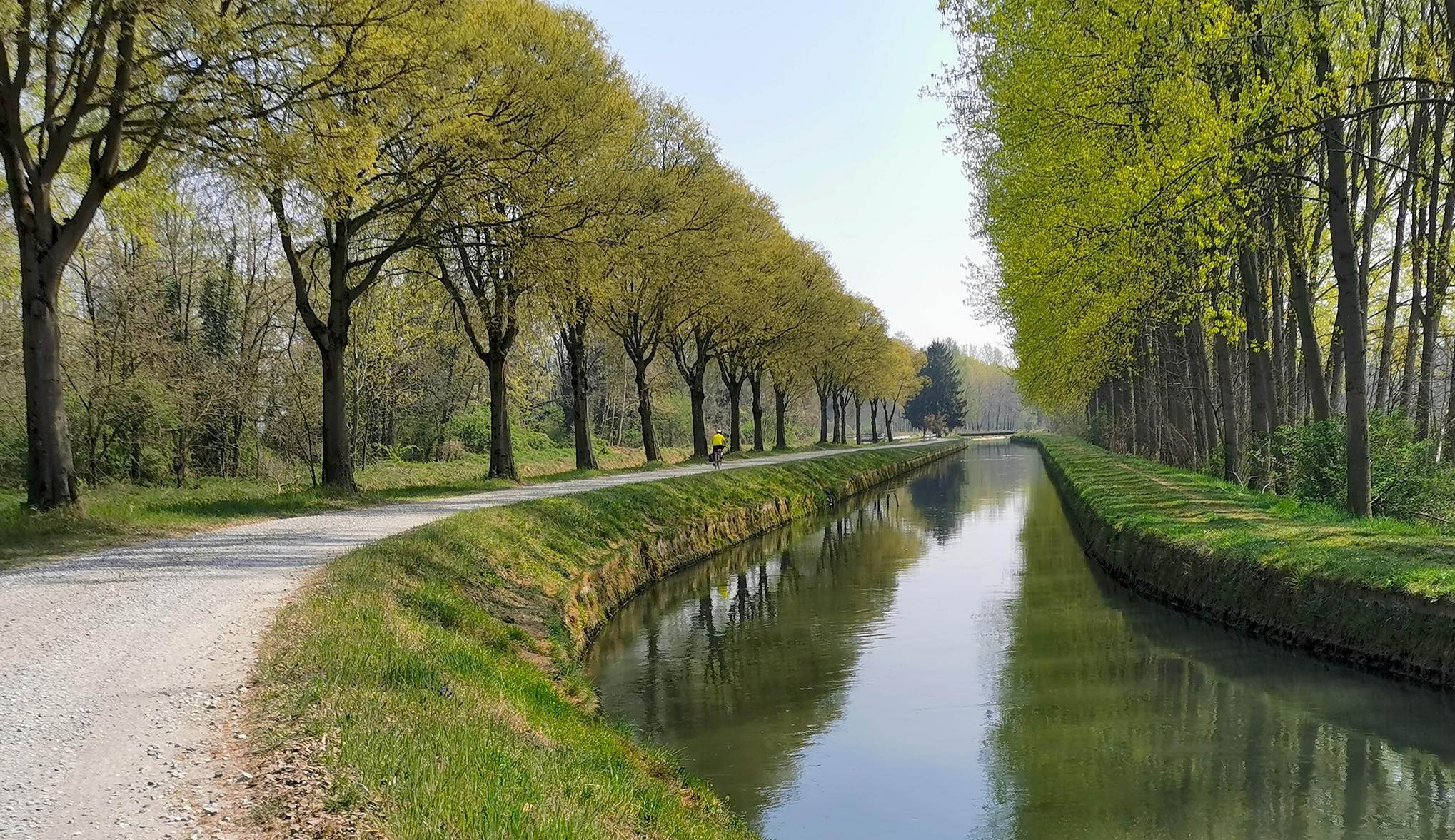
Urban hiking trails around Parco Adda Sud are characterized by the flat, riverine landscape of the Adda River, interspersed with agricultural fields and natural woodlands. The region features historical towns, traditional farmsteads, and significant irrigation canals like the Muzza and Vacchelli. Wetlands, known as "lanche" and "morte," formed by the river's historical course changes, add to the diverse environment. These routes often connect urban centers with the natural surroundings, offering accessible paths for various interests.
Best urban hiking trails around Parco Adda Sud
- The most popular urban hiking route is The center of Lodi – loop tour, a 4.8 miles (7.8 km) trail that takes 1 hour 58 minutes to complete, exploring the historical city center.
- Another top favourite among local hikers is Lodi Cathedral – Federico Barbarossa Gardens loop from Lodi, a moderate 5.2 miles (8.4 km) path. This route highlights key urban landmarks and green spaces within Lodi.
- Local hikers also love the Church of San Bernardino – Church of the Incoronata loop from Castiglione d'Adda, a 3.5 miles (5.6 km) trail leading through historical town centers and past significant churches, often completed in about 1 hour 25 minutes.
- Hiking around Parco Adda Sud is defined by river banks, historical towns, and agricultural landscapes, with routes offering options for different ability levels.
- The routes in Parco Adda Sud are highly rated by the komoot community with an average score of 4.1 stars from over 180 reviews. More than 650 hikers have used komoot to explore Parco Adda Sud's varied terrain.
Last updated: October 13, 2026
1.0
(1)
5
hikers
7.76km
01:59
30m
30m
Easy hike. Great for any fitness level. Easily-accessible paths. Suitable for all skill levels.
8
hikers
2.12km
00:32
10m
10m
Easy hike. Great for any fitness level. Easily-accessible paths. Suitable for all skill levels.

9
hikers
3.67km
00:57
20m
20m
Easy hike. Great for any fitness level. Easily-accessible paths. Suitable for all skill levels.
6
hikers
6.12km
01:35
30m
30m
Easy hike. Great for any fitness level. Easily-accessible paths. Suitable for all skill levels.
6
hikers
Easy hike. Great for any fitness level. Easily-accessible paths. Suitable for all skill levels.
Get access to more routes and recommendations from other explorers.
Already have an account?
Our route recommendations are based on thousands of hikes, rides, and runs completed by other people on komoot.
Start today with a free account
Your next adventure awaits.
Popular around Parco Adda Sud
Other adventures around Parco Adda Sud

Tips from the Community

The Cathedral with the Clock Tower occupies the east side of Piazza della Vittoria, and the facades of houses and palaces frame its facade. The square, as a civic and religious center, as we see it today, was formed in different periods. The construction site of the Duomo was organized according to the methods of the time, i.e. by tracing the perimeter directly on the ground and then starting with the construction of the apse area. The so-called "stepped" facade suggests the division of the internal space, in which the central nave is higher and wider than the two side aisles. In the center of the facade, in the upper part, is the aedicule containing a bronze copy of the statue of San Bassiano, the original in copper and gold patina is kept inside the main nave of the cathedral. The central part of the facade is occupied by the rose window which, besides being a typically decorative element, allows for good internal lighting.
0
0
Around the rose window and the slopes of the roof, the decoration with interwoven arches and polychrome majolica cups of Byzantine derivation is to be observed. Below the rose window, two Renaissance stone windows have been created. The "candelabra" columns and the side coats of arms refer to the motifs of humanistic culture. The most characteristic element of this facade is the protiron. In the lunette above the portal are depicted the Redeemer, the crowned Madonna, and Saint Bassiano imploring. On the pilasters of the horizontal architrave are depicted Adam and Eve and, below, two other figures that recall the vices of man. The portal is framed by spiral columns, and the decorations surrounding the portal arch consist of naturalistic decorative motifs derived from the Lombard school, with shoots, spirals, and aquatic plant leaves. Finally, the small roof that frames and shelters the portal is supported by stylophoric lions.
0
0

The Adda River is the fourth longest watercourse in Italy with its 313 kilometers and is entirely within the Lombardy region. It represents one of the main left tributaries of the Po River and has a very large hydrographic basin that covers about a third of the regional territory.
1
0
The Adda River is the fourth longest watercourse in Italy with its 313 kilometers and is entirely contained within the Lombardy region. It represents one of the main left tributaries of the Po River and has a very large hydrographic basin that covers about a third of the regional territory.
0
0
The Adda River is the fourth longest watercourse in Italy with its 313 kilometers and is entirely contained within the Lombardy region. It represents one of the main left tributaries of the Po River and has a very large hydrographic basin that covers about a third of the regional territory.
0
0
The Torrione of Lodi is a 15th-century historical defensive structure, an integral part of the Castello di Lodi (Visconteo Castle), commissioned by Francesco Sforza. It represents one of the main testimonies of the Renaissance fortifications of the Lombard city, located in the historical context of the city.
2
0

Beautiful bridge to Napoleon Bonaparte
2
0
Moo8 walking along the Adda River
1
0
Frequently Asked Questions
How many urban hiking trails are available in Parco Adda Sud?
There are over 110 urban hiking trails in Parco Adda Sud, offering a wide variety of options for exploring the region's towns and natural areas. Most of these, around 95, are considered easy, making them accessible for many.
Are there urban hiking trails suitable for families with children?
Yes, Parco Adda Sud is an excellent destination for family-friendly urban hikes. The trails are generally accessible with well-compacted dirt surfaces, and many are easy. Routes like the Federico Barbarossa Gardens – Lodi Cathedral loop from Lodi are short and pleasant for all ages, offering a gentle connection with nature and local sights.
What kind of natural features can I expect to see on urban hikes in Parco Adda Sud?
Urban hikes in Parco Adda Sud often blend town exploration with natural beauty. You'll encounter the Adda River's banks, agricultural fields, poplar groves, and hedgerows. The park is also known for its 'lanche' and 'morte' – marshy areas formed by the river's historical course changes, which are important wetlands. You might also spot diverse wildlife, especially various bird species.
Are there any circular urban hiking routes in the area?
Yes, many urban routes in Parco Adda Sud are designed as convenient circular tours. For example, you can enjoy The center of Lodi – loop tour, which is an easy 7.7 km hike, or the slightly more challenging Lodi Cathedral – Federico Barbarossa Gardens loop from Lodi, covering about 8.4 km.
What historical landmarks or attractions can I discover along urban trails?
Urban hikes in Parco Adda Sud offer a rich blend of history and nature. You can explore ancient rural settlements, traditional farmsteads, and small churches. Notable historical sites include medieval and Renaissance castles like the Borromeo Castle of Camairago and Maccastorna and its castle. You might also encounter structures like the Muzza and Vacchelli irrigation canals, showcasing human ingenuity.
What do other hikers enjoy most about urban hiking in Parco Adda Sud?
The komoot community highly rates the urban hiking experience in Parco Adda Sud, with an average score of 4.1 stars. Reviewers often praise the peaceful blend of historical towns with the serene riverine landscapes, the accessibility of the trails, and the opportunity to discover local culture and nature side-by-side.
Are urban hiking trails in Parco Adda Sud dog-friendly?
While many natural areas in Parco Adda Sud are dog-friendly, it's always best to keep dogs on a leash, especially in urban areas and near wildlife habitats. When hiking through towns, be mindful of local regulations and other pedestrians. Always carry waste bags and ensure your dog is well-behaved around people and other animals.
What is the best season for urban hiking in Parco Adda Sud?
Spring and autumn are generally ideal for urban hiking in Parco Adda Sud, offering pleasant temperatures and beautiful scenery. Spring brings blooming flora, while autumn showcases vibrant foliage. Summer can be warm, but riverside paths offer some respite. Winter hikes are also possible, providing a different, often quieter, perspective of the urban and natural landscapes.
Are there any specific urban routes that highlight religious or architectural sites?
Yes, several urban routes allow you to explore significant religious and architectural sites. For instance, the Church of San Bernardino – Church of the Incoronata loop from Castiglione d'Adda is an easy 5.5 km hike that takes you past notable churches. You can also visit the Sanctuary of Our Lady of the Fountains, a beautiful religious building near the trails.
How accessible are the urban hiking trails by public transport or car?
Many urban hiking trails in Parco Adda Sud are accessible from towns like Lodi and Castiglione d'Adda, which typically have public transport connections. For those traveling by car, parking is generally available in or near these towns, providing convenient access to trailheads. It's advisable to check specific route starting points for detailed parking and public transport information.
Most popular routes around Parco Adda Sud
Most popular attractions around Parco Adda Sud

Get inspired with the komoot mobile app


Explore more
Browse the best Hikes in other regions.
