The best city hikes and walks in Weesener Bach
4.5
(8372)
28,891
hikers
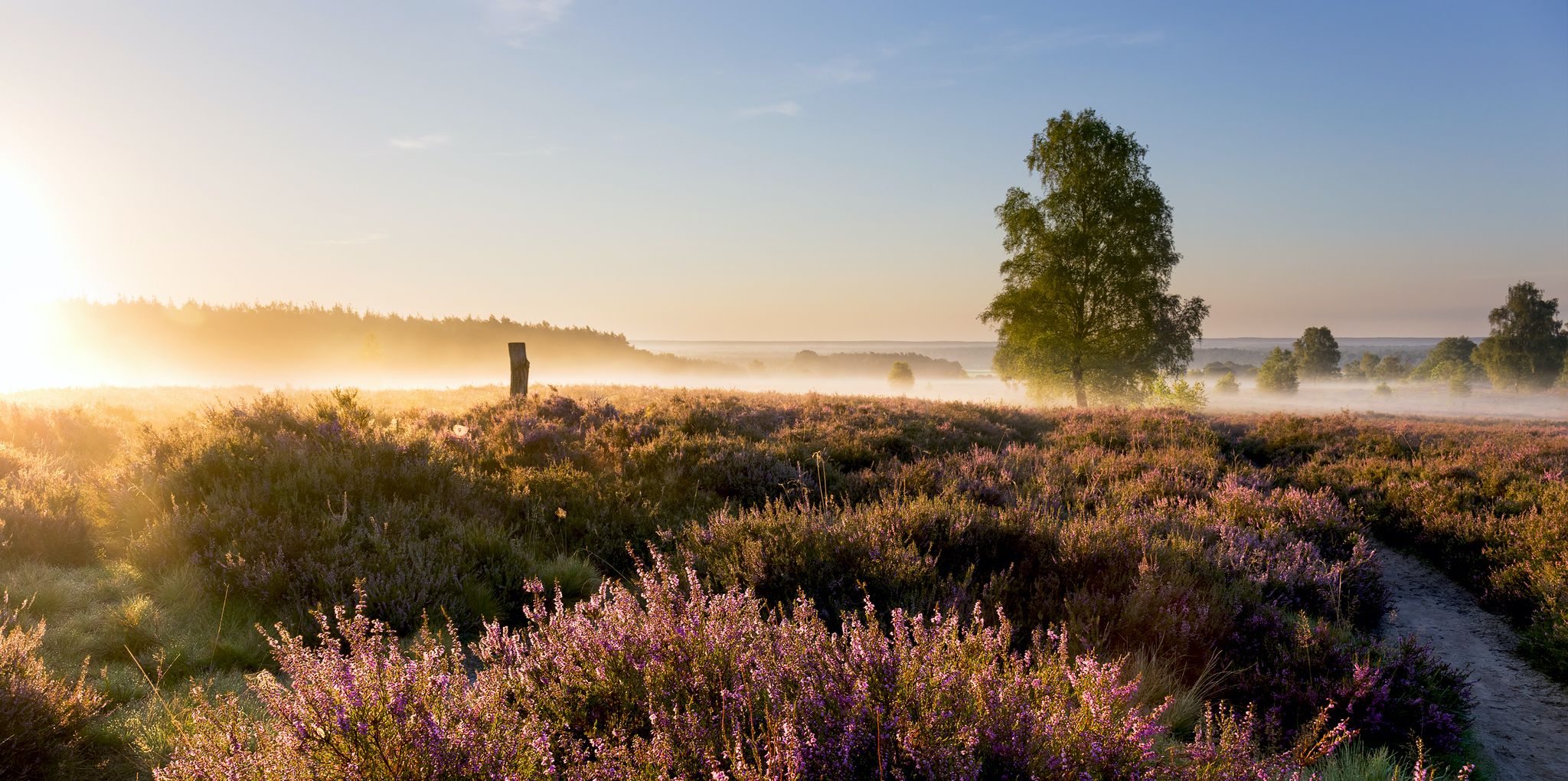
Urban hiking trails in Weesener Bach are situated within a nature reserve, characterized by a near-natural heath stream and diverse floodplain ecosystems. The region features alluvial, marsh, and bog forests, alongside species-rich grassland areas and heathlands. Trails generally present no significant ascents, offering accessible routes through varied natural landscapes. The area is part of the larger Südheide Nature Park, providing a mix of primitive pines, juniper, and wide heath areas.
Best urban hiking trails in Weesener Bach
- The most popular…
Last updated: July 9, 2026
2
hikers
Easy hike. Great for any fitness level. Easily-accessible paths. Suitable for all skill levels.
4
hikers
3.96km
01:01
20m
20m
Easy hike. Great for any fitness level. Easily-accessible paths. Suitable for all skill levels.

Sign up for free
2
hikers
5.13km
01:19
20m
20m
Easy hike. Great for any fitness level. Easily-accessible paths. Suitable for all skill levels.
5.0
(1)
1
hikers
4.58km
01:10
20m
10m
Easy hike. Great for any fitness level. Easily-accessible paths. Suitable for all skill levels.
1
hikers
4.26km
01:05
20m
20m
Easy hike. Great for any fitness level. Easily-accessible paths. Suitable for all skill levels.
Our route recommendations are based on thousands of hikes, rides, and runs completed by other people on komoot.
Start today with a free account
Your next adventure awaits.
Login or Signup
Popular around Weesener Bach
Other adventures in Weesener Bach

Tips from the Community

Added to the collection: komoot.com/de-de/collection/3600632/-naturdenkmaeler-besondere-baeume-und-weitere-schaetze-der-natur
2
0

Charge your battery here and then go exploring a bit.
0
0

St. Lamberti Church in Bergen is a Lutheran church with a long history. Its origins date back to the 9th century, and it was first documented in 1197. The current neoclassical church building was built in 1826/27 and expanded in 1900. It is a three-aisled hall church with galleries. A striking feature is the freestanding wooden bell tower from 1728. It houses four bronze bells, including two historic ones from the 17th and 18th centuries. The oldest bell, the Epiphany Bell from around 1500, is located in the church's ridge turret. The organ was built by the Alsatian company Muhleisen and installed in 1998/99. It has 34 stops on three manuals and a pedal and is renowned for its sound quality. The church is an important place for music, history and community life.
4
0
Bergen's town hall was originally built in 1910/11 as an agricultural winter school – one of the first institutions of its kind in the region. A relief depicting a plow and quill on the facade still commemorates its former use. As part of the administrative reform, the building was converted into a town hall in 1972 and has served exclusively as the city administration ever since. The administrative complex is complemented by the neighboring registry office, a listed half-timbered building dating from 1819, which the city acquired in 1986 and restored in 1997. The historical development of the town hall and its outbuildings reflects Bergen's transformation from an agriculturally dominated community to a modern city administration.
3
0
The so-called "1,000-year-old oak on Kirchberg" is an imposing natural monument and cultural landmark of the city. It stands centrally behind St. Lamberti Church and is easily accessible. Despite its name, its actual age is estimated at around 350 years. It is a pedunculate oak (Quercus robur) with a breast height of 7.50 meters and a height of around 25 meters. Its crown diameter of 28 meters is particularly impressive. The trunk grows straight up for about six meters before the crown divides into two large main branches. The oak is in very good vitality, with only a small amount of deadwood, and is considered a symbol of the long history and the connection of the city of Bergen with its natural environment – it is even depicted in a stylized form on the city's coat of arms.
5
0
The Römstedthaus Local History Museum in Bergen is located in a historic smokehouse dating back approximately 350 years and is dedicated to the history of rural life and regional culture in the Celle district. It opened in 1913 and was named after the association's then chairman, Friedrich Römstedt, in 1929. The museum includes several buildings, including the main house, a tithe barn, a loft, and a small granary that served as refugee accommodation during World War II. The exhibition vividly conveys everyday life in past centuries and offers a lively insight into the region's rural history. A café is located near the museum, making it a great place to take a break.
3
0
The war memorial commemorates the fallen of the Franco-Prussian War of 1870/71. This war marked the last major military conflict between the North German Confederation, then under Prussian leadership, and the French Empire. It ended with a victory for the German troops and led to the founding of the German Empire in 1871. The memorial is a listed monument and an important testament to local commemorative culture. The memorial in Bergen was officially inaugurated on June 22, 1878. It consists of a sandstone obelisk topped with an Iron Cross, with two white marble plaques embedded in its base. The inscription on one of the plaques reads: "In memory of the soldiers from the parish of Bergen who fell in the years 1870 and 1871." The memorial is a significant testament to local commemorative culture and is a listed monument. It is freely accessible and can be visited at any time.
5
0
The war memorial for the victims of the First World War was erected in 1922 and commemorates the fallen soldiers from the parish of Bergen. The memorial consists of a curved wall with two lateral columns and is accessed via two steps. Five bronze plaques bear the names of 241 fallen soldiers, arranged according to the localities of the region. The memorial is crowned by a figure of a fallen soldier, over whom a soldier wearing a steel helmet is leaning. On the front is the dedication "The Parish of Bergen 1914–1918 to its Heroes," and on the back the words "Love Never Ends." The memorial is an important testament to local commemorative culture and is a listed historical monument. It is freely accessible and can be visited at any time.
4
0
Frequently Asked Questions
How many urban hiking trails are available in Weesener Bach?
There are 5 urban hiking trails in the Weesener Bach area, all offering an easy difficulty level suitable for most hikers. These routes are perfect for exploring the local towns and their surrounding natural beauty.
What kind of natural features can I expect to see on urban hikes in Weesener Bach?
Urban hikes in Weesener Bach often feature the near-natural heath stream itself, which is a protected nature reserve. You'll experience diverse ecosystems including alluvial forests, marshlands, and species-rich grasslands, all contributing to the area's rich biodiversity. Keep an eye out for the clear, high-quality water of the Weesener Brook.
Are there any historical landmarks or points of interest along the urban trails?
Yes, several urban trails pass by interesting historical sites. A notable landmark is the Luttermühle, a historic water mill that has operated as a sawmill since 1757. You might also encounter the Historic Farmstead in Naturpark Südheide, offering a glimpse into the region's past.
What is the best time of year for urban hiking in Weesener Bach?
The Weesener Bach area is beautiful year-round, but spring and autumn offer particularly pleasant conditions for urban hiking. Spring brings blooming flora, while autumn showcases vibrant foliage. The trails are generally not demanding, making them accessible in most seasons, though checking local weather is always advisable.
Are the urban hiking trails in Weesener Bach suitable for families?
Yes, the urban hiking trails in Weesener Bach are generally very family-friendly. All 5 routes are rated as easy, with minimal elevation changes, making them suitable for children and those looking for a relaxed walk. The presence of a wading pool on the Weesener Bach can also be a fun stop for families.
Can I bring my dog on the urban hiking trails?
The Südheide Nature Park, where Weesener Bach is located, generally welcomes dogs on trails, provided they are kept on a leash to protect the diverse wildlife and natural environment. It's always a good idea to carry water for your pet and dispose of waste properly.
What do other hikers enjoy most about urban hiking in Weesener Bach?
The komoot community highly rates the urban hiking experience in Weesener Bach, with an average score of 4.7 stars from 66 reviews. Hikers often praise the tranquil and immersive natural setting, the well-maintained paths, and the opportunity to observe local wildlife while enjoying easy, accessible routes.
Are there any circular urban hiking routes available?
Yes, all the urban hiking routes in Weesener Bach are circular, offering convenient starting and ending points. For example, you could try the St. Lamberti Church (Bergen) – Bergen Dairy loop from Bergen (b Celle) for a pleasant round trip.
What is the typical length and duration of urban hikes in this area?
Urban hikes in Weesener Bach typically range from 4 to 6.3 kilometers in length. They generally take between 1 to 1.5 hours to complete at a moderate pace, making them ideal for a leisurely stroll or a quick escape into nature. An example is the Bergen Town Hall – Mill Pond at Bürgerpark loop from Bergen, which is about 4 km long.
Is there parking available near the urban hiking trails?
Yes, parking is generally available in the towns and villages that serve as starting points for these urban trails, such as Bergen. Specific parking information can often be found on the individual route pages on komoot, like for the Mill Pond at Bürgerpark – Bergen Town Hall loop from Bergen.
Are there any urban trails that pass by the Berger Bach?
Yes, one of the urban trails, the St. Lamberti Church (Bergen) – Berger Bach loop from Bergen, specifically takes you along the Berger Bach, offering views of this local stream as it flows through the area.
Can I find urban routes that connect different points of interest like the Mill Pond and Bergen Dairy?
Absolutely. There are routes designed to connect various local points of interest. For instance, the Mill Pond at Bürgerpark – Bergen Dairy loop from Bergen offers a convenient way to explore both the scenic Mill Pond and the Bergen Dairy within a single urban hike.
Most popular routes in Weesener Bach
Most popular attractions in Weesener Bach

Get inspired with the komoot mobile app


Explore more
Browse the best Hikes in other regions.
