The 3 Most Amazing Peaks around Hellingly
Best mountain peaks around Hellingly are found within the varied topography of East Sussex, characterized by rolling hills rather than traditional mountains. The region, including the South Downs National Park, offers significant elevated points that provide expansive views and opportunities for outdoor activities. These prominent hills are considered the highest points in the area, attracting visitors for their natural beauty and recreational value.
Best mountain peaks around Hellingly
- The most popular mountain peaks is Firle Beacon summit, a summit…
Last updated: June 25, 2026
Firle Beacon summit
Highlight • Summit
Tip by

Combe Hill Causewayed Enclosure
Highlight • Historical Site
Tip by

Sign up now to discover places like this
Get recommendations on the best single tracks, peaks, & plenty of other exciting outdoor places.
Sign up for free
Wilmington Hill Trig Point
Highlight • Natural Monument
Tip by

Start today with a free account
Your next adventure awaits.
Login or Signup
Other adventures around Hellingly

Tips from the Community

The trig point has a distant backdrop of the South Downs away to the west towards Cliffe Hill and Firle Beacon. The famous 'Long Man of Wilmington' is beyond the fence on the steep north side of the hill.
1
0
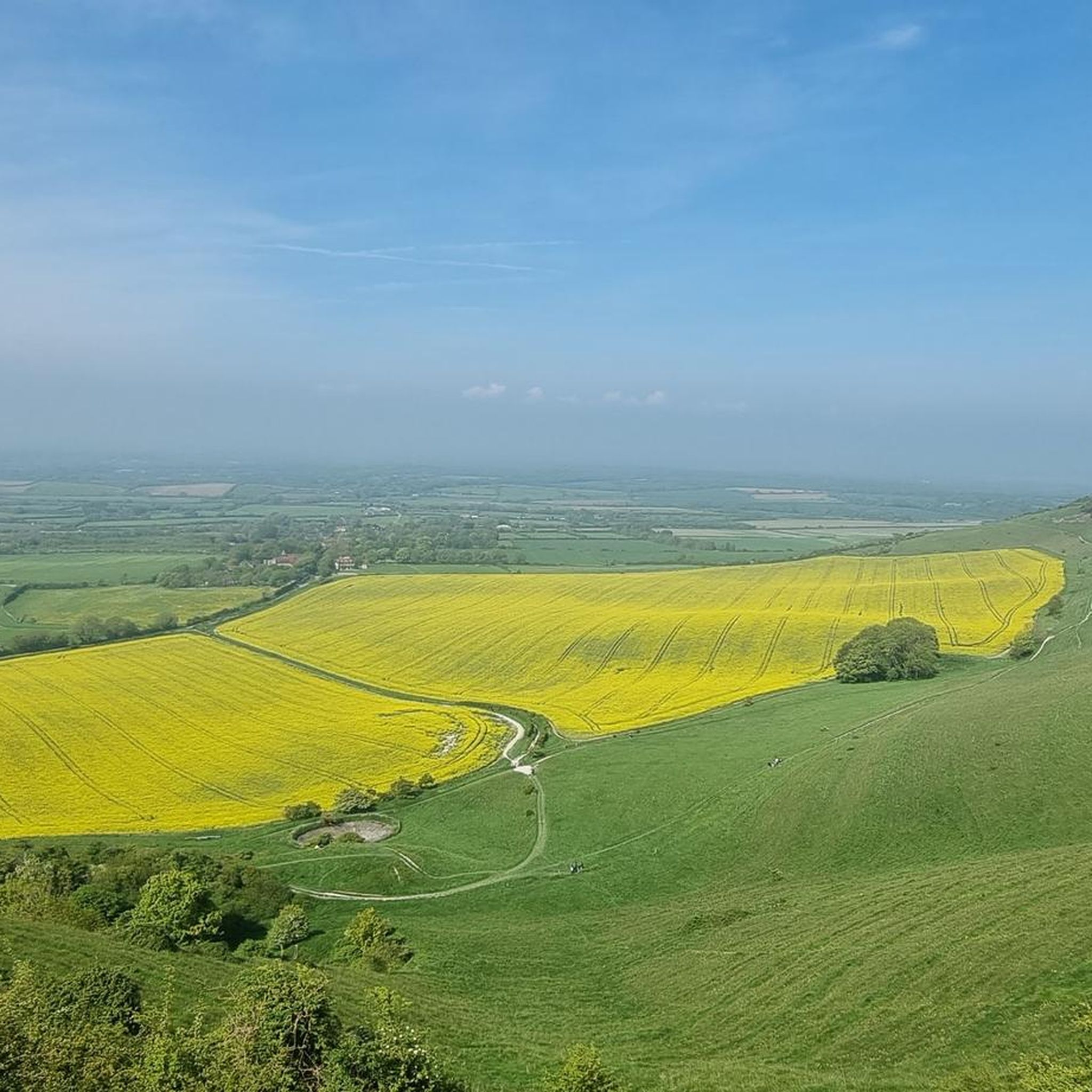
An amble up Firle Beacon in the South Downs of southern England. It is 217 metres high and is a Marilyn. It commands a far-reaching view. It is a trig pointed summit and a designated Marilyn.
3
0
Wilmington Hill is a small summit in the South Downs area not far from Eastbourne. It is 214 metres high and is a designated Marilyn and has a trig pointed summit.
3
0

So peaceful up here! On a clear day you’ll be able to see for miles!
2
0

The site of a Neolithic causewayed enclosure, Combe Hill is a 636-foot (194 m) high point on the South Downs escarpment above Eastbourne. The hill boasts fine sea vistas and great views down onto the town. The enclosure was built around 3200 BC and is made of two concentric ditches. Archaeological discoveries have included Roman pottery, Bronze Age bowl barrows and flint tools.
0
0

One of my favourite Sussex Beacons - Firle Beacon is relatively unique in that it offers fantastic open views over Mount Caburn, near Lewes. Even when the weather is bleak, cloudy, windy, raining and the views are minimal, it’s an energising spot that makes me feel alive. The summit has clearly been a popular spot for centuries as there are several interesting archaeological earthworks at the summit and it has its own legend as well i.e. the earthworks include a long barrow, known as the “Giant’s Grave”, apparently the resting place of the giant that slew the Wilmington Giant who fell on a nearby hillside now marked by the Long Man of Wilmington.
2
0

We set up our wild camp pitch just down from the crest of Firle Beacon and were left undisturbed. The carpark below had a couple of vans parked up for the night and apparently is listed as a good spot on Park4Night. The only bother we had was from a load of enormous May Bugs which suddenly appeared around 8pm. Horrifying if you've never encountered them en masse before! *Responsible note that wild camping means you leave no trace. No fires, no litter left behind. Tent up late and down early in the morning.
1
0

Lots of exploring to be had here, bridleways of the South Downs Way make some great routes/loops.
2
0
Frequently Asked Questions
What are the most prominent elevated points or 'peaks' around Hellingly?
While Hellingly itself is low-lying, the broader East Sussex region features several significant elevated points. Notable examples include Ditchling Beacon, known for its panoramic views, Black Down, the highest point in Sussex, and Butser Hill (just outside the county), recognized for its wild landscape. Within the immediate area, you can explore Firle Beacon summit, Combe Hill Causewayed Enclosure, and Wilmington Hill Trig Point.
What kind of views can I expect from these elevated points?
The hills around Hellingly offer extensive and far-reaching views. From Firle Beacon summit, you can enjoy broad vistas over the South Downs. Combe Hill provides fine sea vistas and great views down onto Eastbourne. Ditchling Beacon offers panoramic views across the countryside and towards the English Channel, while Black Down is renowned for its inspiring views, including the Temple of the Winds viewpoint.
Are there any historical or archaeological sites on these hills?
Yes, several of these elevated points have significant historical value. Firle Beacon summit has many visible ancient burial sites and is steeped in local folklore. Combe Hill Causewayed Enclosure is the site of a Neolithic enclosure built around 3200 BC, with archaeological discoveries including Roman pottery and Bronze Age bowl barrows. The famous 'Long Man of Wilmington' is also located near Wilmington Hill.
What outdoor activities can I do near the peaks around Hellingly?
Beyond hiking and enjoying the views, the area around Hellingly offers various outdoor activities. You can find numerous cycling routes, including traffic-free bike rides, gravel biking, and road cycling. For example, explore routes like the 'Cuckoo Trail – Horam Old Station loop' for easy cycling, or more challenging gravel routes like 'The Long Man of Wilmington – Alfriston Village loop'. You can find more details on these activities in our guides for Traffic-free bike rides around Hellingly, Gravel biking around Hellingly, and Road Cycling Routes around Hellingly.
Are there family-friendly options for exploring the hills around Hellingly?
Many of the trails leading to and around these elevated points are suitable for families, though some ascents can be challenging. The South Downs National Park, where many of these hills are located, offers a variety of paths. For easier, flatter options, consider sections of the Cuckoo Trail, which is traffic-free and accessible from Hellingly, providing a gentle way to experience the local landscape.
When is the best time of year to visit the hills around Hellingly?
The hills around Hellingly are enjoyable year-round, but each season offers a different experience. Spring brings wildflowers and milder temperatures, while summer provides long daylight hours for extended walks. Autumn showcases beautiful foliage, and winter, though colder, can offer crisp air and clear views. Always check local weather conditions before heading out, especially during colder months.
What is the highest point in the broader East Sussex region?
The highest point in Sussex is Black Down, located in the north-west of the county, standing at 280 meters (919 feet) above sea level. It's known for its inspiring views and gorse and heather landscapes.
What natural features are unique to the hills in this area?
The hills in East Sussex are characterized by the rolling chalk downs of the South Downs National Park and the wooded areas of the Weald. You'll find diverse flora and fauna, including gorse and heather on Black Down, and exposed landscapes where trees have been shaped by persistent winds, particularly around Butser Hill. The area is also rich in ancient burial sites and unique geological formations.
Can I find circular walking routes around these hills?
Yes, the South Downs Way, which passes over many of these prominent hills like Ditchling Beacon, offers numerous opportunities for circular walks by combining sections of the long-distance path with local trails. Many local guides and maps provide detailed circular routes of varying lengths and difficulties, allowing you to start and end at the same point.
Are these hills dog-friendly?
Generally, the hills and trails in the East Sussex region are dog-friendly. However, it's important to keep dogs on a lead, especially near livestock, on nature reserves, or during ground-nesting bird seasons. Always follow the Countryside Code and ensure your dog is under control to protect wildlife and other visitors.
Where can I find parking for these hill walks?
Parking is typically available at or near the base of many prominent hills and trailheads. For popular spots like Ditchling Beacon, there are designated car parks. For other areas, look for smaller car parks in nearby villages or lay-bys. Always check for any parking restrictions or fees before you go.
What makes Firle Beacon a notable spot to visit?
Firle Beacon summit stands at 712 feet (217 meters) and offers extensive views over the South Downs. It's notable for its many visible ancient burial sites and local folklore, including tales of giants. It's also a designated Marilyn and features a trig point, making it a popular destination for hikers and those seeking panoramic vistas.
Most popular routes around Hellingly
Most popular attractions around Hellingly

Get inspired with the komoot mobile app


Explore more
See even more amazing summits around Hellingly with these guides:
