Top 3 Caves around Flekkefjord
Best caves around Flekkefjord are found in a region known for its unique geological formations and coastal landscapes in Southern Norway. This area showcases the powerful effects of ancient ice ages and sea level changes on the coastline. Visitors can explore a variety of natural and man-made subterranean features, offering insights into both geological history and human interaction with the environment. The diverse terrain provides opportunities for challenging hikes and historical exploration.
Best caves around Flekkefjord
- The most popular caves…
Last updated: August 16, 2026
Brufjell Caves
Highlight • Cave
Translated by Google •
Tip by

Brufjell and Brufjellhålene Caves
Highlight • Cave
Translated by Google •
Tip by

Sign up now to discover places like this
Get recommendations on the best single tracks, peaks, & plenty of other exciting outdoor places.
Sign up for free
Tunnel and Ruins of Flekkefjord Coastal Fort
Highlight • Historical Site
Tip by

Blåfjell Mines
Highlight • Historical Site
Translated by Google •
Tip by

Mine 1
Highlight • Cave
Tip by

Sign up for free to discover even more caves around Flekkefjord.
Sign up for free
Already have an account?
Start today with a free account
Your next adventure awaits.
Login or Signup

Tips from the Community


A tunnel and ruins from the former Flekkefjord Coastal Fort, built as part of the wartime coastal defences. Concrete remains and passages give a glimpse into the site’s military history. An interesting stop along the route.
0
0

The Blåfjell mines were in operation from 1863 to 1876. Titanium-containing iron ore was mined here. The ore from the mine was brought to Rekefjord. In total, around 80,000 tons of ore were extracted from the mines. A railway line was built from Blåfjell to Rekefjord. The wagons were initially pulled by horses and later by locomotives. Quote from visitnorway.com
3
0

Please close the gate after passing through
1
0
Very nicely signposted with alternatives
1
0

The path to the caves is extremely challenging and dangerous. Good footing and surefootedness are required. This route is only suitable for experienced hikers. Heed the recommendations and warnings on the signs. You should avoid the path to the caves even if it's slightly damp.
1
1

All in all a really worthwhile hike
0
0

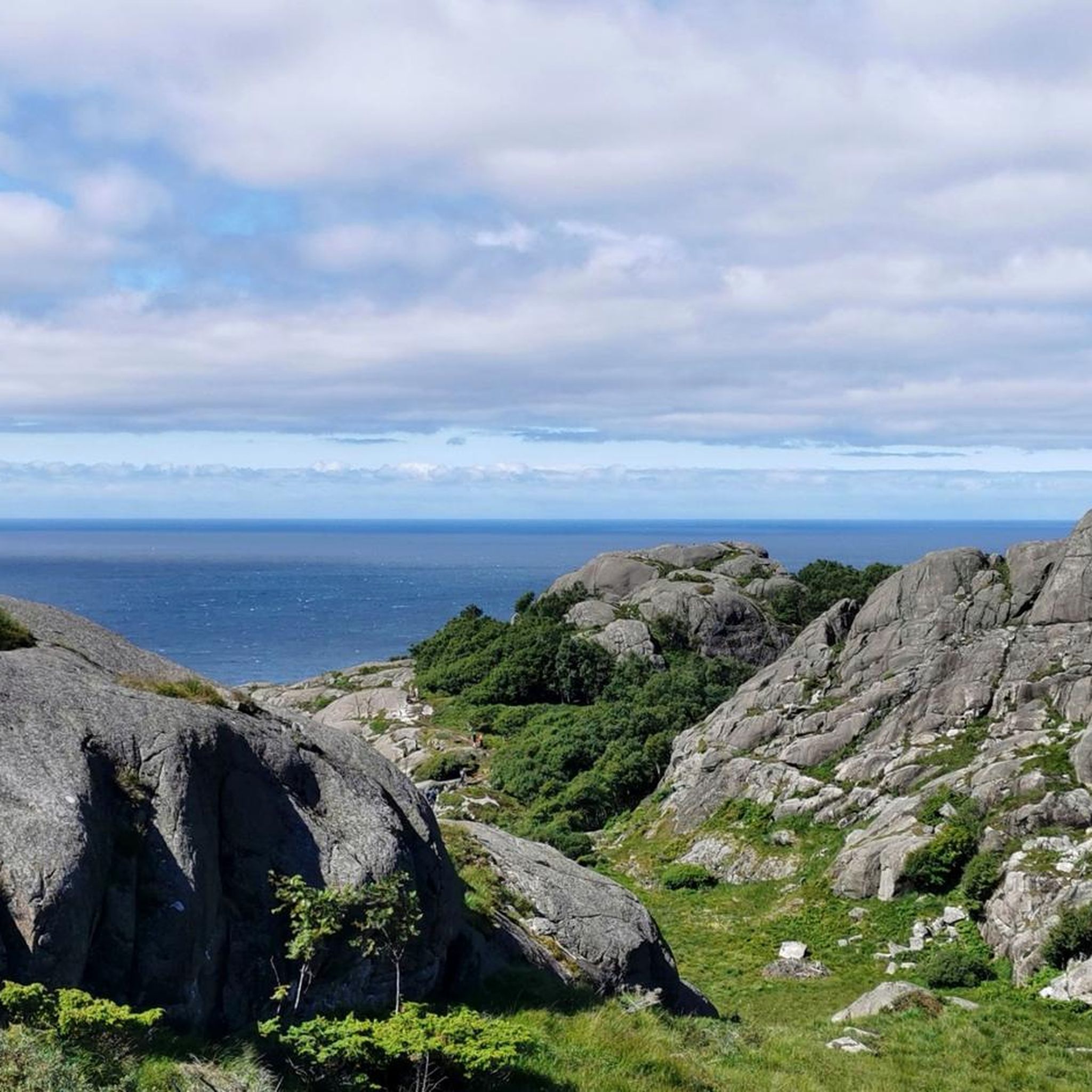
Sturdy shoes and sure-footedness are definitely necessary here! You can take the blue route to Brufjell or the more exposed red route. However, in my opinion, the level of difficulty hardly differs, but the red route has more prospects. The path to Brufjiellhålene is very reminiscent of a via ferrata. Here you climb over wet rocks into the abyss, absolutely NOT recommended for the inexperienced! Anyone who makes it down safely will be rewarded with a great backdrop. This was created by the former glaciers.
0
0
Frequently Asked Questions
What are the most significant natural caves to visit in Flekkefjord?
The most significant natural caves are the Brufjell Caves, also known as Brufjellhålene. These horizontal potholes were carved out by waves and ice during the Ice Age, over 20,000 years ago, and are part of the UNESCO Magma Geopark. They offer a unique glimpse into the region's geological past and stunning coastal scenery.
What is the difficulty level for exploring the Brufjell Caves?
Reaching the Brufjell Caves is considered a challenging adventure. The descent to the caves is very steep and exposed, classified as 'expert' level by Norwegian standards. Metal handholds and chains are installed to assist, but it requires sure-footedness and a head for heights. The hike often takes at least 5 hours.
Are the caves around Flekkefjord suitable for families or children?
The main natural attraction, the Brufjell Caves, is generally not recommended for children under 10 due to the extremely steep and exposed descent. The route is also not suitable for dogs. For a less strenuous experience, you might consider historical sites like the Tunnel and Ruins of Flekkefjord Coastal Fort, which are rated intermediate.
What historical 'caves' or underground sites can I explore in Flekkefjord?
Flekkefjord offers several historical underground sites. You can visit the Tunnel and Ruins of Flekkefjord Coastal Fort, which are remnants of wartime coastal defenses. Another option is the Blåfjell Mines, where titanium-containing iron ore was extracted between 1863 and 1876. There's also Mine 1, a 20-meter-long mining adit showcasing the area's industrial heritage.
What should I know about safety when visiting the Brufjell Caves?
Safety is paramount when visiting the Brufjell Caves. The descent is extremely steep, exposed, and considered life-threatening, especially in wet conditions due to slippery rocks. It is strongly advised against attempting the descent in rainy weather. Good footwear is essential, and falls into the sea from the narrow ledge are life-threatening due to strong currents and large waves.
What is the best time of year to visit the caves in Flekkefjord?
The best time to visit the caves, especially the Brufjell Caves, is during dry weather. The descent to Brufjellhålene becomes extremely dangerous and slippery in wet conditions. Therefore, late spring, summer, and early autumn typically offer the most favorable weather for exploration.
What kind of geological features can I expect to see at the Brufjell Caves?
At the Brufjell Caves, you'll witness horizontal potholes and shallow caves carved by the sea and ice over millennia. These formations are a distinctive natural feature resulting from the slow erosion of rock. The area is a tangible reminder of the Ice Age and the dramatic changes in sea level that have shaped the Norwegian coastline, offering insights into the region's geological evolution.
Are there any other outdoor activities or routes near the caves in Flekkefjord?
Yes, the Flekkefjord area offers various outdoor activities. You can find numerous options for hiking around Flekkefjord, including routes like 'Brufjell & Brufjellhålene' and 'Summit hike Hågåsen'. For cyclists, there are road cycling routes and general cycling routes that explore the scenic coastline and inland areas.
What do visitors enjoy most about the Brufjell Caves experience?
Visitors often highlight the challenging adventure of the hike and the incredible views as the main draw. While the caves themselves can be smaller than photos suggest, the eroded rock formations directly above the surf are a significant attraction. The journey to the Brufjell Caves is considered a rewarding experience for those seeking a demanding trek and stunning coastal scenery.
Are there any unique cave diving opportunities in Flekkefjord?
For experienced divers, Flekkefjord offers cave diving opportunities at a site known as 'Katedralen'. This is a specialized activity and requires appropriate training and equipment.
Where can I find more information about the Brufjell Caves?
For additional information about the Brufjell Caves, you can visit the official tourism listings for the region. For example, you can find details on visitsorlandet.com.
Most popular routes around Flekkefjord
Most popular attractions around Flekkefjord

Get inspired with the komoot mobile app


