Top 20 Natural Monuments around Sankt Bernhard
Natural monuments around Sankt Bernhard showcase a diverse range of geological formations and preserved landscapes. The region features an Alpine environment with historical significance and varied natural attractions. It is characterized by towering peaks, deep valleys, and unique geological features. This area provides opportunities to explore summits, springs, and cliffs.
Best natural monuments around Sankt Bernhard
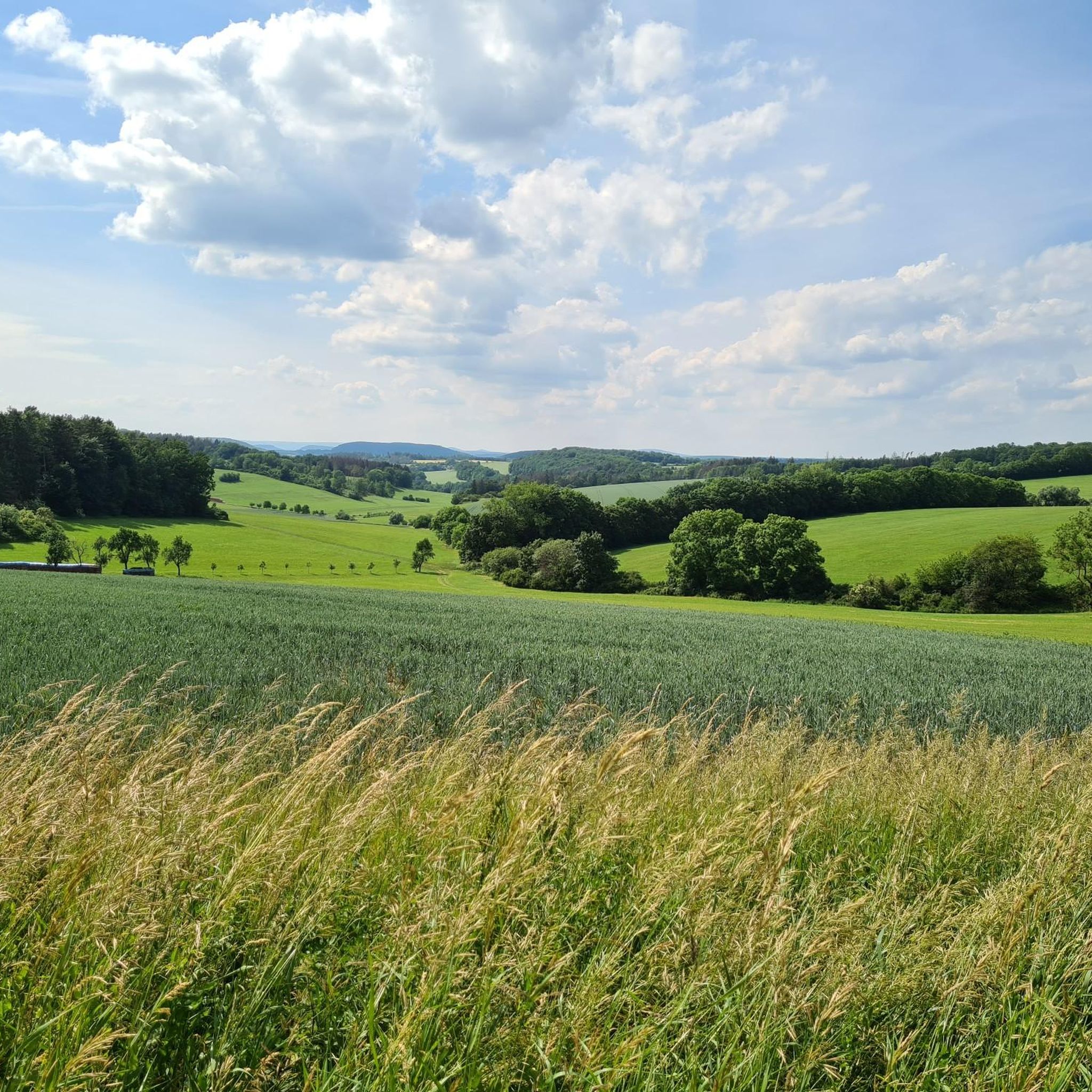
- The most popular natural monuments is Summit of Großer Gleichberg, a summit that offers extensive views towards Franconia and Kleiner Gleichberg. This mountain is notable for its dominance of almost 20 kilometers and a prominence of almost 300 meters.
- Another must-see spot is Delphin Spring (Wiesenbrünnle), a historic natural monument. Visitors can expect a restored spring with seating, located in a shady forest setting on the western slope of Kleiner Gleichberg.
- Visitors also love Collapsed Mountain Cliff, a natural monument formed by landslides. This cliff offers viewpoints into the Werra Valley and the Thuringian Forest, revealing a steep rock face with crevices.
- Sankt Bernhard is known for summits, springs, and unique geological cliffs. The region offers a variety of natural monuments to see and explore, from high vantage points to historic water sources.
- The natural monuments around Sankt Bernhard are appreciated by the komoot community. These locations have garnered 327 upvotes and feature 224 photos from visitors.
Last updated: June 24, 2026
Summit of Großer Gleichberg
Highlight • Summit
Translated by Google •
Tip by

Delphin Spring (Wiesenbrünnle)
Highlight • Natural Monument
Translated by Google •
Tip by
Sign up now to discover places like this
Get recommendations on the best single tracks, peaks, & plenty of other exciting outdoor places.
Sign up for free
Römhild Labor Education Camp Memorial
Highlight • Historical Site
The Große Gleichberg is 679 meters above sea level. NN the higher of the two singular equal mountains east of Römhilds in the Grabfeld landscape in the Hildburghausen district in Thuringia.
Basalt was mined in two quarries on the Großer Gleichberg, the Gleichamberger Steinbruch and the Römhilder Steinbruch.
There was a cable car with which the basalt was transported in Loren to the basalt works in Römhild at the station and to Gleichamberg.
The stones were used to build paved Chausseestrassen, then so-called artificial streets, and cobblestone streets, but also to build buildings.
Basalt from the quarries of the Großer Gleichberg can still be found on cobblestone streets all over Germany today.
During the time of National Socialism, from August 1943 to March 1945, there was a labor education camp in the Römhild quarry in which a maximum of about 400 "foreign nationals who were in breach of contract" were interned.
The prisoners had to work in the basalt quarry or in the basalt works at Römhild Bahnhof.
It must be assumed that at least 500 prisoners died in the camp or on the evacuation march in 1945.
During the Cold War, from 1968 to 1991, there was a restricted military area on the summit of the Großer Gleichberg with a radio and radar station of the Soviet armed forces, who left their autographs in the crushing plant.
In 1942, the Große Gleichberg was declared a nature reserve and is now a nature reserve.
(Source: fotowiesel.de)
Translated by Google •
Tip by

Collapsed Mountain Cliff
Highlight • Natural Monument
Translated by Google •
Tip by

Brückenmühlen Weir Themar
Highlight • Structure
Translated by Google •
Tip by

Sign up for free to discover even more natural monuments around Sankt Bernhard.
Sign up for free
Already have an account?
Start today with a free account
Your next adventure awaits.
Login or Signup
Tips from the Community

A very nice place to rest.
4
0

The Dolphin Fountain (also known as the Meadow Fountain) on the Kleiner Gleichberg near Römhild is a historic, restored spring located on the western slope near the Celtic hillfort. It was inaugurated around 1903, renovated in 2013, and is a popular rest stop along the mountain's hiking trails. It lies on the western slope of the 641-meter-high Kleiner Gleichberg, below the hillfort. The fountain was restored and rebuilt after a long period of disrepair. It is considered a gem by nature lovers. It is the source of the Wiesleinbach stream. Celtic settlement remains and dry stone walls are located nearby. The fountain exemplifies the dedication of the Friends of Steinsburg Association to the upkeep of the site.
6
0
Fountain with seating, pure nature.
16
0

Probably a former guardhouse.
0
0
Be careful at the edge!!!
0
0

From 1939 to 1941, up to 250 Polish prisoners of war from the Mühlberg camp were housed in a barracks camp in the quarry of the basalt works on the Grosser Gleichberg. They had to do forced labor in the quarry, in the city, in agriculture or in the forest, among other things. From 1941 to 1942, a prisoner commando from the main camp in Bad Sulza with 120 prisoners was sent to the quarry. After the quarry was temporarily closed, a maximum of around 400 "foreign ethnic" forced laborers who had broken their contract were interned there in a Gestapo labor education camp from August 1943 to March 1945. The prisoners had to work in the basalt quarry or in the basalt works at Römhild station. They were also used to build bunkers and positions in Mendhausen and for a time in trades and crafts in Römhild and the surrounding area. At least 500 prisoners died in the camp or on the evacuation march in 1945. This includes 25 to 92 prisoners who were unable to march and were shot in a sand cave on the eastern slope of the Grosser Gleichberg. The cave entrance was then blown up, meaning that the mass grave was not found until the end of January 1947. (Wikipedia)
1
0

The dolphin fountain was created and artistically designed by the Thuringian Forest Association Römhild in 1903. Largely destroyed in the early 1970s, the current facility was built 10 years later and was last fundamentally renovated in 2013.
1
0

The weir dates back to a former mill, which still dominates the landscape on the other side of the Werra. After the mill was abandoned, people thought about renaturalizing the Werra, but this would have caused lasting damage to the town of Themar and the town wall. A natural-looking fish ladder was therefore built, which would also enable microorganisms to migrate. In any case, the weir system offers a particularly acoustic spectacle, especially since you can get up close and personal with the river and the fish ladder.
3
0
Frequently Asked Questions
What are some of the most popular natural monuments to visit around Sankt Bernhard?
The Sankt Bernhard region offers several highly-rated natural monuments. Among the most popular are the Summit of Großer Gleichberg, known for its extensive views towards Franconia and Kleiner Gleichberg, and the historic Delphin Spring (Wiesenbrünnle), a beautifully restored spring in a shady forest setting. Another unique site is the Collapsed Mountain Cliff, a dramatic geological formation offering viewpoints into the Werra Valley.
Are there family-friendly natural monuments around Sankt Bernhard?
Yes, the region has options suitable for families. The Delphin Spring (Wiesenbrünnle) is considered family-friendly, offering a nice, shady rest area in the forest. Additionally, the Brückenmühlen Weir Themar is a pleasant spot by the Werra river, featuring a fish ladder and seating, ideal for a relaxed family visit.
What kind of natural features can I expect to see in the Sankt Bernhard region?
The Sankt Bernhard region is characterized by a diverse Alpine environment. You can explore towering peaks like the Summit of Großer Gleichberg, historic water sources such as the Delphin Spring (Wiesenbrünnle), and unique geological formations like the Collapsed Mountain Cliff. The wider region, including the Pays du Saint-Bernard, also features numerous Alpine lakes and extensive forests.
What is the best time of year to visit the natural monuments around Sankt Bernhard?
The best time to visit depends on your preferred activities. Summer offers ideal conditions for hiking and cycling, allowing full access to the Alpine landscapes. Autumn is particularly scenic as the region's extensive forests transform with vibrant colors. Winter provides opportunities for skiing and snowshoeing, especially in areas like Val Ferret and La Fouly, though some higher passes and trails may be less accessible.
Are there historical sites among the natural monuments in Sankt Bernhard?
Yes, several natural monuments in the Sankt Bernhard region also hold historical significance. The Delphin Spring (Wiesenbrünnle) is a historic, restored spring near a Celtic hillfort. The Römhild Labor Education Camp Memorial, located on the Großer Gleichberg, combines natural beauty with a poignant historical past related to a former quarry and labor camp. The Great St Bernard Pass itself, mentioned in regional research, has been used since the Bronze Age and by Napoleon's army.
What outdoor activities can I do near the natural monuments in Sankt Bernhard?
The Sankt Bernhard region is excellent for various outdoor activities. You can find numerous hiking opportunities, including easy routes like the 'Steinbauer Seebers Hut – Delphin Spring (Wiesenbrünnle) loop' or the 'Bench with view of Römhild loop'. For cycling enthusiasts, there are gravel biking routes such as the 'Former Town Hall Birkenfeld – Rodachaue Viewing Tower loop'. Mountain biking trails are also available, including the 'View of Kleiner Gleichberg – Hotel Waldhaus Römhild loop'. You can explore more options on the easy hikes guide, gravel biking guide, and MTB trails guide for Sankt Bernhard.
Are there easy hiking routes to natural monuments in Sankt Bernhard?
Yes, there are several easy hiking routes that allow you to experience the natural monuments. For instance, you can take the 'Steinbauer Seebers Hut – Delphin Spring (Wiesenbrünnle) loop from Dingsleben', which is an easy 5.9 km hike. Another simple option is the 'Bench with view of Römhild loop from Dingsleben', covering 3.1 km. These routes are great for beginners or those looking for a relaxed walk. More easy hikes can be found in the Easy hikes around Sankt Bernhard guide.
Can I spot wildlife near the natural monuments?
The well-preserved Alpine environment of the Sankt Bernhard region supports diverse flora and fauna. While specific sightings are never guaranteed, areas like the Collapsed Mountain Cliff are known to be home to feral goats, which can sometimes be seen. The numerous Alpine lakes and nature reserves in the wider Saint-Bernard region also provide habitats for various wildlife species.
What makes the <a href="https://www.komoot.com/highlight/252631" target="_blank" rel="noopener">Summit of Großer Gleichberg</a> a notable natural monument?
The Summit of Großer Gleichberg is notable for its impressive dominance of almost 20 kilometers and a prominence of nearly 300 meters, making it one of the most sublime mountains in Thuringia. The strenuous climb to the plateau is rewarded with extensive views towards Franconia and Kleiner Gleichberg, offering breathtaking panoramas.
What is the significance of the <a href="https://www.komoot.com/highlight/1279572" target="_blank" rel="noopener">Collapsed Mountain Cliff</a>?
The Collapsed Mountain Cliff is southern Thuringia's largest and most beautiful landslide area. Formed by significant landslides, notably one in 1595, it presents a steep rock face interspersed with mighty crevices. It offers stunning viewpoints into the Werra Valley and the Thuringian Forest, reflecting the sun with its gleaming, white limestone marl cliff.
Are there any botanical attractions in the Sankt Bernhard region?
Yes, the wider Saint-Bernard region is home to the Flore-Alpe Botanical Alpine Garden, located in Champex-Lac at an altitude of 1500 meters. This enchanting garden is recognized as one of the richest and most prestigious botanical gardens in the Alps, making it a significant natural and scientific attraction for those interested in Alpine flora.
What do visitors enjoy most about the natural monuments around Sankt Bernhard?
Visitors particularly appreciate the diverse geological formations and well-preserved landscapes. The extensive views from summits like Großer Gleichberg are highly praised. The tranquility and natural beauty of spots like the Delphin Spring (Wiesenbrünnle), described as a 'gem by nature lovers,' are also a major draw. The unique geological features and historical context of many sites add to the overall appeal.
Most popular attractions around Sankt Bernhard

Get inspired with the komoot mobile app


Explore more
Extend your search for the best caves by checking out these guides of the top ones around Sankt Bernhard:
